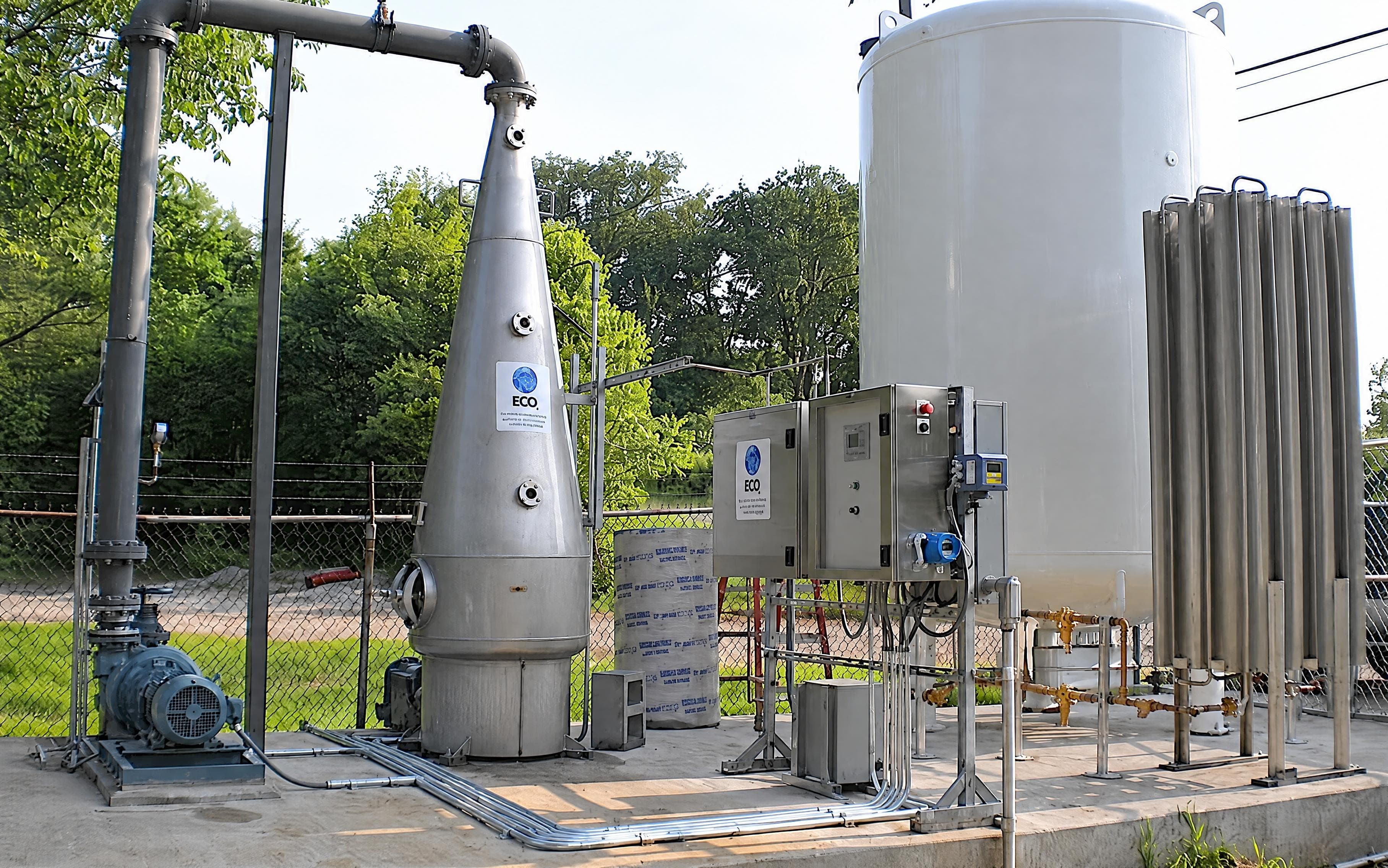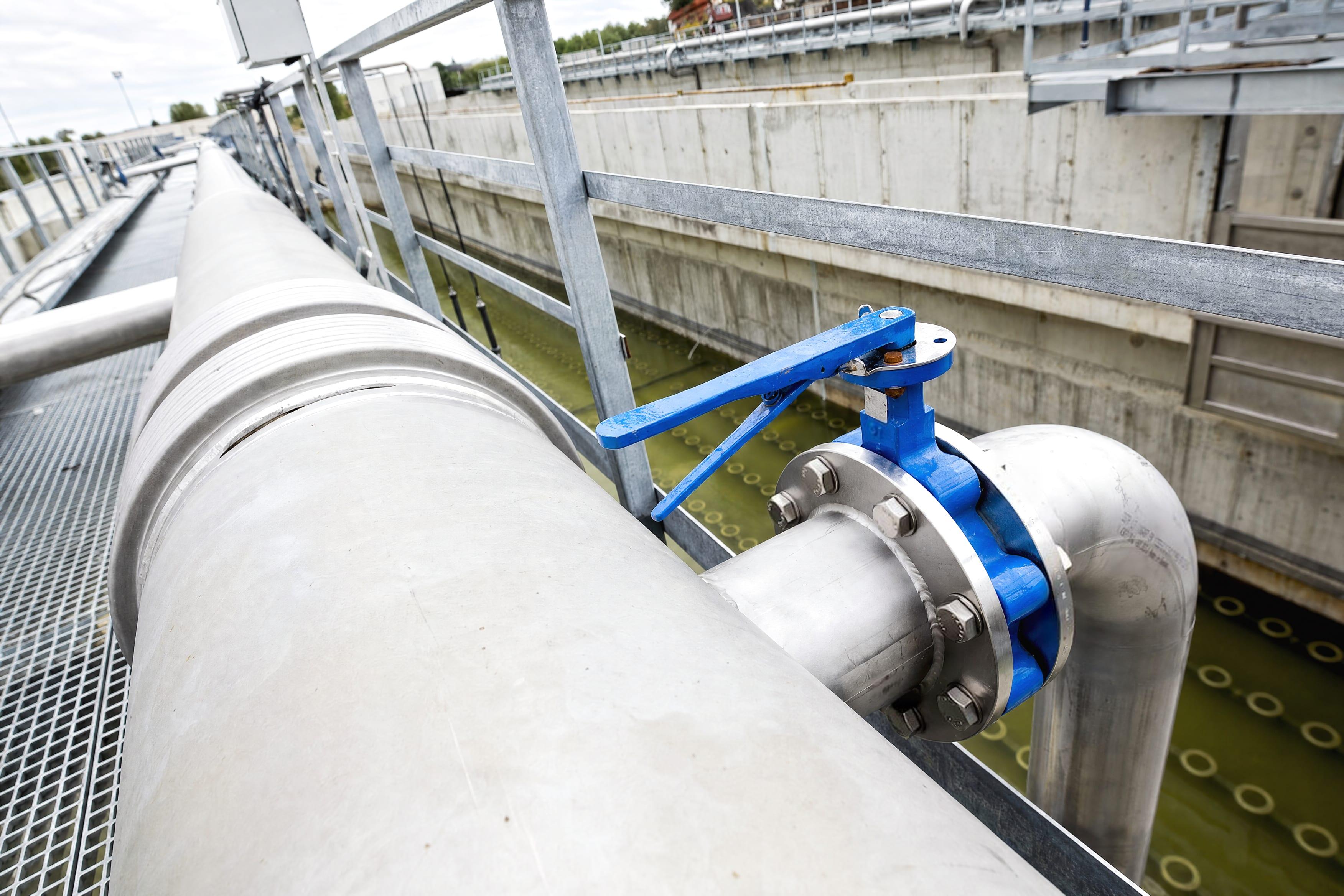
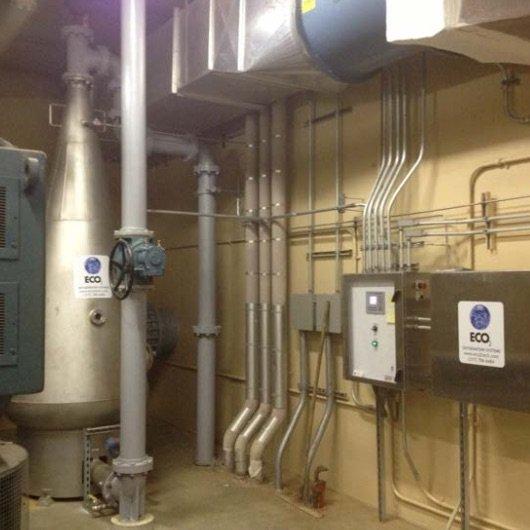
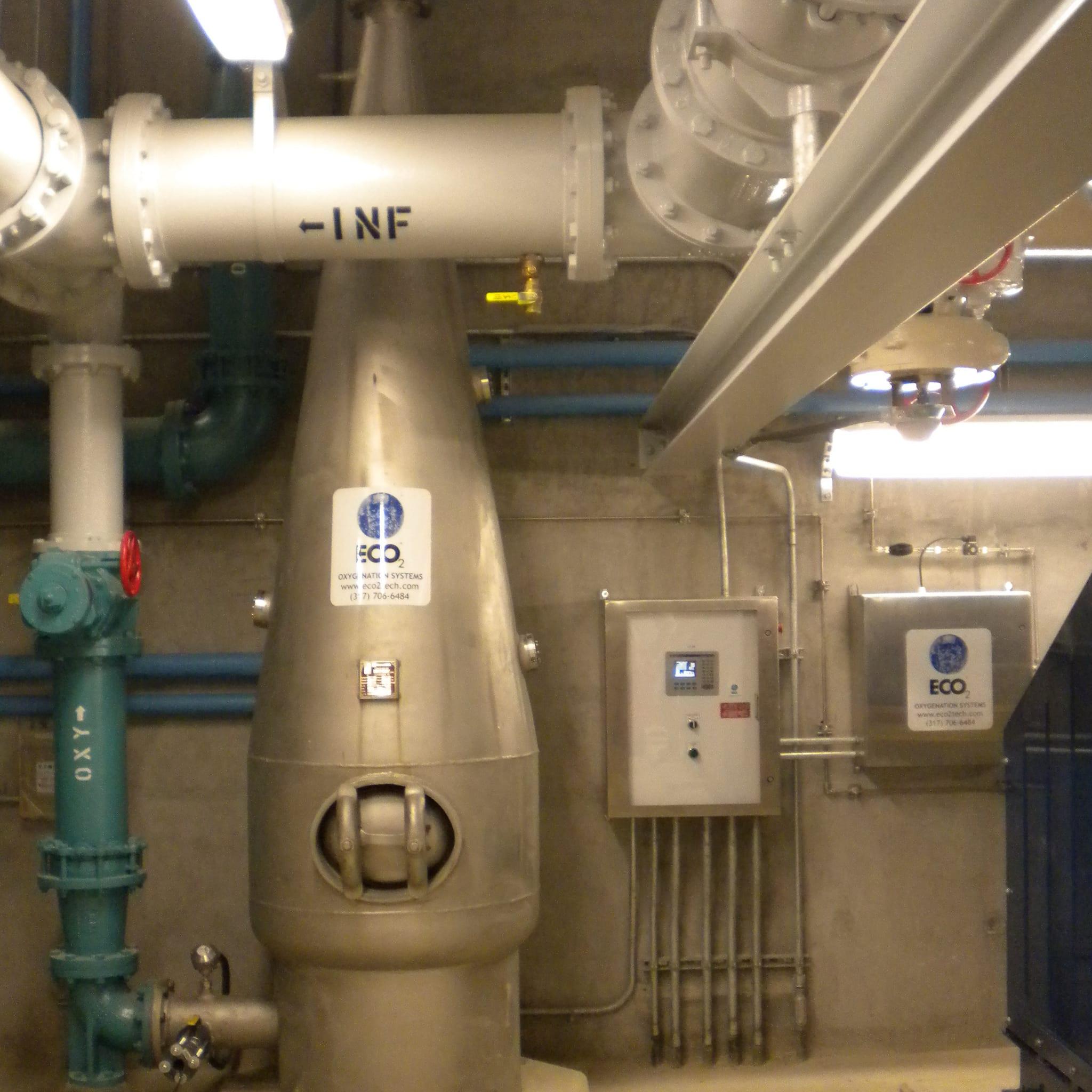
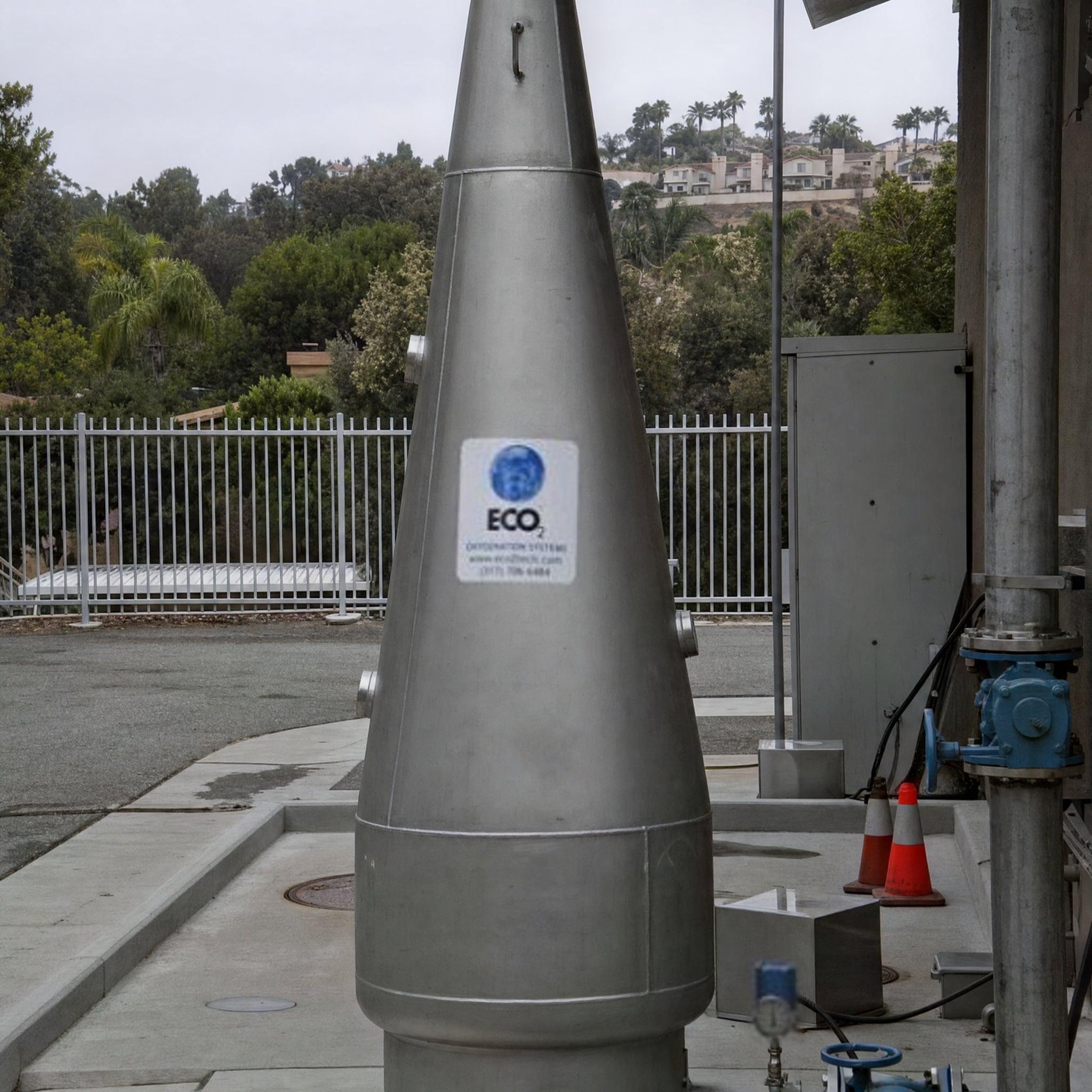
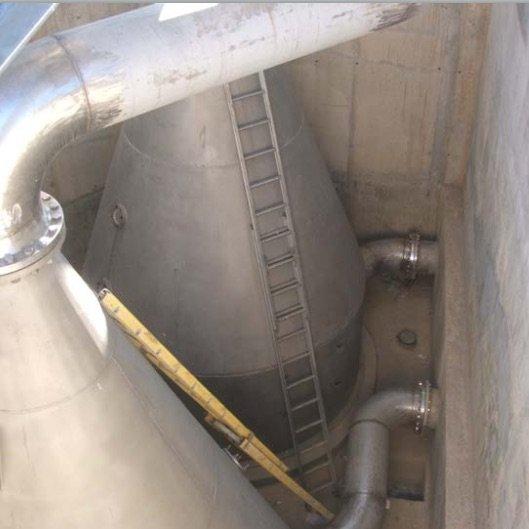
Stainless steel oxygenation piping and a blue valve beside a wastewater basin

Wastewater Odor Control That Stops H₂S Before It Forms

ECO₂ dissolves pure oxygen into the flow in a Speece Cone® so H₂S never forms: on Knoxville's 6.4-mile force main, average H₂S fell from 158 ppm to under 1 ppm.

01The Problem

Why Prevent H₂S in Sewers

Hydrogen sulfide is more than a bad smell. It corrodes infrastructure, raises operating costs and creates serious safety risks for the staff who work on the system. Left untreated, it shortens equipment life and forces costly chemical use.

More on the Problem

The rotten egg odor reaches the communities around lift stations, manholes and the plant. Where H₂S gas meets the pipe, bacteria turn it into sulfuric acid (H₂SO₄), which eats away concrete and metal; ECO₂ cites the ASCE manual on manhole rehabilitation, which puts the loss at about 1 inch of concrete every 5 years at 20 ppm. ECO₂ stops H₂S at the source: oxygen keeps the sewage aerobic, so the sulfide never forms, with no chemicals to dose, store or handle.

ECO₂ supplies wastewater odor control systems and equipment to municipal utilities and industrial plants.

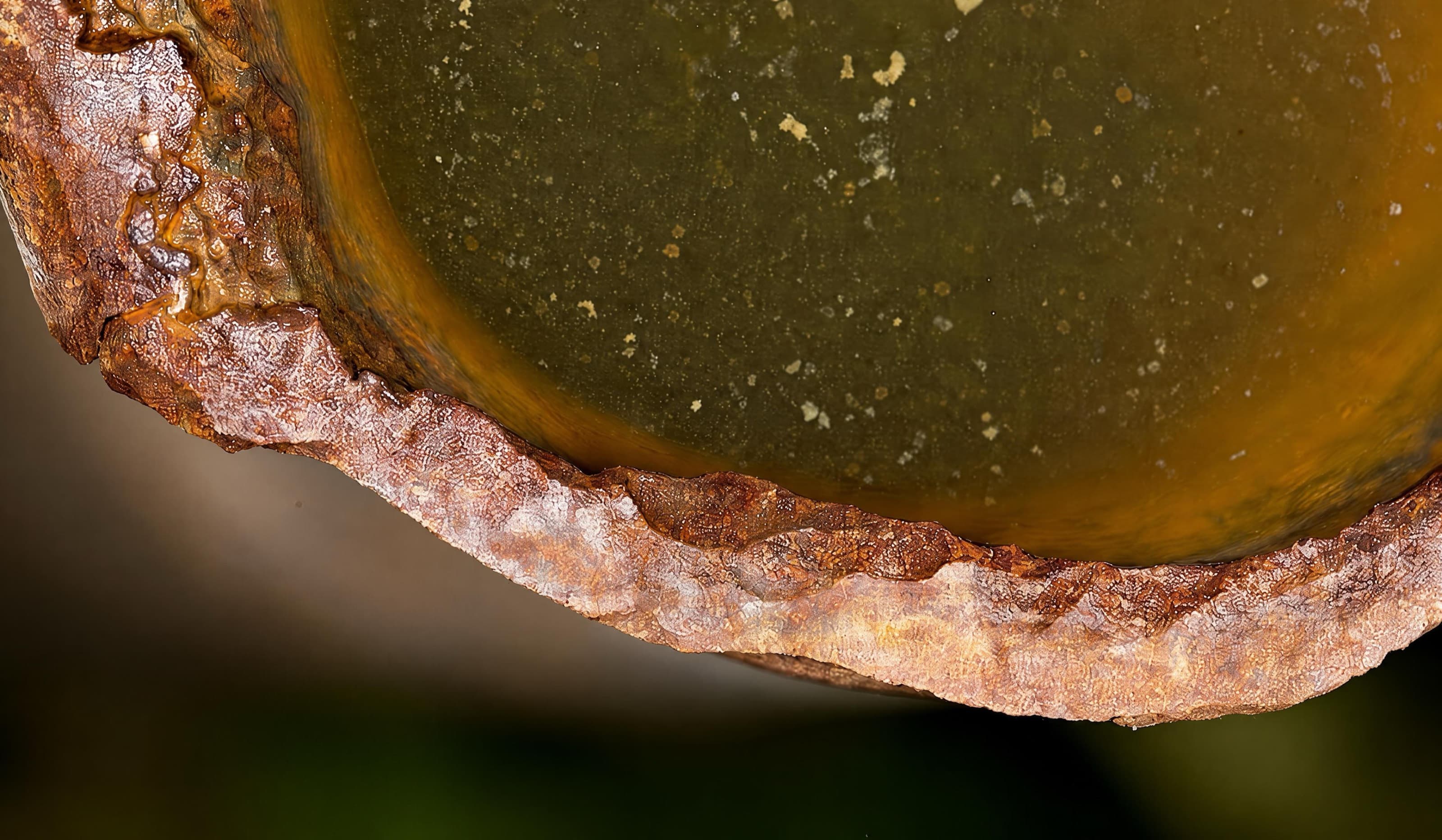
The corroded edge of a pipe

Conveyance & Sewer System Odor Control: Where H₂S Starts

02How It Works

How Oxygen Stops H₂S Without Chemicals

ECO₂’s Superoxygenation System keeps wastewater aerobic by maintaining enough dissolved oxygen. This prevents the biological formation of sulfides (H₂S), and with them the odor and the corrosion.

The System in Detail

  • Unlike chemical treatment, which needs continuous dosing and leaves byproducts, oxygen leaves no toxic residue in the water.
  • Each system is designed for its own pipe, has a small footprint, and fits into an existing collection system with no closures or interruptions to daily operation.
  • The side stream pump is the main part that needs routine maintenance.
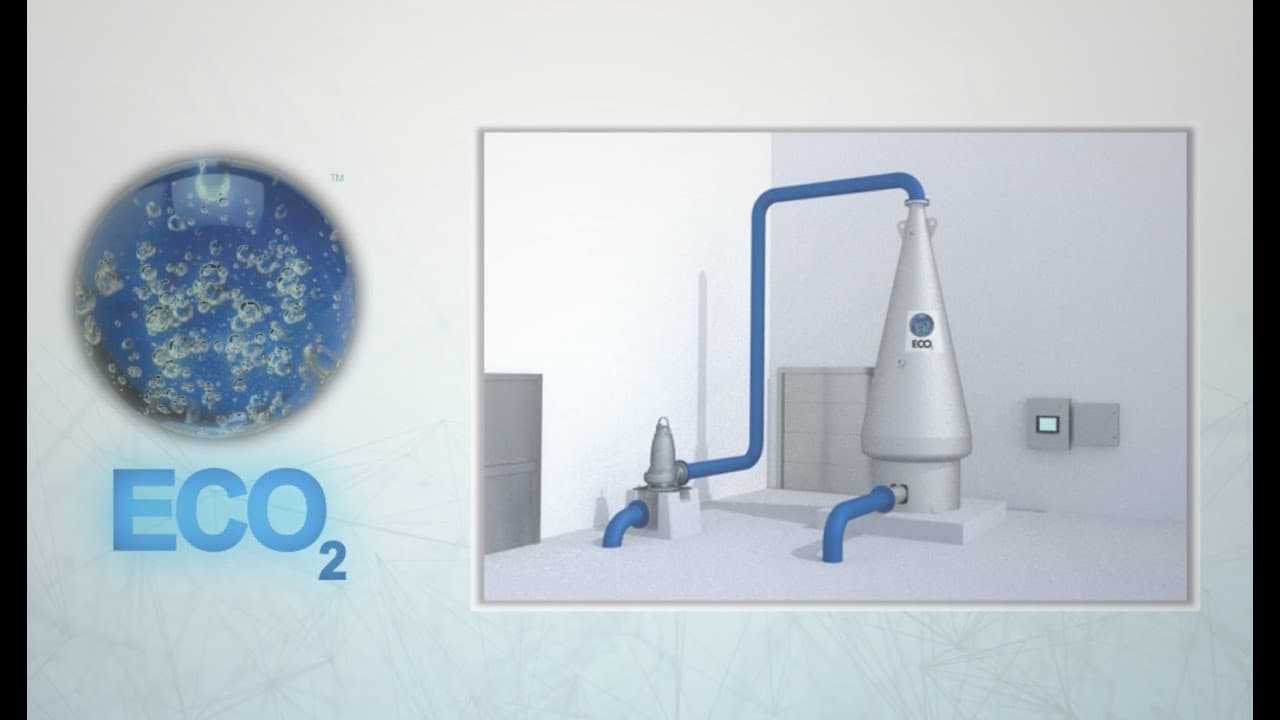
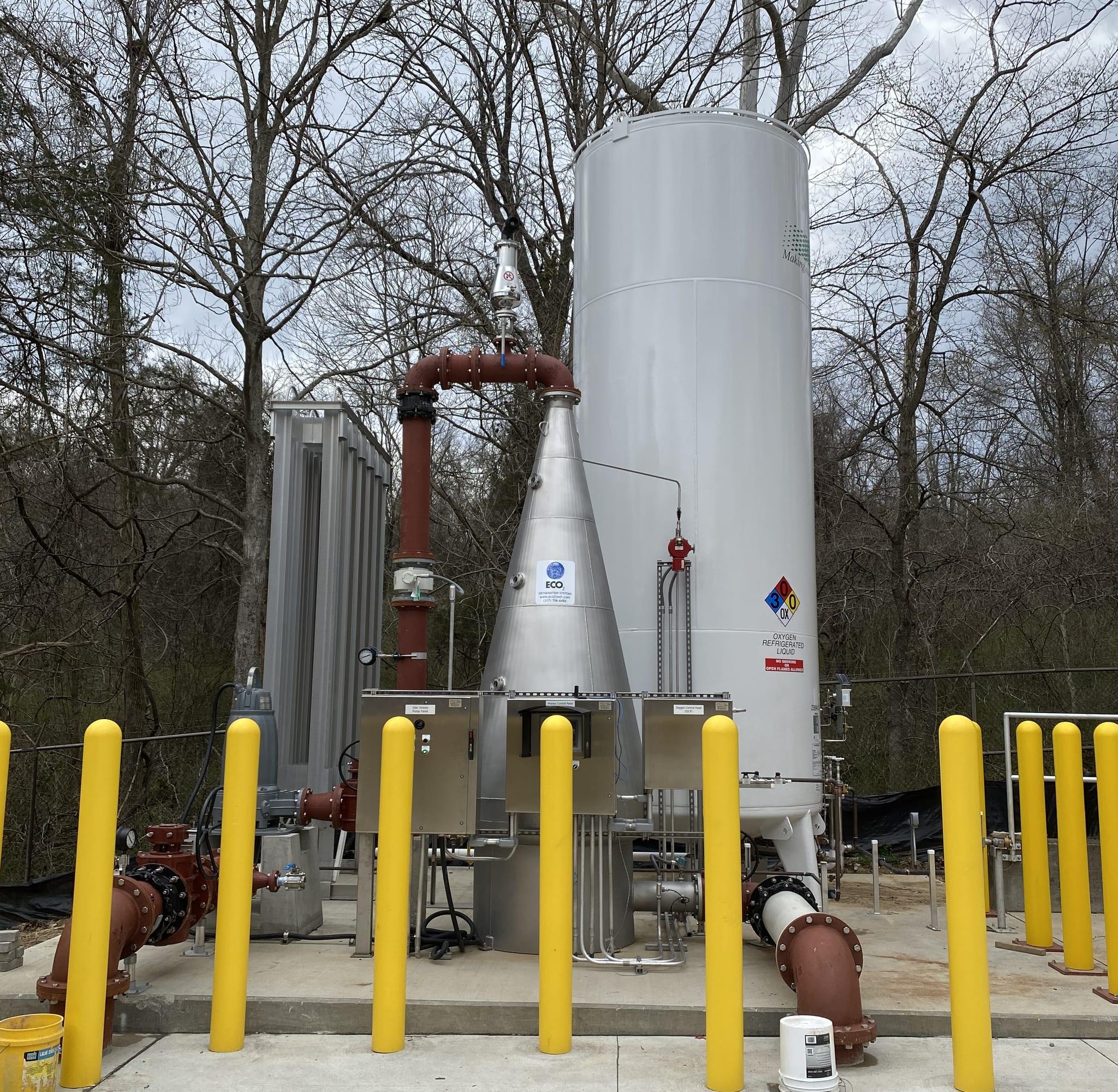
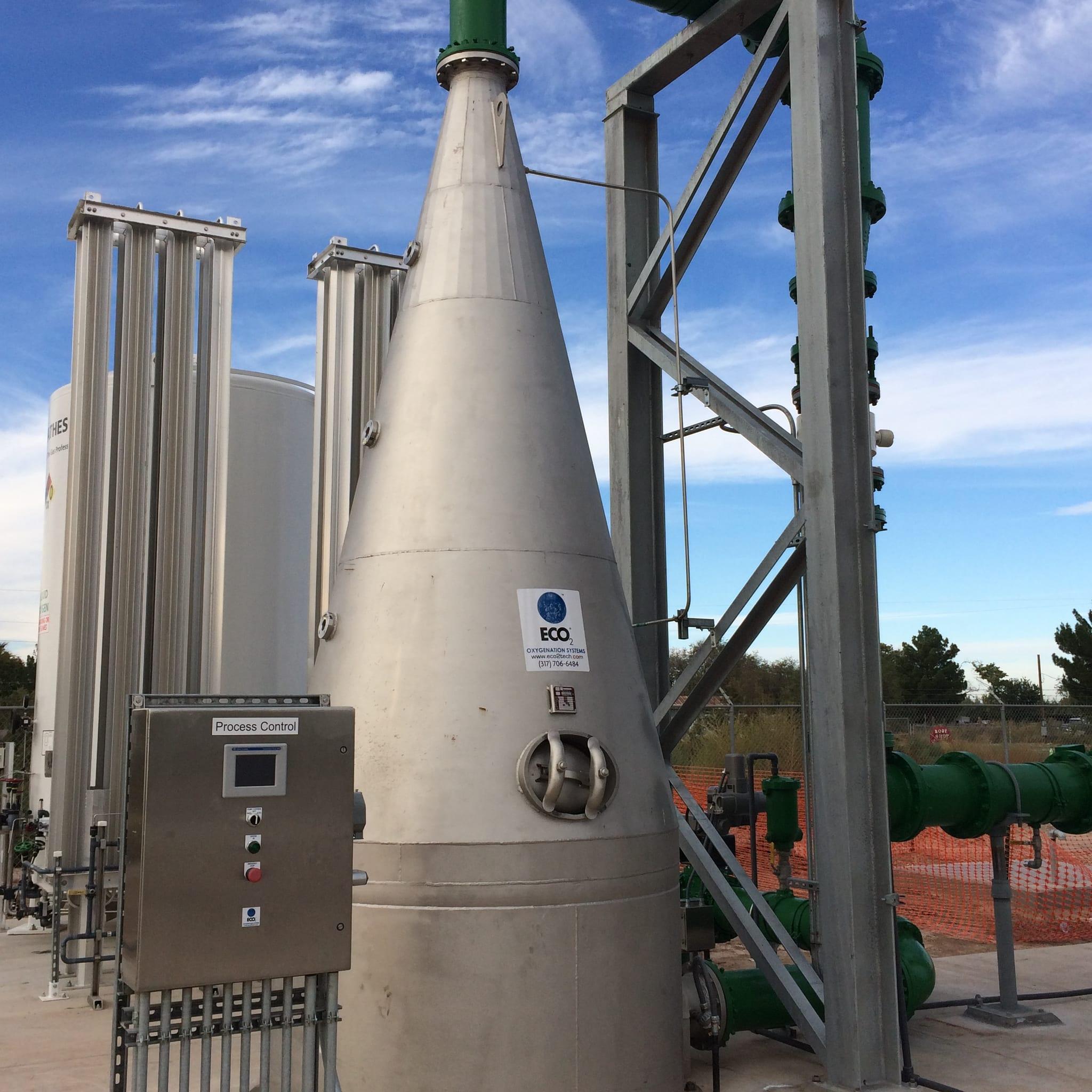
A Speece Cone system at a sewer lift station. A pump draws wastewater up from the force main below ground into the top of the Speece Cone. An oxygen supply, a storage tank and a gas vaporizer, feeds pure oxygen to the top of the cone, where it dissolves. The water leaves the cone's rounded bottom with no bubbles and returns to the main.Sewer LiftStationOxygenStorageTankOxygen SupplyOxygen GasVaporizerPumpSpeeceCone
Fig. 1A Speece Cone system at a sewer lift station. A pump draws a side stream from the force main below ground, the cone dissolves pure oxygen from the oxygen supply into it, and the water returns to the main with no bubbles.

03The Proof

Proven Technology

ECO₂ has a proven record of delivering reliable, cost-effective odor and corrosion control in wastewater systems worldwide. From force mains to gravity systems, the technology consistently eliminates sulfides, with installations operating successfully for more than 20 years.

Consistent H₂S Removal

Field results show ECO₂ systems reducing sulfide levels from extreme concentrations to near non-detectable levels. Even under challenging conditions, the technology delivers stable, long-term performance.

Key Benefits

  • Reliable results in both force mains and gravity systems.
  • Targeted dosing ensures efficiency without wasted oxygen.
  • Safe operation under low pressure with no risk of off-gassing.
  • Proven longevity with systems in service since 2003.
H₂S Untreated & With OxygenAverage at the end of the force main, in ppm
  1. Forks of the River Force MainKnoxville, TNUntreated158 ppmWith oxygenUnder 1 ppm

Two averages, as the case study reports them: before the oxygen went in, and with it running.

Source: Knoxville, TN Solves Odor and Corrosion Problems in Long Sewer Force Main, page 2

Measured at the End of the Pipe

04Why Switch

Chemical Cost Comparison

Switching from traditional odor-control chemicals to ECO₂ Superoxygenation reduces operating costs and eliminates the need for hazardous chemical handling.

Key Advantages

  • No ongoing chemical deliveries or storage requirements.
  • No increase in sludge production.

What It Costs Against Odor Control Chemicals

El Paso, Texas & Laguna Beach, California

Each comparison with its chart and source
ECO₂ Project - El Paso, Texas

El Paso, Texas

The utility's consulting engineer compared five odor control chemicals, ozonation and Superoxygenation for the Frontera force main. Oxygen had the lowest life-cycle cost, and average H₂S went from 12 ppm with calcium nitrate to 1 ppm with oxygen.

Average H₂S on the Frontera Force MainCalcium nitrate compared with oxygen, in ppm
  1. With calcium nitrate12 ppm
  2. With oxygen1 ppm

05For Engineers

Read the Papers

Introduction to ECO₂ Sewer Oxygenation

ECO₂'s animated explainer follows sulfide from a full force main to where it escapes as gas, then shows how a Speece Cone side stream at a lift station stops it.

Questions Utilities Ask About Sewer Odor Control

Where does sewer odor start?

Wherever sewage runs out of oxygen, above all in force mains, which run full with no air space and can hold it for hours. The H₂S comes out where the flow tumbles, at force main discharges, in gravity sewers and manholes, and at the plant's headworks and primary clarifiers.

How does oxygen control wastewater odor?

Bacteria in wastewater prefer dissolved oxygen. While there is enough of it, they do not take oxygen from sulfate, so no hydrogen sulfide forms and there is no odor. Dissolved oxygen also oxidizes sulfide that has already formed, within 15 to 30 minutes.

How much oxygen does a force main need to stop H₂S?

ECO₂ adds 2 mg/L of dissolved oxygen for every mg/L of dissolved sulfide to remove, plus the oxygen uptake rate of the wastewater times its detention time. Uptake is typically 5 to 15 mg/L an hour. At Grand Rapids, Minnesota, 6 hours of detention at 10 mg/L an hour called for 60 mg/L of oxygen.

Sewer collection lines: force mains 

Where is the system installed?

At the pump station or lift station that feeds the force main, at least 30 minutes of flow upstream of the place that needs odor control. A very long force main can take a second system partway along, as Knoxville's 6.4-mile Forks of the River force main does at its midpoint.

Sewer collection lines: lift stations 

Does oxygen stop sewer corrosion as well as odor?

Yes. Corrosion comes from H₂S gas turning into sulfuric acid on concrete and steel, and even 1 to 3 ppm causes rapid deterioration. Preventing H₂S in the wastewater itself stops the corrosion at the source.

Sewer collection lines: gravity sewers 

How does oxygen compare with calcium nitrate and other chemicals?

In El Paso, average H₂S went from 12 ppm with calcium nitrate to 1 ppm with oxygen, and oxygen had the lowest life-cycle cost of the options the utility studied. Oxygen adds no byproducts or solids for the plant to handle.

Why not inject oxygen gas straight into the force main?

Gas injected into a force main rises to the crown of the pipe within about 50 ft and collects at high points, so much of it never dissolves. In a 2-mile rising force main in San Diego, injected oxygen reached only 50 to 70% absorption. The Speece Cone dissolves the oxygen before it returns to the pipe.

What maintenance does an ECO₂ odor control system need?

The cone has no moving parts, so the side stream pump is the only part that needs routine maintenance. In Fishers, Indiana, the only operating costs of three systems over more than 15 years are the oxygen supply and regular pump maintenance.

Where does the oxygen come from?

From an onsite oxygen generator, a liquid oxygen (LOX) tank refilled by a local gas supplier, or cylinders for small systems. Laguna Beach makes its oxygen onsite; Knoxville and Fishers use LOX.

Which utilities use oxygen for sewer odor control?

Among ECO₂'s installations: Knoxville, Tennessee; Milford, Connecticut; Broomfield, Colorado; St. Joseph and Raymore, Missouri; El Paso, Texas; Fishers, Indiana; Aiken, South Carolina; St. Petersburg, Florida; Laguna Beach and Moulton Niguel, California; and Tung Chung, Hong Kong.

All wastewater odor control projects 

06The Next Step

Price Oxygen for Your Force Main or Lift Station

Send your site data through the contact form, or see a system installed first in the System Animation. ECO₂ returns a budgetary price. ECO₂'s engineers check the data for a technical fit, then send a system design with its estimated capital and annual operating costs, and can visit your site to confirm the data.

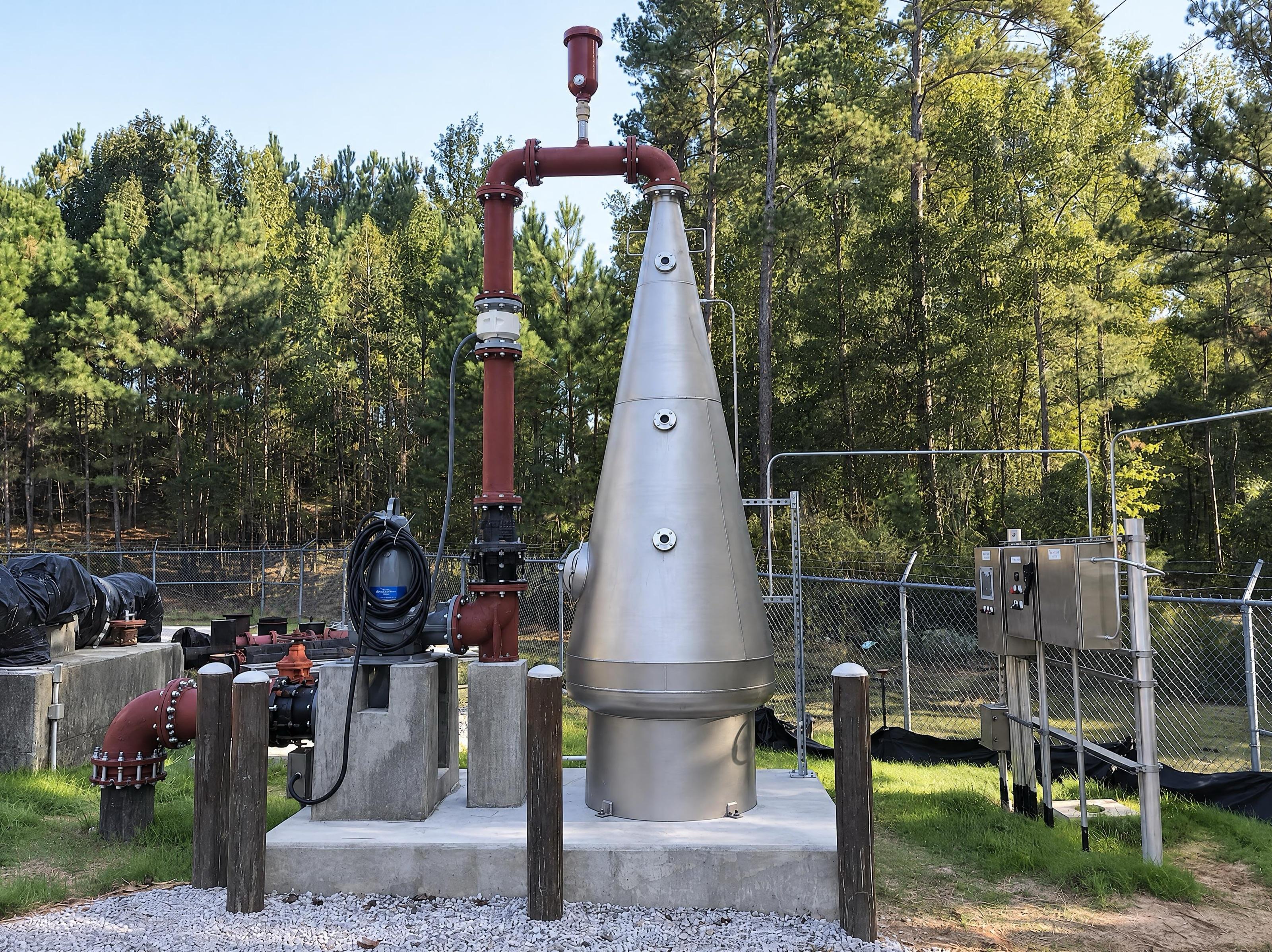
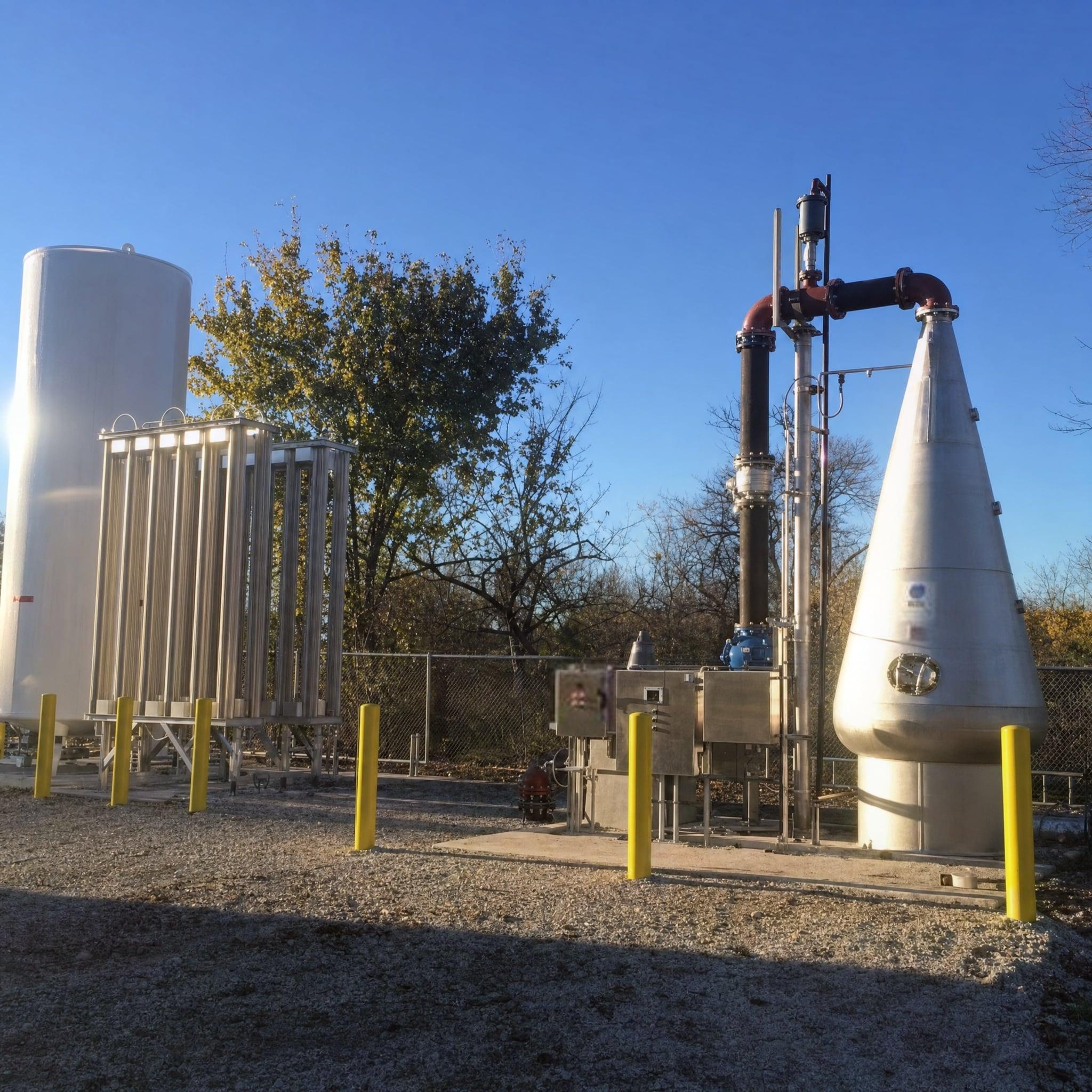
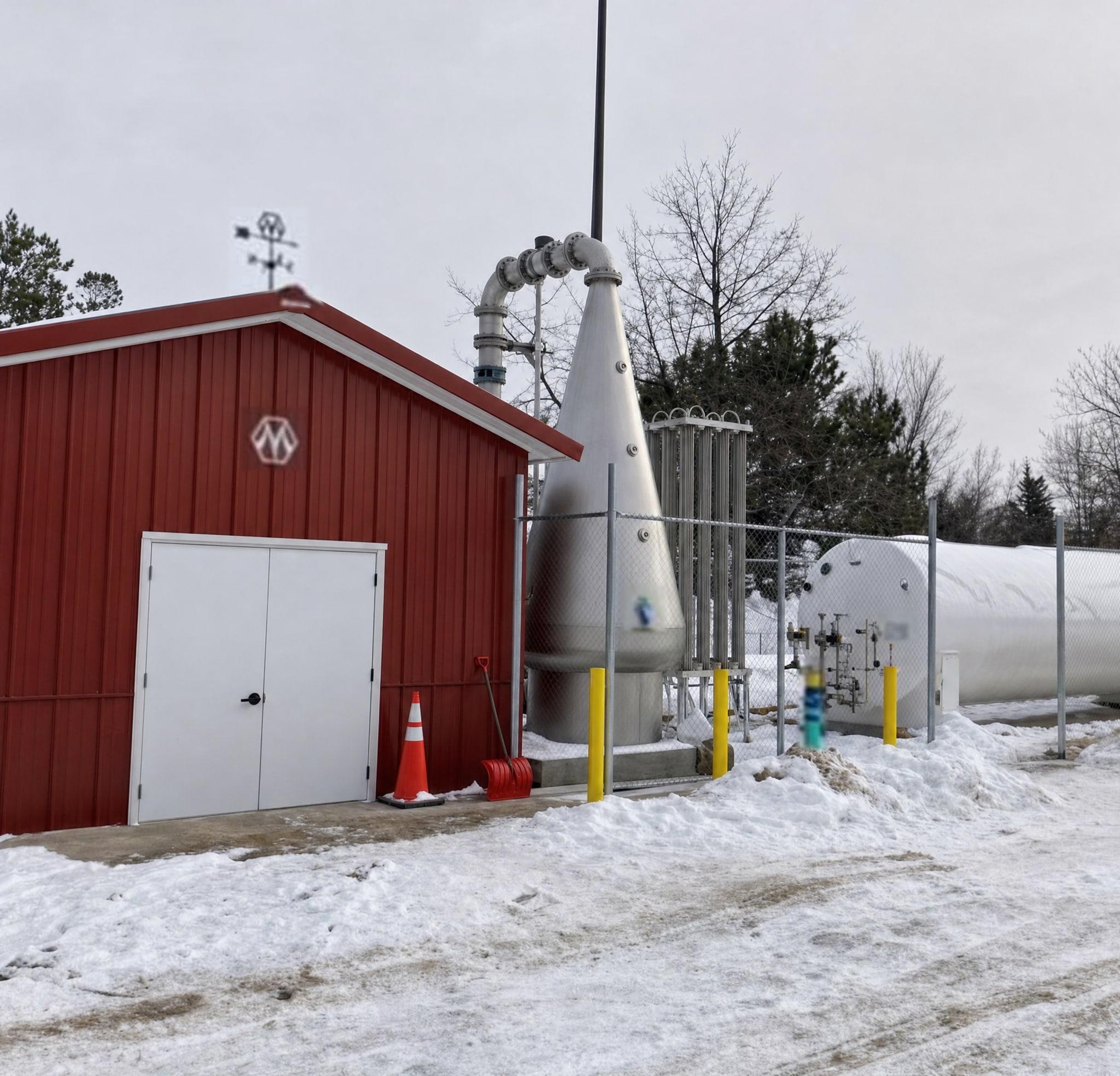
A stainless steel Speece Cone with its side stream pump and controls at a fenced pump station among pine trees