Industrial Pretreatment That Stops H₂S Without Chemicals
Strong, warm industrial flows go septic fast. Oxygen keeps them aerobic from the mill to the plant, with measured results from paper mills, food and ethanol plants and oil fields.
01The Problem
Strong, Warm Industrial Flows Run Out of Oxygen Fast
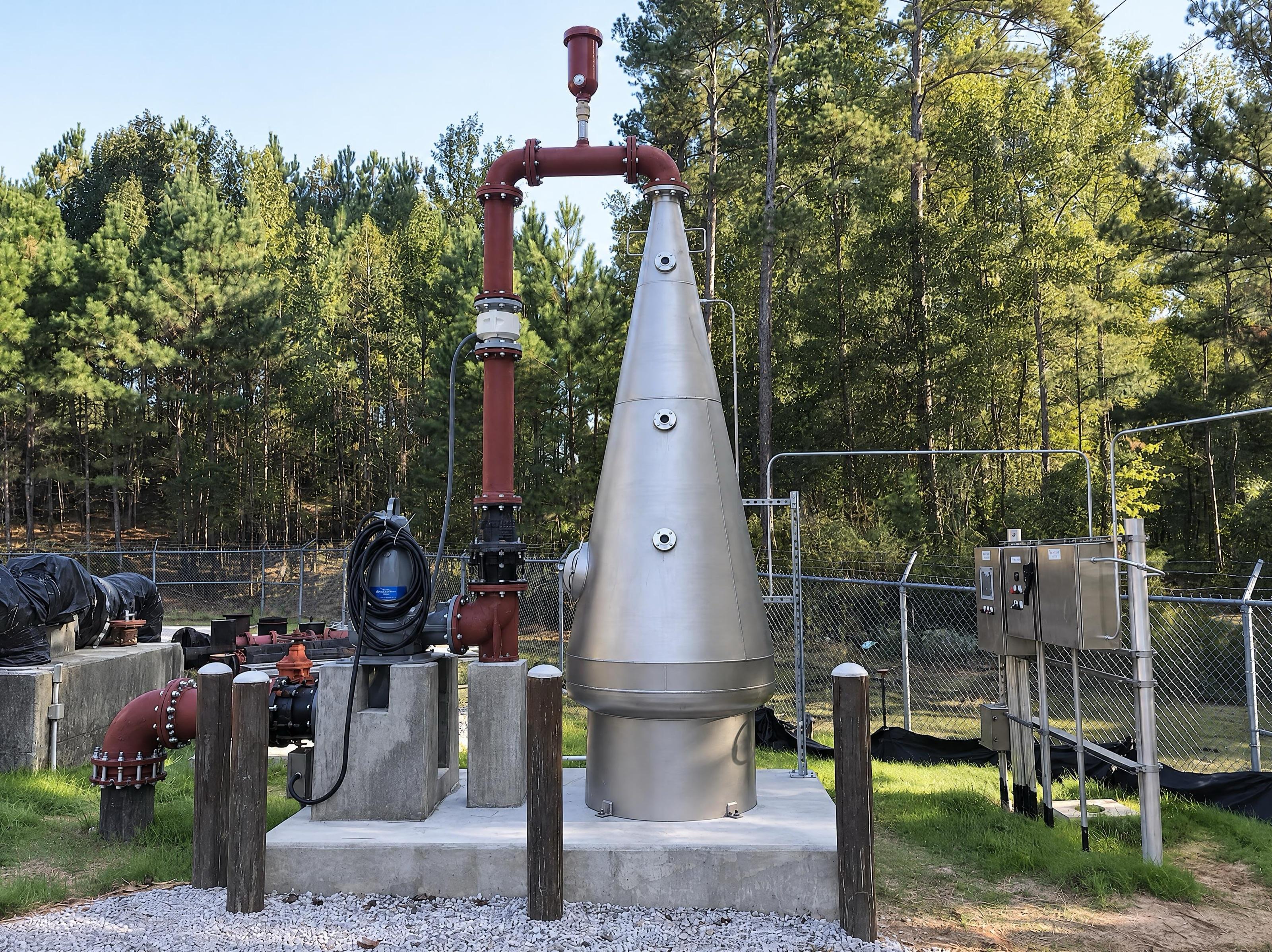
Industrial wastewater pretreatment with dissolved oxygen handles strong, warm flows that use up oxygen fast and turn septic. ECO₂ dissolves pure oxygen into them so hydrogen sulfide (H₂S) never forms. At Grand Rapids, Minnesota, a paper mill's 4.3 MGD flow used to need nearly $500,000 a year of calcium nitrate; with oxygen, H₂S at the city plant measures 0 ppm.
Why It Happens
Industrial wastewater carries far more food for bacteria than domestic sewage. At Anson and Madison, Maine, 88% of a 4.0 MGD plant's flow came from a paper mill, and its BOD averaged 500 to 600 mg/L at 28 to 30°C. The wastewater arrived oxygen deficient, with high H₂S at the primary clarifier.
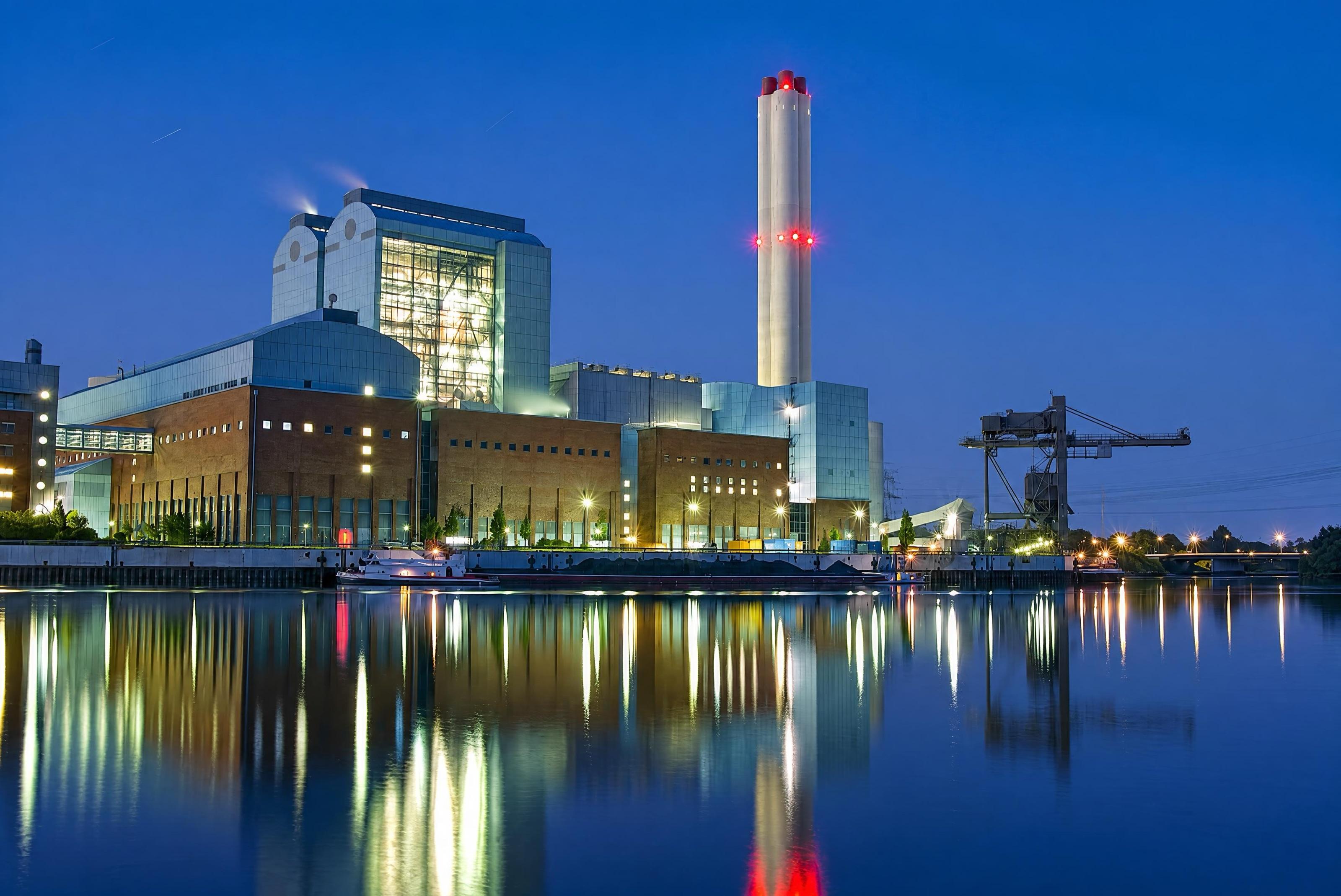
The sulfide forms twice: in the line and again in the treatment plant's tanks. A paper mill in Grand Rapids, Minnesota sends all of its wastewater across town through a force main, where it quickly turns septic. The heavily loaded flow then kept making H₂S in the city plant's primary clarifiers, with odor at the effluent weirs.
Sources: Jacobs, clarifier paper, p. 3; ECO₂, Grand Rapids case study, p. 1
02How It Works
Enough Oxygen at the Start Keeps the Flow Aerobic
The dose covers the oxygen uptake for the whole trip: through the pipe and through the tanks it feeds.
The System in Detail
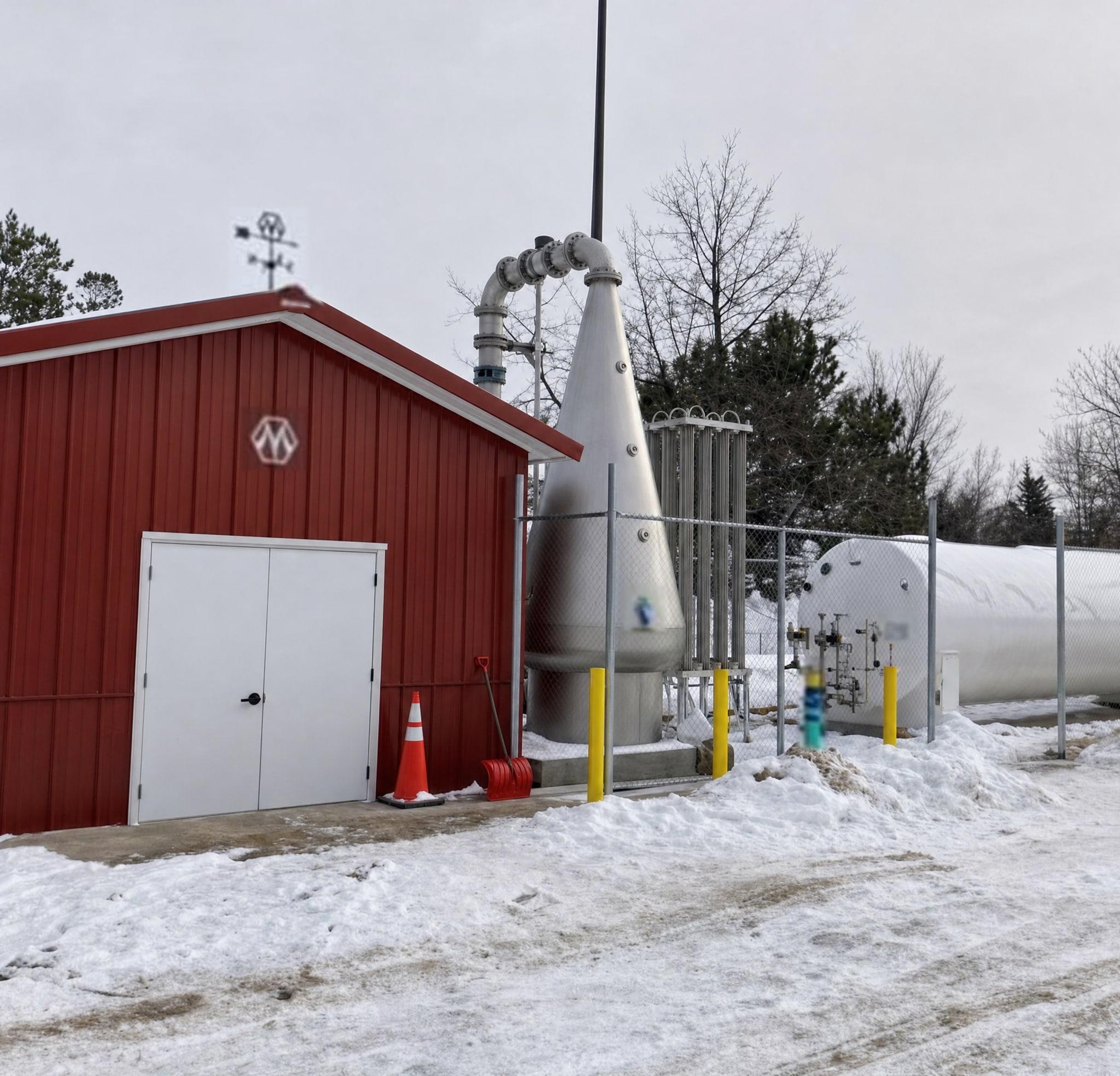
ECO₂ sizes the dose from the oxygen uptake rate and the time the water travels. At Grand Rapids, the force main and the primary clarifier hold the flow for about 6 hours. At an uptake rate of 10 mg/L an hour, that is 60 mg/L of oxygen demand, dissolved at the paper mill pump station at the start of the force main.
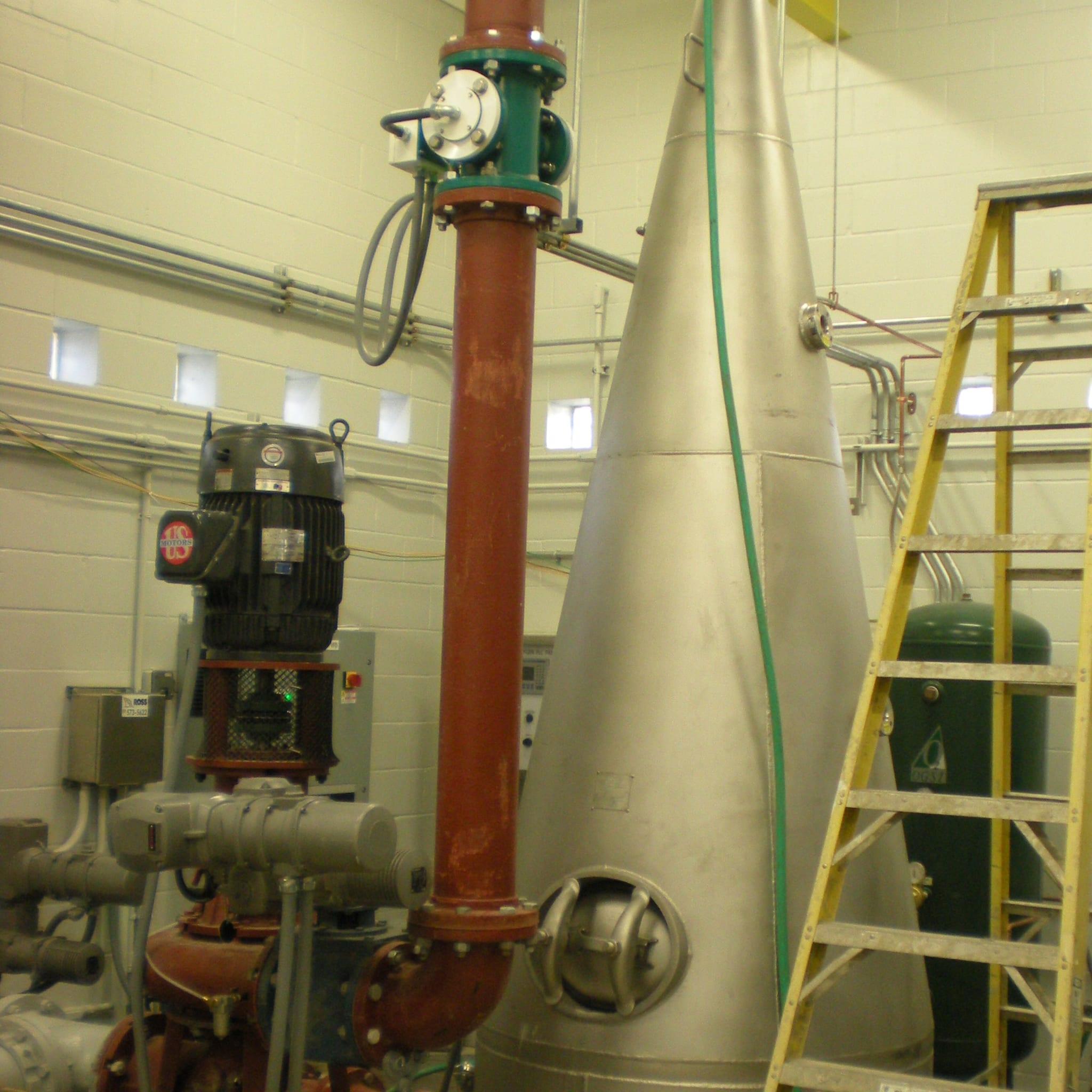
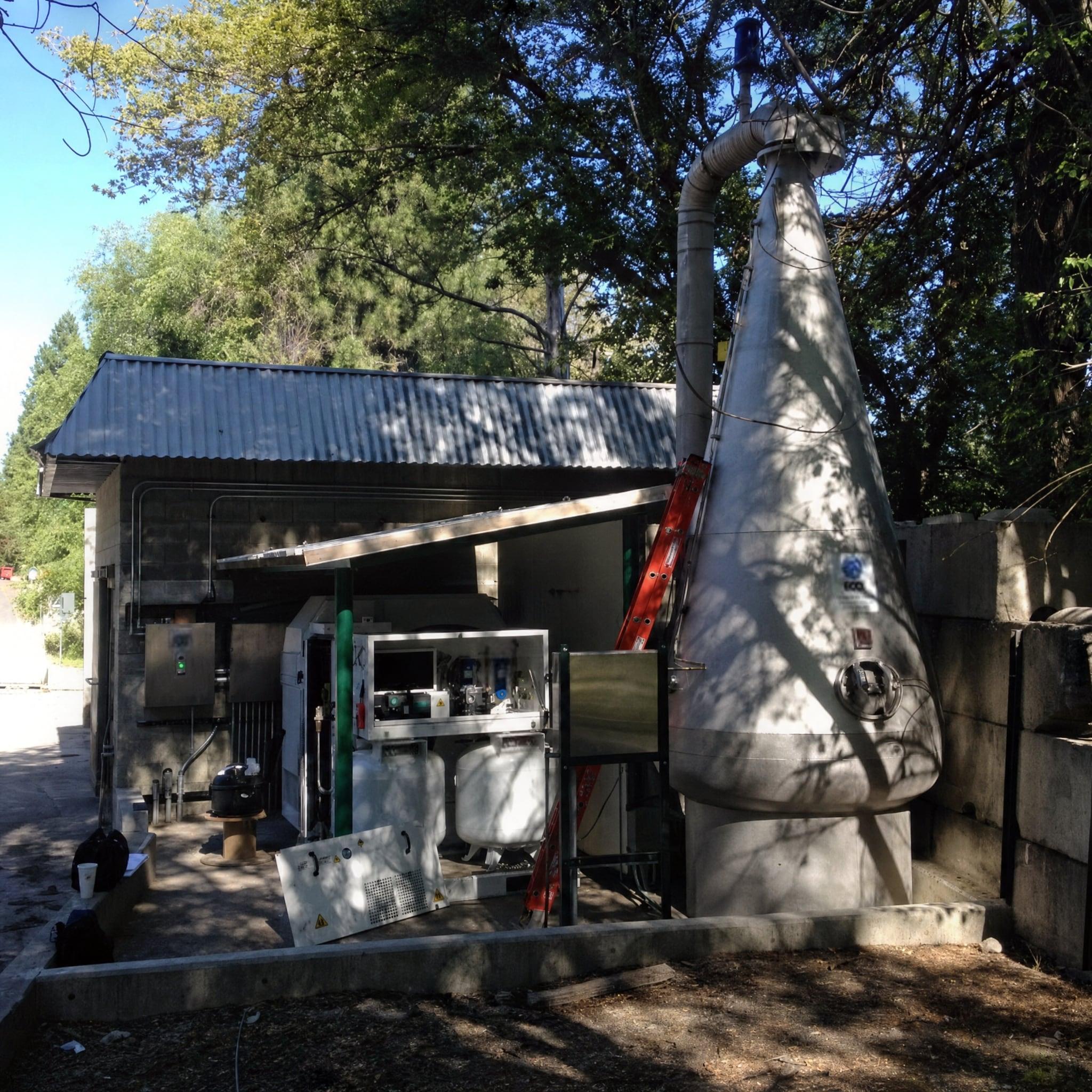
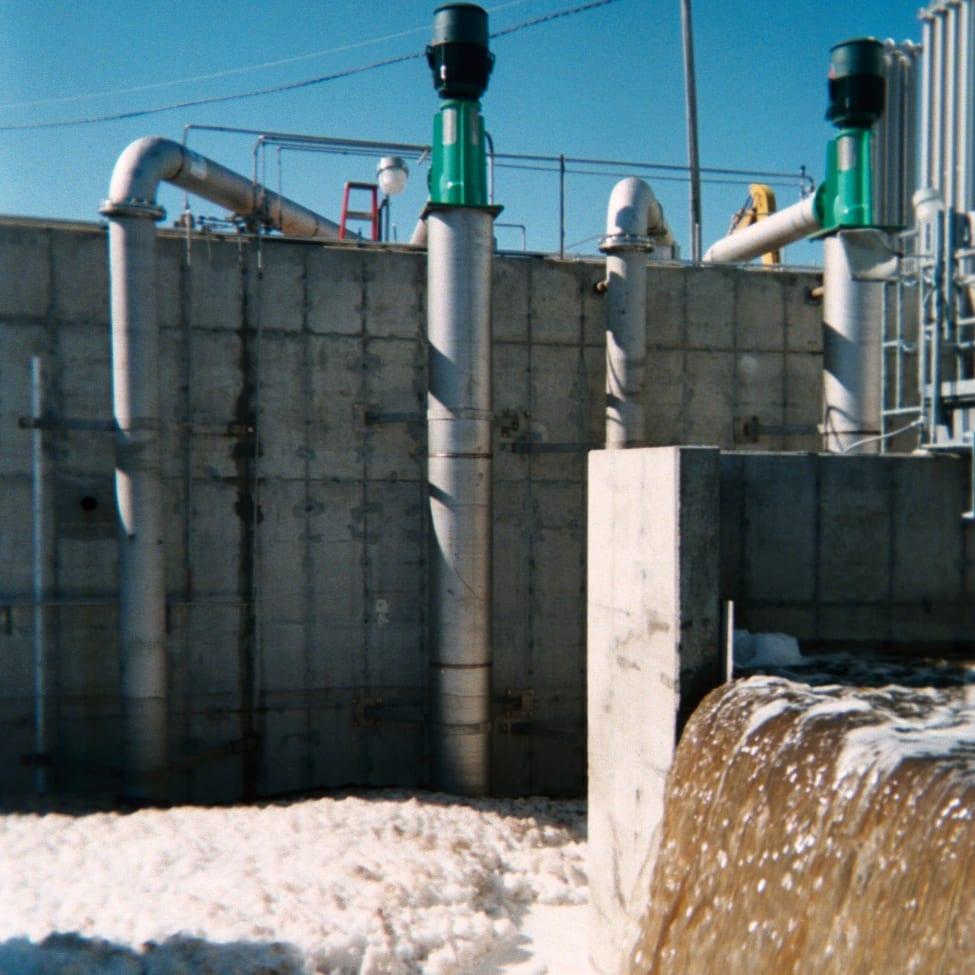
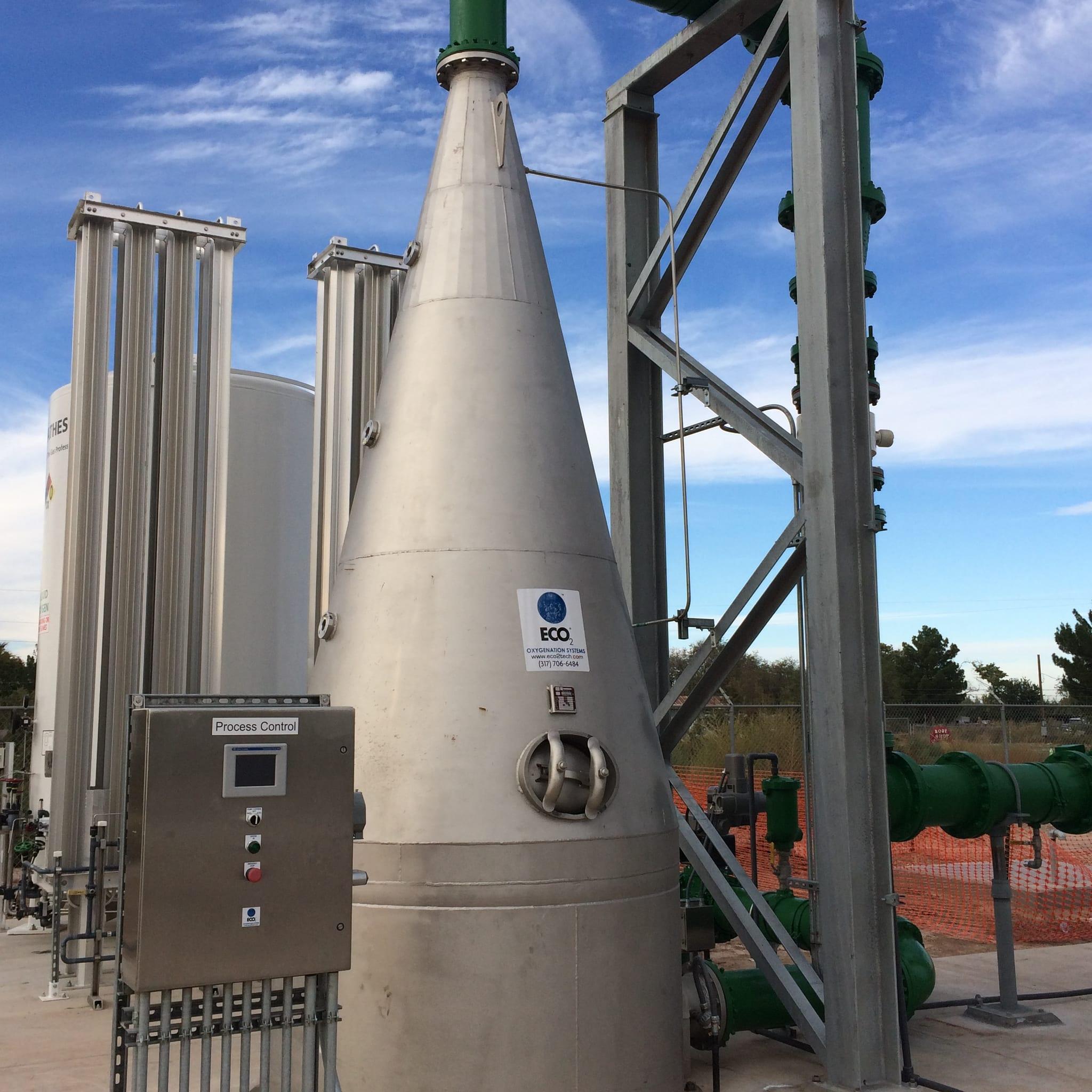
A Speece Cone® dissolves the oxygen almost completely: at Anson and Madison, measured transfer ran from 95.2% to 97.2%. Little off-gas also means volatile compounds stay in the water long enough for bacteria to break them down, which matters in pulp and paper and pharmaceutical wastewater.
Sources: ECO₂, Grand Rapids case study, p. 2; Jacobs, clarifier paper, p. 4; ECO₂, odor control strategies bulletin, p. 1
03The Proof
Measured at Mills & Industrial Lines: H₂S Near Zero
Before and after readings from ECO₂'s case studies, papers and project records.
Every Result in One Table
Industrial wastewater with dissolved oxygen, before and after
Industrial wastewater with dissolved oxygen, before and after
| Place | The flow | Before | With oxygen |
|---|---|---|---|
| Grand Rapids, MinnesotaECO₂, Grand Rapids case study, p. 1; ECO₂, Grand Rapids case study, p. 2 | Paper mill, 4.3 MGD, through a force main to the city plant's primary clarifiers | Calcium nitrate at nearly $500,000 a year | 0 ppm H₂S at the pump station and the clarifiers; odors eliminated |
| Windsor, OntarioECO₂ project record, Windsor, Ontario | High strength industrial wastewater, 4,000 ft force main | Septic conditions in the force main | H₂S at the discharge consistently near zero; plant upsets from BOD surges prevented |
H₂S gas in ppm, as each source reports it.
Paper, Food, Oil & Gas: Where the Systems Run
One method, many flows. Each line comes from the project record or paper behind it.
- Paper mills: at Valliant, Oklahoma, treated mill effluent is pumped over 5 miles to a small creek, and an oxygen system meets the discharge requirement for dissolved oxygen at the end of the pipe.
- Food and ethanol: a new ethanol plant in Fort Dodge, Iowa built a lift station to send its wastewater to the city plant, with an oxygen system to stop H₂S odor and corrosion and prevent plant upsets from high strength flows. In Dayton, Ohio, oxygen keeps H₂S out of the force main carrying corn processing wastewater and out of its discharge at the plant.
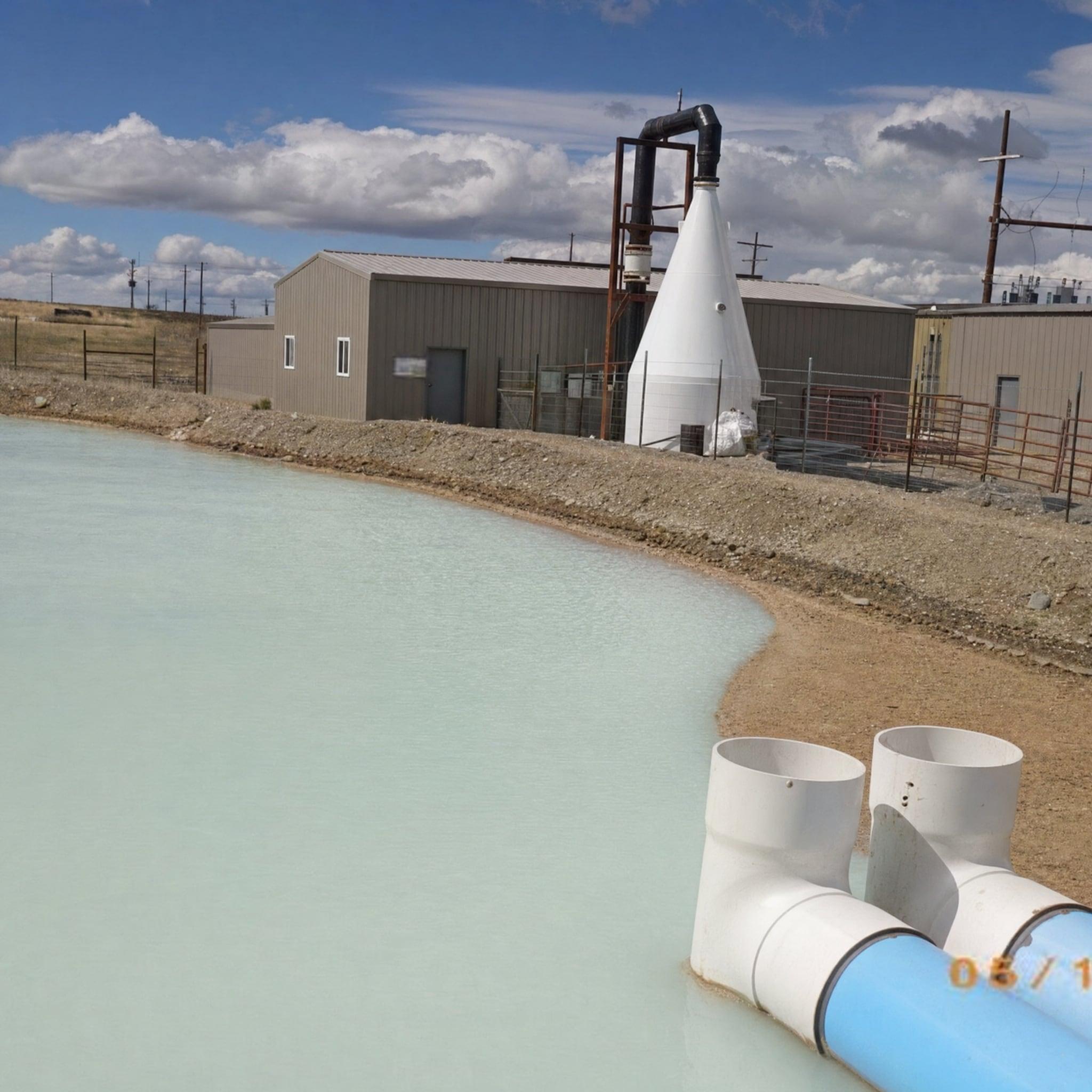
- Oil and gas: produced water from an oil field near Cody, Wyoming carries high levels of dissolved sulfide. Oxygen oxidizes and precipitates it, so the field can treat the water and discharge it to a nearby creek instead of pumping it underground, which saves energy and gives local ranchers water.
Sources: ECO₂ project record, Valliant, Oklahoma; ECO₂ project record, Fort Dodge, Iowa; ECO₂ project record, Dayton, Ohio; ECO₂ project record, Cody, Wyoming
How It Compares with Chemicals, Covers & Aeration
Chemicals work, at a price that grows with the flow, and iron salts and nitrate can add solids or upset other processes. Covers and scrubbers treat the gas after it forms, and corrosion goes on underneath. Bubbled air absorbs only 5 to 10% of its oxygen and strips H₂S and volatile compounds into the air. Dissolved oxygen prevents the sulfide, adds no byproducts or solids and leaves the volatiles in the water for bacteria. It needs a side stream pump and an oxygen supply on site.
Sources: Jacobs, clarifier paper, p. 1; ECO₂, aeration bulletin, p. 2; ECO₂, odor control strategies bulletin, p. 1; ECO₂ wastewater brochure, p. 2
04For Engineers
Read the Papers
Questions Engineers & Operators Ask
How do paper mills control sulfide and odor in wastewater with oxygen?
By dissolving enough pure oxygen at the start of the line to cover the uptake all the way through. At Grand Rapids, Minnesota, a cone at the paper mill pump station dissolves 60 mg/L; the city plant's clarifier influent still carries 20 mg/L and its effluent 12 mg/L, with 0 ppm of H₂S at all three points.
How is dissolved oxygen used on oil field produced water?
Near Cody, Wyoming, oxygen oxidizes and precipitates the dissolved sulfide in oil field produced water, so it can be treated and discharged to a creek instead of pumped underground, which saves energy and gives local ranchers water.
Can oxygen replace calcium nitrate on an industrial line?
At Grand Rapids, Minnesota it did. Calcium nitrate had cost nearly $500,000 a year; with oxygen, the odors were eliminated without chemicals, scrubbers or tank covers. Oxygen also leaves no byproducts or added solids for the plant to handle.
Will oxygen strip volatile compounds into the air?
Very little, because the oxygen dissolves almost completely. Bubbled air absorbs only 5 to 10% of its oxygen, so 98 to 99 ft³ of every 100 ft³ leaves as off-gas. With pure oxygen, volatile organics stay in the water long enough for bacteria to break them down.
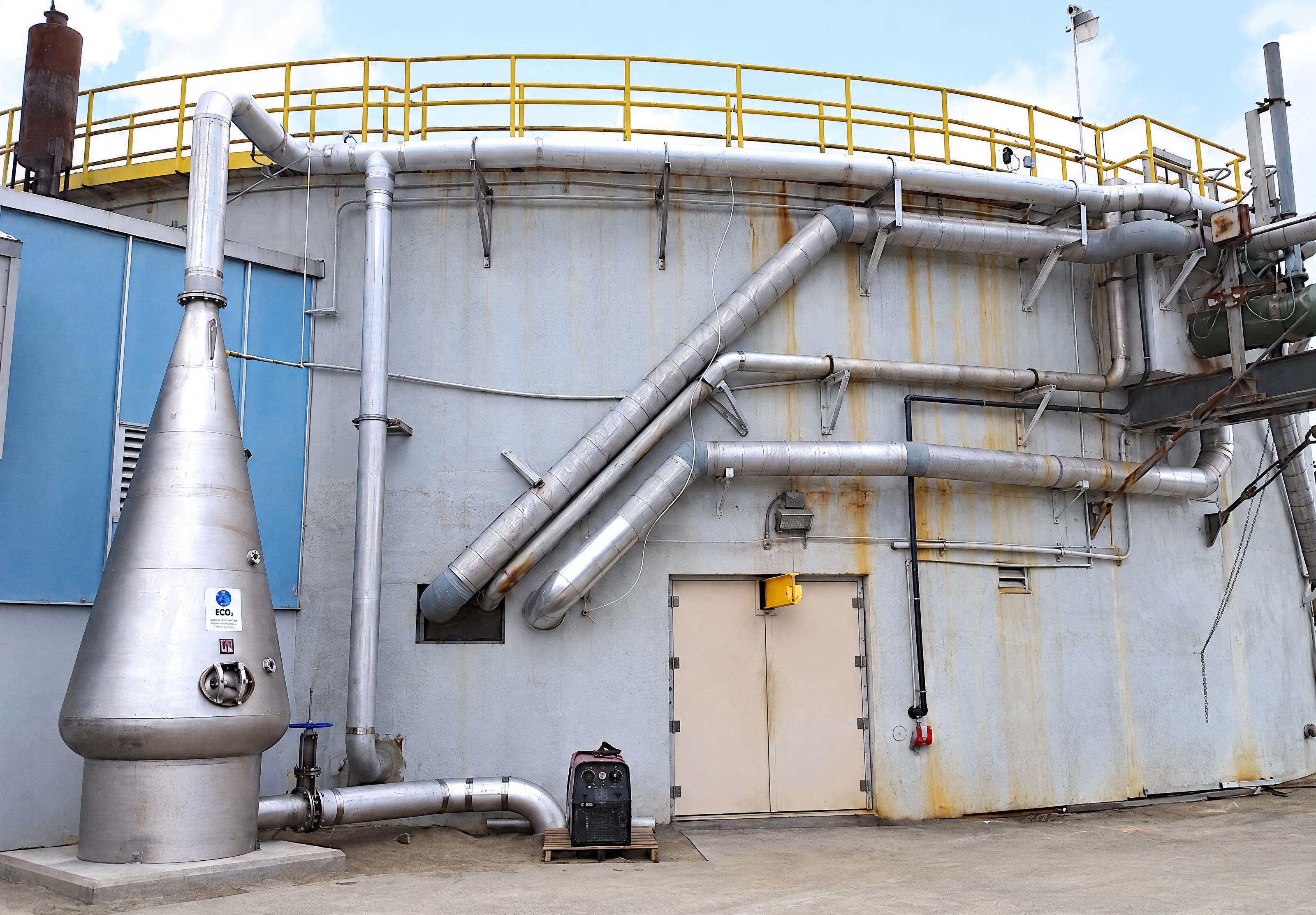
Primary clarifier, Anson-Madison Sanitary District, Madison, Maine.
Other Wastewater Odor Control Problems

05The Next Step
Tell Us About Your Industrial Flow
Flow, strength, temperature and where the odor shows up are enough for a first look and a budgetary price. ECO₂'s engineers check the data for a technical fit, then send a system design with its estimated capital and annual operating costs, and can visit your site to confirm the data.