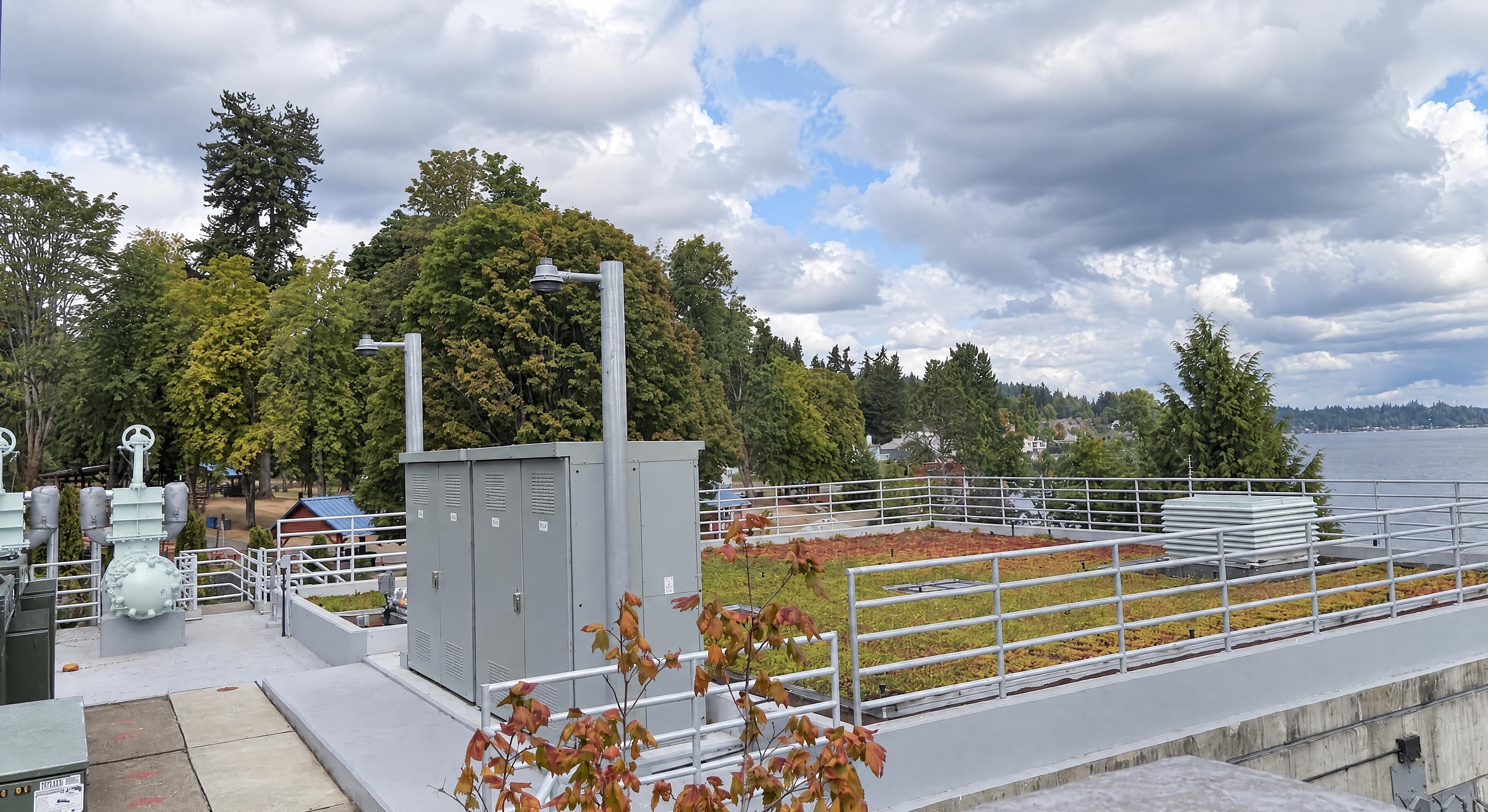
Knoxville, TN Solves Odor and Corrosion Problems in Long Sewer Force Main
ECO₂'s case study of Knoxville, Tennessee's Forks of the River force main, kept aerobic along its length with Superoxygenation to stop odor and corrosion.
Details
Summary
For years the Knoxville Utilities Board received odor complaints near one of its treatment plants and a daycare facility, caused by H₂S formed in the Forks of the River Force Main. The main carries just over 1 MGD for about 6.4 miles with a 24 hour retention time, so KUB installed two ECO₂ Superoxygenation systems, one at the start and one at the midpoint. Average H₂S fell from 158 ppm, with spikes over 1000 ppm, to less than 1 ppm.
Key Figures
158ppm
Average H₂S before the ECO₂ systems (untreated) Source: PDF page 2 (opens in a new tab)
1,000ppm
H₂S spikes before treatment (over) Source: PDF page 2 (opens in a new tab)
1ppm
Average H₂S after the ECO₂ systems (less than) Source: PDF page 2 (opens in a new tab)
Questions
What caused the odor complaints in Knoxville?
Hydrogen sulfide formed in the Forks of the River Force Main, which drew complaints for many years from the area around one of KUB's treatment plants and a nearby daycare facility. (PDF page 1) (opens in a new tab)
Why did KUB choose Superoxygenation?
After considering liquid phase and vapor phase options, KUB chose the ECO₂ system as a cost-effective, non-chemical way to prevent H₂S from forming, which would stop odors and corrosion and cut costs and maintenance. (PDF page 1) (opens in a new tab)
Why were two systems needed?
The 24 inch force main carries just over 1 MGD for about 6.4 miles with a 24 hour retention time, so one system at the start and one at the midpoint were needed to meet the oxygen demand along its full length. (PDF page 2) (opens in a new tab)
What were the results?
Average H₂S fell from 158 ppm, with spikes over 1000 ppm, to less than 1 ppm. (PDF page 2) (opens in a new tab)
The Project
Forks of the River Force Main
In Full
More Key Figures
Three more, each with what it measures and its PDF page.
From the PDF
| Figure | What It Measures |
|---|---|
| 6.4 miles | Length of the Forks of the River Force Main (approximately) (PDF page 2 (opens in a new tab)) |
| 24 hours | Hydraulic retention time in the force main (PDF page 2 (opens in a new tab)) |
| two systems | Superoxygenation systems, at the start and the midpoint of the force main (PDF page 2 (opens in a new tab)) |
Full Text as Published
The text as its authors wrote it.
Preventing Odors & Corrosion through SuperOxygenation
The Knoxville Utilities Board (KUB) provides energy and water utilities to over 67,000 people, with four wastewater treatment plants and 61 pump stations in the 248 square mile area covered.
For many years, the KUB had received numerous odor complaints each year from the area surrounding one of the WWTPs and a nearby daycare facility. The source of the odor was hydrogen sulfide (H2S) created in a long force main, called the Forks of the River Force Main.
In 2005 Knoxville initiated a project to stop odors and protect system infrastructure. KUB considered all available alternatives for controlling the H2S odor, including multiple liquid phase and vapor phase solutions.
The KUB also has a long history of making the environment a top priority. This led them to investigate and ultimately select the environmentally-friendly ECO₂ SuperOxygenation System for its cost-effective, non-chemical solution for preventing the formation of H2S in the force main. This solution would stop odors and corrosion, as well as save costs and reduce maintenance requirements.
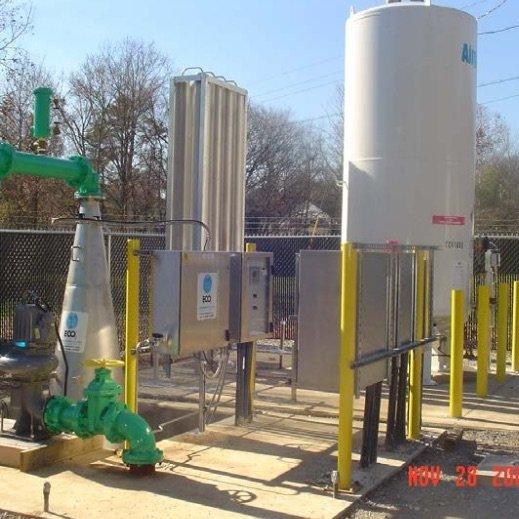
One of two installed ECO₂ systems at KUB. Equipment includes oxygen transfer reactor (Speece Cone), controls, sidestream pump, and liquid oxygen tank with evaporator.
Two Systems for a 6.4-Mile Force Main
The 24" diameter "Forks in the River Force Main" transports just over 1 MGD of wastewater approximately 6.4 miles, with a hydraulic retention time (HRT) of 24 hours before discharging at the WWTP. In this case, two SuperOxygenation systems were required to provide enough dissolved oxygen to satisfy the demand in the entire length of the force main – one at the beginning of the force main, and one at the midpoint.
Results
- H2S levels before ECO₂ system (untreated): Average = 158 ppm, spikes > 1000 ppm
- H2S levels after ECO₂ system: Average < 1 ppm
Chart: Forks of the River Force Main elevation profile, showing the day care facility and the WWTP along the length of the force main.
How to Cite
One line to paste into a report.
Knoxville, TN Solves Odor and Corrosion Problems in Long Sewer Force Main. ECO₂. Project engineer: BWSC. Eco Oxygen Technologies Technical Library. https://eco2tech.com/technical-library/knoxville-tn-solves-odor-and-corrosion-problems-in-long-sewer-force-main/
https://eco2tech.com/technical-library/knoxville-tn-solves-odor-and-corrosion-problems-in-long-sewer-force-main/
The Next Step
Ask an ECO₂ Engineer
Questions about this case study, or about your own water? An application engineer answers, with the figures.