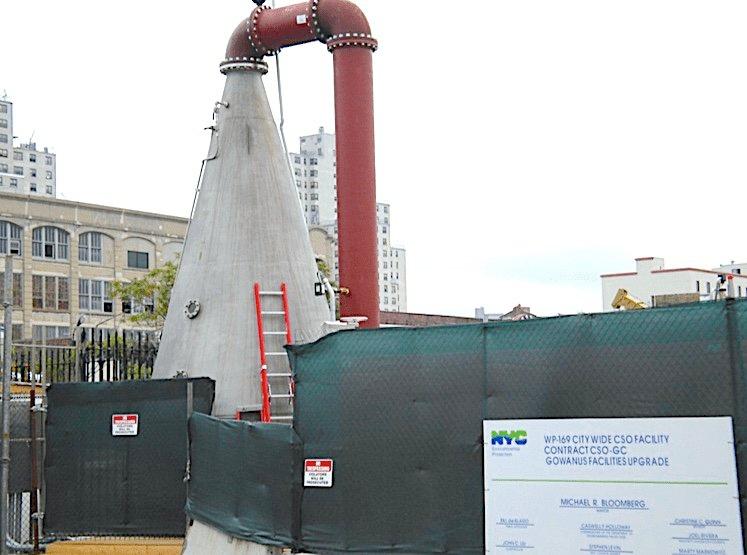
Gowanus Canal Remediation
See the Project
Oxygen for working waterways, added from the bank: how Speece Cones® dissolve it into harbors, tidal canals and city canals without work in the channel, and what each delivers.
01The Problem
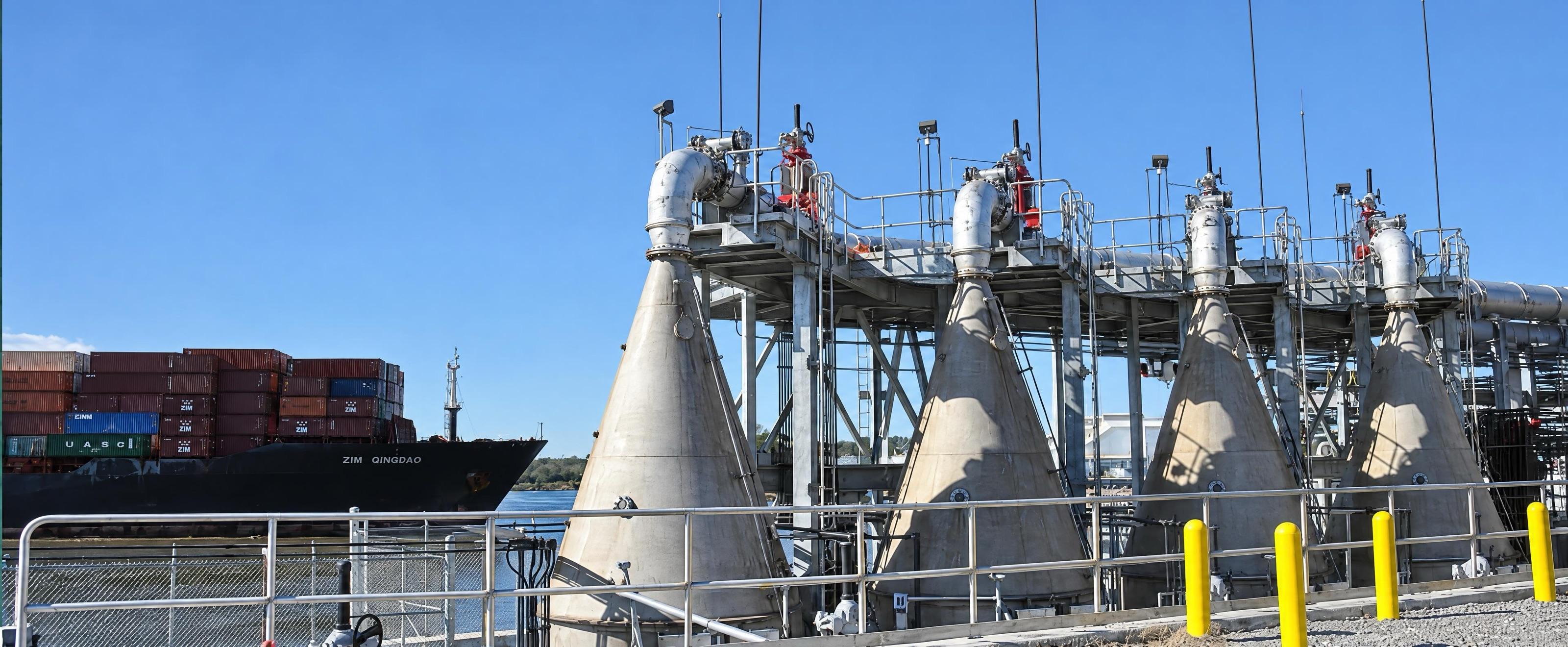
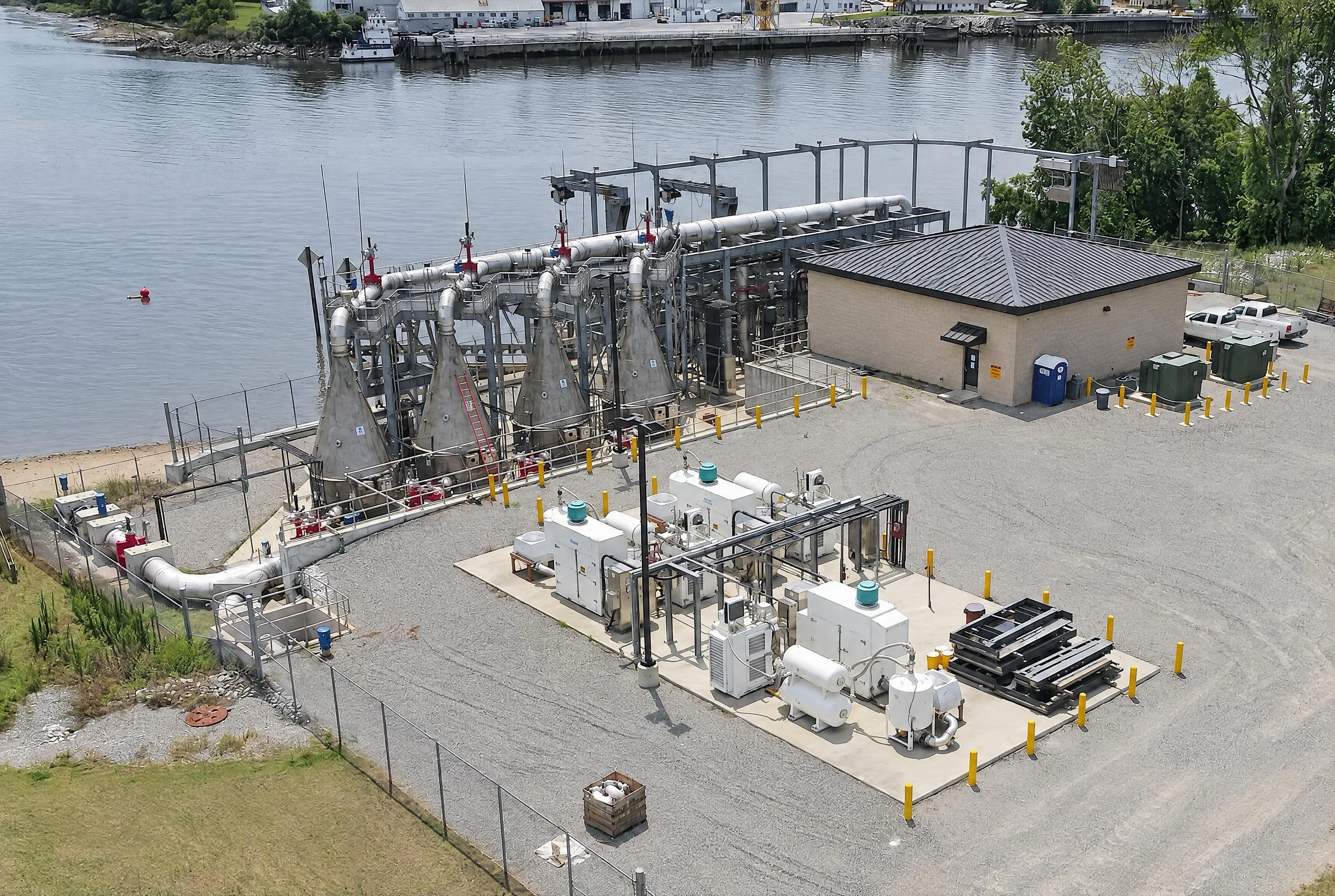
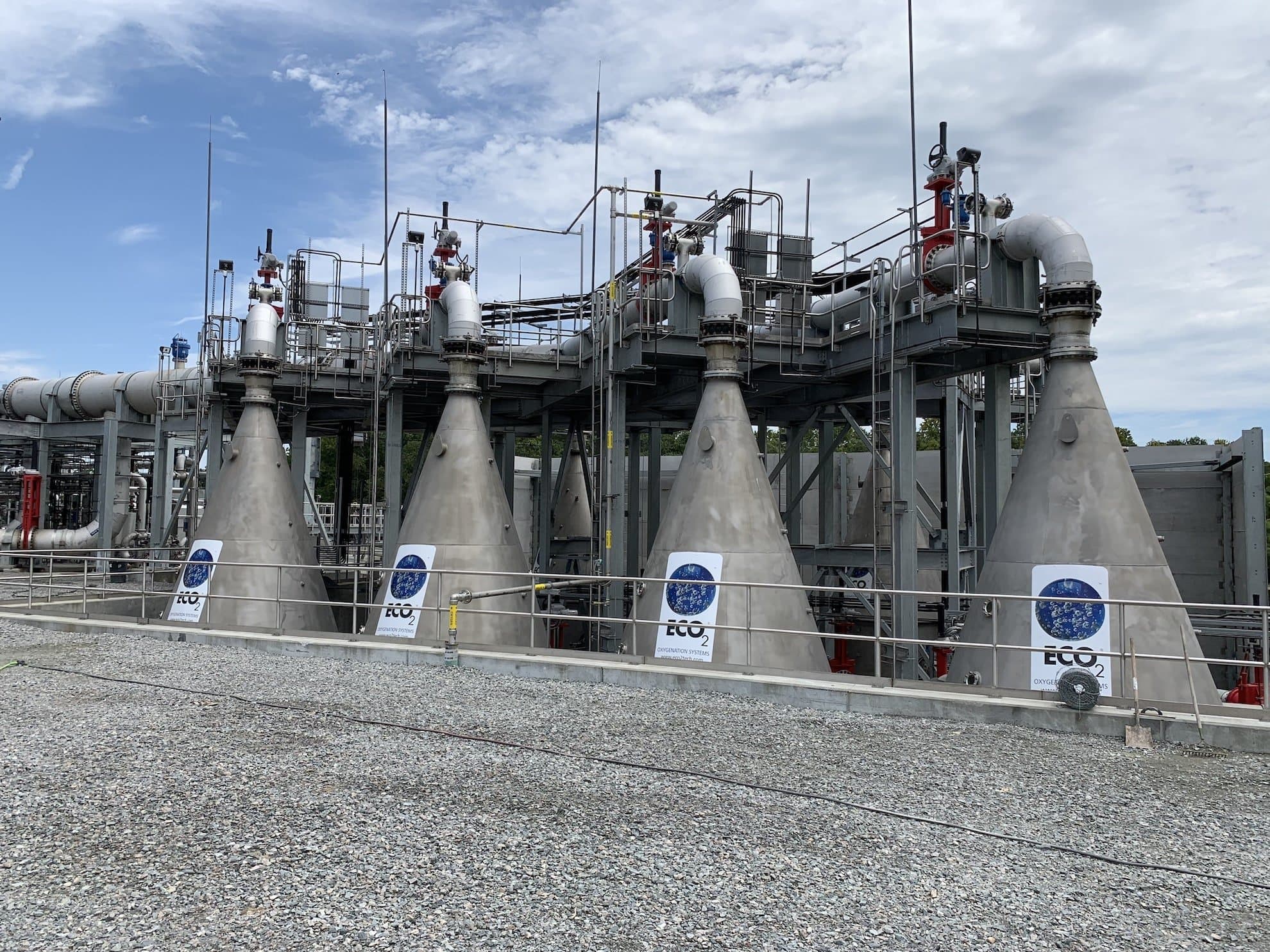
ECO₂ adds dissolved oxygen to rivers, harbors and canals from the bank. Pumps draw a side stream of water through Speece Cones, pure oxygen dissolves under pressure, and the water returns to the channel. On the Savannah River, 12 cones dissolve up to 40,000 lbs of oxygen a day, tested by the Corps of Engineers at 95% or better.
Why It Happens
Working waterways lose dissolved oxygen in ways a lake does not. Deepening Savannah Harbor from 42 to 47 ft lowered its dissolved oxygen, and the harbor must keep at least 5 mg/L. The Gowanus Canal in Brooklyn lost the flushing tunnel that freshened it for 26 months of construction.
City canals in Shanghai ran low on dissolved oxygen, with H₂S odor, ammonia, phosphorus and algae. In each case the answer was the same: add pure oxygen from the bank, without work in the channel or traffic held up.
Sources: O₂ to the Rescue, Civil Engineering; ECO₂, Gowanus Canal case study; ECO₂ project record, Shanghai canals
02How It Works
Three steps, the same on a harbor, a canal or a river.
The System in Detail
Sources: ECO₂, Savannah River case study; ECO₂, Gowanus Canal case study
03The Proof
Three working waterways, each with the system it needed and what was measured.
Every Result in One Table
ECO₂ oxygenation systems on a harbor, a tidal canal and city canalsECO₂ oxygenation systems on a harbor, a tidal canal and city canals
| Place | The water | The system | What it delivers |
|---|---|---|---|
| Savannah Harbor, GeorgiaU.S. Army Corps of Engineers 2019 testO₂ to the Rescue, Civil EngineeringECO₂, Savannah River case study | A harbor deepened from 42 to 47 ft that must keep at least 5 mg/L of dissolved oxygen | 12 Speece Cones at two sites, up to 40,000 lbs of oxygen a day into about 150 million gallons a day | 95% or better transfer over 60 days in the Corps of Engineers' test; 13,385 lbs a day delivered against a 12,000 criterion |
| Gowanus Canal, Brooklyn, New YorkECO₂, Gowanus Canal case study | 7,500 ft of tidal canal with its flushing tunnel shut for 26 months of construction | A Speece Cone system feeding oxygen through a 2,500 ft diffuser | 12 mg/L soon after commissioning, then 8 mg/L held, against a 4 mg/L design minimum |
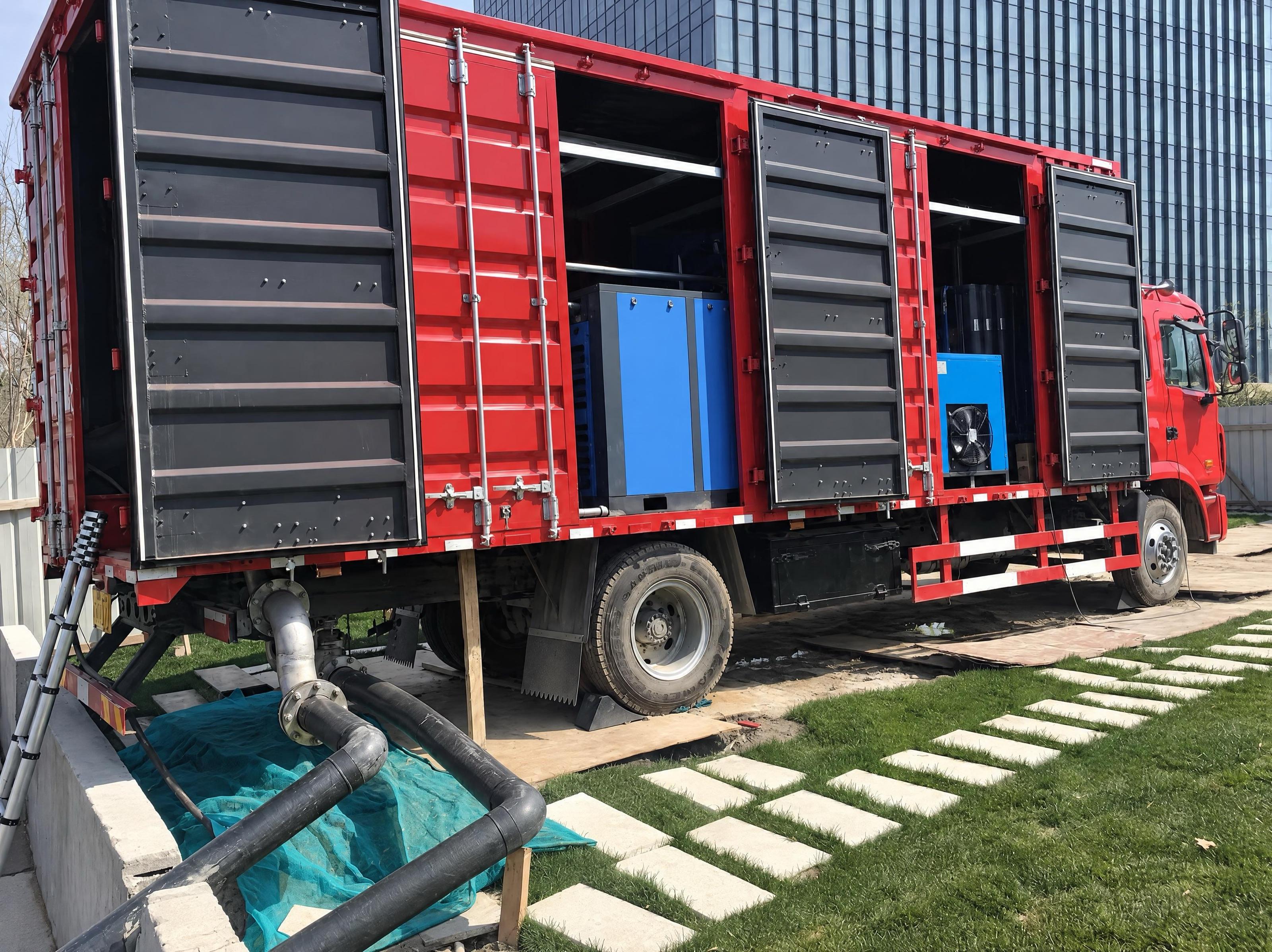
| Xi Si Tang and Zou Ma Tang canals, Shanghai, ChinaECO₂ project record, Shanghai canals | City canals with low dissolved oxygen, H₂S odor, ammonia, phosphorus and algae | Four containerized Speece Cones along the canal, plus a truck-mounted cone for other canals | Sized for 2,205 lbs of oxygen a day |
04For Engineers
Pumps draw a side stream of the water to Speece Cones on land, pure oxygen dissolves in the cones under pressure, and the oxygen-rich water returns to the channel. On the Savannah River, 12 cones dissolve up to 40,000 lbs of oxygen a day into about 150 million gallons a day of river water.
Deepening the harbor from 42 to 47 ft lowers its dissolved oxygen, and the harbor must keep at least 5 mg/L. After 25 alternatives were studied, ECO₂'s system was chosen: 12 Speece Cones at two sites that dissolve up to 40,000 lbs of oxygen a day without disturbing shipping traffic.
Yes. In a 60-day test from March 14 to May 12, across two complete lunar cycles, the U.S. Army Corps of Engineers measured 95% or better average transfer efficiency against an 80% criterion, with 13,385 lbs of oxygen a day delivered against a 12,000 criterion.
While New York City shut the canal's flushing tunnel for 26 months of construction, a Speece Cone system fed oxygen through a 2,500 ft diffuser. Commissioned in July 2010, it raised the canal to 12 mg/L soon after and held 8 mg/L, against a design minimum of 4 mg/L, for the whole project.
Yes. In Shanghai, four containerized Speece Cones oxygenate the Xi Si Tang canal, and a truck-mounted cone can be driven to treat other canals across the city.
Manganese, iron, taste and odor that start at the reservoir's bottom.
See How It Is Solved
Stop internal phosphorus loading and the blooms it feeds.
See How It Is Solved
Oxygen for water released through a dam, and for the cold-water fish above and below it.
See How It Is Solved05The Next Step
The waterway and its flows, the dissolved oxygen it must hold and where equipment could stand on the bank are enough for a first look at the system. ECO₂'s engineers check the data for a technical fit, then send a system design with its estimated capital and annual operating costs, and can visit your site to confirm the data.