Nitrifying Chemical Plant Wastewater in a Smaller Footprint
A treatment wetland built for a manufacturing facility's wastewater removes its ammonia with dissolved oxygen, in a smaller footprint: why it needs oxygen, and the project.
01The Problem
Removing Ammonia Takes Dissolved Oxygen
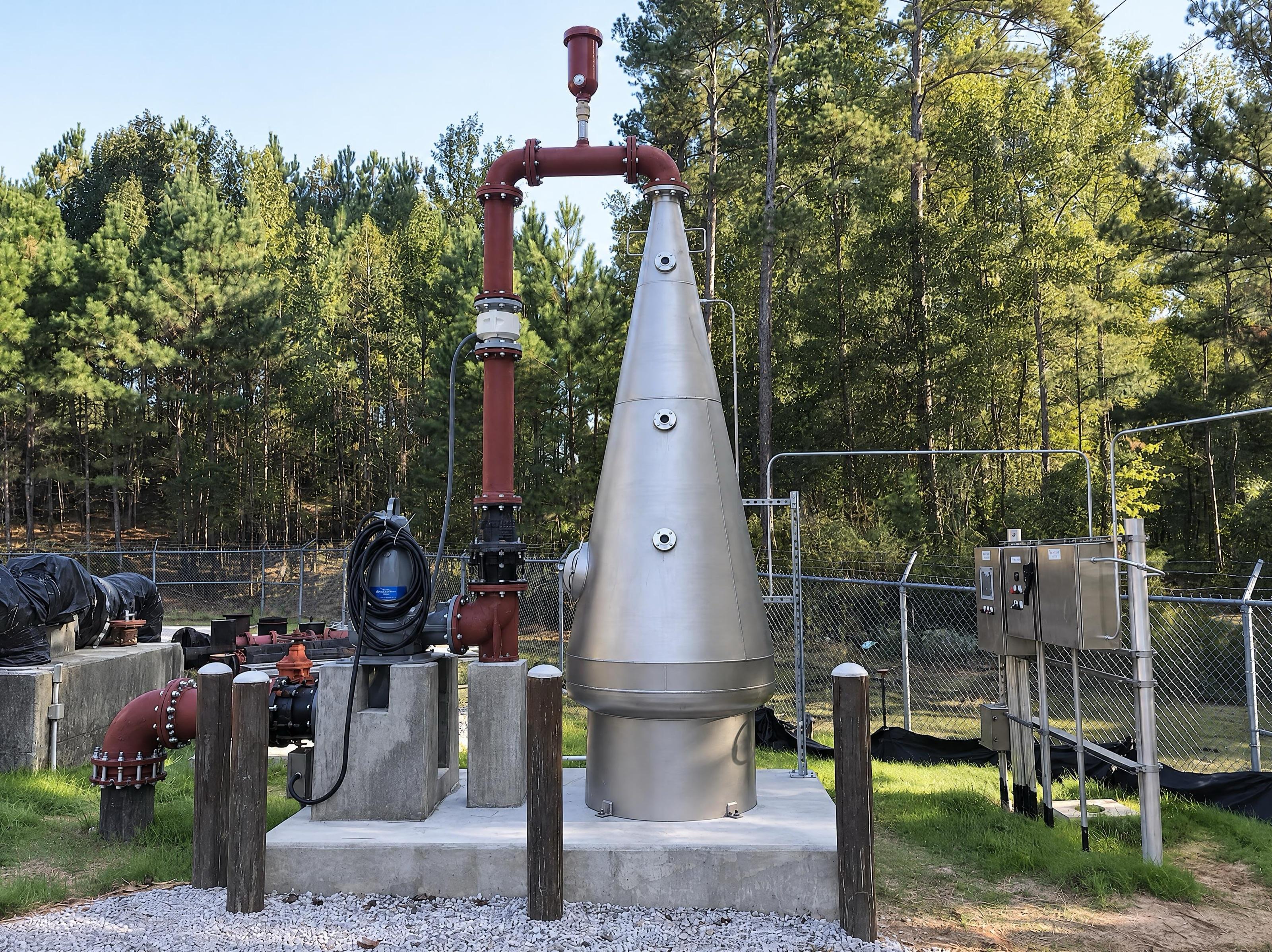
Ammonia in industrial wastewater is removed by nitrification, and nitrification needs dissolved oxygen. In Bay City, Michigan, a wetland that treats a large manufacturing facility's wastewater was designed with an ECO₂ Superoxygenation system for nitrification, installed in 2016. Superoxygenation allows a smaller total footprint than a traditional aerated wetland.
Why It Happens
Nitrification turns ammonia into nitrate. A surface flow wetland gets its oxygen only from the air, so it nitrifies slowly and has to be large to remove its ammonia.
Sources: ECO₂ Project Portfolio, p. 27; ECO₂ project record, Bay City, Michigan; Austin et al. 2019, p. 2
02How It Works
Superoxygenation Brings the Oxygen into the Wetland
The Bay City wetland was designed from the start with an ECO₂ Superoxygenation system.
The System in Detail
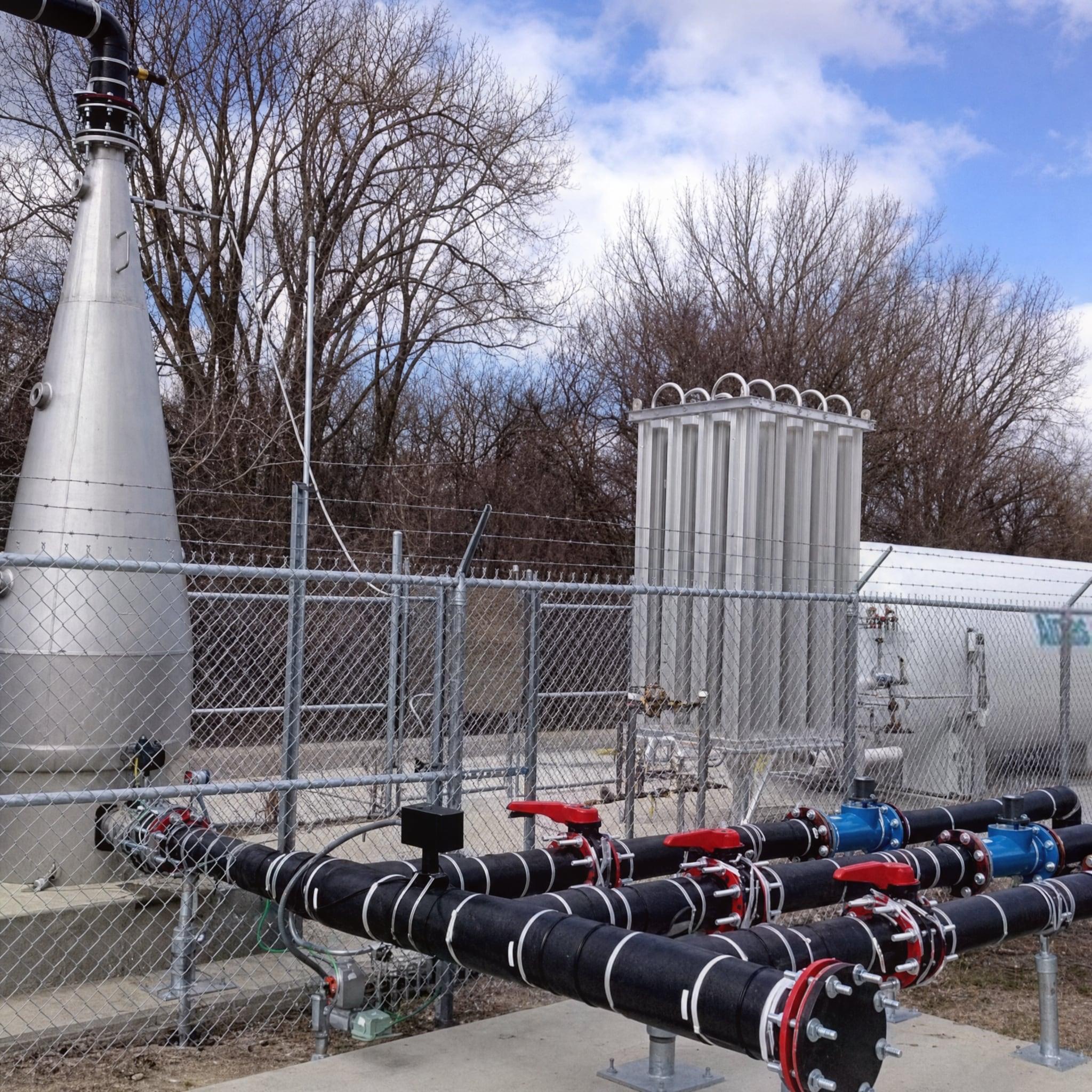
The system dissolves pure oxygen in a Speece Cone®, fed from a liquid oxygen tank, for ammonia removal through nitrification. Superoxygenation allows a smaller total footprint than a traditional aerated wetland, with large cost savings and a more efficient process.
In shallow lakes and wetlands, the cone still transfers 90 to 95% of its oxygen at 1 m depth. How oxygen speeds up nitrification in a treatment wetland, with measured results, is on the Treatment Wetlands page.
Sources: ECO₂ project record, Bay City, Michigan; ECO₂ Project Portfolio, p. 27; ECO₂ Lakes and Rivers brochure, p. 2
03The Proof
On Record: The Industrial Wetland in Bay City
The installation as ECO₂'s project record and project portfolio give it.
Every Result in One Table
The industrial wastewater wetland in Bay City, Michigan, from ECO₂'s project record
The industrial wastewater wetland in Bay City, Michigan, from ECO₂'s project record
| Item | On record |
|---|---|
| WhereECO₂ project record, Bay City, Michigan | Bay City, Michigan |
| What it treatsECO₂ project record, Bay City, Michigan | Industrial wastewater from a large manufacturing facility |
| The processECO₂ Project Portfolio, p. 27 | A constructed wetland, designed with the ECO₂ system for ammonia removal through nitrification |
| FootprintECO₂ project record, Bay City, Michigan | Smaller in total than a traditional aerated wetland |
| Oxygen supplyECO₂ project record, Bay City, Michigan | Liquid oxygen (LOX) tank |
| InstalledECO₂ project record, Bay City, Michigan | 2016 |
Where ECO₂ Systems Work on This Problem
04For Engineers
Read the Papers
Questions Plant Engineers & Operators Ask
Why does a treatment wetland need oxygen to remove ammonia?
Ammonia comes out by nitrification, which needs dissolved oxygen, and a surface flow wetland gets its oxygen only from the air, so it nitrifies slowly and must be large. In Bay City, Michigan, a wetland that treats a large manufacturing facility's wastewater was designed with an ECO₂ system for nitrification.
Does Superoxygenation make a treatment wetland smaller?
ECO₂'s project record for the Bay City wetland says Superoxygenation allows a smaller total footprint than a traditional aerated wetland. In shallow lakes and wetlands, the cone still transfers 90 to 95% of its oxygen at 1 m depth.
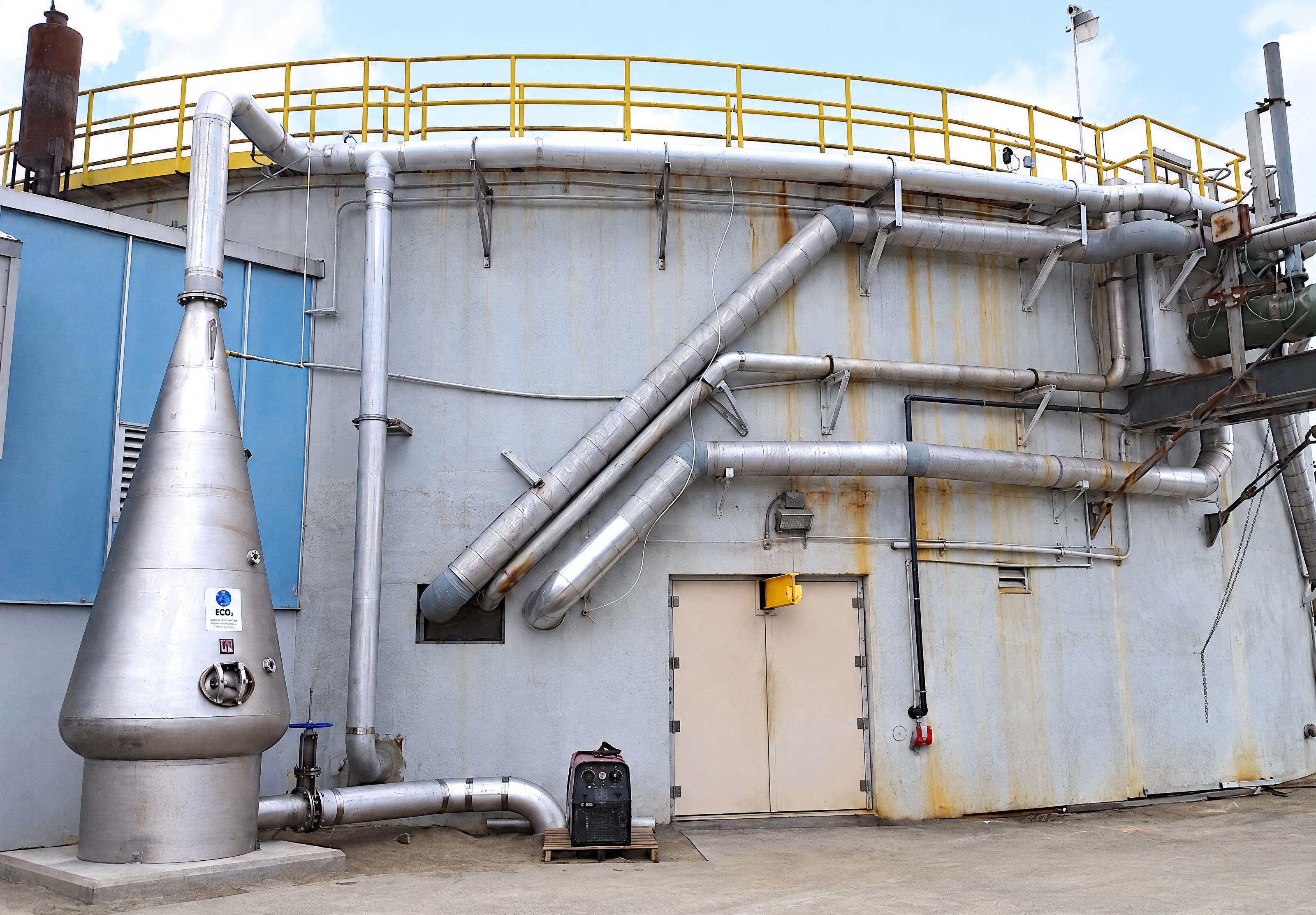
Primary clarifier, Anson-Madison Sanitary District, Madison, Maine.
Other Wastewater Treatment Problems
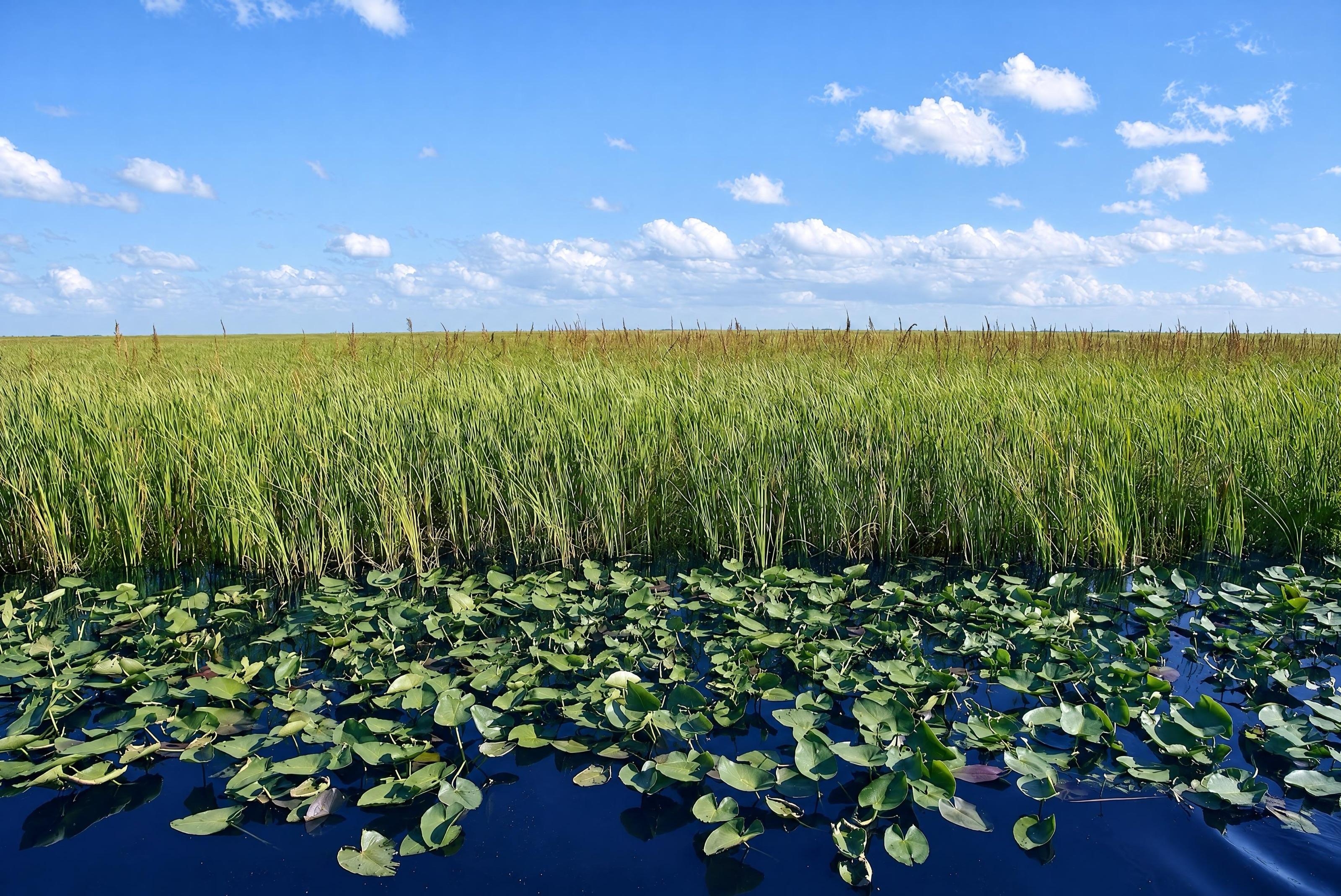
Treatment Wetlands
Oxygen dissolved into the water lets a wetland nitrify in a smaller footprint.
See How It Is Solved
Industrial
Oilfield produced water high in sulfide is treated with oxygen so it can be discharged.
See How It Is Solved
Advanced Reuse
Advanced treatment for reuse gets its oxygen with no pressure break and no bubbles.
See How It Is Solved
05The Next Step
Tell Us About Your Plant's Wastewater
Its flows, the ammonia it must remove and how it is treated today are enough for a first look. ECO₂'s engineers check the data for a technical fit, then send a system design with its estimated capital and annual operating costs, and can visit your site to confirm the data.