Effluent Discharge D.O. That Meets Your Permit, Even in Summer
Raise effluent DO to the permit limit, or offset the BOD a plant still discharges: post aeration in a small footprint, net-zero ultimate oxygen demand permits and the results.
01The Problem
Permits Set a Floor for Dissolved Oxygen
An effluent dissolved oxygen limit sets the least oxygen a plant's discharge may carry, to protect the water that receives it. ECO₂ dissolves pure oxygen into the effluent before the outfall. At Kennebunk, Maine, where hot summers had been hardest, effluent averaged 9.2 mg/L of dissolved oxygen from June to mid October against an 8.0 mg/L standard.
Why It Happens
Under Section 303(d) of the Clean Water Act, a water body that fails its standards goes on the state's list of impaired waters and gets a TMDL. Plants that discharge to it face tighter limits on their effluent dissolved oxygen and BOD. Kennebunk, Maine's 2006 permit renewal said its discharge must not lower the quality of the Mousam River estuary, which is impaired for dissolved oxygen.
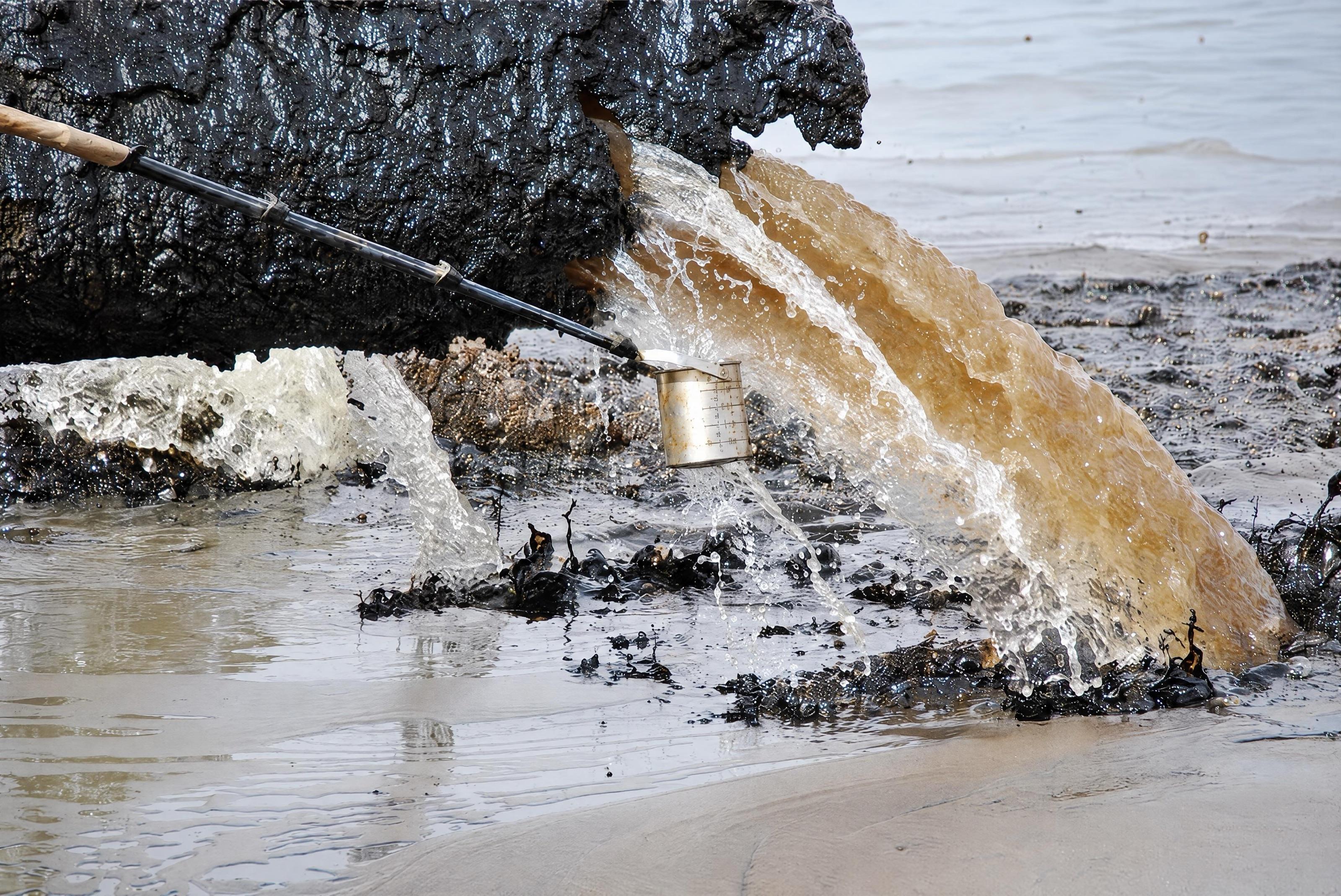
Treatment never removes all of the BOD. An effluent may still carry 30 to 40 mg/L of ultimate BOD, and the receiving water pays for it with its own oxygen.
Sources: ECO₂, Fort Valley case study, p. 2; ECO₂, Kennebunk case study, p. 1; Speece and Clidence 2024, p. 7
8.0mg/L
Kennebunk's effluent dissolved oxygen standard is 8.0 mg/L, as a 5-day average. Source: ECO₂, Kennebunk case study, p. 2
6.0mg/L
The NPDES permit for a new plant at Travis Field in Savannah, Georgia requires 6.0 mg/L of dissolved oxygen in its effluent.
02How It Works
A Side Stream & a Cone Lift Effluent DO in a Small Footprint
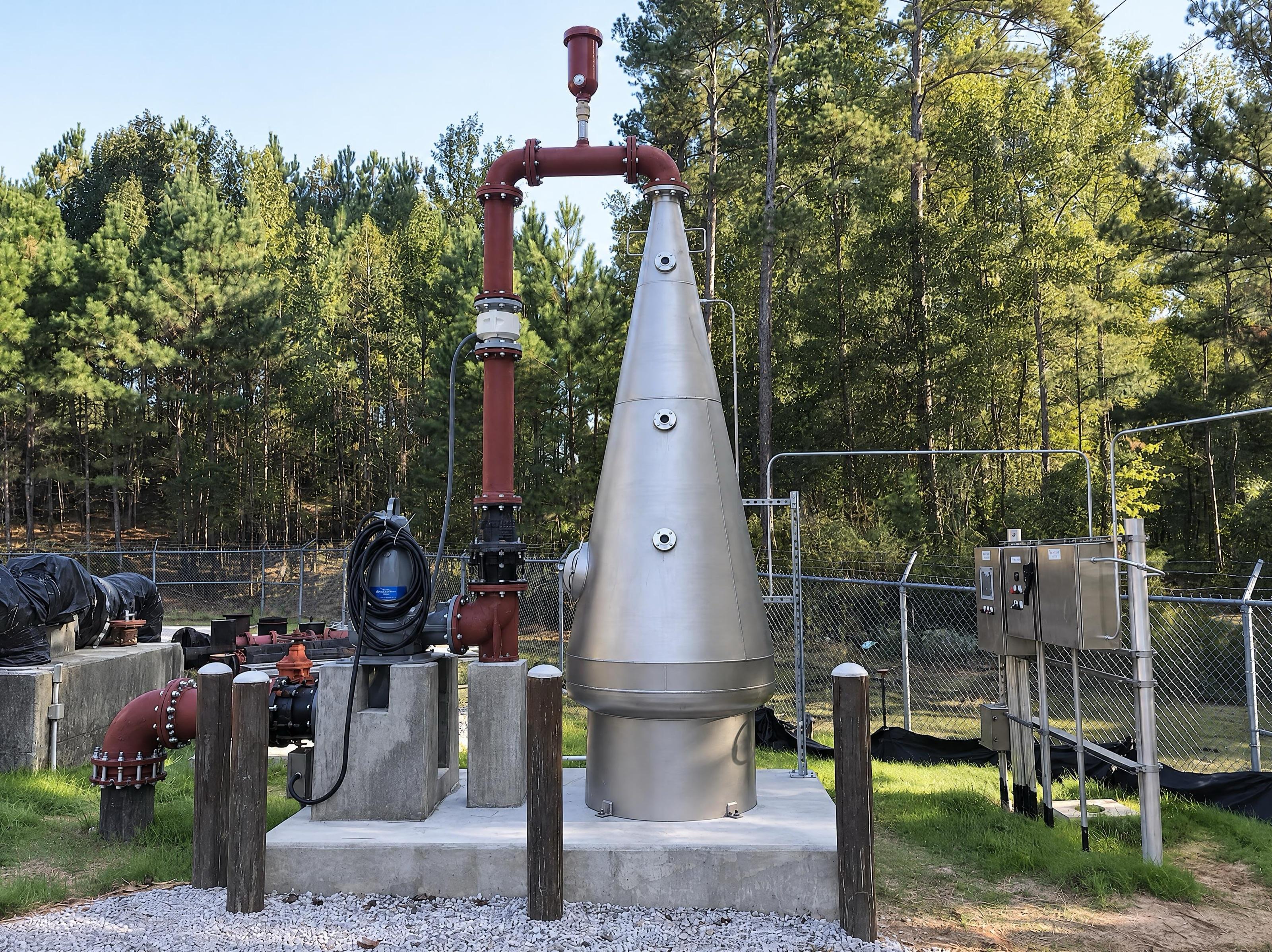
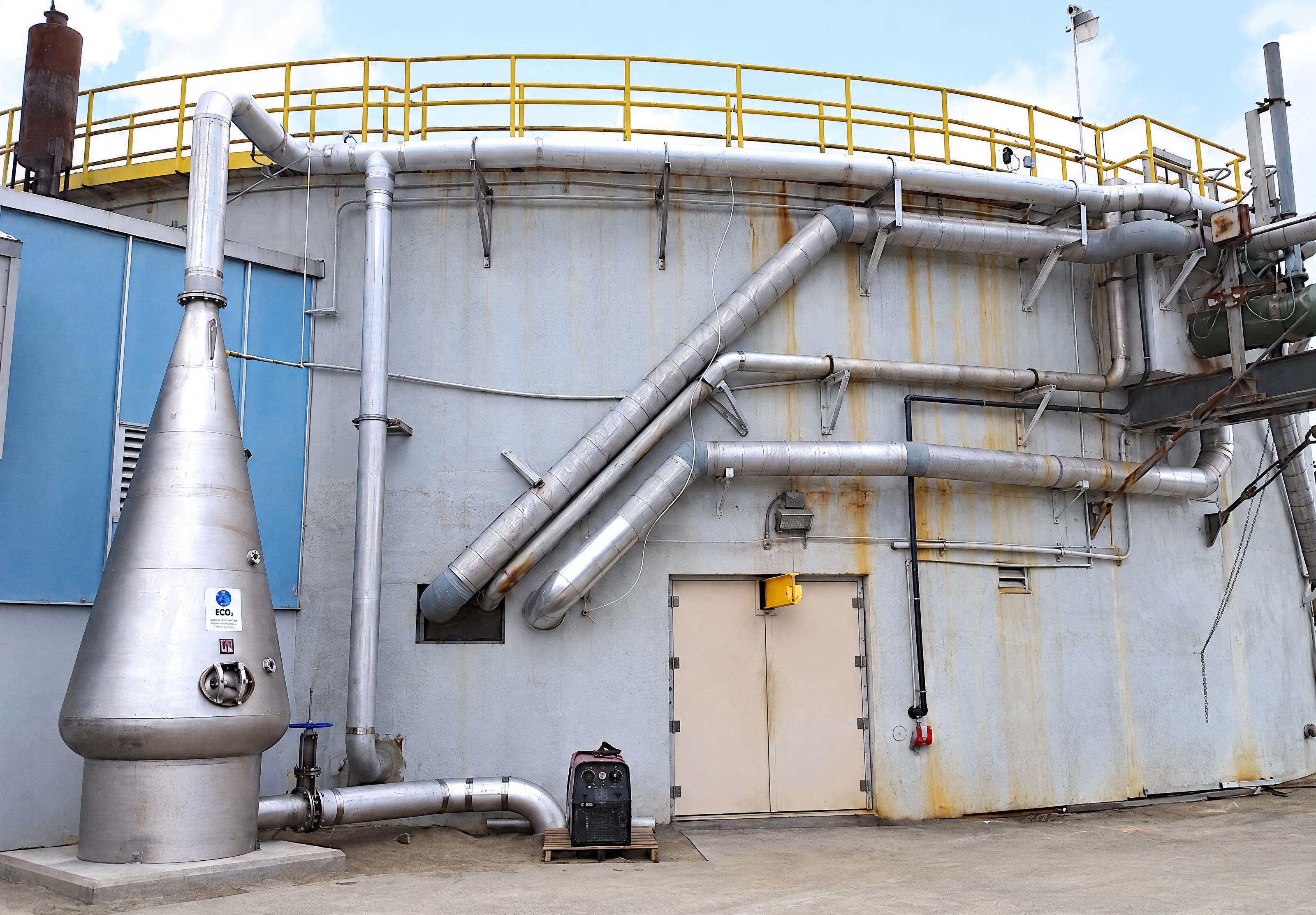
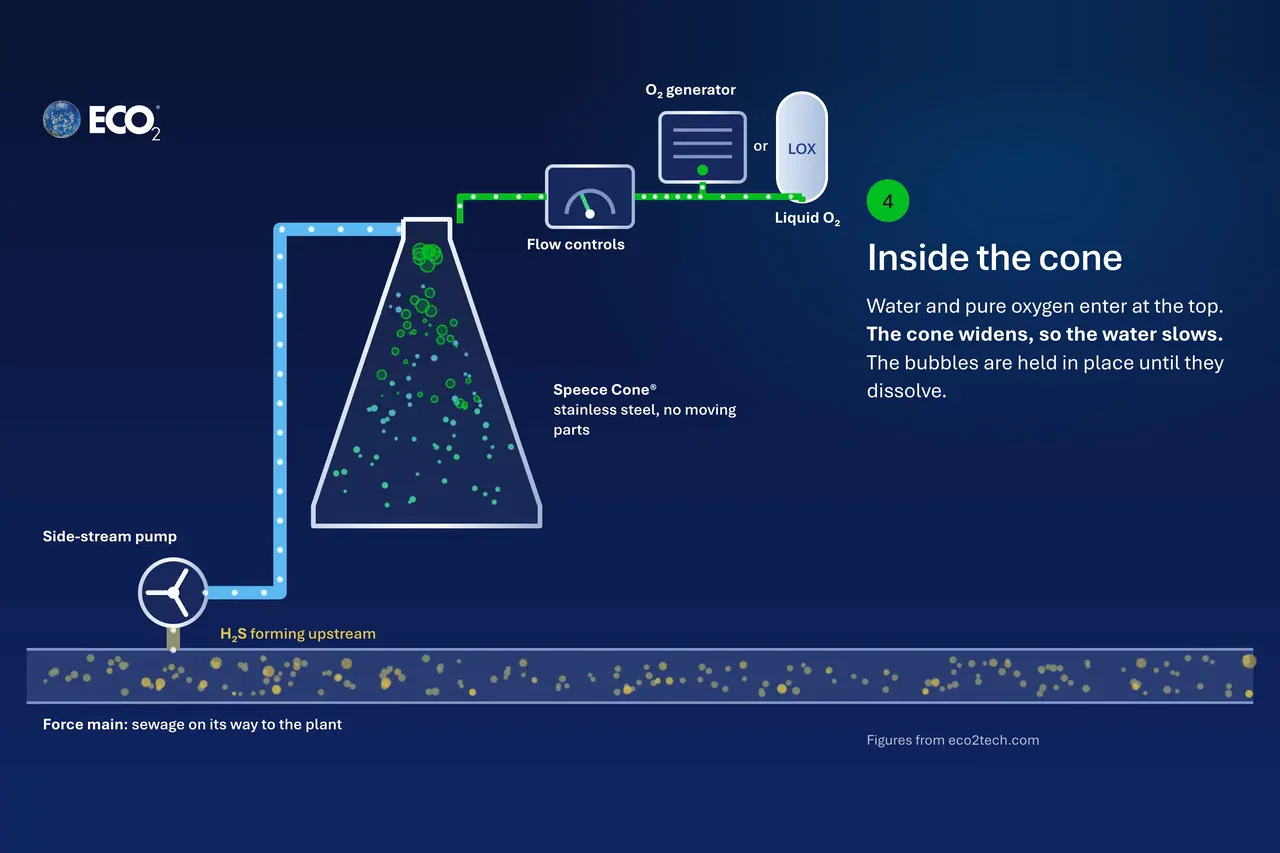
Pump part of the effluent through a Speece Cone®, dissolve pure oxygen into it, and blend it back before the outfall.
The System in Detail
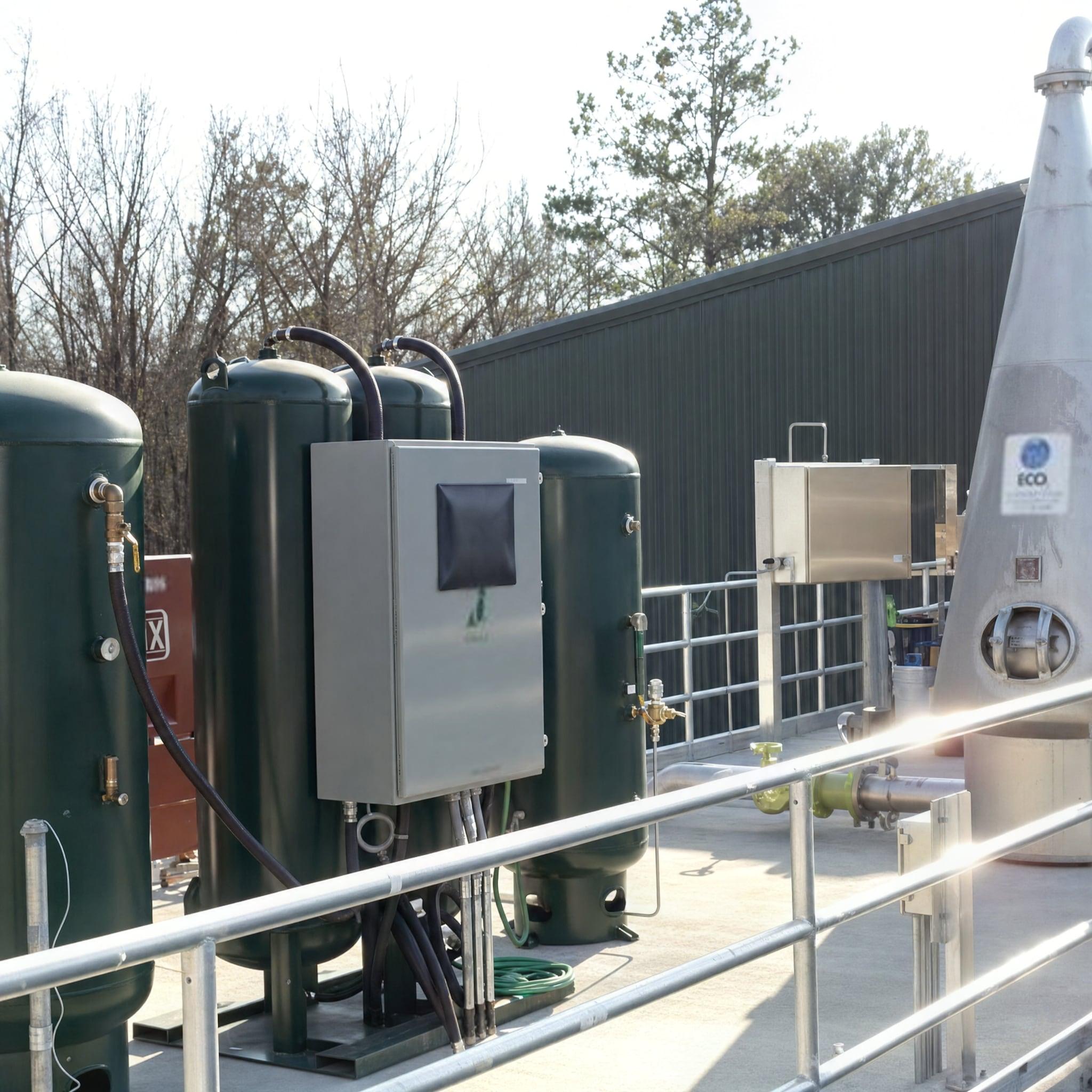
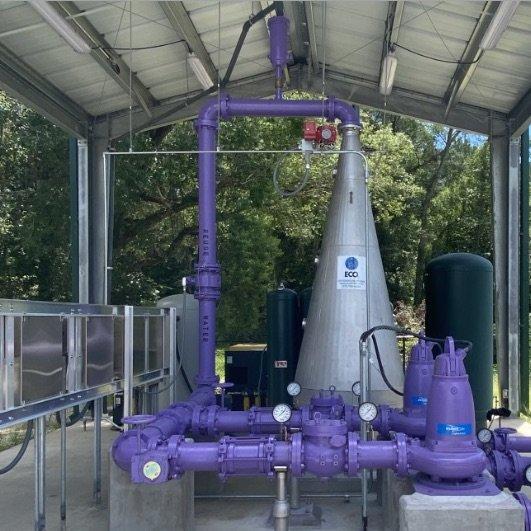
At Kennebunk, the system draws a side stream from the discharge of the chlorine contact tanks, at about 5 mg/L of dissolved oxygen, and raises it above 8 mg/L. Depending on plant flow, the oxygenated effluent runs from 8 to 25 mg/L, and it blends with the main flow before it reaches the Mousam River.
Small footprints decide many of these projects. The Travis Field plant had little room for large basins, so a cone raises the dissolved oxygen in its pumped effluent force main.
Sources: ECO₂, Kennebunk case study, p. 2; ECO₂ project record, Savannah, Georgia
Kennebunk's System, by the Numbers
The effluent oxygenation system and the dissolved oxygen it held, from the published case study.
Kennebunk, Maine: the effluent oxygenation system and its results
| Item | Value |
|---|---|
| Plant flowECO₂, Kennebunk case study, p. 2 | 1.0 MGD average, 5.0 MGD maximum |
| Cone diameterECO₂, Kennebunk case study, p. 2 | 3 ft |
| Side stream flowECO₂, Kennebunk case study, p. 2 | 700 gpm |
| Most oxygen fedECO₂, Kennebunk case study, p. 2 | 230 lbs a day |
| Oxygen transfer efficiency, testedECO₂, Kennebunk case study, p. 2 | 94% to 97% |
| Effluent dissolved oxygen, June 1 to October 15, 2007ECO₂, Kennebunk case study, p. 2 | 9.2 mg/L average, against an 8.0 mg/L standard |
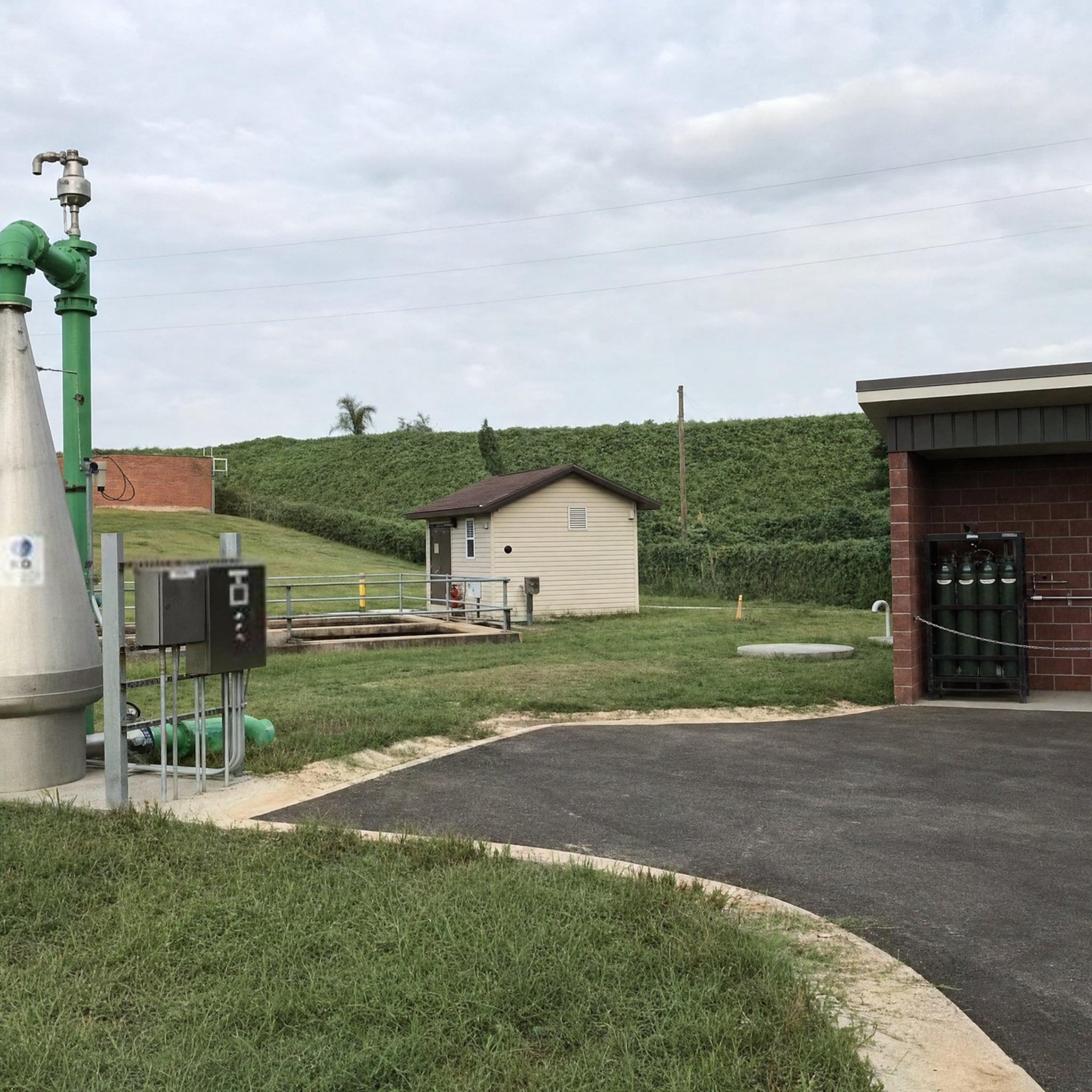
The oxygen can come from cylinders, an onsite generator or a liquid oxygen tank. Fort Valley, Georgia runs on a 12-pack of oxygen cylinders; Port Wentworth, Georgia makes its own with a PSA oxygen generator.
Sources: ECO₂, Fort Valley case study, p. 1; ECO₂, Port Wentworth case study, p. 1
03The Proof
Offset the BOD Instead of Removing It
Add as much dissolved oxygen as the effluent's BOD and ammonia will use, and the river spends none of its own.
Every Result in One Table
Two Georgia plants that offset BOD with dissolved oxygen
Two Georgia plants that offset BOD with dissolved oxygen
| Plant | The permit | The alternative | With oxygen |
|---|---|---|---|
| Fort Valley, GeorgiaECO₂, Fort Valley case study, p. 1; ECO₂, Fort Valley case study, p. 2 | Add up to 316 lbs of oxygen a day to the effluent, offsetting 10 mg/L of BOD and ammonia | About $2 million more for tertiary treatment or reverse osmosis to take BOD below 10 mg/L | Permit met; the oxygen system cost less than 20% of the tertiary treatment equipment |
| Port Wentworth, GeorgiaECO₂, Port Wentworth case study, p. 1; ECO₂, Port Wentworth case study, p. 2 | 5 mg/L of BOD and 1 mg/L of ammonia allowed if offset with dissolved oxygen | About $2 million more for tertiary treatment to take BOD below 5 mg/L | Permit granted and a new plant built; the oxygen system cost less than 20% of the tertiary treatment equipment |
How It Compares with Cascade, Diffused Air & Mechanical Post Aeration
Post aeration with air works where the target is low and the site has room. In the field, coarse bubble and mechanical aerators transfer 1 to 2 lbs of oxygen per kWh, absorb only 5 to 10% of the oxygen they move, and become uneconomic above 2 to 4 mg/L. Cascade aeration needs a drop in elevation the site may not have, and basins need space. Kennebunk weighed several aeration and oxygenation technologies on capital and operating cost before choosing oxygen to reach saturation or above.
Sources: ECO₂, aeration bulletin, p. 1; ECO₂, Kennebunk case study, p. 1
04For Engineers
Read the Papers
Questions Plant Engineers & Operators Ask
How can I raise effluent dissolved oxygen to meet a permit limit?
Dissolve pure oxygen into a side stream of the effluent and blend it back before the outfall. At Kennebunk, Maine, a 3 ft cone on a 700 gpm side stream lifts effluent from about 5 mg/L to 8 to 25 mg/L, and the effluent averaged 9.2 mg/L through the summer against an 8.0 mg/L standard.
What is a net-zero ultimate oxygen demand discharge, and how do plants achieve it?
A permit that lets a plant discharge some BOD and ammonia if it adds enough dissolved oxygen to cover them, so the receiving water spends none of its own. Fort Valley, Georgia offsets 10 mg/L of BOD and ammonia this way; Port Wentworth, Georgia was allowed 5 mg/L of BOD and 1 mg/L of ammonia.
What are the alternatives to post aeration for meeting effluent DO limits?
Tertiary treatment to remove more BOD, or aeration with air. Fort Valley and Port Wentworth, Georgia were each looking at about $2 million more for tertiary treatment; their oxygen systems cost less than 20% of the tertiary equipment. Aeration becomes uneconomic above 2 to 4 mg/L of dissolved oxygen.
Will the extra oxygen bubble out before the outfall?
Not when it is fully dissolved and blended back. Below about 60 mg/L, dissolved oxygen can stay in solution for hours at atmospheric pressure. At Kennebunk the oxygenated side stream, at 8 to 25 mg/L, blends with the main flow before it reaches the river.
Other Wastewater Treatment Problems
Treatment Wetlands
Oxygen dissolved into the water lets a wetland nitrify in a smaller footprint.
See How It Is Solved
Supplemental D.O.
Oxygen dissolved outside the tank adds capacity when aeration reaches its limit.
See How It Is Solved
Groundwater Remediation
Dissolved oxygen feeds the bacteria that break a groundwater contaminant down.
See How It Is Solved
05The Next Step
Send Us Your Permit & Your Flows
Your dissolved oxygen limit, today's effluent DO and your flows are enough for a budgetary price. The Post Aeration Design Data Checklist helps. ECO₂'s engineers check the data for a technical fit, then send a system design with its estimated capital and annual operating costs, and can visit your site to confirm the data.