Groundwater Remediation with Dissolved Oxygen
Dissolved oxygen feeds the aerobic bacteria that break a groundwater contaminant down: how ECO₂ adds it ahead of biological activated carbon at an aquifer restoration site.
01The Problem
Aerobic Bacteria Need Oxygen to Break a Contaminant Down
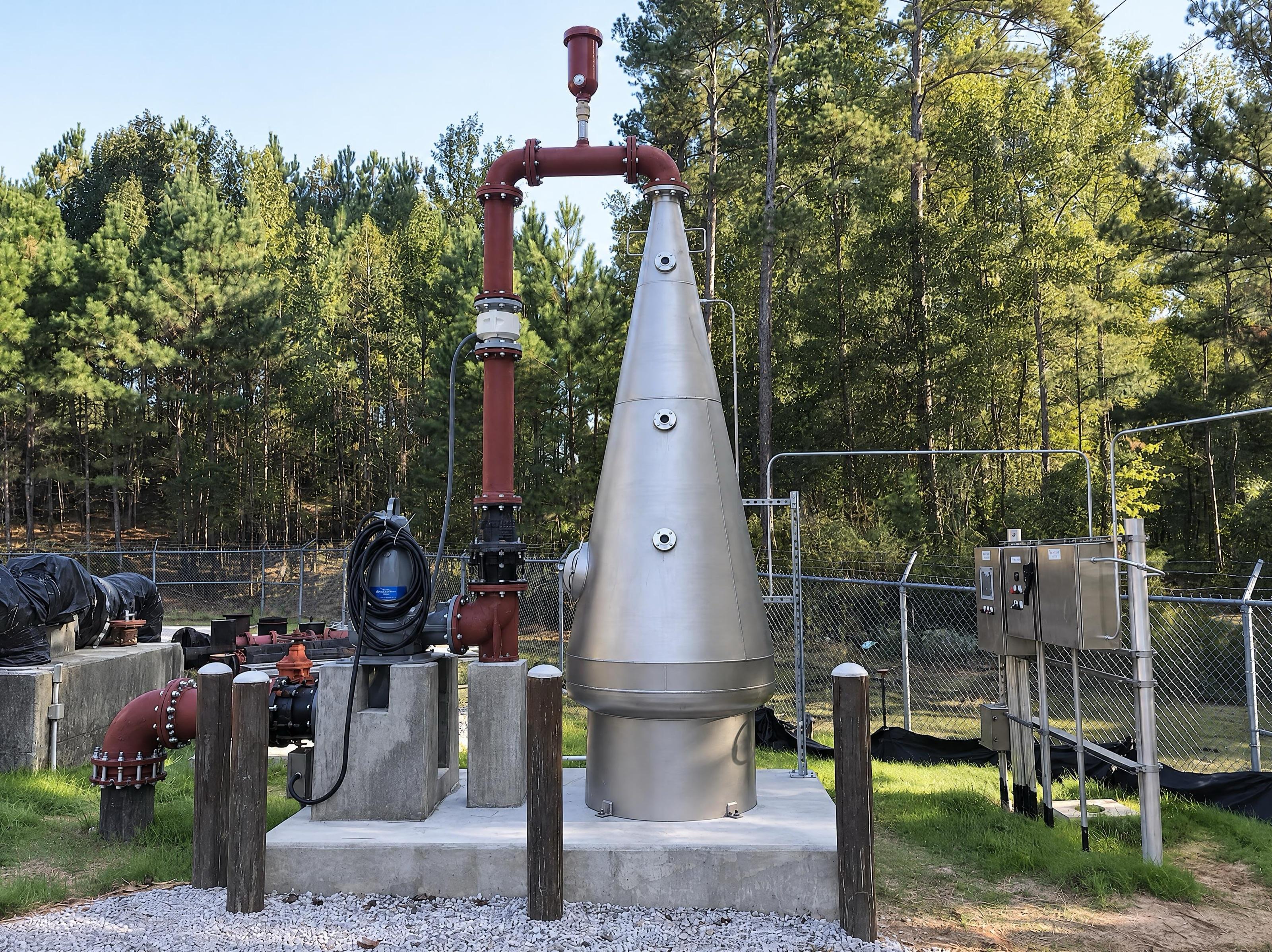
Some groundwater contaminants are broken down by aerobic bacteria, and aerobic bacteria need dissolved oxygen. At an aquifer restoration site in Lathrop, California, an ECO₂ system adds dissolved oxygen upstream of a biological activated carbon process, up to 250 lbs of oxygen a day, so the bacteria can degrade the contaminant sulfolane.
Why It Happens
A groundwater remediation facility in the San Joaquin Valley was built to remove contaminants left by a previous industrial process, to restore the aquifer. Its biological activated carbon process relies on aerobic bacteria to degrade the contaminant sulfolane, and those bacteria need dissolved oxygen.
02How It Works
Oxygen Dissolved Upstream of the Carbon
The ECO₂ system adds dissolved oxygen to the water before it reaches the biological activated carbon.
The System in Detail
At the Lathrop site, the ECO₂ system adds dissolved oxygen upstream of the biological activated carbon process to support the aerobic bacteria that degrade sulfolane. It can dissolve up to 250 lbs of oxygen a day, supplied from a liquid oxygen tank.
03The Proof
On Record: The Aquifer Restoration Site in Lathrop
The installation as ECO₂'s project record gives it.
Every Result in One Table
The aquifer restoration site in Lathrop, California, from ECO₂'s project record
The aquifer restoration site in Lathrop, California, from ECO₂'s project record
| Item | On record |
|---|---|
| WhereECO₂ project record, Lathrop, California | A groundwater remediation facility in the San Joaquin Valley, Lathrop, California |
| ContaminantECO₂ project record, Lathrop, California | Sulfolane, from a previous industrial process |
| Where the oxygen goesECO₂ project record, Lathrop, California | Upstream of a biological activated carbon process |
| Oxygen capacityECO₂ project record, Lathrop, California | Up to 250 lbs a day |
| Oxygen supplyECO₂ project record, Lathrop, California | Liquid oxygen (LOX) tank |
| InstalledECO₂ project record, Lathrop, California | 2012 |
Where ECO₂ Systems Work on This Problem
04For Engineers
Read the Papers
Questions Plant Engineers & Operators Ask
How does dissolved oxygen help clean up groundwater?
Some contaminants are broken down by aerobic bacteria, which need dissolved oxygen. At an aquifer restoration site in Lathrop, California, an ECO₂ system adds dissolved oxygen upstream of a biological activated carbon process so the bacteria can degrade sulfolane.
Where does the oxygen come from?
At the Lathrop site, from a liquid oxygen (LOX) tank. The system can dissolve up to 250 lbs of oxygen a day.
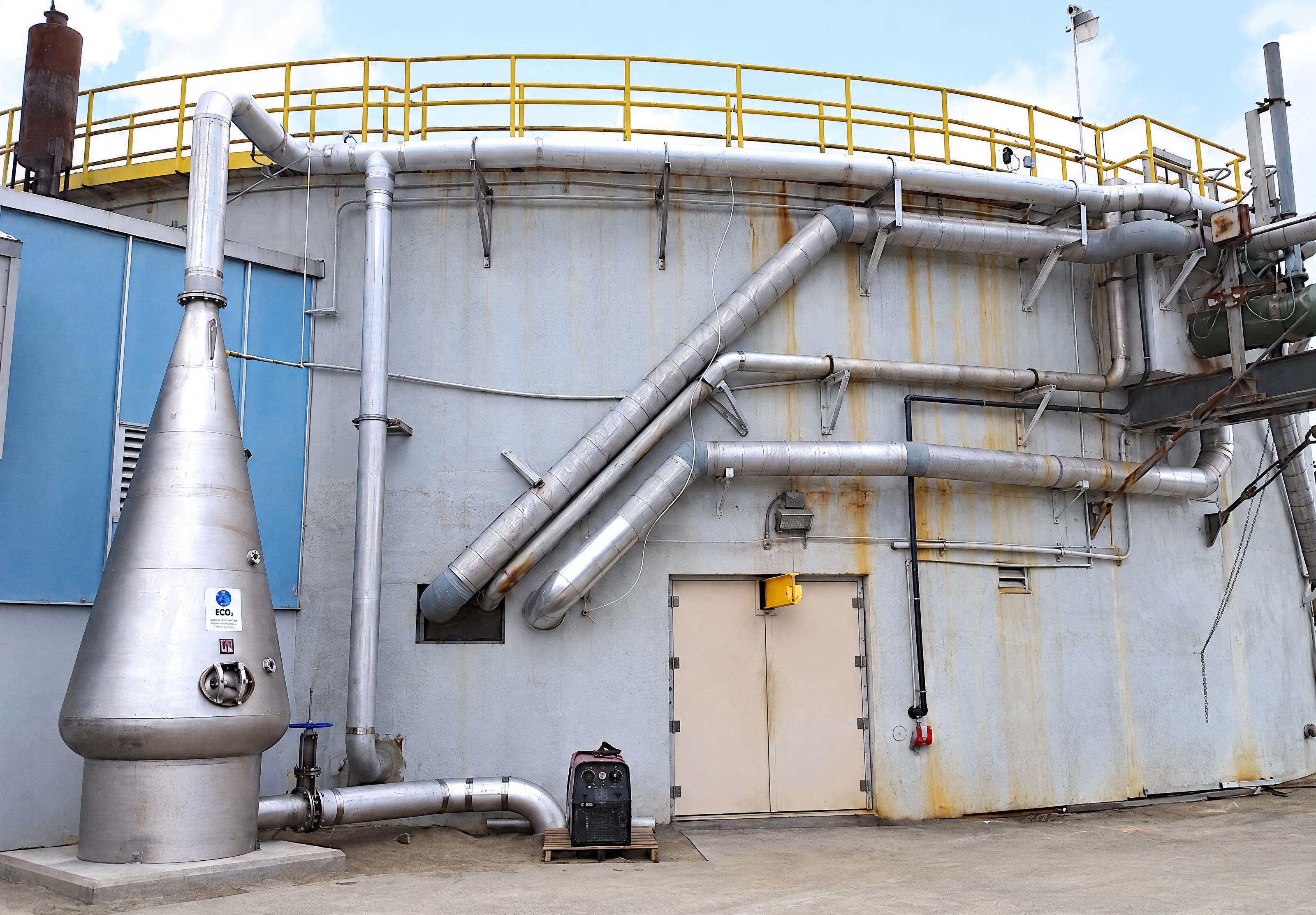
Primary clarifier, Anson-Madison Sanitary District, Madison, Maine.
Other Wastewater Treatment Problems
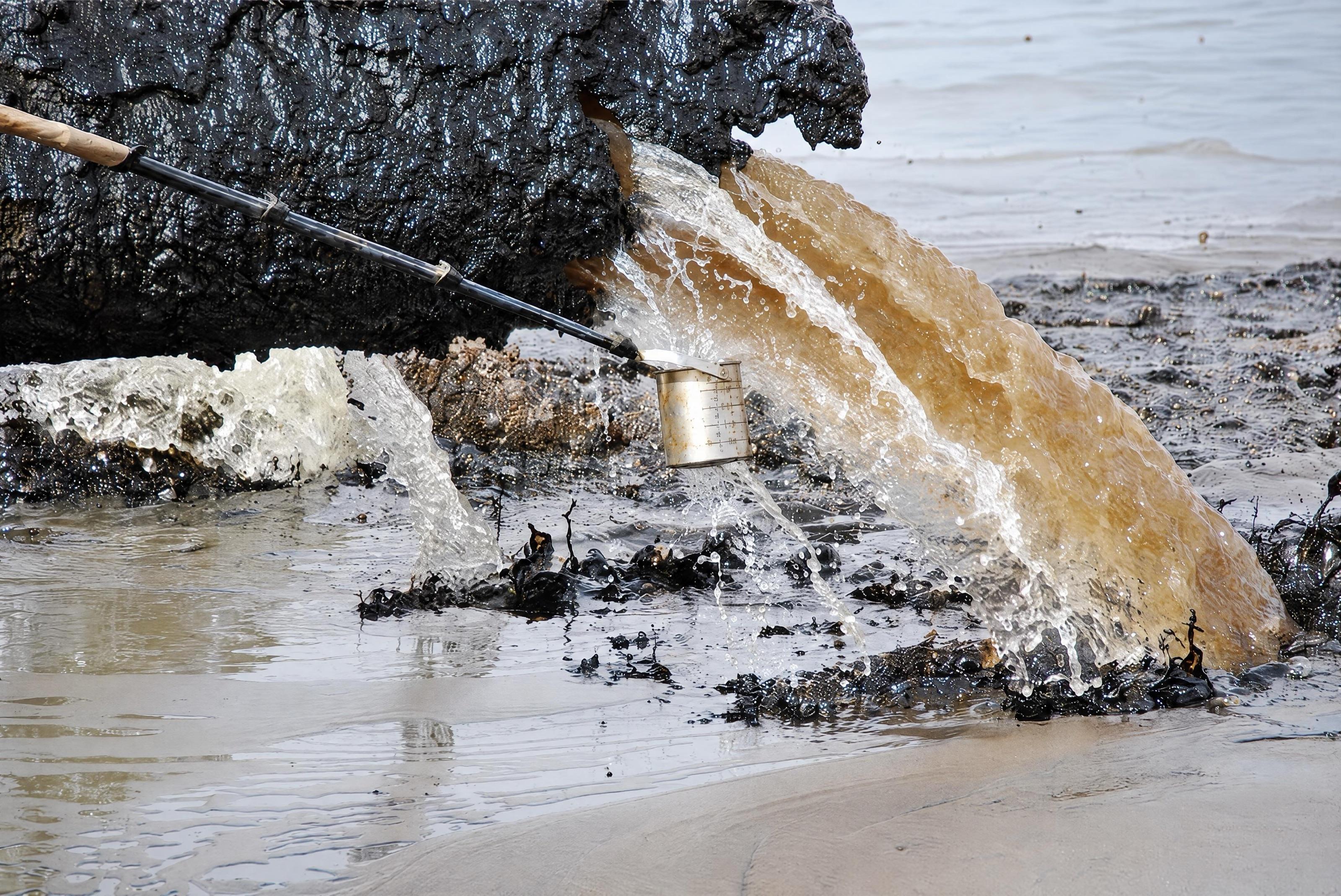
Effluent Discharge D.O.
Raise effluent DO to the permit limit, or offset the BOD a plant still discharges.
See How It Is Solved
Treatment Wetlands
Oxygen dissolved into the water lets a wetland nitrify in a smaller footprint.
See How It Is Solved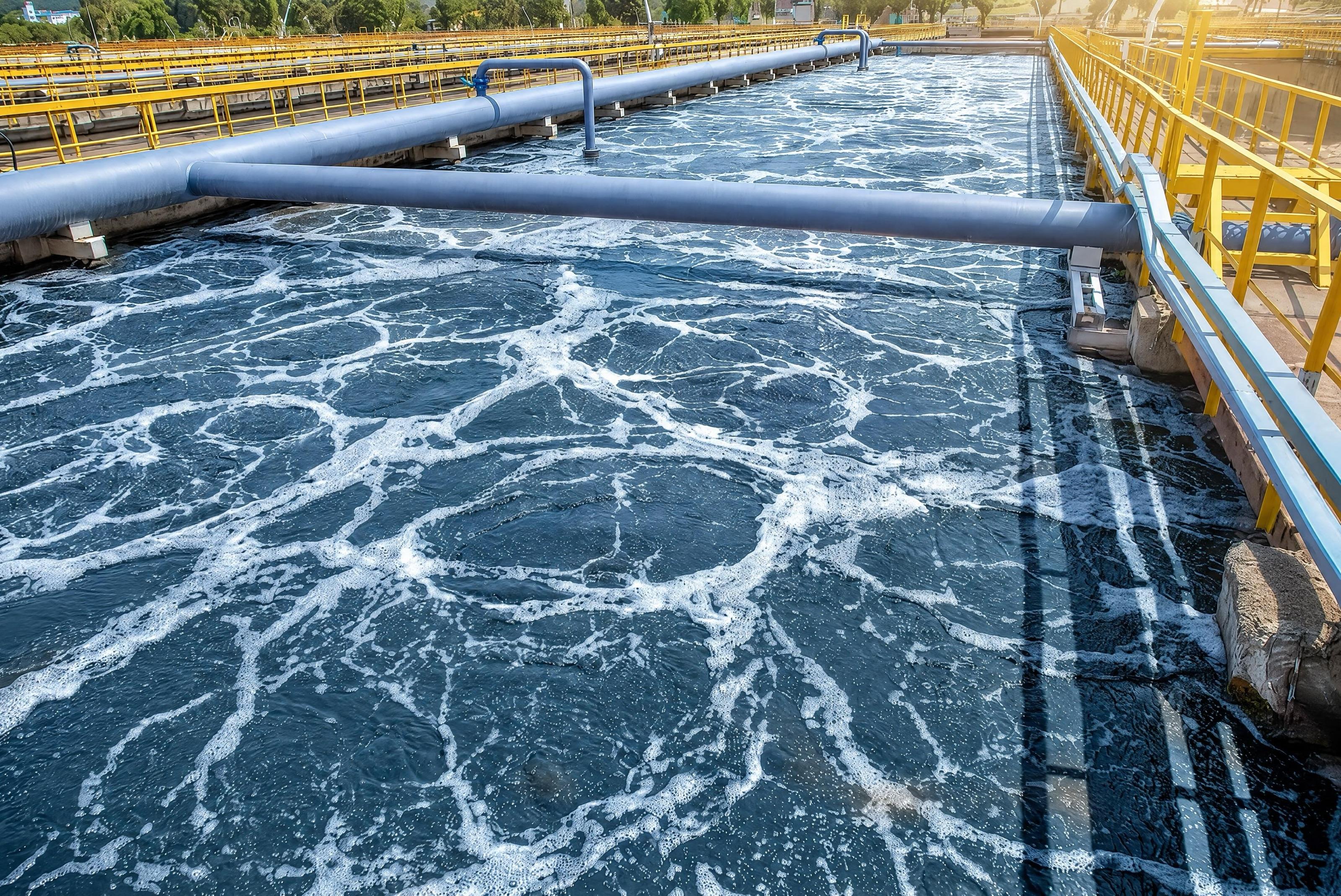
Supplemental D.O.
Oxygen dissolved outside the tank adds capacity when aeration reaches its limit.
See How It Is Solved
05The Next Step
Tell Us About Your Remediation Site
The flow, the contaminant and the treatment process the oxygen would feed are enough for a first look. ECO₂'s engineers check the data for a technical fit, then send a system design with its estimated capital and annual operating costs, and can visit your site to confirm the data.