Treatment Wetlands That Nitrify in a Smaller Footprint
Oxygen dissolved into the water lets a treatment wetland nitrify in a smaller footprint: why surface flow wetlands nitrify slowly, how oxygen changes it, and what was measured.
01The Problem
Air Alone Leaves a Wetland Short of Oxygen
A treatment wetland removes ammonia by nitrification, which needs dissolved oxygen. A surface flow wetland gets its oxygen only from the air, so it nitrifies slowly and must be large. In a peer-reviewed study of a Superoxygenated wetland in Michigan, mean ammonia nitrogen fell from 8.0 mg/L at the inlet to 0.6 mg/L at the outlet.
Why It Happens
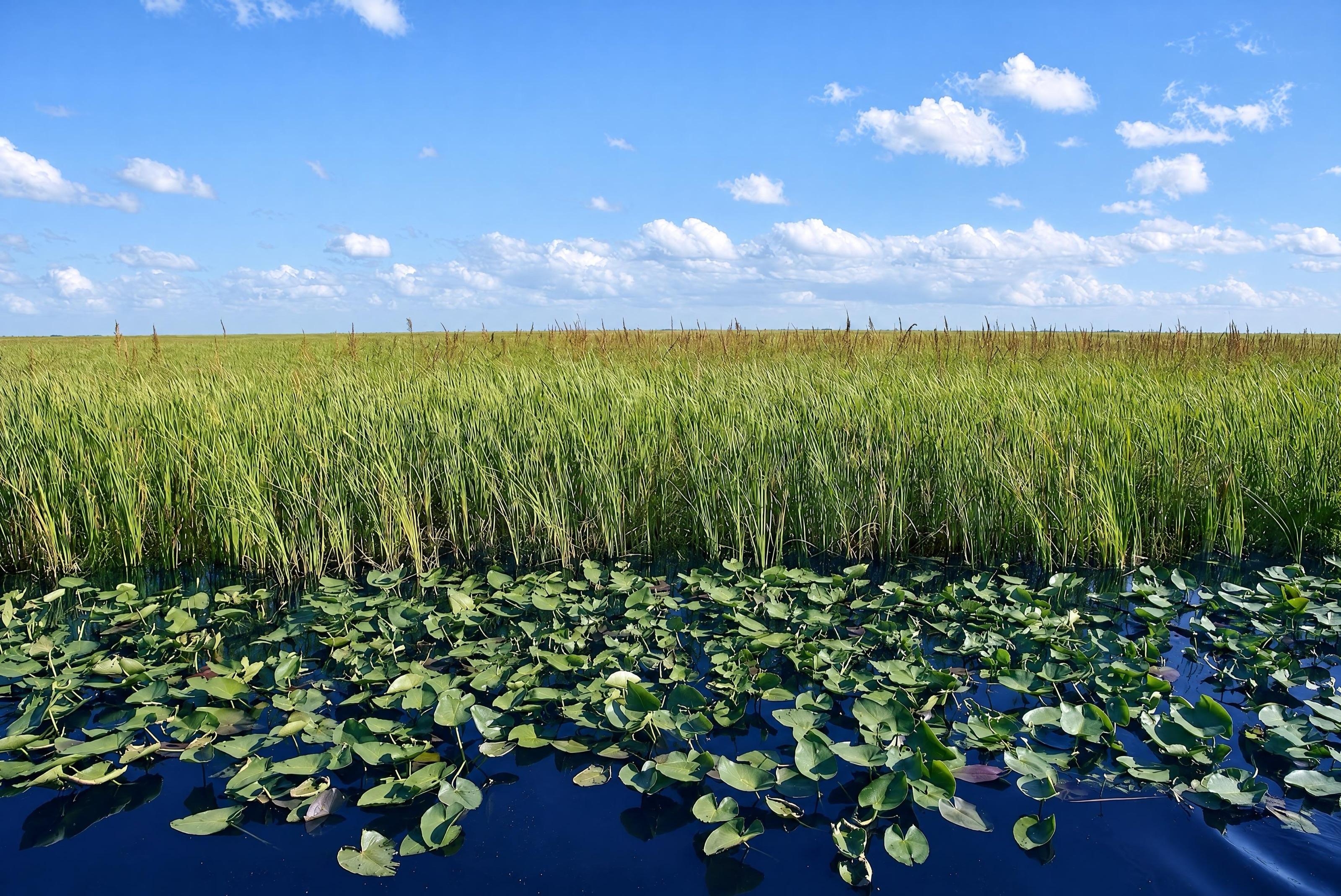
Surface flow wetlands cost about one third as much to build as aerated subsurface flow wetlands, and they never clog. But oxygen reaches their water only from the air, which limits nitrification, so a passive wetland has to be very large to remove its ammonia.
Diffused air does not fix it. In planted zones 0.1 to 0.3 m deep, diffused air transfers less than 5% of its oxygen, plant growth heaves the diffusers up, and in the deeper zones rodents chew plastic diffusers.
Source: Austin et al. 2019, p. 2
02How It Works
Superoxygenated Water Carries the Oxygen In
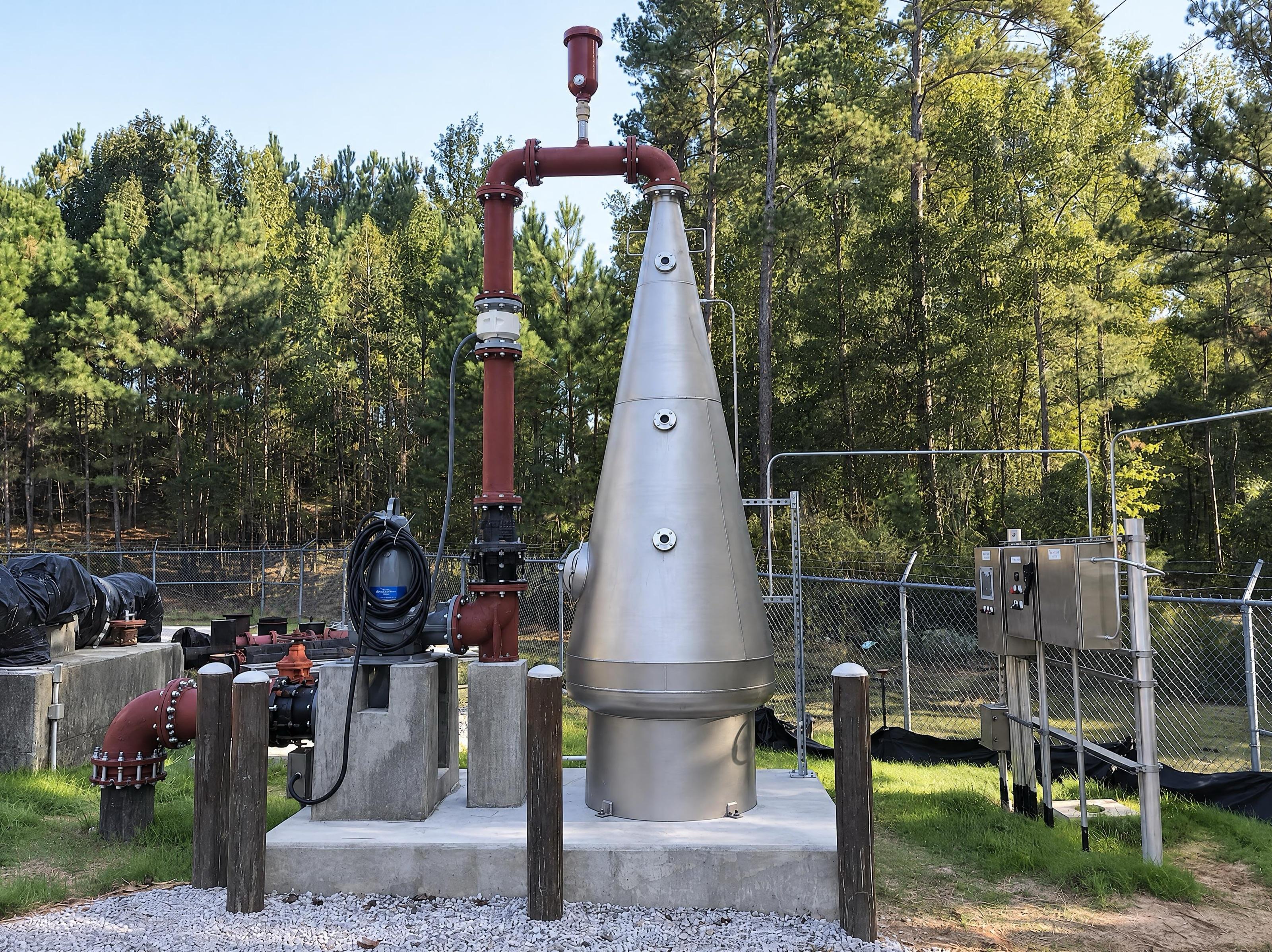
A pump sends wetland water through a Speece Cone®, and it returns to the wetland supersaturated with dissolved oxygen.
The System in Detail
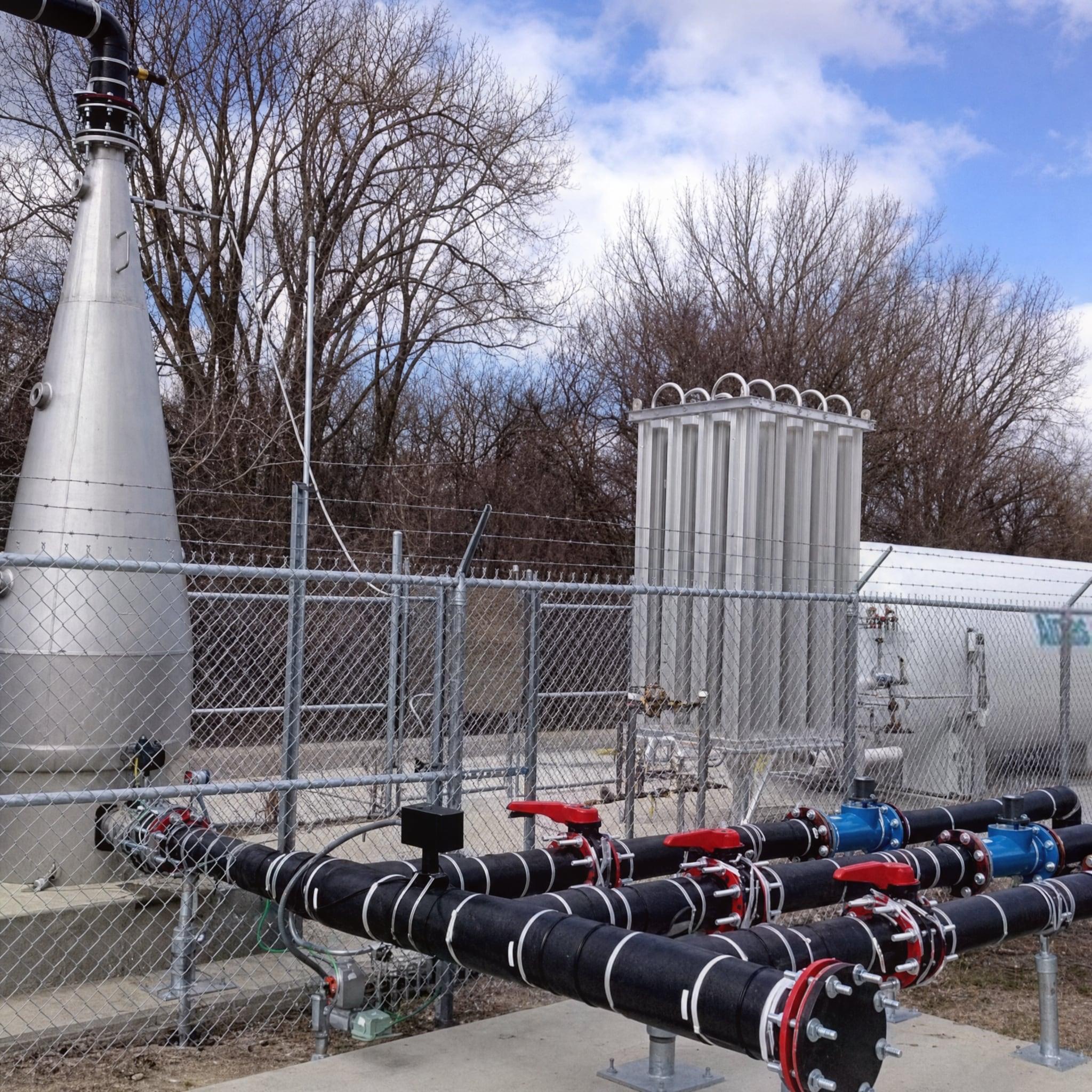
In the Michigan study, a 19 kW pump recirculates 4000 m³ a day from the discharge end through a Speece Cone pressurized to 3 atm and fed from a liquid oxygen tank. The water leaves the cone with a calculated 67 mg/L of dissolved oxygen at 20 °C, and diffusers release it into three open water zones across the wetland. The study does not name the site or the system's supplier.
ECO₂'s project in Bay City, Michigan is a wetland built to treat industrial wastewater from a large manufacturing facility, designed with an ECO₂ system for nitrification. Superoxygenation gives it a smaller total footprint than a traditional aerated wetland. In shallow lakes and wetlands, the cone still transfers 90 to 95% of its oxygen at 1 m depth.
Sources: Austin et al. 2019, p. 2; ECO₂ project record, Bay City, Michigan; ECO₂ Lakes and Rivers brochure, p. 2
03The Proof
Measured: Ammonia Removed from Start-Up
Results from the peer-reviewed study of a Superoxygenated wetland in Michigan that treats groundwater contaminated with ammonia.
Every Result in One Table
A Superoxygenated treatment wetland in Michigan, as measured in the study
A Superoxygenated treatment wetland in Michigan, as measured in the study
| Measure | Result |
|---|---|
| Mean ammonia nitrogenAustin et al. 2019, p. 1 | 8.0 mg/L at the inlet, 0.6 mg/L at the outlet |
| The 1.0 mg/L treatment goalAustin et al. 2019, p. 3 | Met within six weeks of start-up |
| Dissolved oxygen at the outletAustin et al. 2019, p. 3 | Near or over saturation, at oxygen feed rates of 40 to 140 L/min |
| Nitrification against passive wetlandsAustin et al. 2019, p. 4 | Over an order of magnitude faster |
| Treatment area needed for nitrificationAustin et al. 2019, p. 4 | 90% smaller than a passive surface flow wetland, as the authors regard it |
| In winterAustin et al. 2019, p. 3 | Held until the water reached 0.5 °C under ice; nitrifying bacteria added in late February restored it by March 23, 2017 |
How It Compares with Passive & Aerated Wetlands
A passive surface flow wetland gets its oxygen only from the air, so it nitrifies slowly and needs a large area. An aerated subsurface flow wetland nitrifies fast with diffusers under granular media, but the media is costly and can clog. Diffused air in a surface flow wetland's shallow planted zones transfers less than 5% of its oxygen. Superoxygenated water keeps the open, low cost surface flow wetland and brings the oxygen in with the water.
Source: Austin et al. 2019, p. 2
Where ECO₂ Systems Work on This Problem
04For Engineers
Read the Papers
Questions Plant Engineers & Operators Ask
Why add oxygen to a treatment wetland?
Nitrification, the step that turns ammonia into nitrate, needs dissolved oxygen, and a surface flow wetland gets it only from the air. In a peer-reviewed study of a Superoxygenated wetland in Michigan, mean ammonia nitrogen fell from 8.0 mg/L in to 0.6 mg/L out.
Why not aerate the wetland with diffusers?
In planted zones 0.1 to 0.3 m deep, diffused air transfers less than 5% of its oxygen. Plant growth heaves diffusers up, and rodents chew plastic diffusers in the deeper zones.
Does a Superoxygenated wetland keep nitrifying in winter?
In the Michigan study it held until the water reached 0.5 °C under ice in late December, then slowly declined. Nitrifying bacteria added in late February restored it by March 23, 2017.
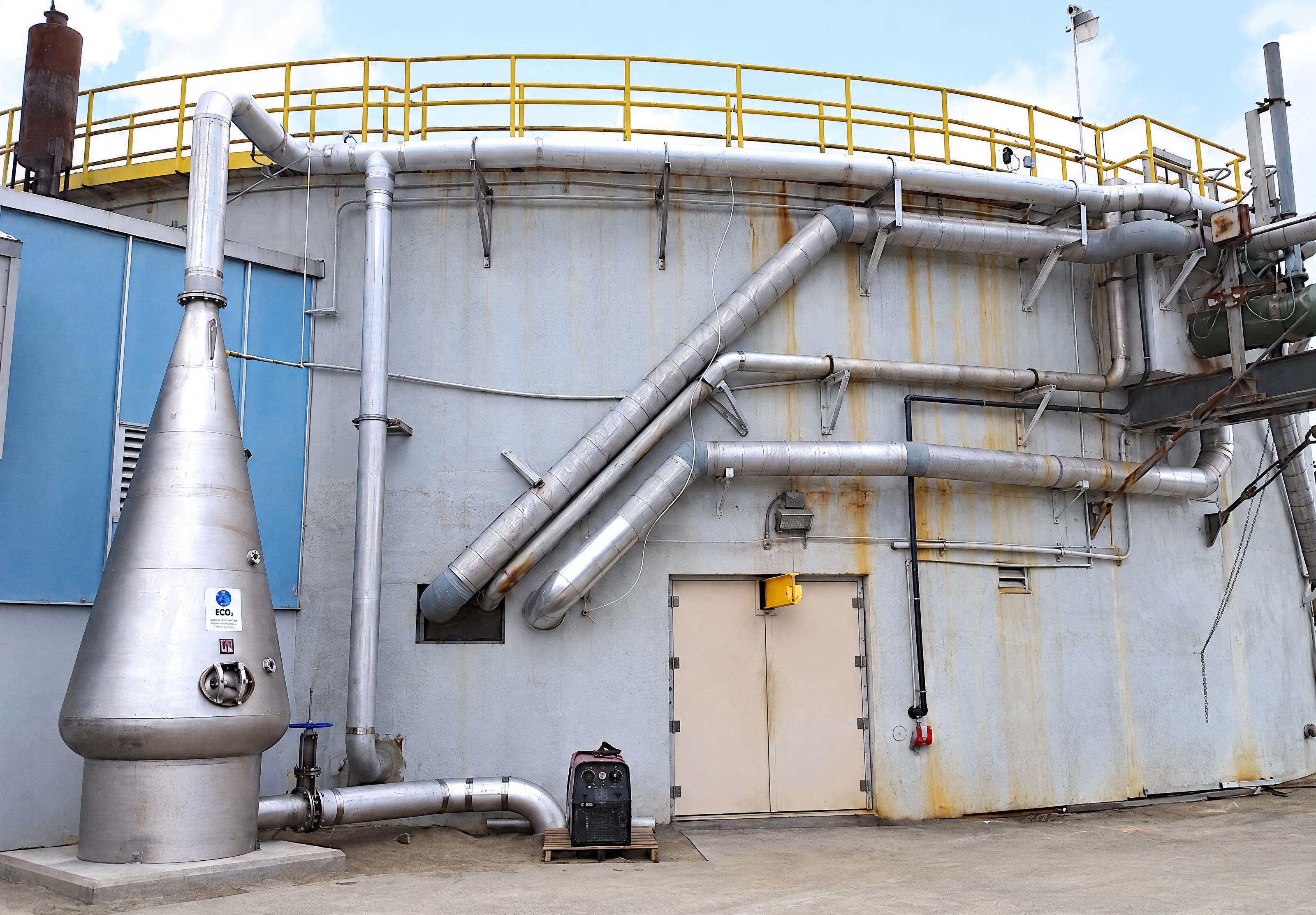
Primary clarifier, Anson-Madison Sanitary District, Madison, Maine.
Other Wastewater Treatment Problems
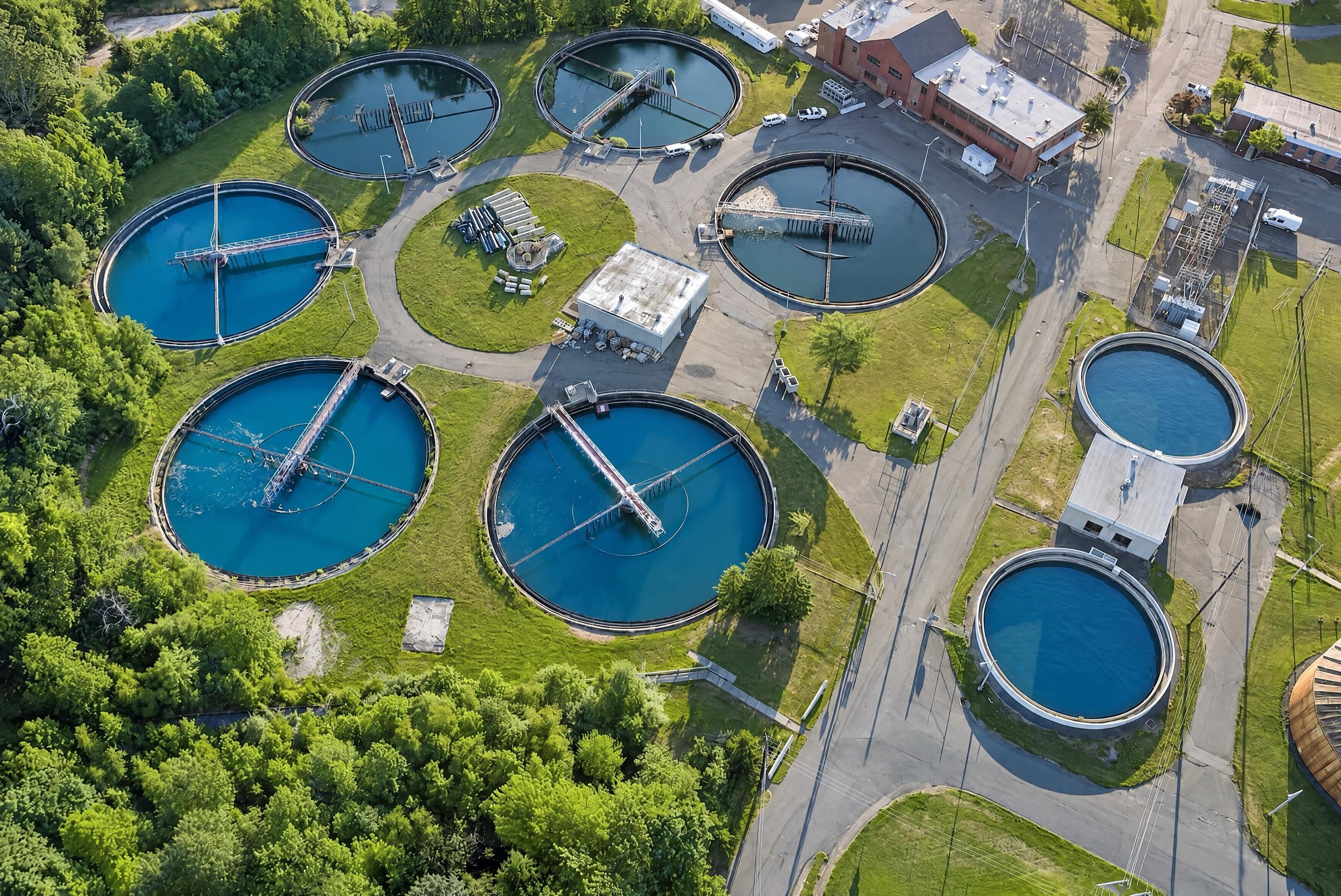
Chemical
A wetland that treats a manufacturing plant's wastewater nitrifies in a smaller footprint.
See How It Is Solved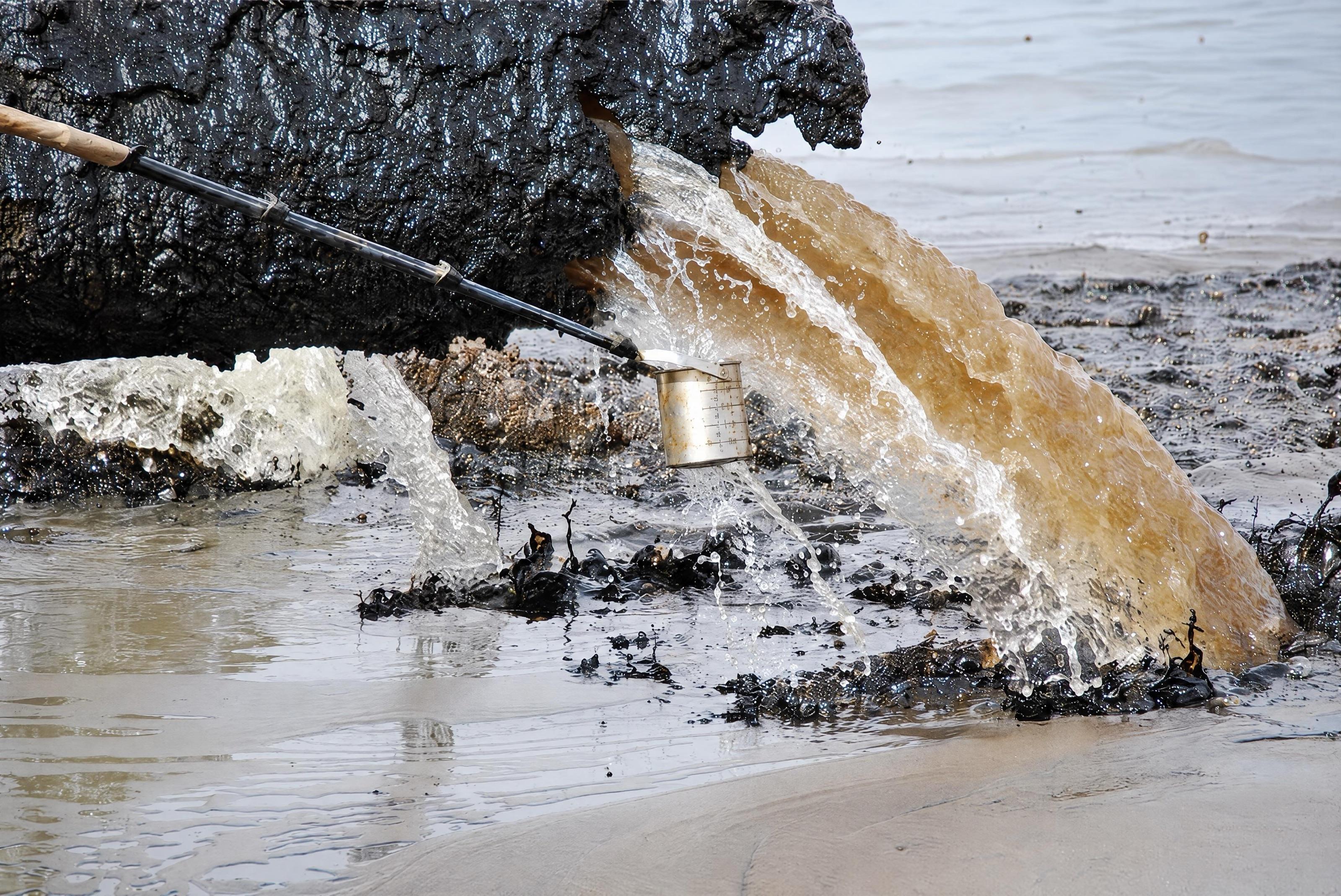
Effluent Discharge D.O.
Raise effluent DO to the permit limit, or offset the BOD a plant still discharges.
See How It Is Solved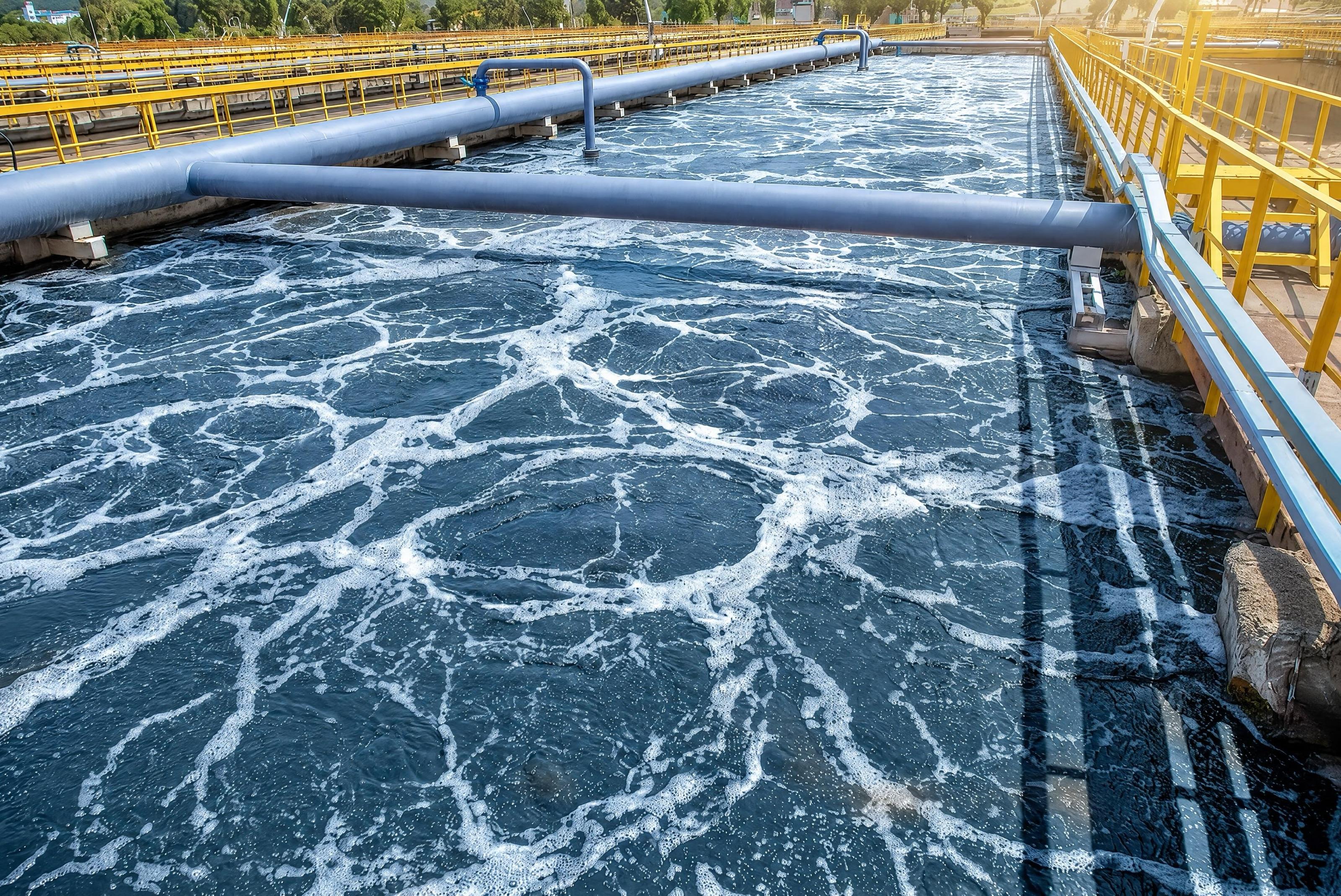
Supplemental D.O.
Oxygen dissolved outside the tank adds capacity when aeration reaches its limit.
See How It Is Solved
05The Next Step
Tell Us About Your Wetland
Its area, its flows, the ammonia it must remove and how it gets oxygen today are enough for a first look. ECO₂'s engineers check the data for a technical fit, then send a system design with its estimated capital and annual operating costs, and can visit your site to confirm the data.