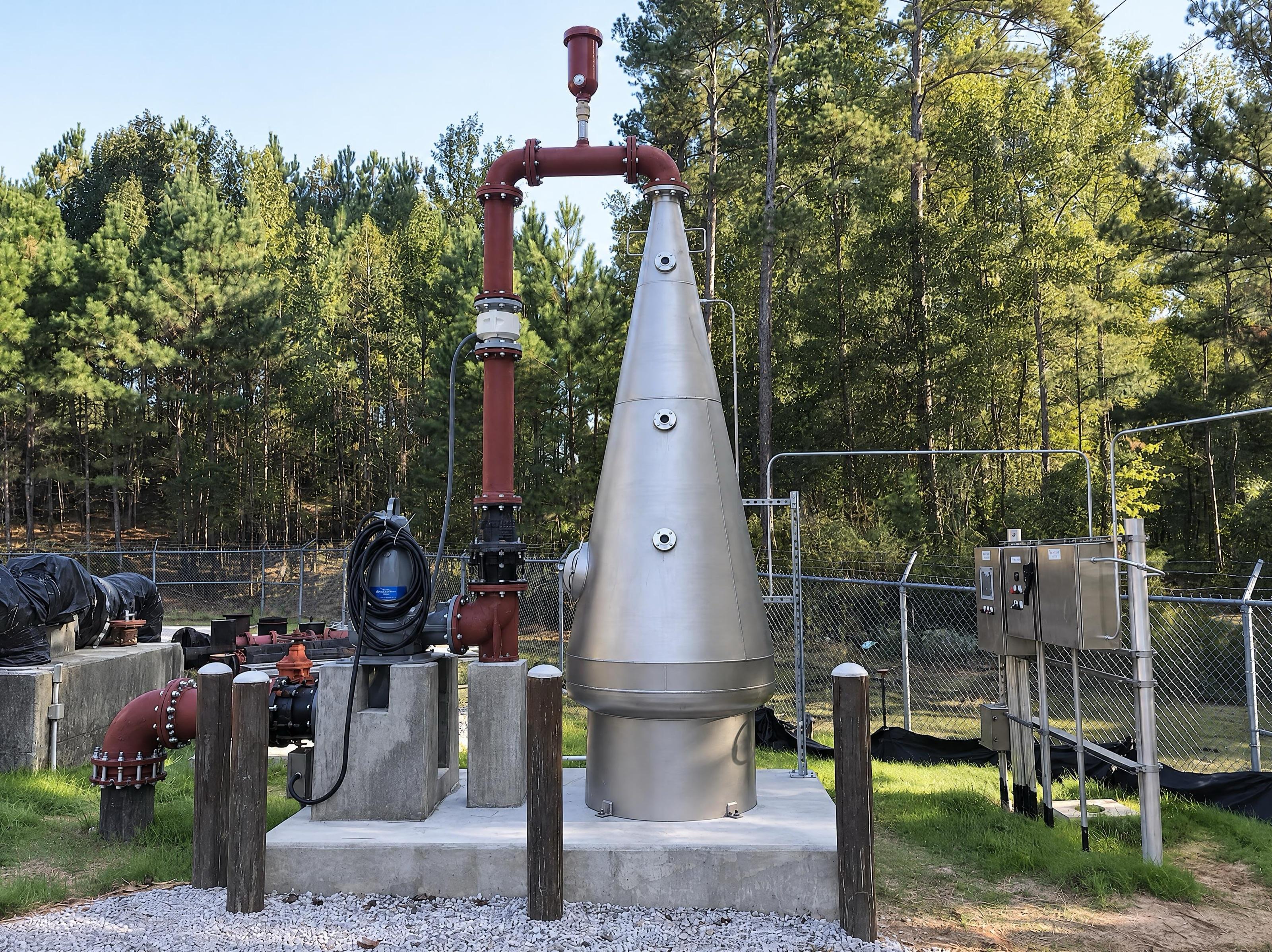
Two Ways to Put Oxygen in Water: From Air or from Pure Oxygen
Aeration transfers oxygen into water from air, with bubble diffusers and mechanical aerators. Oxygenation transfers it from high purity oxygen (ECO₂ aeration bulletin, p. 1). Superoxygenation dissolves pure oxygen under pressure, raising the dissolved oxygen in the water it discharges to 10 to 300 mg/L, depending on the application (Superoxygenation: Facts and Myths, p. 1).
| Aeration (air) | Oxygenation (high purity oxygen) | |
|---|---|---|
| Oxygen in the gas | 21% | 90 to 99% |
| Dissolved oxygen it can reach economically | 2 to 4 mg/L | 50 to 100 mg/L |
| Share of the oxygen absorbed | 5 to 10% | Over 90%, guaranteed on every ECO₂ system |
Aeration Lets Most of Its Oxygen Escape
For every 100 ft³ of air bubbled through the water, 1 to 2 ft³ of oxygen dissolves and 98 to 99 ft³ leave as off-gas (ECO₂ aeration bulletin, p. 2). Air is free, so that waste costs only electricity; pure oxygen has a price, so it has to dissolve almost completely (Superoxygenation: Facts and Myths, p. 2). In a 60-day Corps of Engineers test at Savannah Harbor in 2019, Speece Cones® averaged 95% transfer or better, against an 80% minimum (Corps of Engineers test summary, pp. 1 to 2).
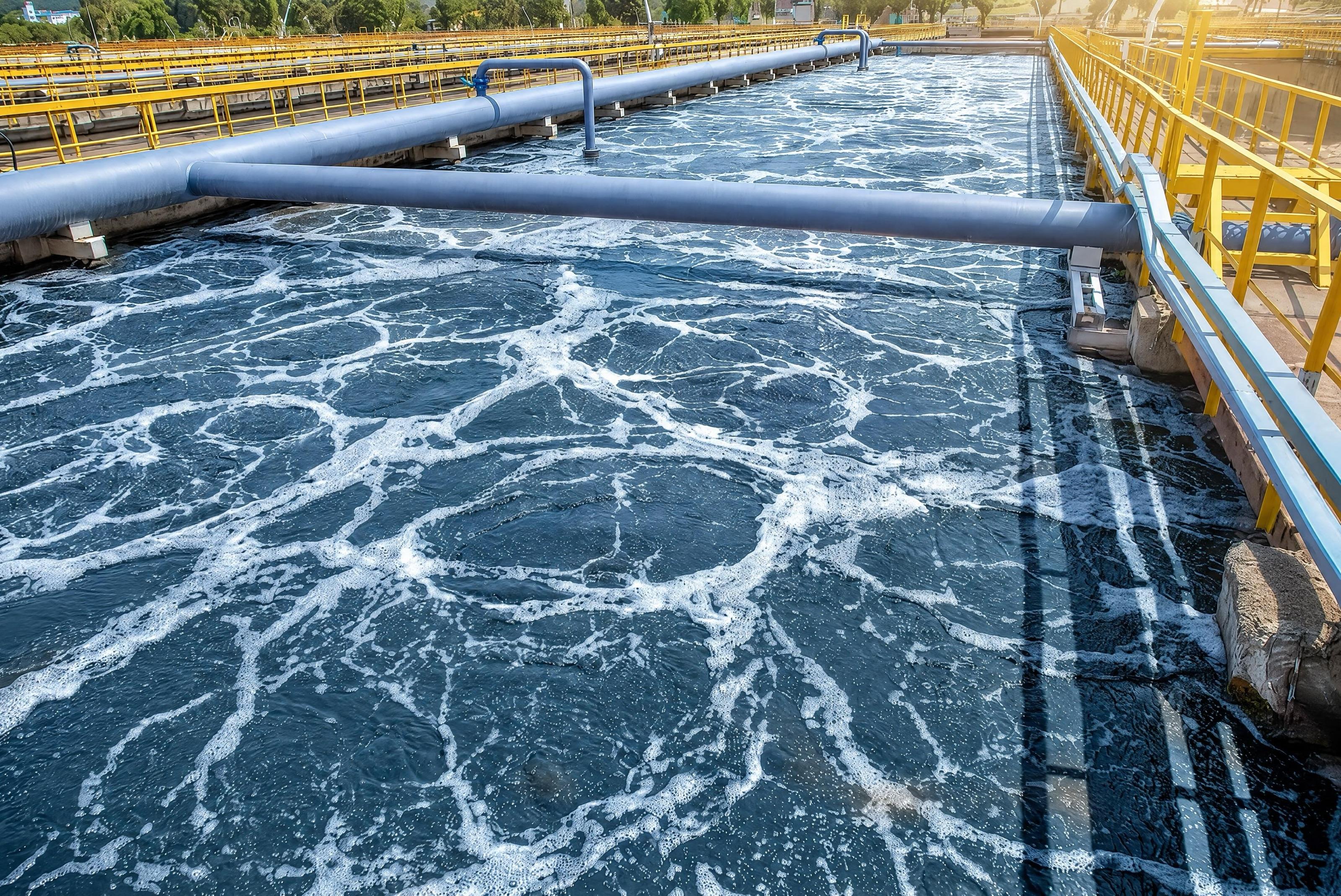
Off-gas also strips odors and volatile compounds into the air (ECO₂ aeration bulletin, p. 2); with little of it, volatile organics stay in the water for bacteria to break down (ECO₂ odor control bulletin, p. 1). See oxygen transfer efficiency.
Per Ton Dissolved, Pure Oxygen Used Less Electricity
ECO₂'s aeration bulletin works out 1 ton of oxygen a day both ways (ECO₂ aeration bulletin, p. 2). Aeration at 1.5 lbs of oxygen per kWh takes 1,300 kWh a ton; an onsite PSA generator and the cone take 800 kWh a ton, making the oxygen and dissolving it.
- Aeration, at 1.5 lbs of oxygen per kWh1,300 kWh
- Oxygenation, with an onsite PSA generator800 kWh
Source: Tech Bulletin - Comparing Aeration and Oxygenation, page 2
Total Cost per Ton, by Electricity Price
| Electricity | Aeration: power | Aeration: total | Oxygenation: power | Oxygenation: total |
|---|---|---|---|---|
| $0.06 a kWh | $78 | $94 | $48 | $75 |
| $0.09 a kWh | $117 | $133 | $72 | $99 |
| $0.12 a kWh | $156 | $172 | $96 | $123 |
Where Pure Oxygen Wins, and Where Air Still Does
- Odor control in force mains, headworks and primary clarifiers: only oxygenation reaches the 50 to 100 mg/L these need (ECO₂ aeration bulletin, p. 1). See force main odor control and treatment plant odor control.
- Volatile and hazardous compounds: industrial wastewaters, as in pharmaceuticals and pulp and paper, are treated with far less stripping (ECO₂ aeration bulletin, p. 1).
- Effluent dissolved oxygen: Kennebunk, Maine averaged 9.2 mg/L through the hot summer months after it installed oxygenation in 2006 (Kennebunk case study, p. 2).
Air makes sense where energy is cheap and the target low: a basin that needs about 2 mg/L sits within aeration's economic range (ECO₂ odor control bulletin, p. 1; ECO₂ aeration bulletin, p. 1). Where aerators also keep solids in suspension, keeping the jobs together can be right, though the bulletin finds it often cheaper to separate them (ECO₂ aeration bulletin, p. 3). Open lakes and reservoirs are a different job, with their own methods.
Liquid Oxygen or a Generator on Site
High purity oxygen is delivered as liquid oxygen to a tank on site, or made on site by a PSA or VSA generator (ECO₂ oxygen source bulletin, p. 1); see oxygen supply options. The Aeration Basin Design Data Checklist lists the plant data ECO₂ needs to size supplemental oxygen.
Questions Engineers Ask
What is the difference between aeration and oxygenation?
Aeration dissolves oxygen from air, which is 21% oxygen. Oxygenation dissolves high purity oxygen, 90 to 99% oxygen, and can reach 50 to 100 mg/L of dissolved oxygen where aeration becomes uneconomic above 2 to 4 mg/L.
Is pure oxygen more energy efficient than aeration?
Per ton dissolved, yes. ECO₂'s aeration bulletin gives 1,300 kWh a ton for aeration at 1.5 lbs of oxygen per kWh, against 800 kWh a ton to make oxygen on site and dissolve it. Many field aeration systems use 1,000 to 2,000 kWh a ton.
How much of the oxygen does aeration actually dissolve?
Conventional aeration absorbs 5 to 10% of the oxygen in the air it moves. Speece Cones averaged 95% or better in a 60-day Corps of Engineers test at Savannah Harbor.
When is aeration the better choice?
Where the process needs only low dissolved oxygen, about 2 mg/L, and power is cheap, or where the aerator is needed to mix the tank anyway. Aeration becomes uneconomic above 2 to 4 mg/L of dissolved oxygen.
Sources
Every Paper, Case Study & Note Cited
- Tech Bulletin - Comparing Aeration and OxygenationTechnical paper, ECO₂, Undated. Pages 1, 2, 3. PDF: Tech Bulletin - Comparing Aeration and Oxygenation (opens in a new tab)
- Superoxygenation - Facts and MythsTechnical paper, ECO₂, Undated. Pages 1, 2. PDF: Superoxygenation - Facts and Myths (opens in a new tab)
- Competitive Advantages of Oxygen Injection Technology by ECO₂Technical paper, ECO₂, Undated. Page 4. PDF: Competitive Advantages of Oxygen Injection Technology by ECO₂ (opens in a new tab)
- Oxygen Transfer Efficiency Test Report Summary for Savannah Harbor ExpansionPublished article, U.S. Army Corps of Engineers, August 2019. Pages 1, 2. PDF: Oxygen Transfer Efficiency Test Report Summary for Savannah Harbor Expansion (opens in a new tab)
- Tech Bulletin - Comparing Odor Control Strategies in WastewaterTechnical paper, ECO₂, Undated. Page 1. PDF: Tech Bulletin - Comparing Odor Control Strategies in Wastewater (opens in a new tab)
- Kennebunk Sewer District Dissolved Oxygen Discharge ComplianceCase study, ECO₂, Undated. Page 2. PDF: Kennebunk Sewer District Dissolved Oxygen Discharge Compliance (opens in a new tab)
- Tech Bulletin - Comparing Oxygen Source OptionsTechnical paper, ECO₂, Undated. Page 1. PDF: Tech Bulletin - Comparing Oxygen Source Options (opens in a new tab)
Cite this guide: Eco Oxygen Technologies. Aeration vs Oxygenation in Wastewater. ECO₂ Guides, November 2026. https://eco2tech.com/guides/aeration-vs-oxygenation/