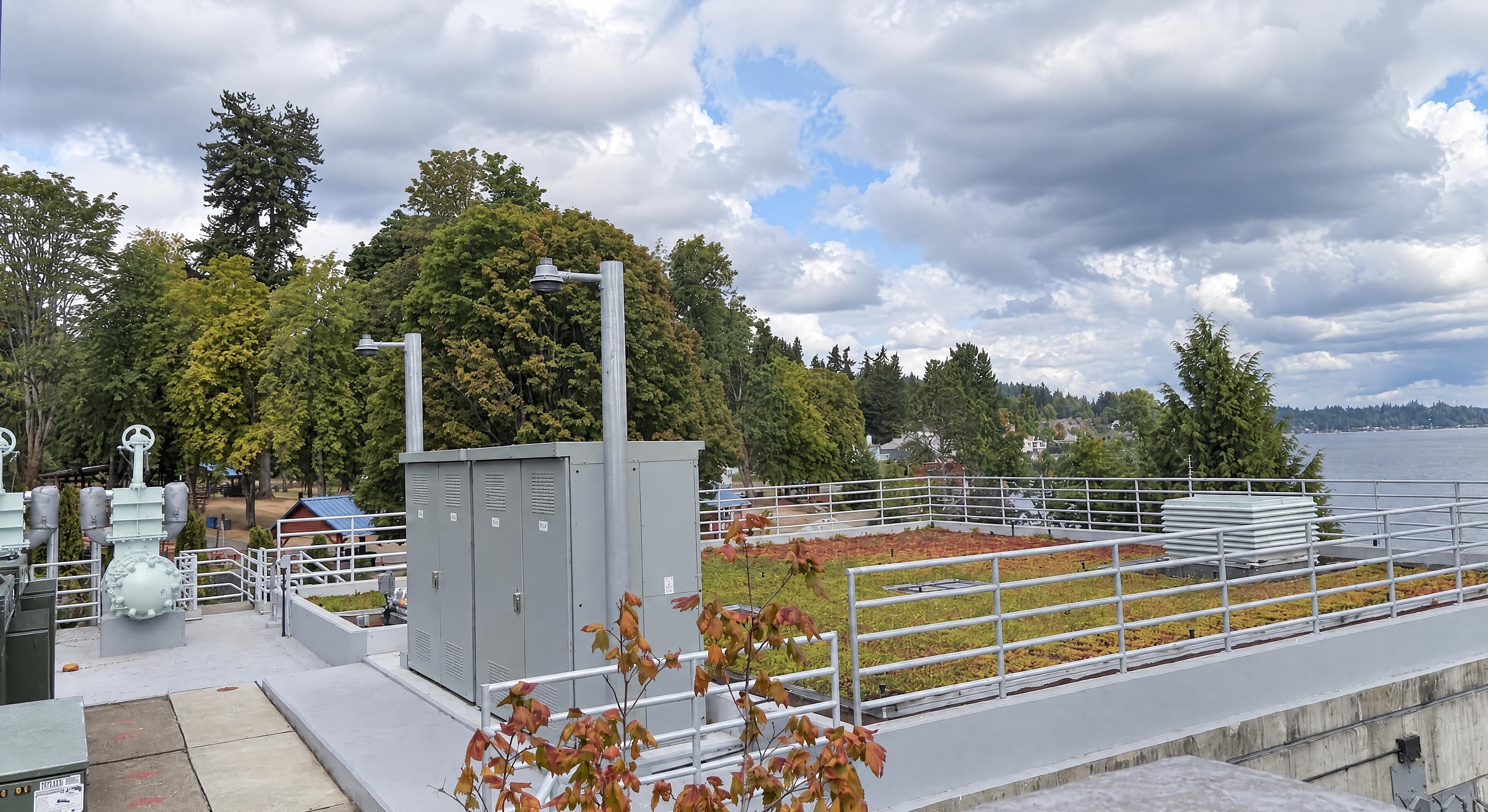
A New Way to Stop H2S Odor and Corrosion in Large Diameter Gravity Sewers
A 2020 WEF Odor Conference paper whose models show that dissolved oxygen can keep a large, partly full interceptor aerobic for miles, free of the H₂S behind odor and corrosion.
Details
Summary
Dr. Richard Speece and Alison Trollier of ECO₂ model whether Superoxygenation, already proven in full-flowing force mains, can also stop hydrogen sulfide odor and corrosion in large, partially full gravity sewers. Their models show that raising dissolved oxygen to about 45 mg/L can keep a large interceptor aerobic for roughly 4 miles without pushing headspace oxygen near the 23.5% limit.
Key Figures
4miles
Gravity sewer length kept aerobic by raising dissolved oxygen to 45 mg/L (modeled) Source: PDF page 7 (opens in a new tab)
10mg/L per hour
Industry-standard oxygen uptake rate used in the models Source: PDF page 7 (opens in a new tab)
2pounds of oxygen
Dissolved oxygen needed to oxidize one pound of sulfide, on average Source: PDF page 3 (opens in a new tab)
Questions
Can Superoxygenation control H₂S in gravity sewers, not just force mains?
The authors' models show it can: a sidestream raised to high dissolved oxygen keeps a large, partially full interceptor aerobic for up to about 4 miles, though they stress the gravity results are mathematical models. (PDF page 9) (opens in a new tab)
Will oxygen stripped from the wastewater create an explosion risk in the headspace?
The models say no. In a 5 ft pipe flowing half full, starting at 60 mg/L dissolved oxygen raises headspace oxygen to 21.6%, well below the 23.5% limit the paper uses. (PDF page 7) (opens in a new tab)
How much dissolved oxygen is needed to keep 3 miles of gravity sewer free of H₂S?
In the paper's example, 1.5 mg/L of sulfide times 2.0 plus an uptake rate of 10 mg/L per hour for 3 hours gives 33 mg/L of initial dissolved oxygen. (PDF page 5) (opens in a new tab)
Which gravity sewers are good candidates for Superoxygenation?
Pipes larger than about 4 to 5 ft in diameter, whose low stripping rates retain dissolved oxygen for several miles. (PDF page 7) (opens in a new tab)
In Full
More of the Summary
Two more paragraphs of our summary.
The paper starts from the cost of sulfide corrosion: an EPA report cited $130 million to repair 25 miles of one Los Angeles County interceptor. Superoxygenation pumps a sidestream from the gravity main, dissolves pure oxygen into it completely and returns it upstream of the problem area, so sulfide is oxidized within 15 to 30 minutes and new sulfide does not form.
Two objections are tested. Second, oxygen stripped to the headspace stays low: in a 5 ft pipe flowing half full, starting at 60 mg/L raises headspace oxygen only to 21.6%. The authors note the gravity sewer results are mathematical models, not field data.
More Key Figures
Four more, each with what it measures and its PDF page.
From the PDF
| Figure | What It Measures |
|---|---|
| 15 to 30 minutes | Reaction time for 95 to 100% sulfide removal once oxygen is added (PDF page 3 (opens in a new tab)) |
| 60 mg/L | Dissolved oxygen sustained at atmospheric pressure in a Maine primary clarifier with no rapid loss (PDF page 5 (opens in a new tab)) |
| 21.6 % oxygen | Headspace oxygen in a 5 ft pipe flowing 50% full, starting at 60 mg/L dissolved oxygen (PDF page 7 (opens in a new tab)) |
| 130 million dollars | Budget to repair 25 miles of one Los Angeles County interceptor (EPA 1991) (PDF page 1 (opens in a new tab)) |
How to Cite
One line to paste into a report.
Richard Speece and Alison Trollier. A New Way to Stop H2S Odor and Corrosion in Large Diameter Gravity Sewers. WEF. Eco Oxygen Technologies Technical Library. https://eco2tech.com/technical-library/a-new-way-to-stop-h2s-odor-and-corrosion-in-large-diameter-gravity-sewers/
https://eco2tech.com/technical-library/a-new-way-to-stop-h2s-odor-and-corrosion-in-large-diameter-gravity-sewers/
The Next Step
Ask an ECO₂ Engineer
Questions about this technical paper, or about your own water? An application engineer answers, with the figures.