Primary Clarifier & Headworks Odor Control Without Covers
Headworks, primary clarifiers and sludge tanks smell when sulfide escapes. Oxygen stops it in the water: why each one smells, and the measured results.
01The Problem
Plant Odor Is Sulfide That Escapes Where the Water Tumbles
Primary clarifier odor control means stopping hydrogen sulfide (H₂S) in the water, before turbulence releases it at the headworks, the primary clarifier weirs and the sludge tanks. Dissolved oxygen keeps the flow aerobic. At Grand Rapids, Minnesota, a paper mill's flow reaches the city plant's primary clarifiers with 20 mg/L of oxygen and 0 ppm of H₂S.
Why It Happens
Sewage that sits without oxygen in a force main reaches the plant septic. The influent of the Trinity River Authority's plant in Dallas, Texas arrives with 3 to 6 mg/L of dissolved sulfide from its collection system, ready to escape as hydrogen sulfide in the influent channels and at the headworks.
The primary clarifier makes more. While wastewater sits there for hours, bacteria use up its dissolved oxygen and turn to sulfate, making sulfide. The basin is quiet by design, so almost no oxygen comes in from the air. Where the water falls over the effluent weirs, the turbulence strips out H₂S.
Sources: ECO₂, Dallas case study, p. 1; Jacobs, clarifier paper, p. 1; Speece and Clidence 2024, p. 6
3.5hours
At average flow, wastewater sits about 3.5 hours in a Maine primary clarifier fed by a paper mill, time enough for sulfide to form. Source: Jacobs, clarifier paper, p. 3
02How It Works
Headworks Odor Control: Oxidize Sulfide Before It Arrives
Dissolve oxygen upstream, with enough travel time for it to work, and the influent reaches the screens with no sulfide to release.
The System in Detail
Sulfide does not last long in water that holds dissolved oxygen. In a bench study for the Dallas plant, about 80% of the total sulfide was gone within 10 minutes of adding oxygen, and the engineers set at least 15 minutes of contact before the clarifiers.
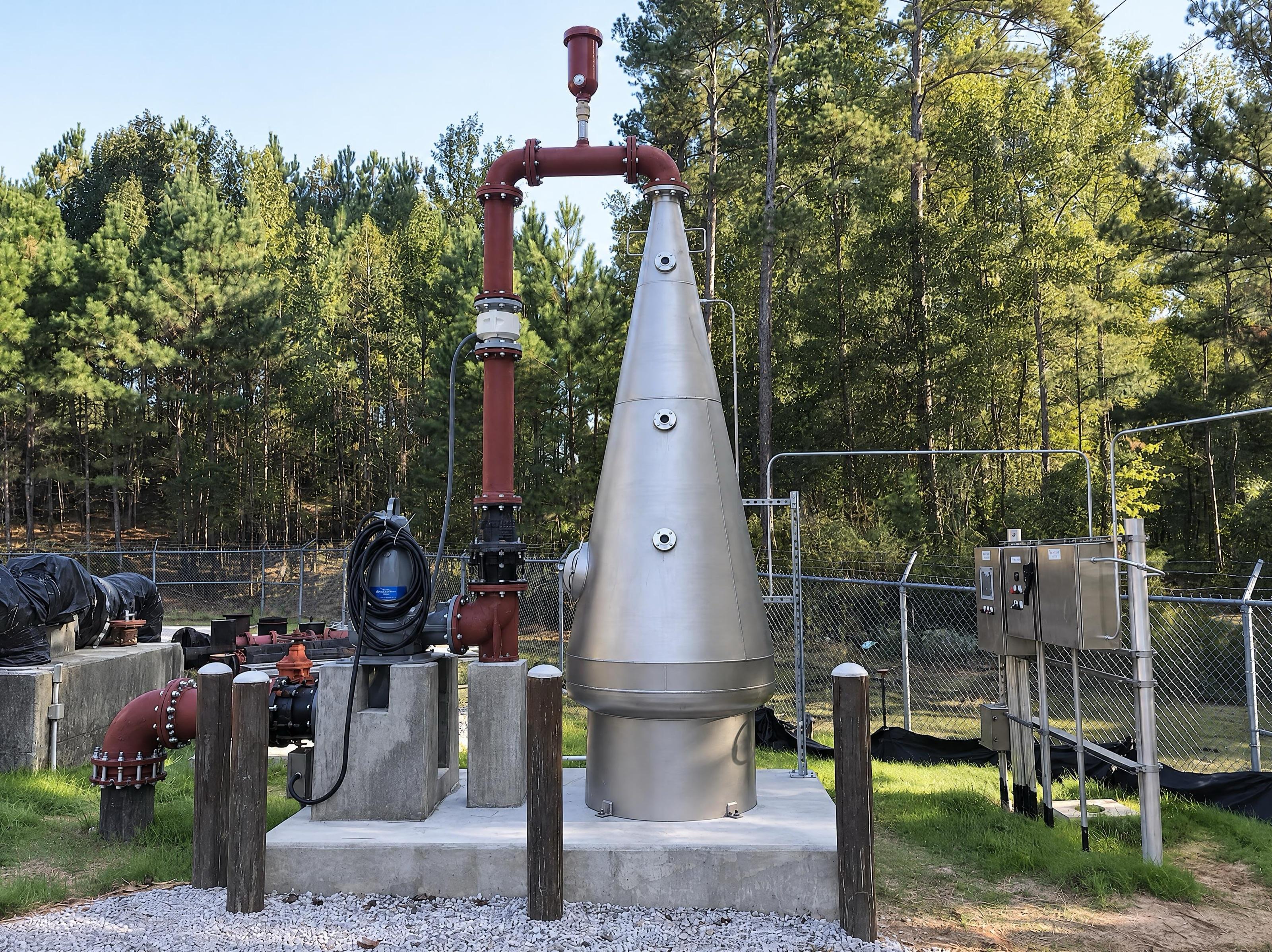
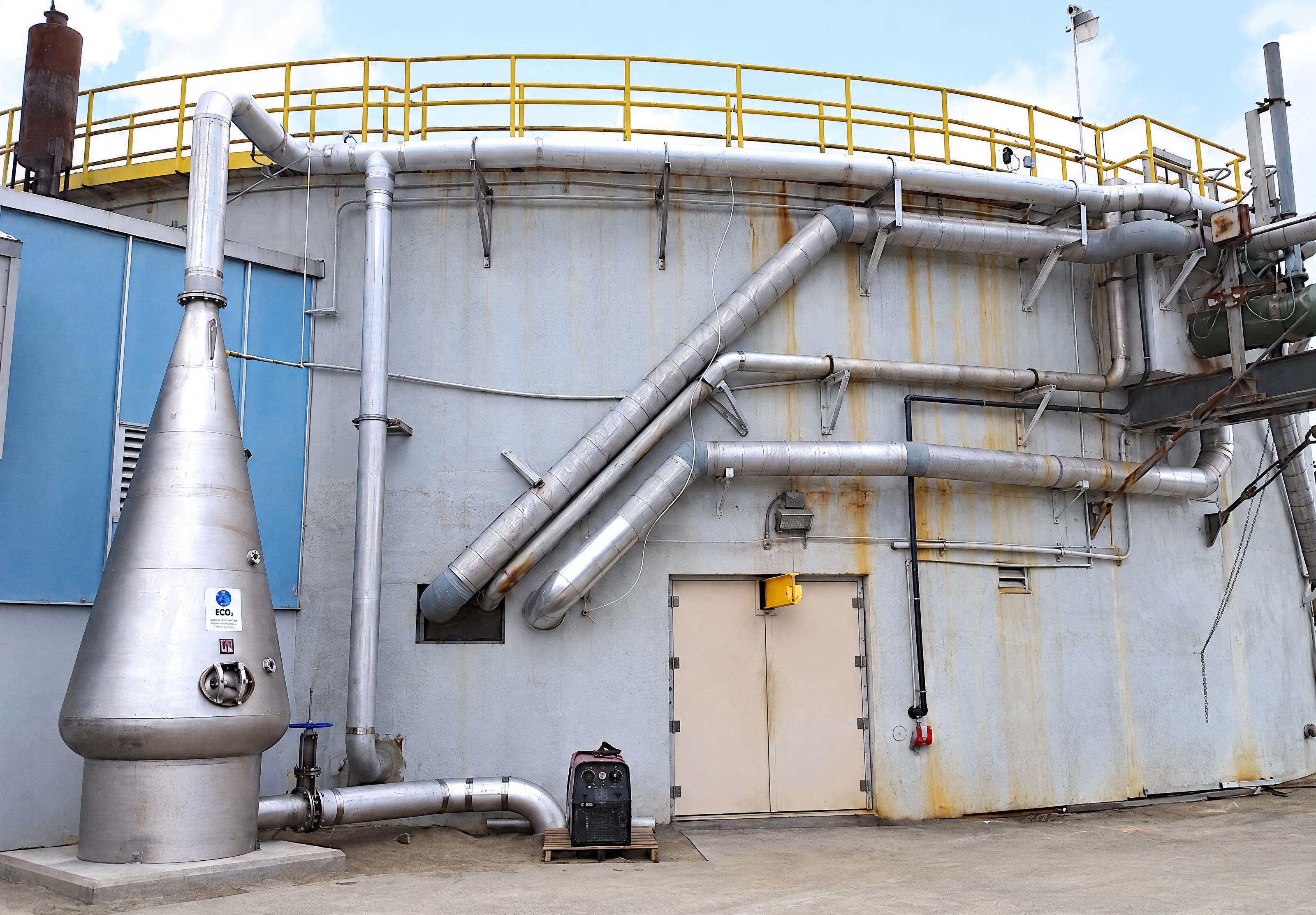
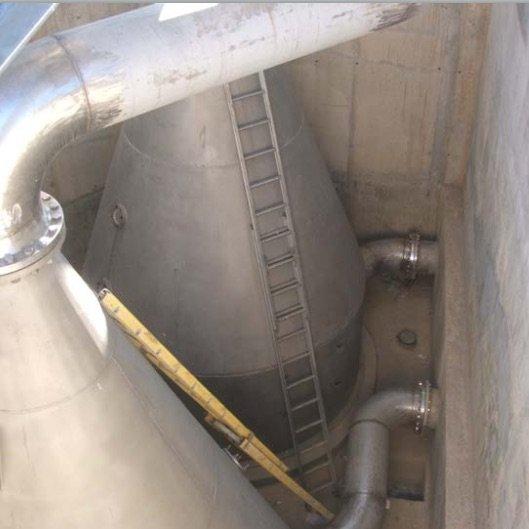
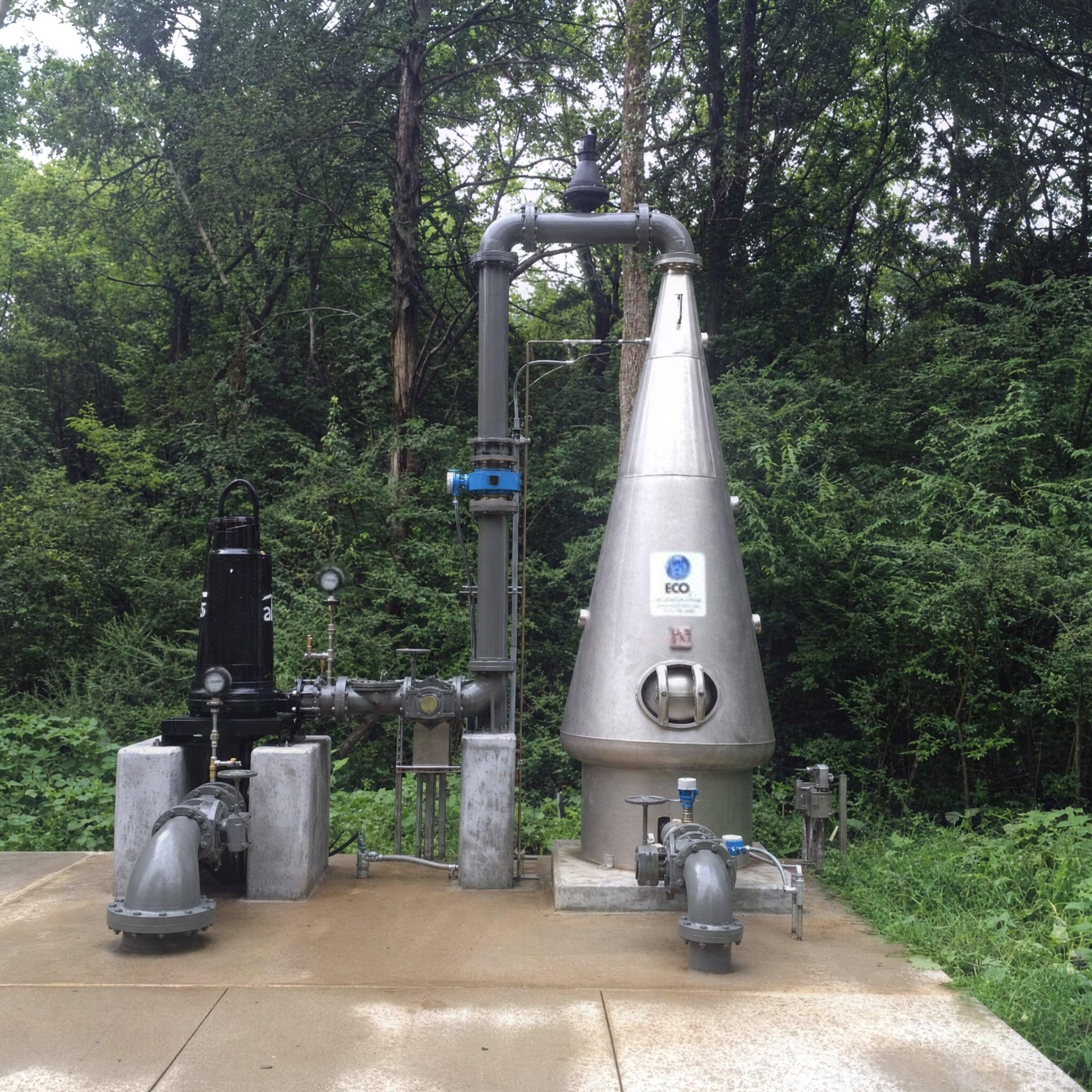
At the Dallas plant, two Speece Cones®, each 12 ft across and 20 ft high, sit in a 30 ft deep vault beside the influent pump station. They raise a side stream of raw wastewater to 60 mg/L of dissolved oxygen. The added oxygen oxidizes the 3 to 6 mg/L of sulfide within minutes, before it can escape as H₂S in the influent channels.
Sources: McMillen et al. 2008, p. 11; ECO₂, Dallas case study, p. 2
In the Primary Clarifier, Carry Oxygen Through to the Weirs
Dissolve enough oxygen to cover the clarifier's uptake for its whole detention time, and no sulfide forms in the tank.
ECO₂ sizes the dose from the clarifier itself: its detention time times an oxygen uptake rate of about 10 mg/L an hour. A clarifier with about 2 hours of detention needs its influent raised above 20 mg/L. Sulfide already in the water takes another 2 mg/L of oxygen for each 1 mg/L.
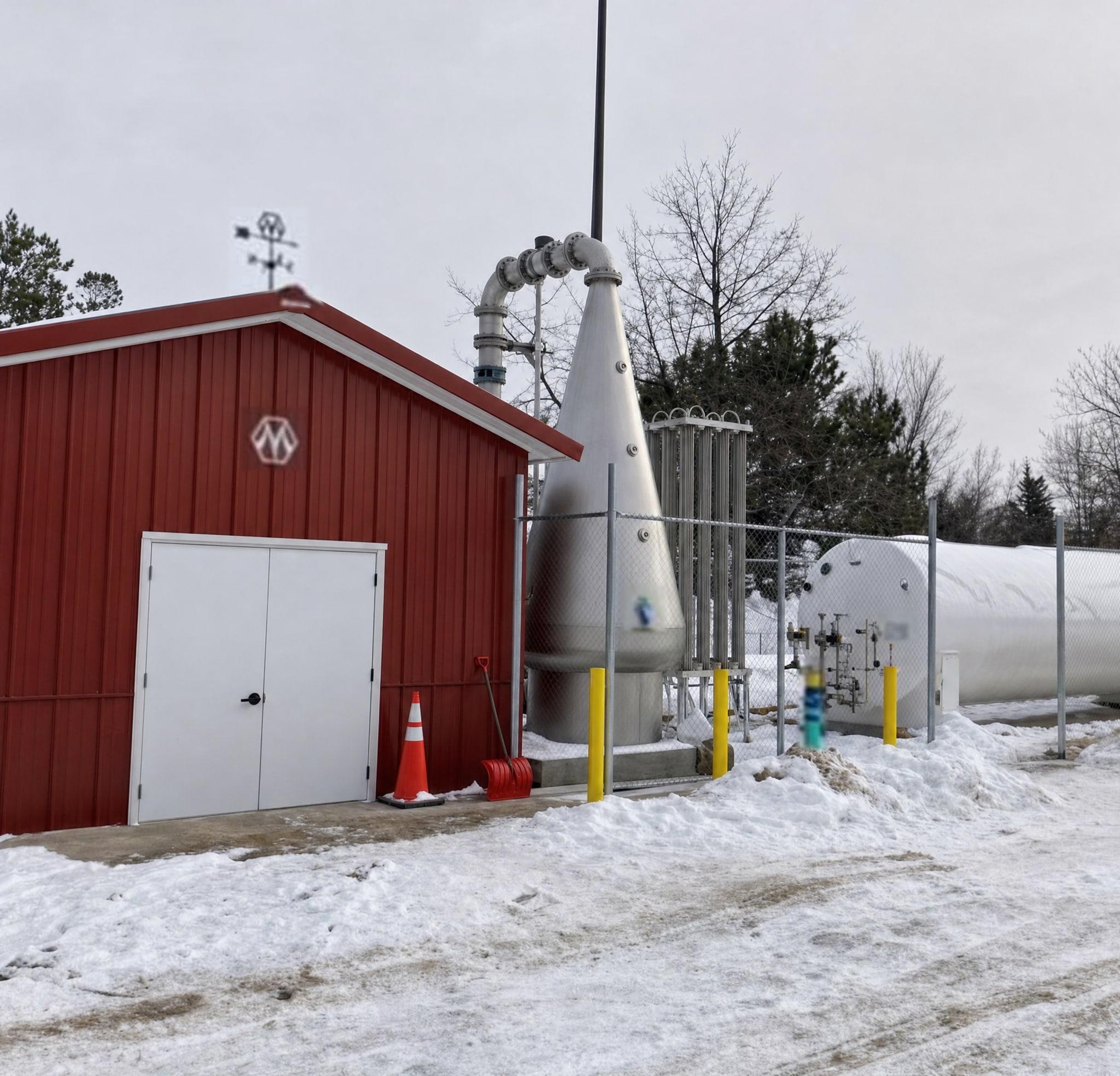
The oxygen has to be fully dissolved, so no bubbles disturb settling. Measured on the cone discharge at Anson and Madison, Maine, 95.2% to 97.2% of the oxygen fed was dissolved, and the paper reports no impact on settling in the clarifier.
The oxygen does useful work on the way. At Anson and Madison, the primary clarifier removed more of the BOD with oxygen than before, which takes load off the aeration that follows.
Sources: ECO₂, Primary Clarifier Design Data Checklist; Speece and Clidence 2024, p. 6; Jacobs, clarifier paper, p. 3
In Sludge Tanks, a Little Oxygen Fed Slowly Stops the H₂S
Sludge has a huge oxygen demand, but sulfide takes the oxygen first. ECO₂'s method feeds just enough.
Coarse bubble aeration is the usual fix, and it backfires. It absorbs only about 5% of the oxygen it moves: for every 100 ft³ of air bubbled through a sludge tank, about 1 ft³ of oxygen dissolves and 99 ft³ of odorous off-gas escape. Collecting and scrubbing the gas removes the odor but not the corrosion, and it is costly.
Sulfide takes oxygen much faster than the rest of the sludge does. So a Speece Cone on a side stream feeds pure oxygen at less than the total uptake rate, keeping the sludge micro-aerophilic, with dissolved oxygen near zero. The bacteria then stop at elemental sulfur instead of making H₂S, and the cone absorbs 95% of the oxygen it is fed.
03The Proof
Primary Clarifier Odor Control: H₂S Near Zero at the Weirs
Every Result in One Table
Primary clarifiers with dissolved oxygen, as measured
Primary clarifiers with dissolved oxygen, as measured
| Place | Clarifier | Before | With oxygen |
|---|---|---|---|
| Grand Rapids, MinnesotaECO₂, Grand Rapids case study, p. 1; ECO₂, Grand Rapids case study, p. 2 | City plant taking a paper mill's flow; 3 hours of retention | H₂S odor at the effluent weirs; calcium nitrate at nearly $500,000 a year | 20 mg/L of dissolved oxygen in, 12 mg/L out; 0 ppm H₂S |
| Dallas, TexasMcMillen et al. 2008, p. 3; McMillen et al. 2008, p. 4 | Full-scale pilot on one 40 MGD pump | Surface H₂S at the primary clarifier, oxygen off | Down by over 80% with oxygen on |
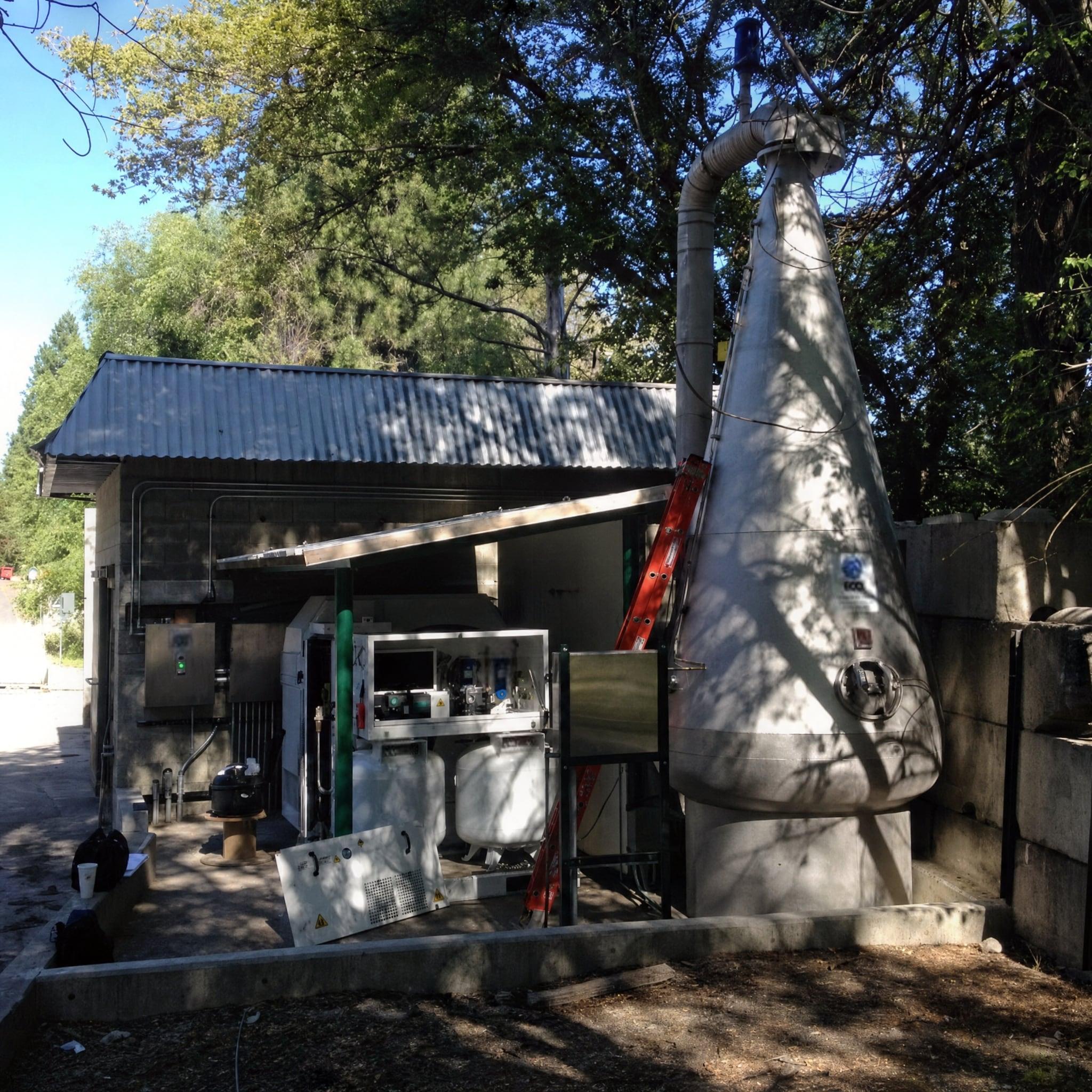
| Spokane, WashingtonECO₂ project record, Spokane, Washington | Paper mill treatment plant | H₂S at the primary clarifier | Aerobic through the clarifier, no H₂S at the weirs, no tank covers or odor scrubbers |
H₂S gas in ppm and dissolved oxygen in mg/L, as each source reports them.
Covering a Large Plant Costs More than Dissolving Oxygen
At the Dallas plant, the engineers priced covers and scrubbers, then tested oxygen at full scale.
Covering the primary clarifiers would have meant literally acres of covers, and collecting and treating well over 150,000 cfm of foul air. Covering and scrubbing the grit basins and primary clarifiers was estimated at over $50 million over the life of the system, and the covers and scrubbers were judged potentially hazardous to staff.
What the full-scale pilot at the Dallas plant measured, oxygen off and on
| Measure | Oxygen off | Oxygen on |
|---|---|---|
| Drop in total sulfide, pump station to grit basin influentMcMillen et al. 2008, p. 3 | 13% on average | Over 60% |
| Drop in dissolved sulfide, same stretchMcMillen et al. 2008, p. 3 | 5% | Over 68% |
| Surface H₂S at the primary clarifierMcMillen et al. 2008, p. 4 | Baseline | Down by over 80% |
| Modeled area of odor impact around the plantMcMillen et al. 2008, p. 4 | Baseline | Down by 96%, with grit basin odors also controlled |
For the full-scale system, the engineers compared two ways of putting in the oxygen. Downflow bubble contactors came to a 20-year life-cycle cost of $9.8 million, against $12.7 million for multiple injection points.
Sources: McMillen et al. 2008, p. 1; ECO₂, Dallas case study, p. 1
How It Compares with Covers, Scrubbers & Chemicals
Covering tanks and scrubbing the air treats the gas after it forms. Corrosion goes on under the covers, and a covered clarifier can become a confined space. Iron salts and nitrate can add solids or upset other processes, and bubbled air strips H₂S out of the water. Dissolved oxygen prevents the sulfide, adds no solids and strips nothing. It needs contact time: at the Dallas plant, oxygen with a low dose of ferrous sulfate as a catalyst proved the most cost-effective of four options studied.
Sources: Jacobs, clarifier paper, p. 1; ECO₂, sludge tank application note, p. 1; Jordan 2013, p. 3
Where ECO₂ Systems Work on This Problem
04For Engineers
Read the Papers
Questions Engineers & Operators Ask
Which odor control technologies are used at headworks?
Covers with scrubbers, chemicals dosed upstream, or dissolved oxygen. Oxygen added more than 15 to 20 minutes of travel upstream oxidizes the sulfide before the flow reaches the screens. At the Trinity River Authority's plant in Dallas, Texas, two cones raise a side stream to 60 mg/L and oxidize the 3 to 6 mg/L of incoming sulfide within minutes.
How do you control odor at primary clarifiers without covers?
Keep the clarifier aerobic. Dissolve enough oxygen into the influent to cover its uptake for the whole detention time, so no sulfide forms and none is stripped at the weirs. At Grand Rapids, Minnesota, the clarifier influent carries 20 mg/L of dissolved oxygen and the effluent 12 mg/L, with 0 ppm of H₂S.
Will dissolved oxygen disturb settling in the clarifier?
Not when it is fully dissolved before it reaches the clarifier. At Anson and Madison, Maine, 95.2% to 97.2% of the oxygen fed dissolved in the cone, and the clarifier showed no impact on settling.
Can oxygen control odor in sludge holding tanks?
Yes, with a light touch. Sulfide takes oxygen faster than the rest of the sludge, so feeding oxygen below the total uptake rate keeps the sludge near zero dissolved oxygen and stops the sulfide at elemental sulfur. Coarse bubble aeration, by contrast, absorbs only about 5% of its oxygen and strips the H₂S into the air.
Other Wastewater Odor Control Problems
05The Next Step
Send Us Your Clarifier's Numbers
Size, detention time, flow and any H₂S readings are enough for a budgetary price. The Primary Clarifier Design Data Checklist helps. ECO₂'s engineers check the data for a technical fit, then send a system design with its estimated capital and annual operating costs, and can visit your site to confirm the data.