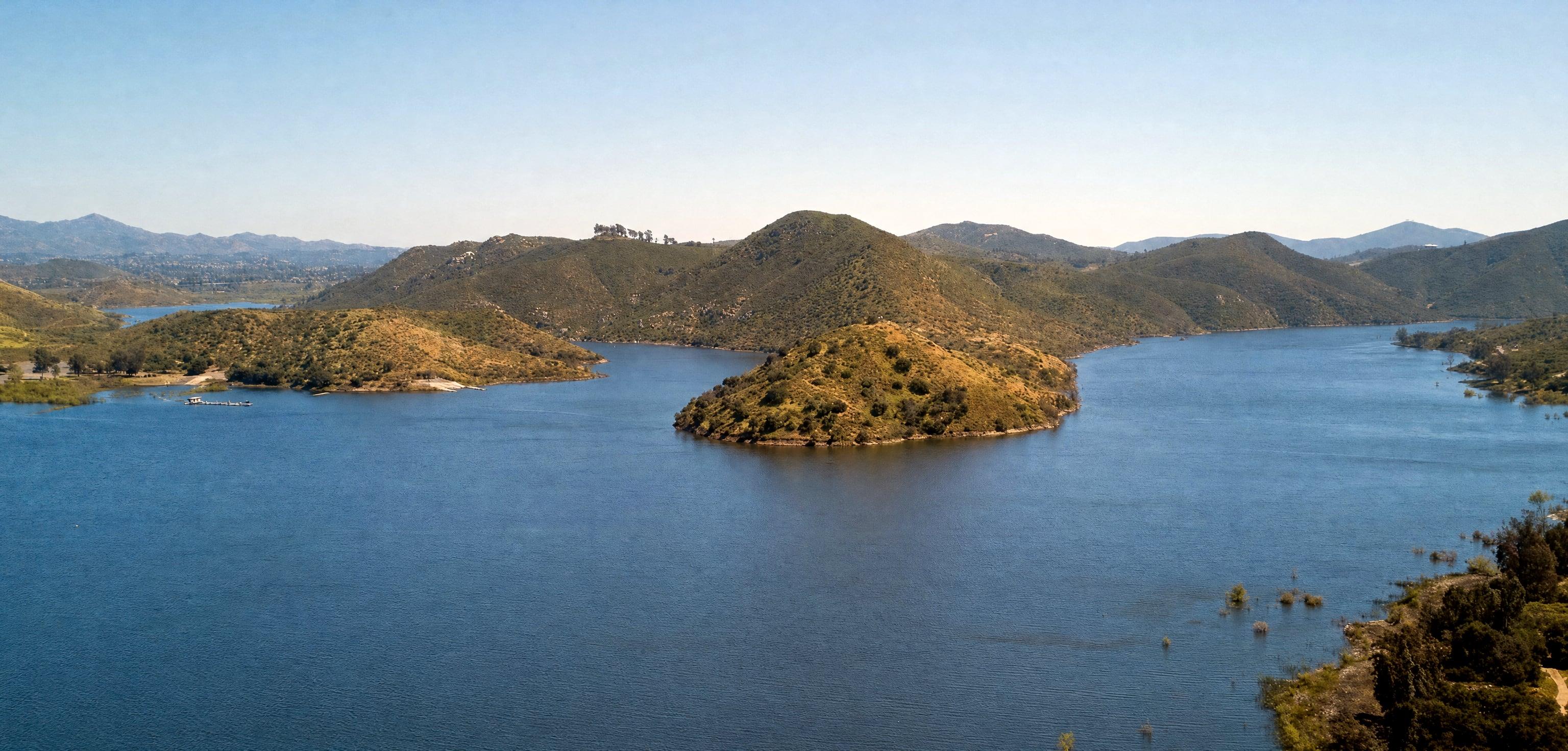
Hypolimnetic Oxygenation That Restores Lakes & Reservoirs
Hypolimnetic oxygenation dissolves pure oxygen into the cold bottom layer of a lake or reservoir without mixing it. At Camanche Reservoir, average chlorophyll a fell 79%.
01The Problem
The Role of Oxygen in Lakes & Reservoirs
Oxygen is the foundation of any healthy lake or river. Dissolved oxygen (D.O.) supports fish, invertebrates and microorganisms, and naturally enters water through wind, waves and photosynthesis. But excess nutrients disrupt this balance. Algal blooms grow rapidly, then decompose, stripping oxygen from the water and triggering fish kills and further decline.
More on the Problem
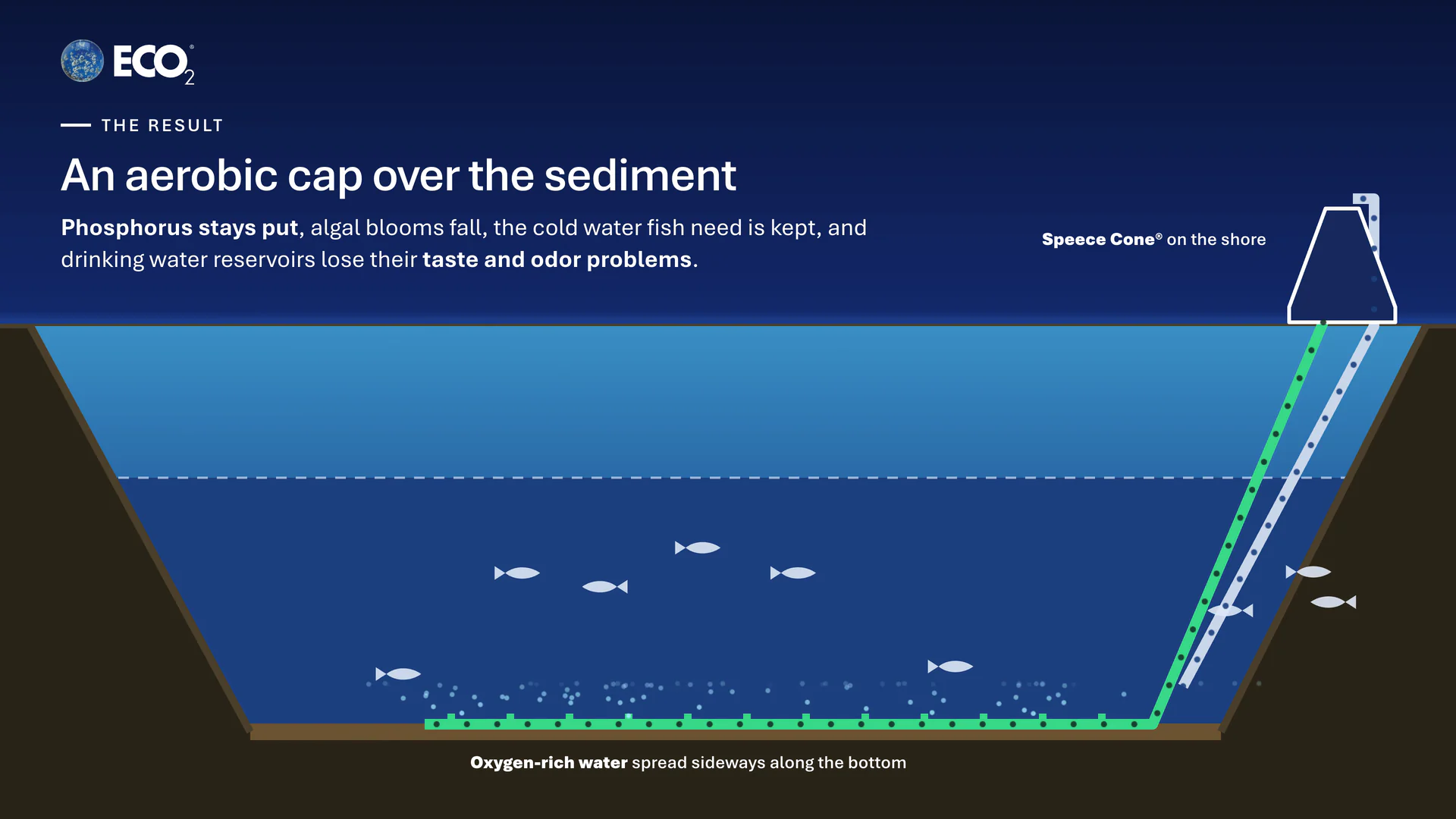
When oxygen is lost, a damaging cycle begins. Thermal stratification keeps oxygen from reaching deep water. The anoxic bottom layer releases phosphorus from the sediment, which feeds more algae, and produces methane and methylated mercury, while bad taste, odor and H₂S reach the water supply.
Deep-water oxygenation reverses these effects. Restoring oxygen to bottom waters stops internal loading, prevents the harmful byproducts and shifts bacteria back to aerobic processes.
Which Problem Do You Have?
Drinking Water Reservoirs
The bottom water goes anoxic each summer and sends metals and odors to the intake.
See How It Is SolvedEutrophication & Algae
Phosphorus released from anoxic sediment feeds the summer blooms.
See How It Is SolvedRivers, Harbors & Canals
A deepened harbor or a canal that lost its flushing runs short of the oxygen it needs.
See How It Is SolvedHydropower & Fisheries
The cold layer and the water released through the dam run short of oxygen.
See How It Is Solved
02How It Works
How a Lake Oxygenation System Adds Oxygen Without Mixing
ECO₂’s oxygenation systems deliver dissolved oxygen at targeted depths, preventing anoxic conditions and limiting nutrient release from sediments.
The System in Detail
Unlike traditional aeration, which can disrupt stratification and resuspend pollutants, ECO₂’s hypolimnetic oxygenation provides precise oxygenation without mixing, for a stable and healthy ecosystem.
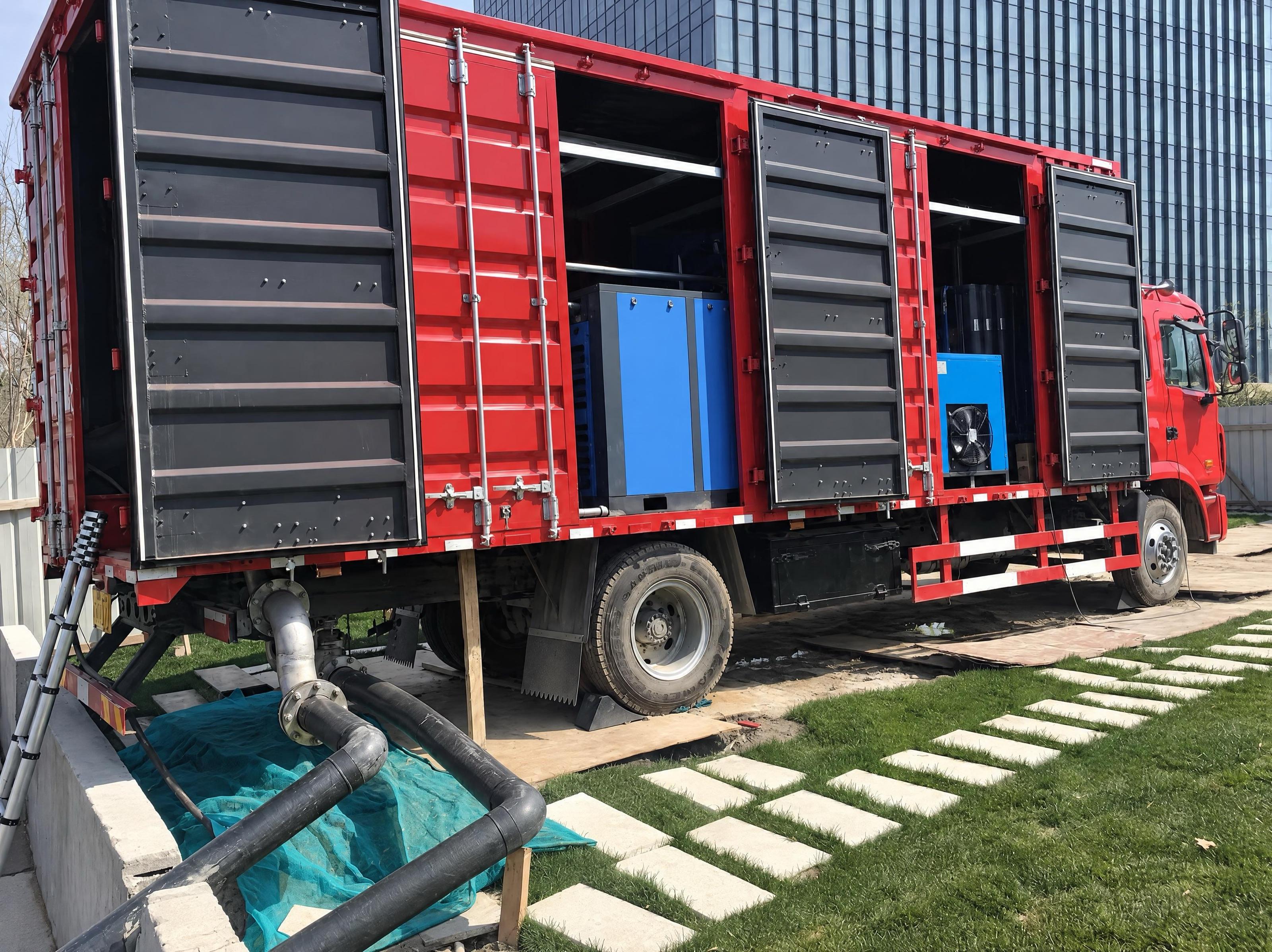
Oxygen at the bottom keeps the cold-water habitat fish need, and as a reservoir oxygenation system it cuts the algae, odor and taste problems that reach a drinking water intake. It works for small lakes and large reservoirs alike, and from the bank it oxygenates rivers, harbors and canals too.
Shallow lakes and wetlands. In shallow water the cone still transfers 90 to 95% of its oxygen at 1 m (3 ft) depth, without stirring up settled organics, and oxygen raises a wetland's treatment capacity, including nitrification and nitrogen removal.
Sources: ECO₂ Lake & River Oxygenation (2025); Nitrification and Total Nitrogen Removal in a Super-oxygenated Wetland (2018)

03The Proof
What Oxygen Changed, in Numbers
10,000lbs/day
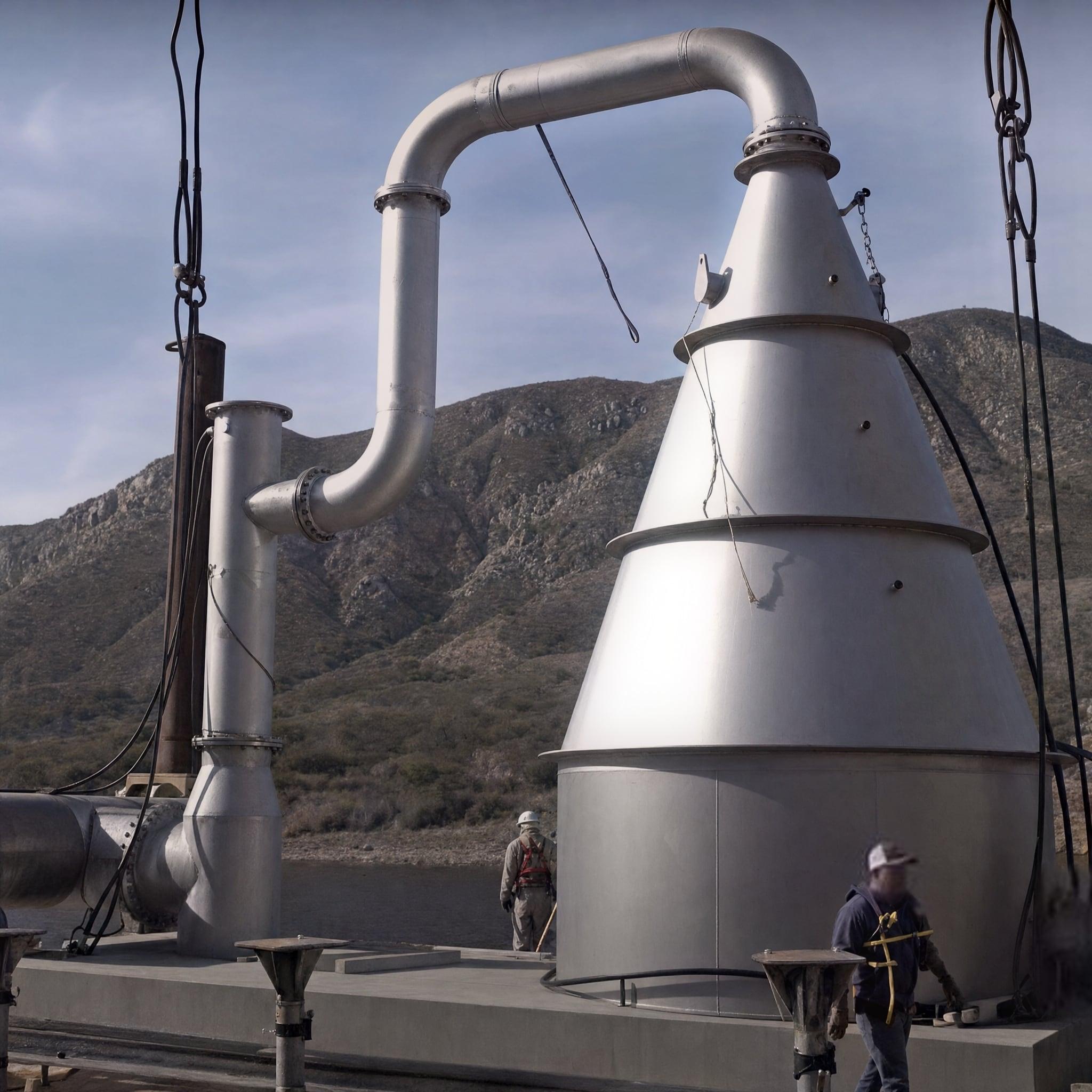
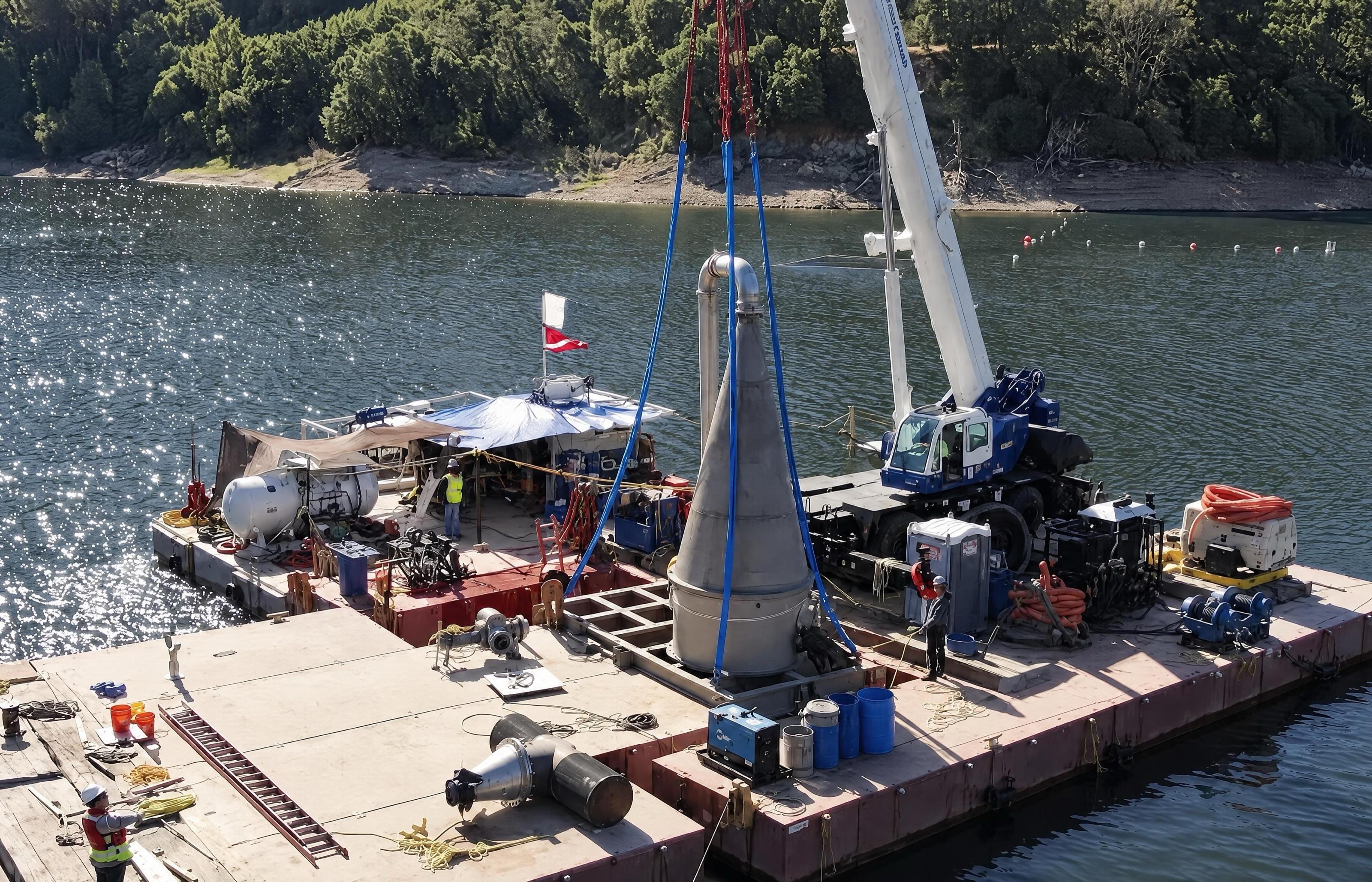
The Lake Hodges system in San Diego is sized to feed up to 10,000 lbs of oxygen a day. Source: Lake Hodges Receives Supplemental Oxygen System to Reduce Nutrient Loading and Control Algae (2017), page 2
95% or better
In the Corps of Engineers' 60-day test, the cones averaged 95% or better oxygen transfer efficiency, against an 80% criterion. Source: Oxygen Transfer Efficiency Test Report Summary for Savannah Harbor Expansion (2019), pages 1 and 2
Three Decades of Results at Camanche Reservoir
Every Result in One Table
Camanche Reservoir before and after hypolimnetic oxygenation, from Hypolimnetic Oxygenation 1 to 3, Lake and Reservoir Management, 2019
Camanche Reservoir before and after hypolimnetic oxygenation, from Hypolimnetic Oxygenation 1 to 3, Lake and Reservoir Management, 2019
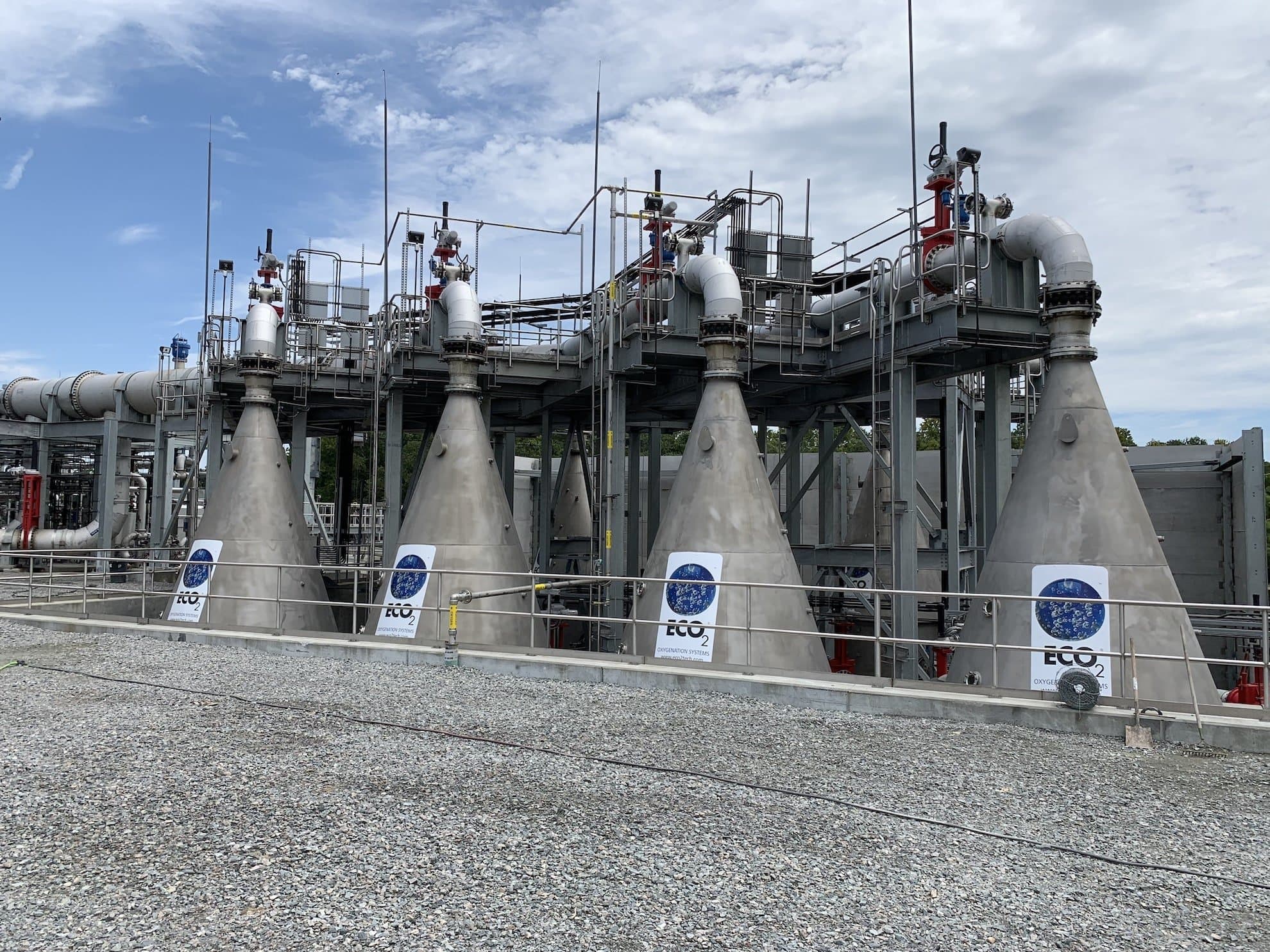
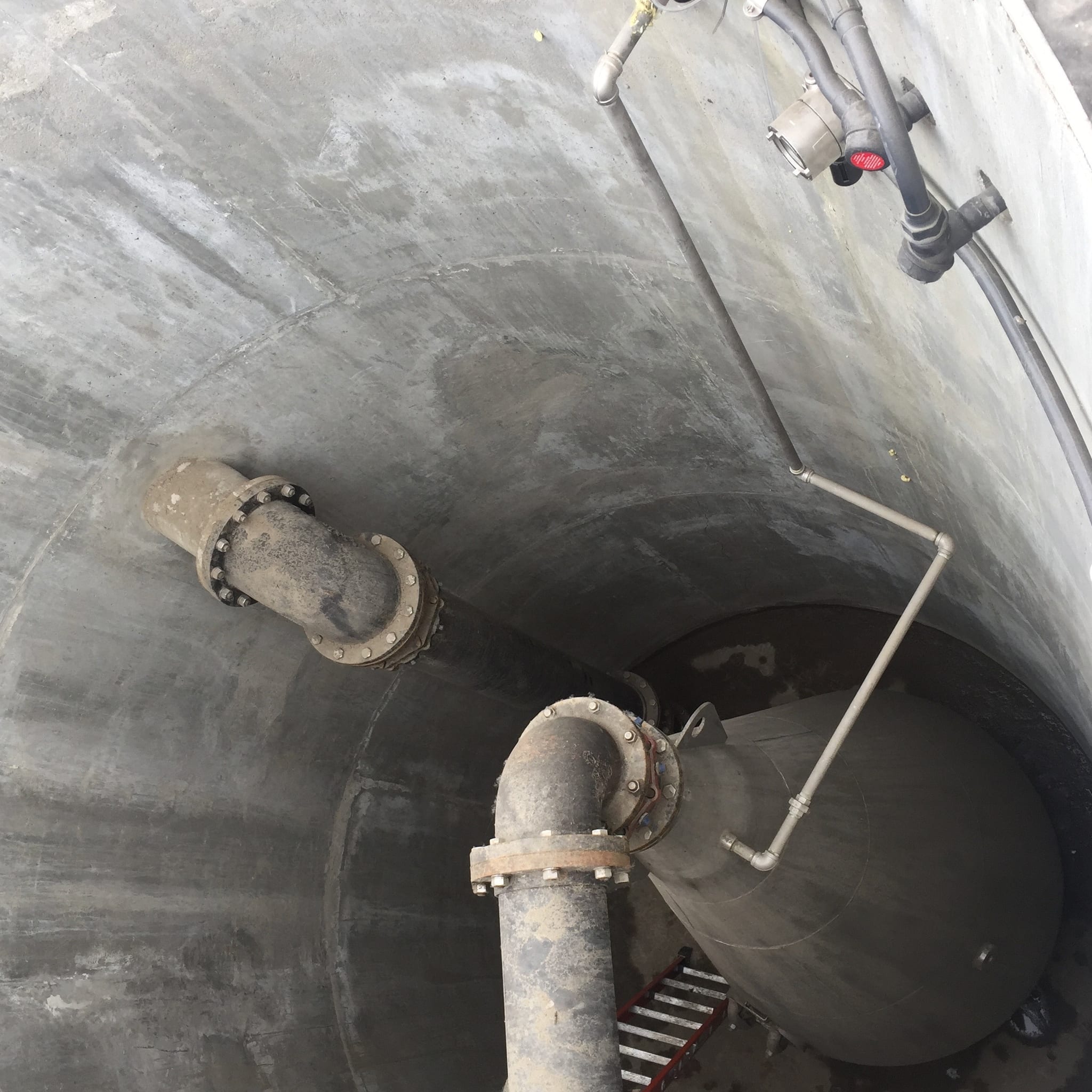
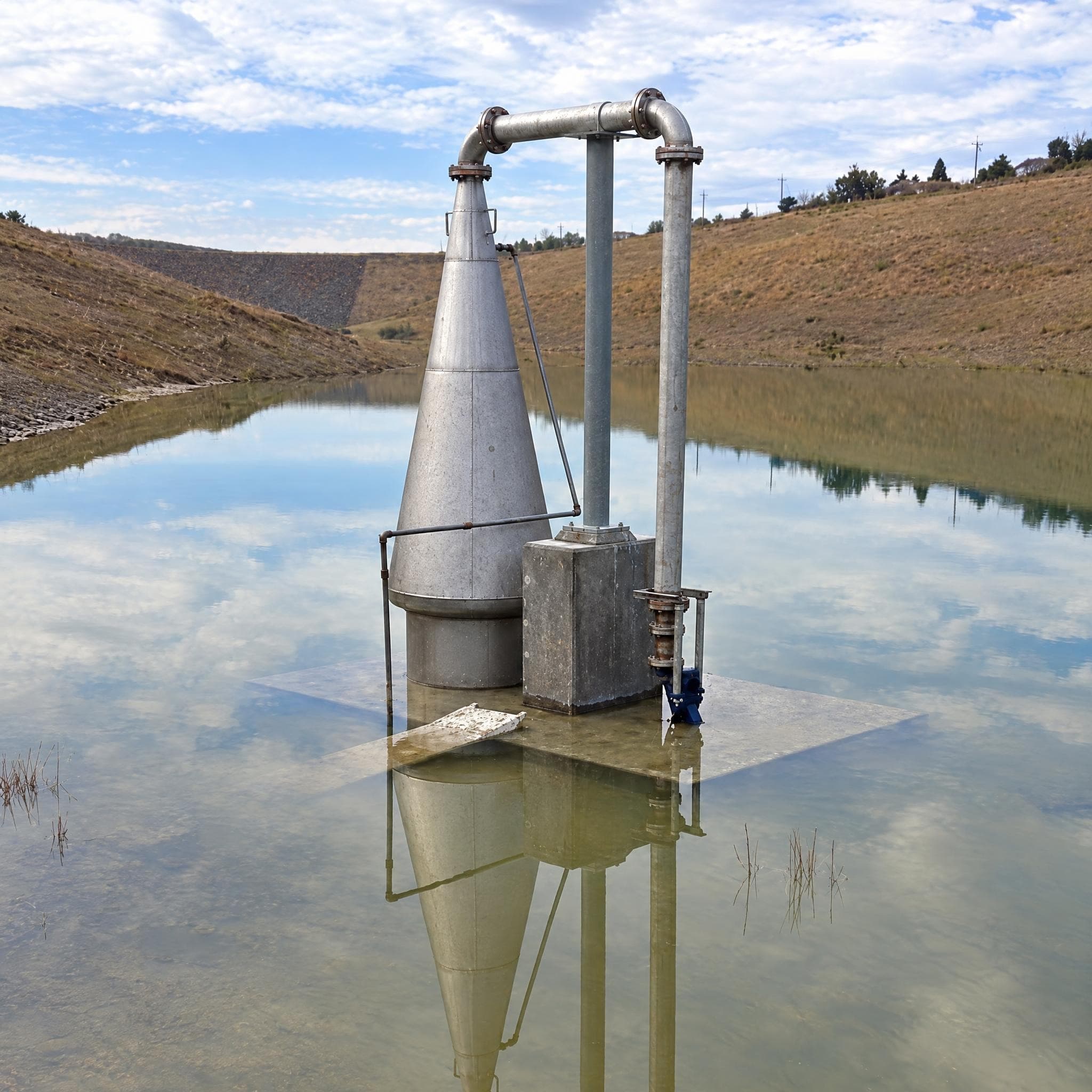
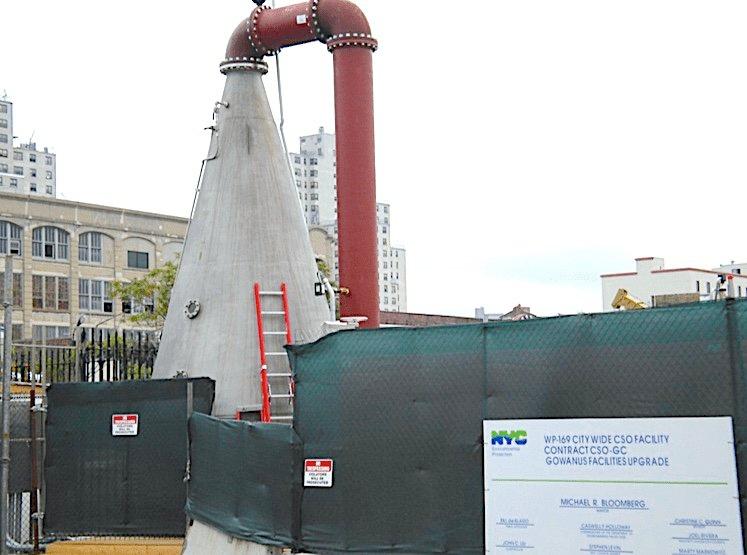
Where It Works: Reservoirs, Lakes & Rivers
04Why Switch
Lake Aeration vs Oxygenation
Aeration moves air into a lake; oxygenation dissolves pure oxygen into it. Aeration that mixes the lake warms its bottom water and takes away the cold-water habitat, so it suits a nutrient-rich lake with a warm-water fishery [1, 2, 3]. Oxygenation adds oxygen to the cold bottom layer and keeps the layers, as a drinking water reservoir or a cold-water fishery needs [1, 4].
Five Ways to Add Oxygen to a Lake
| Method | The Lake's Layers | Published Transfer Efficiency |
|---|---|---|
| Downflow Contact Oxygenator (Speece Cone) | Kept: the water goes back at the depth and temperature it came from. [5] | 95% or better average in a 60-day full-scale test, against an 80% criterion. Over 90% at design flow below a dam. 80 to 90% at bench scale. [1, 6, 7] |
| Bubble-Plume Diffuser (Line or Circular) | Kept when the plumes are weak and widely distributed. [3] | Above 90% at depths over 45 ft (14 m); greatly reduced in water as shallow as about 30 ft (10 m). [3] |
| Side-Stream Supersaturation | Kept: in a 9.3 m deep reservoir it raised bottom oxygen without weakening stratification or warming the sediment. [8] | About 100% standard transfer efficiency for a bench-scale unit in clean water (a wastewater study, not a lake). [9] |
| Hypolimnetic Air-Lift Aerator | Kept by design. Air-driven units can destratify by accident, raise sediment oxygen demand and supersaturate the hypolimnion with nitrogen. [1, 10] | Low, so recirculation rates are high: 0.2 to 0.6 kg O₂ per kWh in 1980s data. [10] |
| Artificial Mixing (Destratification, Layer Aeration) | Removed by destratification: the bottom water warms and the cold-water habitat goes. Layer aeration shapes where stratification sits. [1, 2, 3] | For diffused-air plumes, 0.6 to 3.9 kg O₂ per kWh and a mixing efficiency of 0 to 8%, in 1980s data. [10] |
Each figure as its source publishes it; the tests behind them are not alike.
References
The 10 sources behind the numbers in brackets
- Moore B, Mobley M, Little J, Kortmann B, Gantzer P. 2015. What works: aeration and oxygenation methods for stratified lakes and reservoirs. NALMS LakeLine 35(1):17 to 28.
- Gerling AB, Browne RG, Gantzer PA, Mobley MH, Little JC, Carey CC. 2014. First report of the successful operation of a side stream supersaturation hypolimnetic oxygenation system in a eutrophic, shallow reservoir. Water Research 67:129 to 143.
- Kim et al. 2020. Oxygen transfer performance of a supersaturated oxygen aeration system evaluated at high biomass concentrations. Process Safety and Environmental Protection 139:171 to 181.
- Johnson PL. Thoughts on selection and design of reservoir aeration devices. US Bureau of Reclamation, PAP-449 (undated; cites 1983 sources).
05For Engineers
Read the Papers
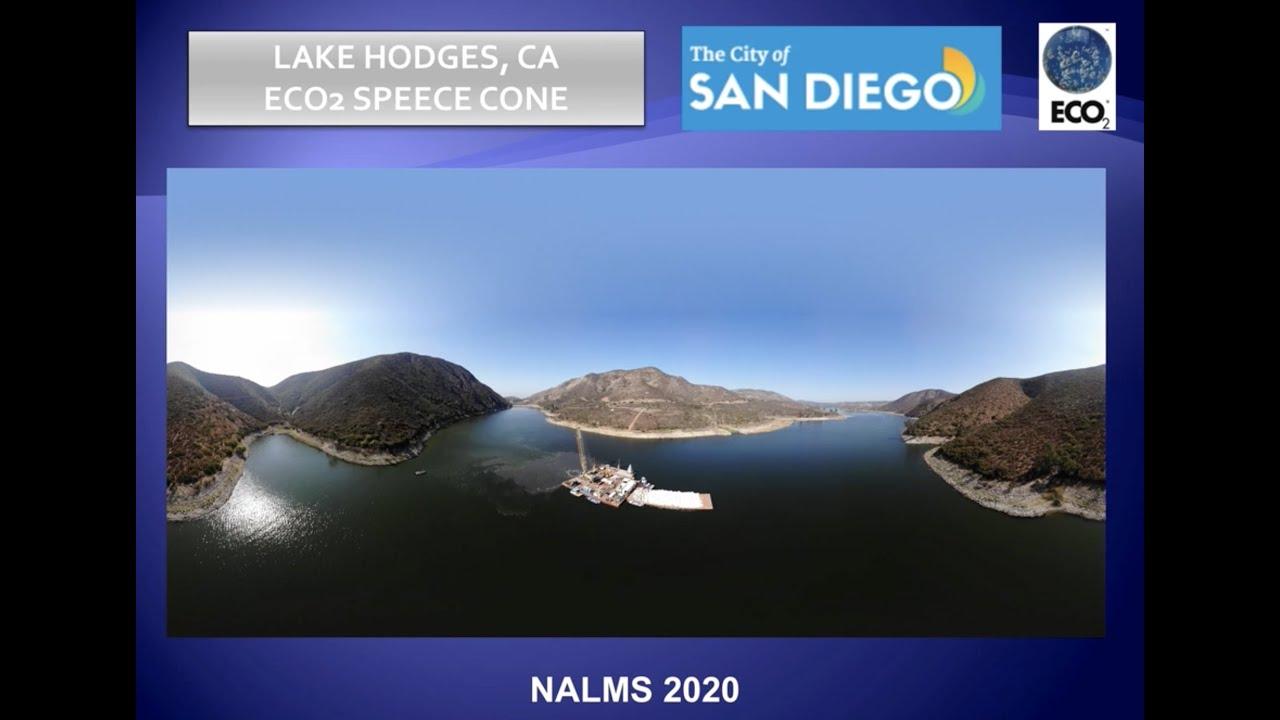
NALMS 2020: The Lake Hodges Oxygenation Project
How the Lake Hodges Speece Cone was designed, fed from shore and set on the reservoir floor, in a 2020 talk to the North American Lake Management Society.
Questions Lake Managers Ask
What is hypolimnetic oxygenation?
Adding dissolved oxygen to the hypolimnion, the cold bottom layer of a stratified lake or reservoir, without mixing it with the warm surface water. Keeping the sediment-water interface oxygenated keeps phosphorus and metals in the sediment and stops the anoxic cycle that feeds algae.
How is oxygenation different from aeration or destratification?
Destratification mixes the whole water column so oxygen enters at the surface, which warms the bottom water and loses the cold-water habitat. The Speece Cone dissolves pure oxygen into water drawn from the hypolimnion and returns it at the same depth and temperature, so the lake stays stratified.
Is the system installed in the water or on shore?
Either. At Lake Hodges the cone, pump and intake screen sit on a skid on the lake bottom. At Barberton the systems sit in a building beside the reservoir, with piping to and from the hypolimnion.
How much does a reservoir oxygenation system cost?
It depends on the oxygen demand, the depth and the oxygen supply. The 2014 water quality assessment for Lake Hodges put a 3 ton a day Speece Cone system at $2,897,000 total project cost, an order-of-magnitude estimate, and $232,000 a year to operate. ECO₂'s oxygen source bulletin puts the oxygen at $102 to $116 a ton, depending on the supply.
How is a hypolimnetic oxygenation system sized?
From the oxygen demand of the bottom water: sediment oxygen demand plus the demand in the water column, best measured as the drop in dissolved oxygen after the lake stratifies, plus a safety factor. San Pablo Reservoir's system was sized at 5 tons a day for an estimated demand of 4.75 tons a day.
What are the alternatives to hypolimnetic oxygenation?
Destratification mixes the lake so oxygen enters at the surface; it warms the bottom water and rules out choosing the depth of withdrawal. Hypolimnetic air-lift aerators and bubble-plume diffusers add air or oxygen in the water column, and alum binds phosphorus in the sediment. Which fits depends on the depth, the oxygen demand and whether the cold layer must stay.
06The Next Step
Send Us Your Reservoir's Numbers
Send your site data through the contact form, or see a system installed first in the System Animation. ECO₂ returns a budgetary price. ECO₂'s engineers check the data for a technical fit, then send a system design with its estimated capital and annual operating costs, and can visit your site to confirm the data.