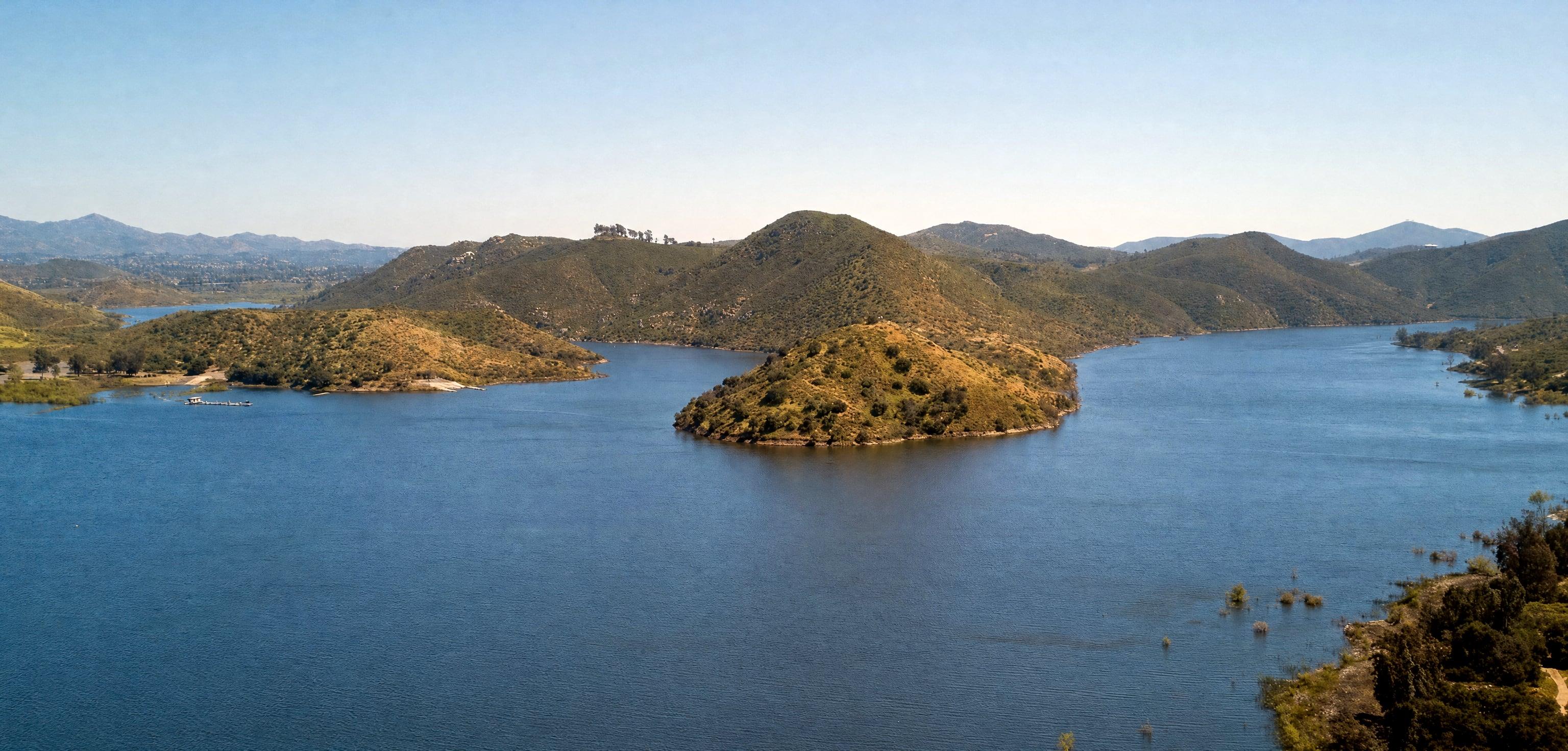
Eutrophication & Algae Blooms: Stop Them at the Sediment
Stop internal phosphorus loading and the blooms it feeds: measured results for oxygenation, how it compares with alum, and when it is not enough.
01The Problem
The Sediment Holds More Phosphorus than the Water
Internal phosphorus loading is phosphorus released from a lake's own sediment when the bottom water loses its oxygen. Keep the sediment oxygenated and the release stops: at Camanche Reservoir, with no other management, average chlorophyll a fell 79%, from 14.6 to 3.1 µg/L, and Secchi depth rose from 0.47 to 4.9 m.
Why It Happens
The phosphorus pool in lake sediment is often more than 100 times the pool in the water. Much of it is bound to iron, which holds it while the sediment surface has oxygen. Retention stays high when the iron to phosphorus ratio is above about 15 by weight and the surface stays oxidized. Phosphorus can be released from as deep as 20 cm, and some lakes keep releasing more than they receive for decades. That is internal loading.
When the bottom water goes anoxic, the iron is reduced and both iron and phosphate return to the water, where they fertilize the algae.
Sources: Søndergaard, Jensen and Jeppesen 2003; ECO₂, oxygen supplementation strategy
02How It Works
With Oxygen on the Sediment, the Iron Holds the Phosphorus
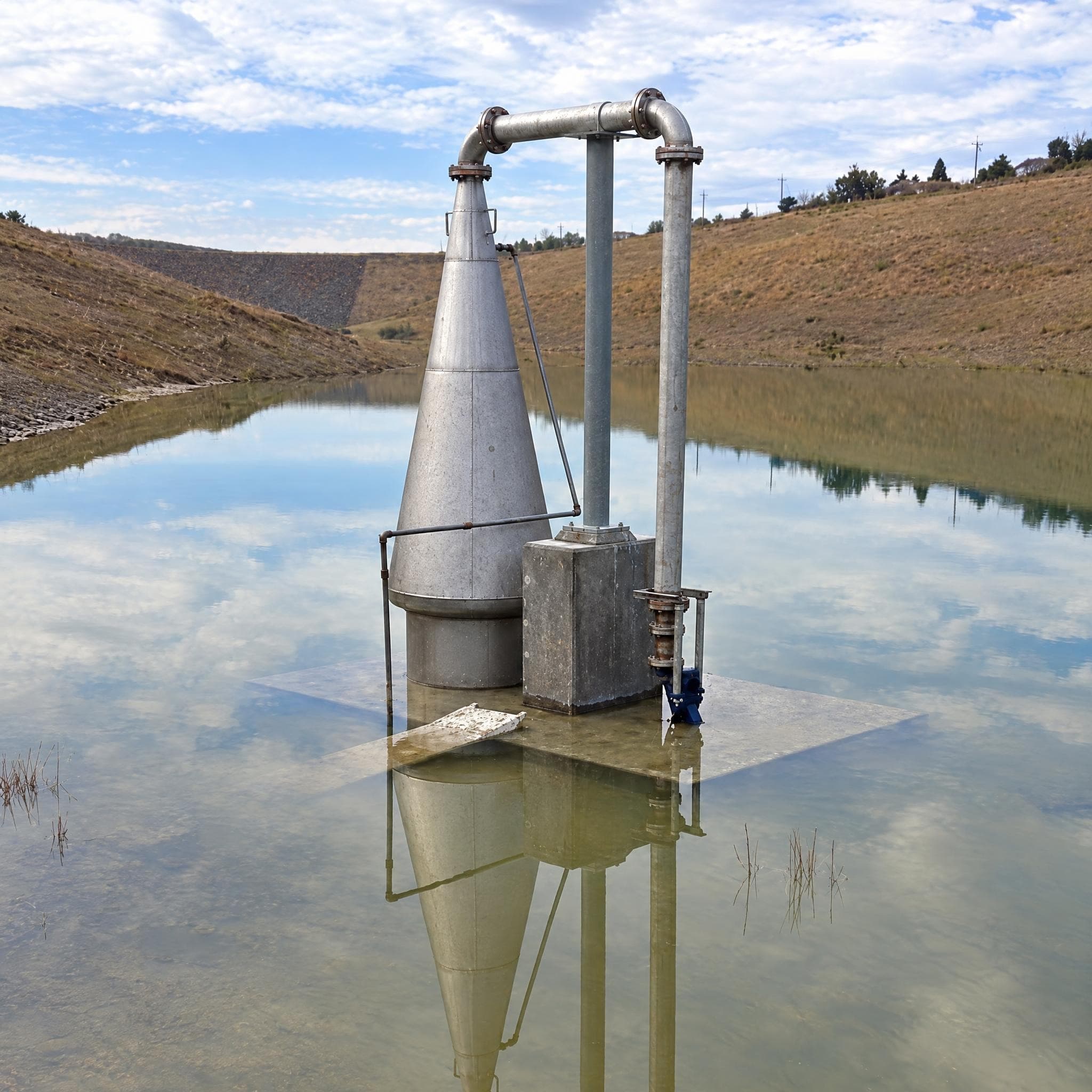
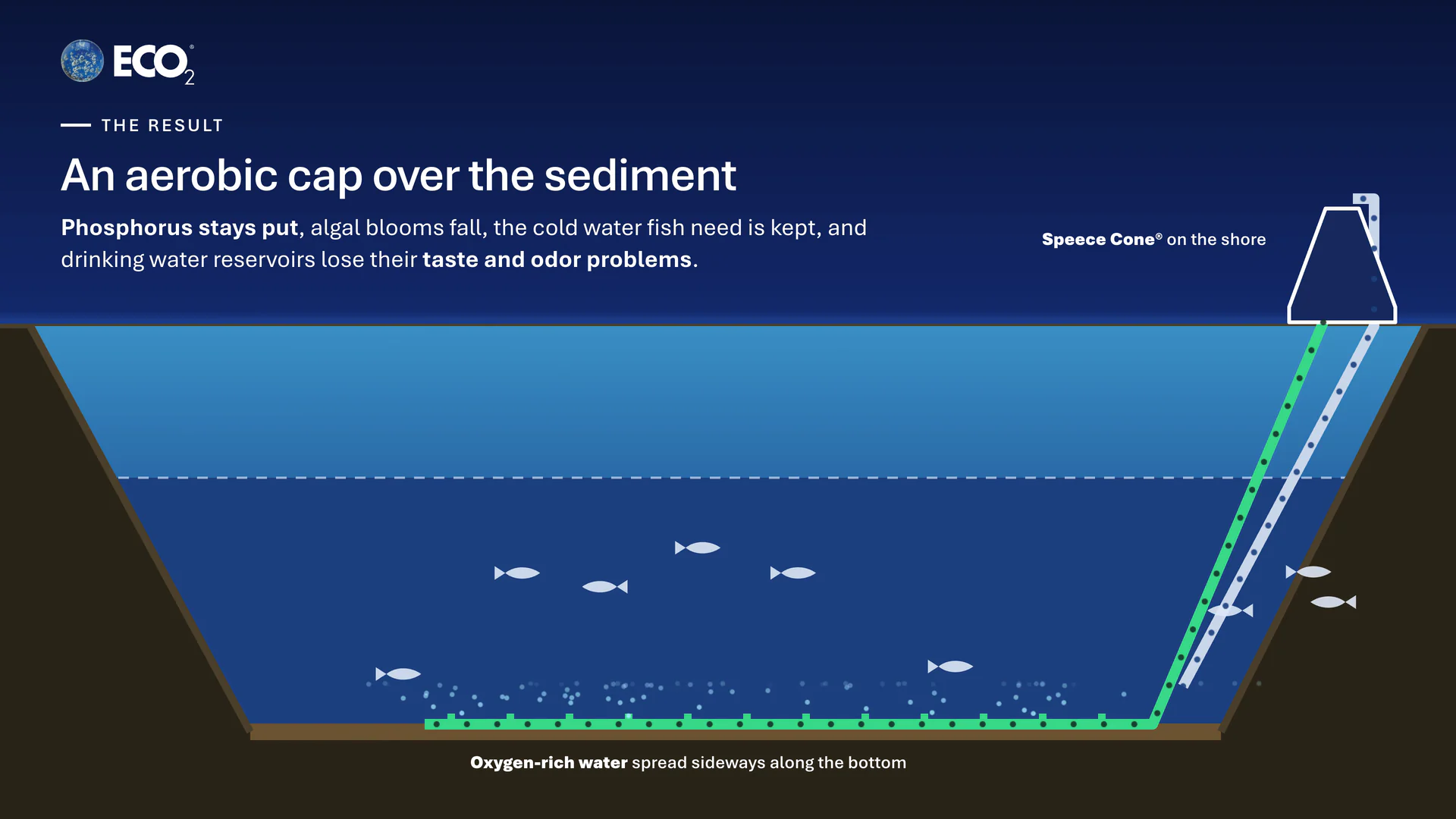
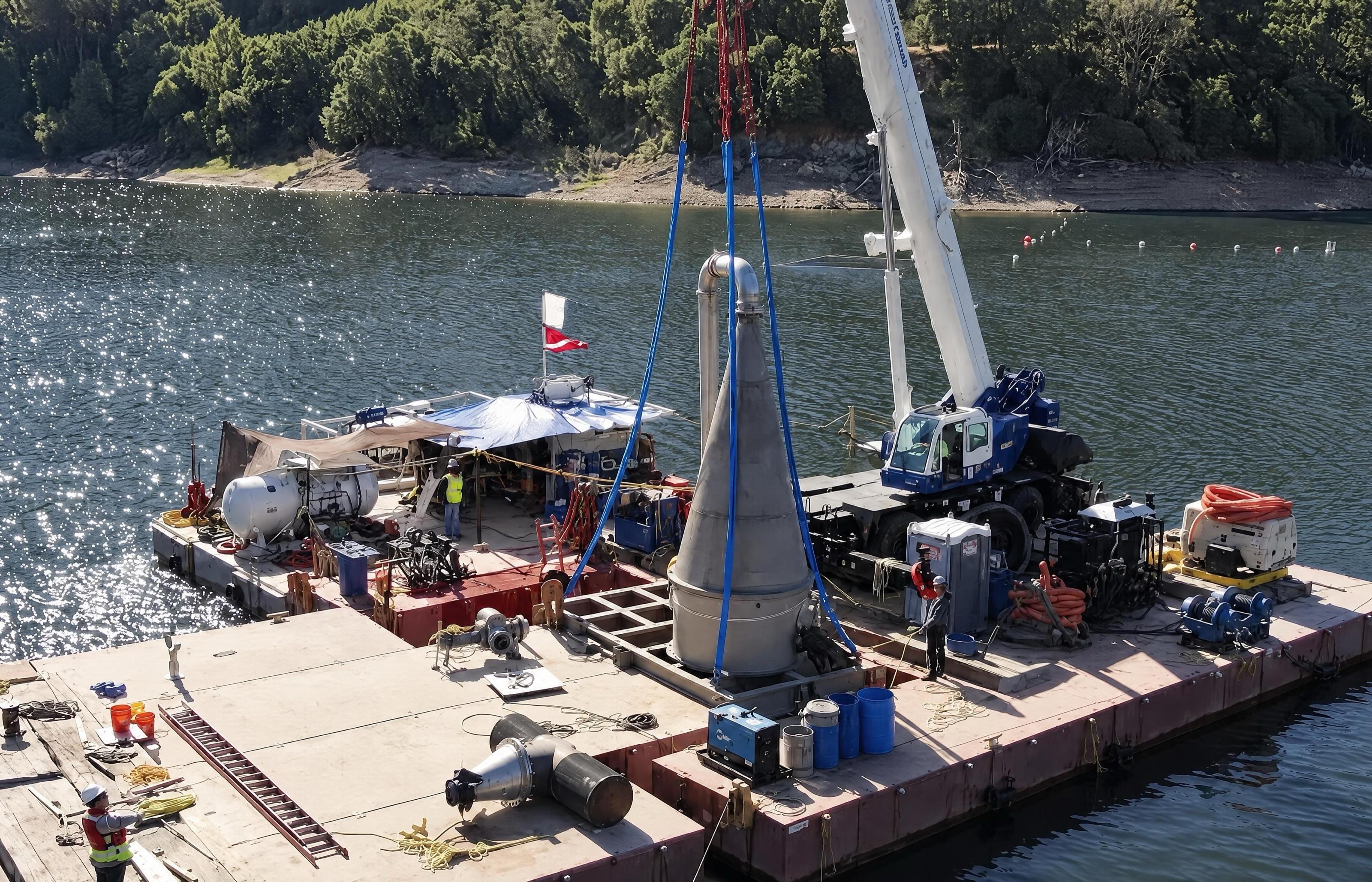
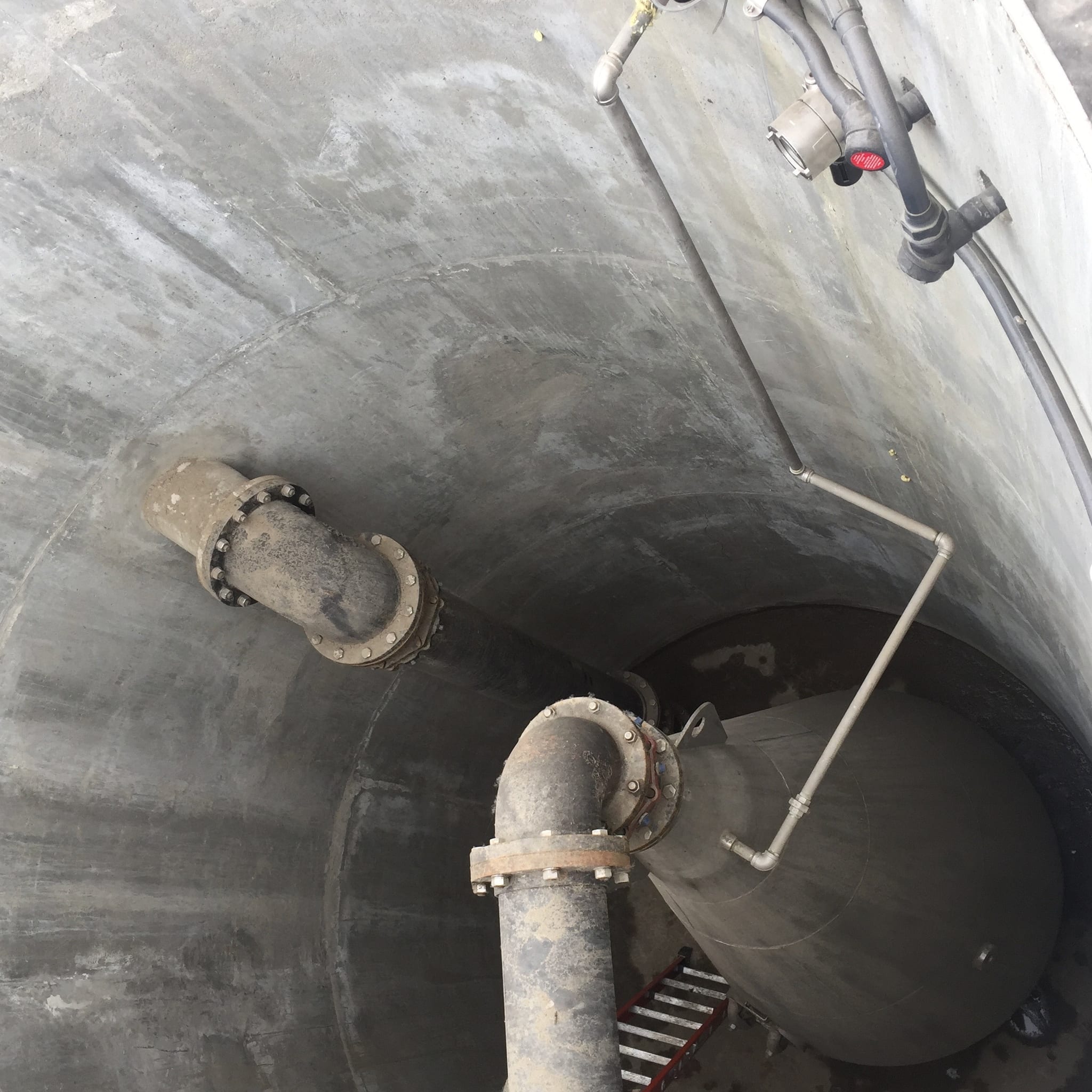
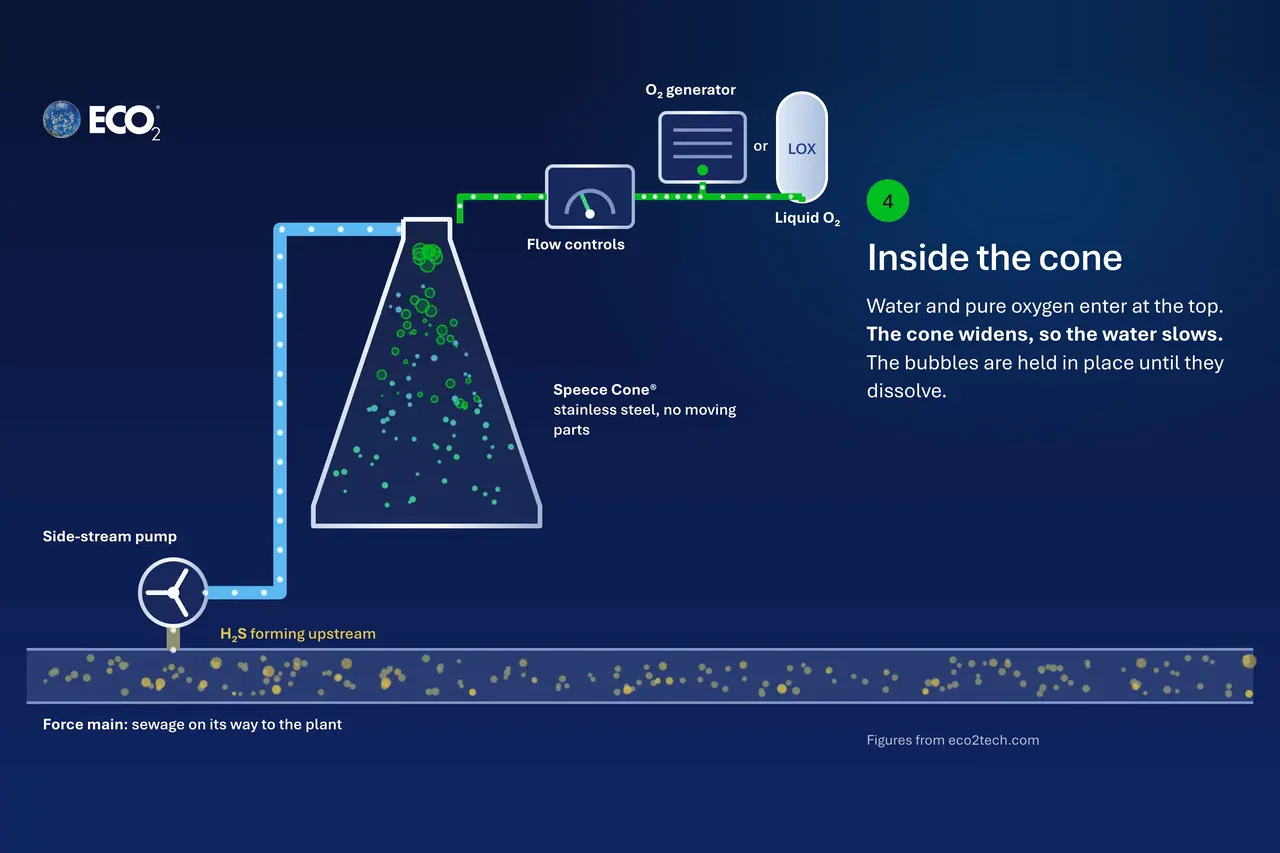
A hypolimnetic oxygenation system takes a side stream from the bottom layer, dissolves pure oxygen into it and returns it horizontally at the same depth and temperature. It spreads over the sediment as an aerobic cap, and the lake stays stratified.
The System in Detail
With oxygen at the sediment surface, the iron stays oxidized and holds the phosphate. San Pablo Reservoir's sediment showed iron to phosphorus ratios of 23 to 28, which points to good phosphorus binding once the sediment surface stays oxic.
Sources: Mello, Environmental Science & Engineering; ECO₂, oxygen supplementation strategy; San Pablo Reservoir final report, 2017
03The Proof
Oxygen Shuts the Sediment, Then the Algae Follow
Camanche Reservoir, measured over 12 years after oxygenation began, with no other management.
The record also shows what happens without it. In 1995, when the system ran for only a week in late October, and during an electrical failure in 2001, surface phosphorus and bottom phosphate spiked. Both returned to low levels once oxygenation resumed.
Every Result in One Table
Camanche Reservoir before and after hypolimnetic oxygenation
Camanche Reservoir before and after hypolimnetic oxygenation
| Measure | Before | After |
|---|---|---|
| October bottom-water phosphateHorne and Beutel 2019 | 95 µg P/L | 15 µg P/L |
| October bottom-water ammoniumHorne and Beutel 2019 | 706 µg N/L | 28 µg N/L |
| Average chlorophyll a, growth seasonHorne and Beutel 2019 | 14.6 µg/L | 3.1 µg/L |
| Peak chlorophyll aHorne and Beutel 2019 | 49 µg/L | 8 µg/L (2004) |
| Average Secchi depthHorne and Beutel 2019 | 0.47 m (1.5 ft) | 4.9 m (16 ft) |
| Cyanobacteria (Aphanizomenon and Dolichospermum)Horne and Beutel 2019 | Blooms | Down more than 95% |
Large drops in phosphate, total phosphorus and ammonium appeared within 4 weeks of start-up. The authors call it the first successful long-term use of a large system on its own.
Oxygenation or Alum: Compare the Record
Both cut internal loading. They do it differently, last differently and cost differently.
Hypolimnetic oxygenation and alum, from the published record
| Measure | Hypolimnetic oxygenation | Alum |
|---|---|---|
| What it doesHorne and Beutel 2019Horne and Faisst 2022 (opens in a new tab) | Keeps the sediment surface oxygenated, so iron holds the phosphorus; also cuts ammonium, iron, manganese and hydrogen sulfide | Binds phosphate in the sediment, even during anoxia |
| How long it lastsHorne and Beutel 2019Horne and Faisst 2022 (opens in a new tab) | While it runs; phosphate spiked at Camanche when the system stopped | Treatments typically repeated about every 10 years in temperate climates |
| Phosphorus cost at Camanche, whole reservoirHorne and Faisst 2022 (opens in a new tab) | $19.3 per kg removed | $16 per kg |
| Fish and other pollutantsHorne and Faisst 2022 (opens in a new tab) | Oxygen for the cold-water fishery; iron, manganese and metals fall too | May not give the same fisheries benefit, and does not remove the other pollutants |
Horne and Faisst also put the cost of phosphorus removal by oxygenation at 2.4 times that of many alum treatments, and note that the two come closer over 20 years because alum treatments need repeating.
When Oxygen Alone Is Not Enough
An outside load, a system with no margin, and shallow water each need a plan.
- An outside load. Sediment treatments work only once the external phosphorus load has been cut enough. At Canyon Lake, watershed controls are the long-term answer, with in-lake work needed for 15 to 30 years.
- No margin. Newman Lake's system kept the anoxic factor below 10 days once it ran full time. Compressor outages in July and August 2012 let bottom oxygen fall below 1 mg/L at 6 m and deeper, and the season's total phosphorus averaged 34 µg/L against a target of about 20.
- Shallow water. In shallow lakes, wind can stir up the sediment and release depends on many factors, so internal loading is partly lake specific. ECO₂ reports 90 to 95% transfer efficiency at 1 m depth in shallow lakes and wetlands.
Sources: Søndergaard, Jensen and Jeppesen 2003; Horne, Canyon Lake report; Newman Lake 2012 monitoring report; ECO₂ Lakes and Rivers brochure
How It Compares with Other Methods
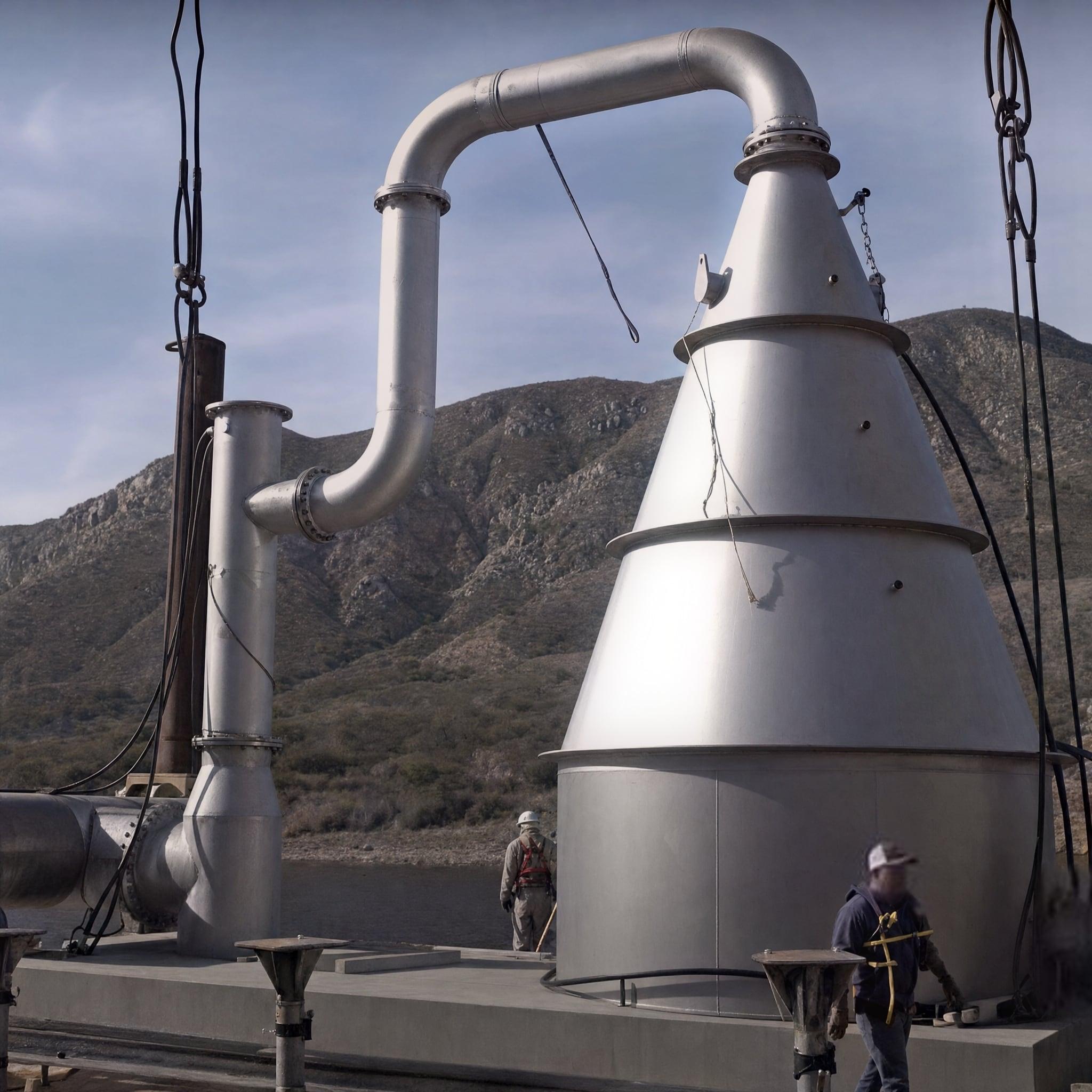
Alum binds phosphorus for years but is repeated, and adds no oxygen. Dredging removes phosphorus-rich sediment but works only once the outside load is cut. Algaecides treat the bloom, not the sediment. Mixing the whole lake brings oxygen down but warms the bottom water. A downflow contact oxygenator puts dissolved oxygen on the sediment and leaves the layers in place.
Sources: Horne and Faisst 2022 (opens in a new tab); Søndergaard, Jensen and Jeppesen 2003; San Pablo Reservoir final report, 2017; Beutel 2002
Where ECO₂ Systems Work on This Problem
04For Engineers
Read the Papers
- Technical paper
Reversing Eutrophication at Camanche
Read the Technical Paper - Technical paper
Shallow Lake Internal Phosphorus Loading
Read the Technical Paper - Technical paper
Newman Lake Water Quality Monitoring
Read the Technical Paper - Technical paper
Restoring Canyon Lake Water Quality
Read the Technical Paper
Questions Lake Managers Ask
Is oxygenation better than alum?
They work differently. At Camanche Reservoir, oxygenation removed phosphorus at $19.3 per kg against $16 per kg for alum, but alum is typically repeated about every 10 years and adds no oxygen for fish or for iron and manganese. Some lakes use both.
How fast does phosphorus fall?
Within weeks at the bottom. At Camanche Reservoir, large drops in phosphate, total phosphorus and ammonium appeared within 4 weeks of start-up, and October bottom-water phosphate fell from 95 to 15 µg P/L.
Will oxygenation stop cyanobacteria blooms?
Where internal loading drives them, it cuts them sharply. At Camanche Reservoir, Aphanizomenon and Dolichospermum fell more than 95% and average chlorophyll a fell 79%.
What if most of the phosphorus comes from the watershed?
Then cut the outside load first. Sediment treatments work only once the external load has been reduced enough, and the Canyon Lake report pairs watershed controls with in-lake work.
05The Next Step
Ask for a Phosphorus Budget Review
Send your phosphorus, chlorophyll and dissolved oxygen records for a first look at how much of the load comes from the sediment. ECO₂'s engineers check the data for a technical fit, then send a system design with its estimated capital and annual operating costs, and can visit your site to confirm the data.