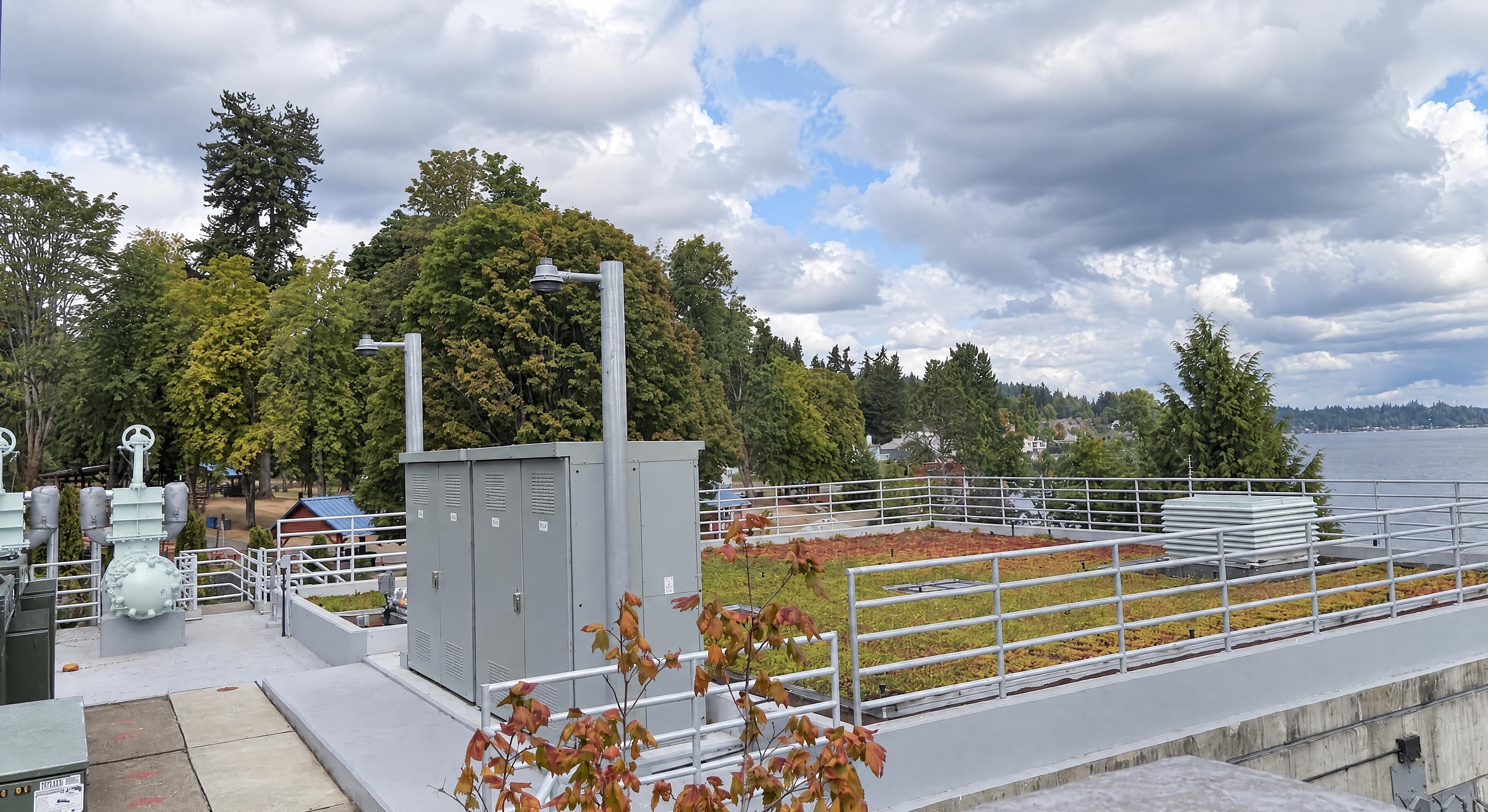
TRA - To Boldly Go Where No One Else Has Gone - Odor Control at WWTP using Oxygen
The Trinity River Authority of Texas used high purity oxygen to control odor at the headworks and primary clarifiers of its Central Regional Wastewater System plant.
Details
Summary
Oxygen with a Little Iron Works Best
Oxygen alone did less than the pilot promised, so a low dose of ferrous sulfate went in as a catalyst. Together they gave the lowest odor and the most cost effective option (p. 4).
Key Figures
2gpm
Ferrous sulfate catalyst feed with oxygen, against 8 gpm of iron alone Source: PDF page 4 (opens in a new tab)
940D/T
Odor concentration at primary clarifier 6 mid-tank with oxygen plus iron (3,350 with oxygen only) Source: PDF page 4 (opens in a new tab)
53,050D/T
Odor at Headworks Building B with oxygen only Source: PDF page 4 (opens in a new tab)
Questions
Can high purity oxygen control odor at a wastewater treatment plant?
At the Trinity River Authority's plant, a pilot showed that more dissolved oxygen in the raw wastewater cut sulfide and the hydrogen sulfide given off by the primary clarifiers, even at a low dose (p. 2).
How does oxygen remove hydrogen sulfide from wastewater?
It oxidizes sulfide to sulfate and elemental sulfur, and it keeps the wastewater aerobic so hydrogen sulfide does not form again (p. 1).
Why did the full scale oxygen system control less odor than the pilot?
Recycle streams from solids treatment added an oxygen demand the pilot did not have, and a large flow of spent filter backwash shortened the contact time before the headworks (p. 3).
Why add iron to an oxygen system for odor control?
Several metals speed up the reaction between oxygen and sulfide. A low dose of ferrous sulfate gave lower odor than oxygen or iron alone, and iron alone needed a much higher dose to match it (pp. 3, 4).
What is a downflow bubble contactor?
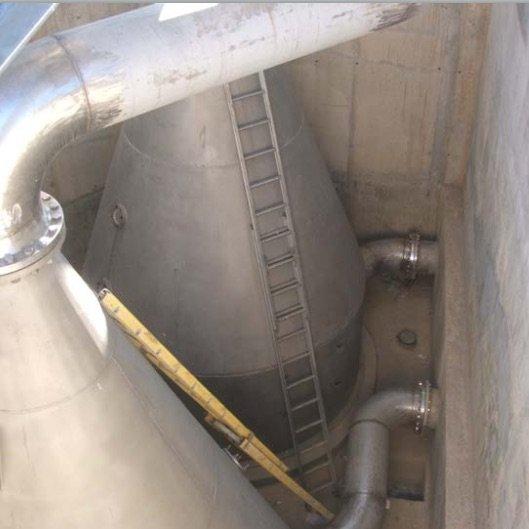
A pressurized oxygen dissolution cone. A side stream of wastewater is pumped through it, oxygen gas is injected under pressure, and the oxygenated water is blended back into the main flow (pp. 2, 3).
What did the pilot test show?
Injecting oxygen into wastewater pumped to the aerated grit basins reduced total and dissolved sulfide and hydrogen sulfide emissions from the primary clarifiers, even at a low dose with a poor diffuser. (PDF page 2) (opens in a new tab)
Why did the demonstration underperform at first?
Solids recycle streams and a large spent filter backwash flow competed for the oxygen and reduced contact time before the headworks. (PDF page 3) (opens in a new tab)
What fixed it?
A low dose of ferrous sulfate as a catalyst for the oxygen and sulfide reaction; oxygen with 2 gpm of iron beat 8 gpm of iron alone on cost and off-site odor. (PDF page 4) (opens in a new tab)
The Project
TRA Central Plant Influent Pump Station
In Full
More Key Figures
Five more, each with what it measures and its PDF page.
From the PDF
| Figure | What It Measures |
|---|---|
| 13,700 D/T | Odor at Headworks Building B with iron only (PDF page 4 (opens in a new tab)) |
| 6,100 D/T | Odor at Headworks Building B with oxygen plus iron (PDF page 4 (opens in a new tab)) |
| 940 D/T | Odor at primary clarifier 6 mid-tank with oxygen plus iron, against 3,350 with oxygen only (PDF page 4 (opens in a new tab)) |
| 2 gpm | Ferrous sulfate fed with oxygen, against 8 gpm of ferrous sulfate alone (PDF page 4 (opens in a new tab)) |
| 72 inch | Force main the oxygenated side stream returns to (PDF page 3 (opens in a new tab)) |
The Full Write-Up
The problem, the work, the results and who did it.
A Treatment Plant Does Not Have to Stink
The article starts from a simple point: wastewater makes odor, but a treatment plant does not have to stink. The Trinity River Authority of Texas has pursued odor control at its Central Regional Wastewater System plant (CRWS) for more than four decades, treating its largest sources one by one (p. 1).
Hydrogen sulfide is the main source of odor at the plant and in the collection system. People notice it at very low concentrations, and it corrodes the plant's infrastructure (p. 1).
The plant has two parallel activated sludge trains: the Phase I/II or north plant, built in the 1970s, and the Phase III or south plant, built in the 1980s (p. 1). The question was whether oxygen added between the influent pump station and the first treatment units would have enough time to work.
A Pilot, a Full Scale Demonstration, Then Iron as a Catalyst
After high purity oxygen had worked for odor control in pressurized collection system pipelines, the Authority and Alan Plummer Associates piloted it on the north plant, adding oxygen to wastewater pumped from Pump Station 6 to the aerated grit basins (p. 1). Oxygen controls sulfide in two ways: it oxidizes sulfide to sulfate and elemental sulfur, and it keeps the water aerobic so hydrogen sulfide cannot form again (p. 1).
The full scale demonstration went on the south plant, from Pump Station 6A through Headworks Building B, vortex grit removal and primary clarifiers 5 to 8 (p. 2). A pump sends a side stream of raw wastewater through a pressurized oxygen dissolution cone, also called a downflow bubble contactor, where it passes through a layer of oxygen bubbles. The oxygenated stream rejoins the main flow in the existing 72 inch force main to the headworks (pp. 2, 3).
Commissioning tests showed less odor control than the pilot. Recycle streams from solids treatment now competed for the oxygen, and a large flow of spent filter backwash cut the contact time. Because several metals speed up the reaction between oxygen and sulfide, and the Authority already fed iron in its collection system, a low dose of ferrous sulfate was tested at Pump Station 6A as a catalyst (p. 3).
Oxygen Plus Iron Gave the Lowest Odor at the Lowest Cost
In the pilot, even with a low dose and a poor pilot diffuser, more dissolved oxygen cut sulfide in the wastewater and hydrogen sulfide from the primary clarifiers (p. 2).
In the demonstration, iron alone beat oxygen alone, and oxygen with iron did best. At Headworks Building B, odor measured 53,050 D/T with oxygen only, 13,700 with iron only and 6,100 with both. At the middle of primary clarifier 6 it was 3,350, 1,385 and 940 (p. 4). Iron alone could match the combination only at a much higher dose. Air dispersion modeling found oxygen with 2 gpm of ferrous sulfate cheaper, and better at cutting odor off site, than 8 gpm of ferrous sulfate alone (p. 4).
Of four options, including covering and treating the foul air on one or both plants, oxygen plus ferrous sulfate was the most cost effective (p. 4).
Alan Plummer Associates Wrote It for the Trinity River Authority
Betty L. Jordan, P.E., of Alan Plummer Associates, Inc. (APAI) wrote the article for Texas WET, May/June 2013. The Trinity River Authority of Texas owns the plant (p. 1). The author thanks the plant staff, colleagues at APAI and Perkins Consulting Engineers, and ECO₂ and Pennco, Inc. staff, who helped in the field (p. 4).
Why It Matters for a Plant with Odorous Headworks & Clarifiers
What a pilot shows depends on the flows it sees. At full scale, recycle streams and filter backwash took oxygen and contact time the pilot never had to share (p. 3). If you plan oxygen for odor control at a plant, map every stream that joins the influent ahead of the headworks, and the time the oxygen will have to work.
Oxygen and chemicals can also work together: a small dose of iron let the oxygen do its job, with far less iron than iron alone needed (p. 4). The Authority tentatively decided to extend oxygen to the north plant, expand iron feed at both plants and reroute recycle streams to cut the competing oxygen demand (p. 4).
Written up from the published article. Every figure is as the published article prints it, with the PDF page it comes from; the authors' own words appear only in quotation marks.
How to Cite
One line to paste into a report.
Betty L. Jordan. TRA - To Boldly Go Where No One Else Has Gone - Odor Control at WWTP using Oxygen. Water Environment & Technology, 2013. Project engineer: Alan Plummer & Associates. Eco Oxygen Technologies Technical Library. https://eco2tech.com/technical-library/tra-to-boldly-go-where-no-one-else-has-gone-odor-control-at-wwtp-using-oxygen/
https://eco2tech.com/technical-library/tra-to-boldly-go-where-no-one-else-has-gone-odor-control-at-wwtp-using-oxygen/
The Next Step
Ask an ECO₂ Engineer
Questions about this published article, or about your own water? An application engineer answers, with the figures.