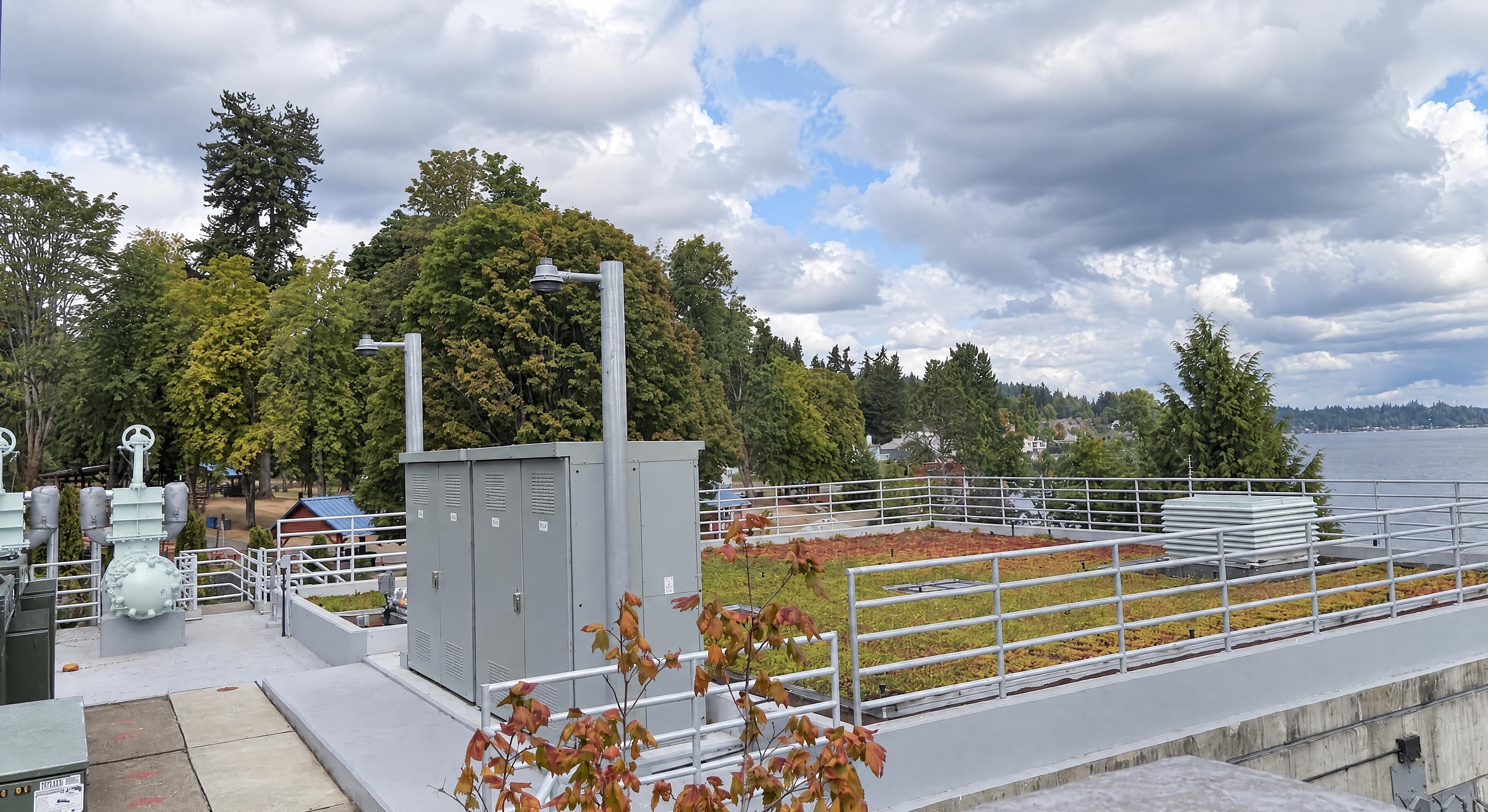
Grand Rapids, Minn. Plant to Plant H₂S Prevention
ECO₂'s case study of oxygen dissolved at the Blandin Paper Mill's pump station, which keeps the force main to Grand Rapids' plant and its clarifiers free of H₂S.
Details
Summary
Zero H₂S from Paper Mill to Plant
In Grand Rapids, Minnesota, all of the Blandin Paper Mill's wastewater crosses town in a force main to the city's treatment plant. A Speece Cone® at the mill's pump station now dissolves 60 mg/L of pure oxygen into it. H₂S measures 0 ppm at the mill, at the clarifier influent and at the clarifier effluent (pp. 1, 2).
Key Figures
500,000USD/year
Cost of the previous calcium nitrate feed (nearly) Source: PDF page 1 (opens in a new tab)
4.3MGD
Average daily flow treated Source: PDF page 1 (opens in a new tab)
60mg/L
Pure oxygen dissolved at the paper mill pump station Source: PDF page 2 (opens in a new tab)
Questions
How do you stop hydrogen sulfide odor from a paper mill force main?
At Grand Rapids, Minnesota, a Speece Cone at the paper mill pump station dissolves 60 mg/L of pure oxygen into the wastewater at the start of the force main. H₂S measures 0 ppm at the pump station and at the treatment plant's clarifier influent and effluent (p. 2).
How much oxygen does a force main need to stay aerobic?
The retention time multiplied by the oxygen uptake rate. At Grand Rapids, about 6 hours in the force main and primary clarifier at 10 mg/L per hour gives 60 mg/L of dissolved oxygen demand (p. 2).
Can oxygen added in the sewer stop odors at the primary clarifiers?
Yes, when the dose also covers the clarifier's retention time. At Grand Rapids the clarifier influent carries 20 mg/L of dissolved oxygen and the effluent 12 mg/L, with 0 ppm of H₂S at both (p. 2).
What did Grand Rapids use for odor control before oxygen?
A liquid calcium nitrate feed. It gave satisfactory results on an average daily flow of 4.3 MGD, but its cost led the city and the paper mill to look for a cheaper and better solution (p. 1).
How much maintenance does an oxygen system for sewer odor need?
The Grand Rapids system adjusts its oxygen feed automatically and inherently needs very little maintenance (p. 2).
What did the city use before oxygen, and what did it cost?
A liquid calcium nitrate feed, which worked but cost nearly $500,000 a year to treat an average daily flow of 4.3 MGD. (PDF page 1) (opens in a new tab)
How was the oxygen system sized?
For the total oxygen demand of the force main and primary clarifier: about 6 hours of retention time multiplied by an oxygen uptake rate of 10 mg/L/hr, which equals 60 mg/L of dissolved oxygen demand. (PDF page 2) (opens in a new tab)
What results were measured?
Dissolved oxygen was 60 mg/L at the paper mill pump station, 20 mg/L at the clarifier influent and 12 mg/L at the clarifier effluent, with 0 ppm H₂S at all three points. H₂S odors at the plant were eliminated. (PDF page 2) (opens in a new tab)
The Project
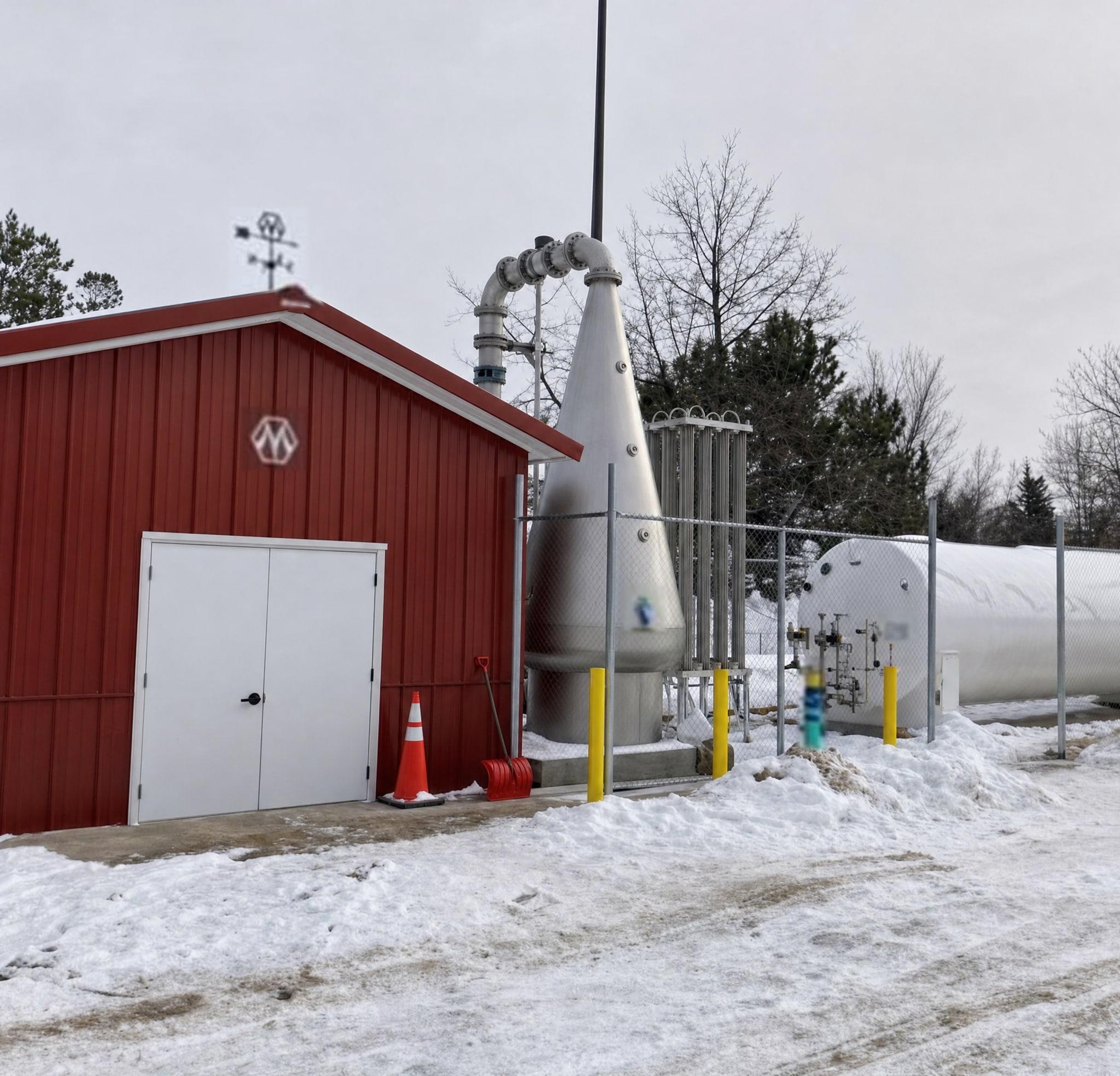
Grand Rapids Paper Mill Force Main and Primary Clarifiers
In Full
More Key Figures
10 more, each with what it measures and its PDF page.
From the PDF
| Figure | What It Measures |
|---|---|
| 10 mg/L/hr | Oxygen uptake rate used to size the system (PDF page 2 (opens in a new tab)) |
| 20 mg/L | Dissolved oxygen measured at the clarifier influent (PDF page 2 (opens in a new tab)) |
| 12 mg/L | Dissolved oxygen measured at the clarifier effluent (PDF page 2 (opens in a new tab)) |
| 0 ppm | H₂S measured at the pump station, clarifier influent and clarifier effluent (PDF page 2 (opens in a new tab)) |
| 60 mg/L | Dissolved oxygen at the paper mill pump station, the start of the force main (PDF page 2 (opens in a new tab)) |
| 20 mg/L | Dissolved oxygen at the treatment plant's clarifier influent (PDF page 2 (opens in a new tab)) |
| 12 mg/L | Dissolved oxygen at the treatment plant's clarifier effluent (PDF page 2 (opens in a new tab)) |
| 0 ppm H₂S | At the pump station, the clarifier influent and the clarifier effluent (PDF page 2 (opens in a new tab)) |
| 6 hours | Retention time in the force main and primary clarifier together (approximately) (PDF page 2 (opens in a new tab)) |
| 4.3 MGD | Average daily flow the calcium nitrate feed treated (PDF page 1 (opens in a new tab)) |
The Full Write-Up
The problem, the work, the results and who did it.
Sulfide Formed Twice: In the Force Main & in the Clarifiers
Grand Rapids sits at the headwaters of the Mississippi River. The Blandin Paper Mill, first built in 1901, stands at the heart of downtown and takes pride in being a good neighbor, free from odors (p. 1).
All of the mill's wastewater is piped across town to the city's wastewater treatment plant through a sewer force main. A force main is a pressure pipe that runs full, so the wastewater in it gets no fresh air. It quickly turns septic (anoxic), and sulfides form. Without treatment, those sulfides are released at the treatment plant as foul odors, corrosion and safety hazards (p. 1).
The plant had a second source. The mill's highly loaded wastewater kept generating H₂S in the plant's primary clarifiers, with more odor at the effluent weirs (p. 1).
For years the city tried chemical alternatives. A liquid calcium nitrate feed gave satisfactory results on an average daily flow of 4.3 MGD, but at a high cost, so the city and the mill looked for a better solution together (p. 1).
One Oxygen Dose, Sized for the Whole Trip from Mill to Clarifier
An ECO₂ system and an oxygen supply tank were installed in 2021. A Speece Cone at the paper mill pump station dissolves pure oxygen into the wastewater at the start of the force main, fed from liquid oxygen (p. 2).
The dose covers the whole path, not only the pipe. The system was designed for the oxygen demand of the force main and of the 3 hour retention time in the primary clarifier. Together they hold the flow for about 6 hours, and the case study multiplies that by an oxygen uptake rate of 10 mg/L per hour. The result is 60 mg/L of dissolved oxygen demand, which is what the system dissolves at the mill (p. 2).
The uptake rate is how fast the bacteria in the wastewater use oxygen. Wastewater that carries enough oxygen for its whole journey does not turn septic, so sulfide never gets a start. The system adjusts its oxygen feed automatically and inherently needs very little maintenance (p. 2).
0 ppm of H₂S from the Mill to the Clarifier Effluent
H₂S odors at the treatment plant have been eliminated. The industrial force main and the primary clarifiers now stay aerobic throughout, and the relief from odors and from the costly chemical feed was immediate (p. 2).
The case study prints three measurements. At the paper mill pump station, dissolved oxygen is 60 mg/L. At the clarifier influent it is 20 mg/L, and at the clarifier effluent it is 12 mg/L. H₂S is 0 ppm at all three points (p. 2).
Oxygen falls along the way as the bacteria use it, but some is still there when the water leaves the clarifier. With oxygen present from start to finish, there is no septic stretch for sulfide to form in. The odors went without harmful chemicals, scrubbers or expensive tank covers (p. 2).
The City of Grand Rapids & the Blandin Paper Mill, with ECO₂
This is ECO₂'s own case study, and it names no author or consulting engineer. The partners it names are the City of Grand Rapids, whose treatment plant receives the flow, and the Blandin Paper Mill, which sends it (p. 1). Eco Oxygen Technologies (ECO₂) supplied the Speece Cone and liquid oxygen system (p. 2).
What It Means If an Industrial Flow Brings Odor to Your Plant
Many treatment plants receive a strong industrial flow through a long force main. Grand Rapids shows that the odor at the plant can be stopped where the flow starts: dissolve enough oxygen at the pump station, and the wastewater arrives still aerobic.
One dose can also protect more than the pipe. Because the sizing counted the primary clarifier's retention time too, the effluent weirs stayed free of H₂S without covers or scrubbers (p. 2).
To size a system like it, you need the oxygen uptake rate of your own wastewater and the hours it spends in the pipe and tanks you want to keep aerobic.
Written up from the case study. Every figure is as the case study prints it, with the PDF page it comes from; the authors' own words appear only in quotation marks.
How to Cite
One line to paste into a report.
ECO₂. Grand Rapids, Minn. Plant to Plant H₂S Prevention. October 2023. Eco Oxygen Technologies Technical Library. https://eco2tech.com/technical-library/grand-rapids-minn-plant-to-plant-h2s-prevention/
https://eco2tech.com/technical-library/grand-rapids-minn-plant-to-plant-h2s-prevention/
The Next Step
Ask an ECO₂ Engineer
Questions about this case study, or about your own water? An application engineer answers, with the figures.