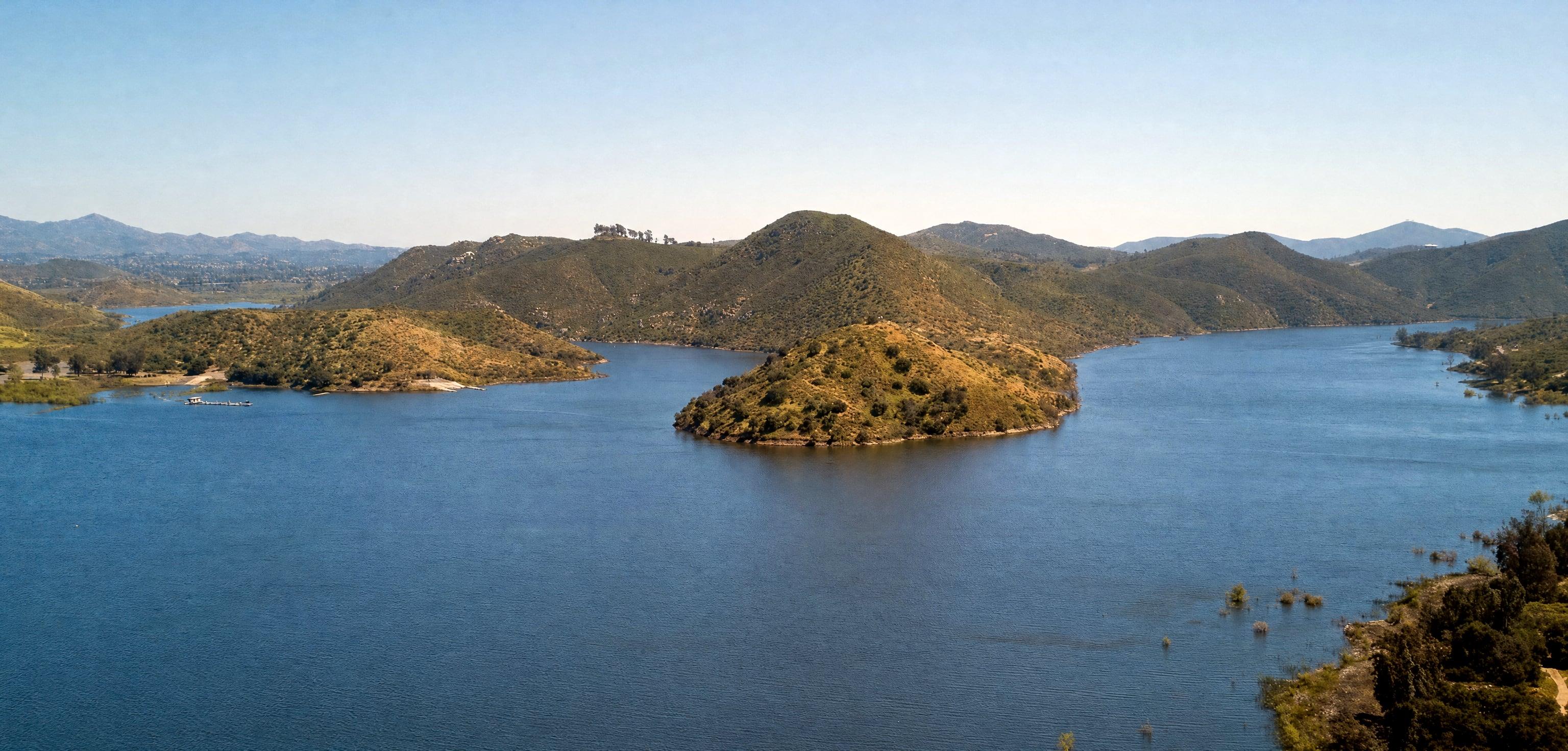
Improving Raw Water Quality with Hypolimnetic Oxygenation
Why pure oxygen beats destratification and air-lift aeration for a drinking water reservoir, and how four oxygenation systems compare, from a 2002 AWWA paper.
Details
Summary
Marc Beutel of Brown and Caldwell compares ways to keep reservoir bottom water oxygenated in this paper for the AWWA 2002 Annual Conference. It explains why pure-oxygen hypolimnetic oxygenation beats destratification and air-based hypolimnetic aeration in drinking water reservoirs, reviews four types of oxygenation system, and finds that the submerged contact chamber, the cone design used at Camanche Reservoir, has the lowest operating cost.
Key Figures
8t/d of oxygen
Capacity of the Camanche Reservoir submerged contact chamber, at a pumping rate of 1 m³/s Source: PDF page 7 (opens in a new tab)
5mg/L
Dissolved oxygen the Camanche system maintains at the dam (or more) Source: PDF page 7 (opens in a new tab)
80 to 90%
Oxygen transfer efficiency of a bench-scale submerged contact chamber (Speece et al. 1971) Source: PDF page 7 (opens in a new tab)
Questions
Why use hypolimnetic oxygenation instead of destratification in a drinking water reservoir?
Destratification raises summer bottom-water temperatures, which harms cold-water fish and downstream biota, and a mixed water column rules out choosing the best withdrawal depth. Oxygenation keeps the reservoir stratified while keeping the bottom water oxic. (PDF page 2) (opens in a new tab)
Why do hypolimnetic aeration systems sometimes fail?
Most have low oxygen transfer efficiency, so they run at high recirculation rates or in multiples, and the turbulence can raise sediment oxygen demand or destratify the lake by accident. Compressed air is mostly nitrogen, which can supersaturate the hypolimnion and cause gas bubble disease in fish. (PDF page 3) (opens in a new tab)
What types of hypolimnetic oxygenation systems are there?
The paper names four in use: side stream oxygenation (including the U-tube), bubble plume oxygenation, diffuse deep-water oxygenation, and the submerged contact chamber. (PDF page 3) (opens in a new tab)
What are the advantages of a submerged contact chamber such as the Speece Cone®?
A bench-scale chamber showed 80-90% oxygen transfer efficiency. Its horizontal discharge sends oxygenated water out over the sediments, avoiding the accidental destratification and local anoxia that bubble systems can cause. (PDF page 7) (opens in a new tab)
What did oxygenation achieve at Camanche Reservoir?
Fall bottom orthophosphate dropped from 200 to under 50 µg P/L and ammonia from 1,000 to 1,700 µg N/L to under 200, with no rise in nitrate accumulation. Peak chlorophyll a fell from 40 to 50 µg/L to under 10 and average summer Secchi depth rose from 1.5 to 5 m. (PDF page 8) (opens in a new tab)
How much does a hypolimnetic oxygenation system cost?
For a 5 t/d system, enough for a mesotrophic to eutrophic reservoir of about 50,000 acre-feet, capital cost is roughly $1 million for a submerged contact chamber or diffuse deep-water system. Operating costs run $850 to $3,000 a day, assuming oxygen at $150 a metric ton and power at $0.10/kWh, and the contact chamber is cheapest to run. (PDF page 8) (opens in a new tab)
In Full
More of the Summary
Two more paragraphs of our summary.
Anoxic bottom water releases ammonia, phosphate, iron, manganese and sulfide, feeds blue-green algae that cause taste and odor problems, and can raise methylmercury. Destratification warms the bottom water and rules out selective withdrawal, while air-lift aeration has low transfer efficiency, can raise sediment oxygen demand and supersaturates nitrogen. Pure oxygen needs smaller equipment and lower flows. The paper describes side stream systems (including the U-tube), bubble plumes (Lake Baldegg, Amisk Lake), diffuse deep-water diffusers (TVA's Douglas Dam, nearly 100 t/d with transfer efficiency above 90%) and submerged contact chambers (Newman Lake and Camanche Reservoir).
Fall bottom-water orthophosphate fell from 200 to under 50 µg P/L, ammonia from 1,000 to 1,700 µg N/L to under 200, peak chlorophyll a from 40 to 50 µg/L to under 10, and average summer Secchi depth rose from 1.5 to 5 m.
More Key Figures
Four more, each with what it measures and its PDF page.
From the PDF
| Figure | What It Measures |
|---|---|
| 200 to <50 µg P/L | Fall bottom-water orthophosphate at Camanche, before and after oxygenation (PDF page 8 (opens in a new tab)) |
| 1,000-1,700 to <200 µg N/L | Fall bottom-water ammonia at Camanche, before and after oxygenation (PDF page 8 (opens in a new tab)) |
| 40-50 to <10 µg/L | Peak chlorophyll a at Camanche, before and after oxygenation (PDF page 8 (opens in a new tab)) |
| 1.5 to 5 m | Average summer Secchi depth at Camanche, before and after oxygenation (PDF page 8 (opens in a new tab)) |
How to Cite
One line to paste into a report.
Marc Beutel. Improving Raw Water Quality with Hypolimnetic Oxygenation. AWWA, 2002. Project engineer: Brown and Caldwell. Eco Oxygen Technologies Technical Library. https://eco2tech.com/technical-library/improving-raw-water-quality-with-hypolimnetic-oxygenation/
https://eco2tech.com/technical-library/improving-raw-water-quality-with-hypolimnetic-oxygenation/
The Next Step
Ask an ECO₂ Engineer
Questions about this technical paper, or about your own water? An application engineer answers, with the figures.