Lake Hodges Receives Supplemental Oxygen System to Reduce Nutrient Loading and Control Algae
ECO₂'s case study of the oxygenation system for Lake Hodges near San Diego, meant to add oxygen to its deep water to control algae and nutrient cycling and improve fish habitat.
Details
Summary
Hodges Reservoir, created in 1918, takes in runoff from across San Diego County and suffers from excessive algae. The city's Hypolimnetic Oxygenation System, supplied by ECO₂, adds dissolved pure oxygen to the deep water to control algal blooms and internal nutrient cycling and to improve fish habitat.
Key Figures
10,000lbs/day
Maximum oxygen feed rate of the system Source: PDF page 2 (opens in a new tab)
Questions
What is the Lake Hodges oxygenation project for?
To reduce and control excessive algae in the reservoir, improving water quality and restoring the drinking water supply so it can be connected more widely and reliably. (PDF page 1) (opens in a new tab)
How does the Hypolimnetic Oxygenation System help?
It adds dissolved pure oxygen to the deep part of the reservoir to replace the oxygen used up as bacteria decay algae, which helps control algal blooms and internal nutrient cycling and improves fish habitat. (PDF page 1) (opens in a new tab)
The Project
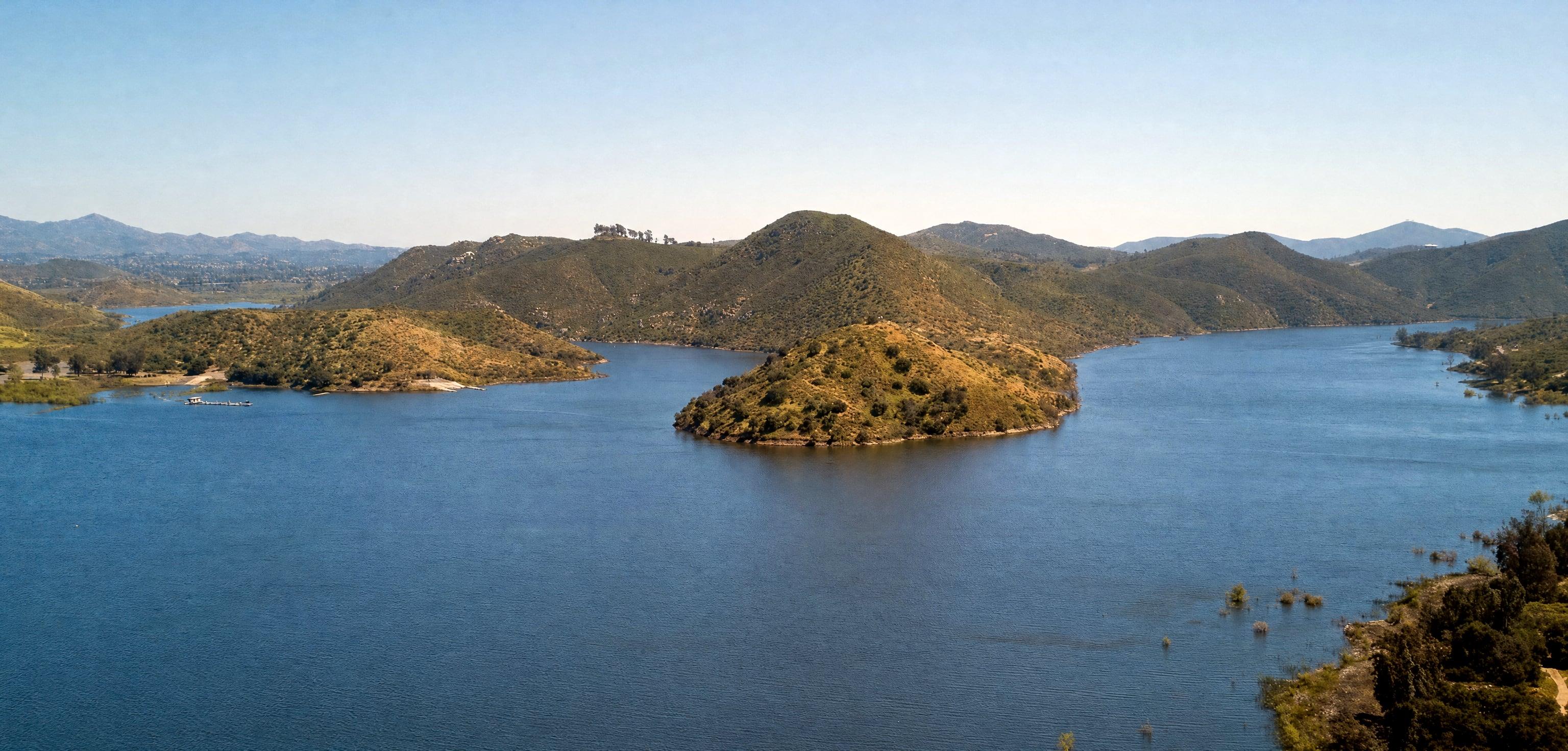
Lake Hodges
In Full
More Key Figures
One more, each with what it measures and its PDF page.
From the PDF
| Figure | What It Measures |
|---|---|
| 1918 | Year Hodges Dam was built on San Dieguito Creek (PDF page 1 (opens in a new tab)) |
Full Text as Published
The text as its authors wrote it.
Breathing New Life into Lakes & Rivers Through SuperOxygenation
Reduced organics, nutrients, iron & manganese, harmful algal blooms.
Hodges Reservoir was created with the building of Hodges Dam on San Dieguito Creek in 1918. Operated and maintained by the city's Public Utilities Department, the reservoir serves the San Dieguito Water District and Santa Fe Irrigation District as well as the city. Lake Hodges takes in runoff from all over San Diego County and, as such, the water contains lots of impurities. These are cleaned up in filtration plants before going out to the public.
The purpose of the Hodges Reservoir Oxygenation System Project is to reduce and control excessive algal productivity in the reservoir with the intent to improve water quality and restore the drinking water supply allowing greater water supply interconnectivity and reliability.
The Project will involve the construction of a Hypolimnetic Oxygenation System (HOS). The HOS will add dissolved pure oxygen into the deep portion of the reservoir to make up for that lost by bacterial decay of algae, alleviating water quality problems, controlling algal blooms, internal nutrient cycling and improving fish habitat. The proposed Hypolimnetic Oxygenation System was supplied by ECO₂.
Lake Hodges Dam Overflow.
ECO₂ System Installation
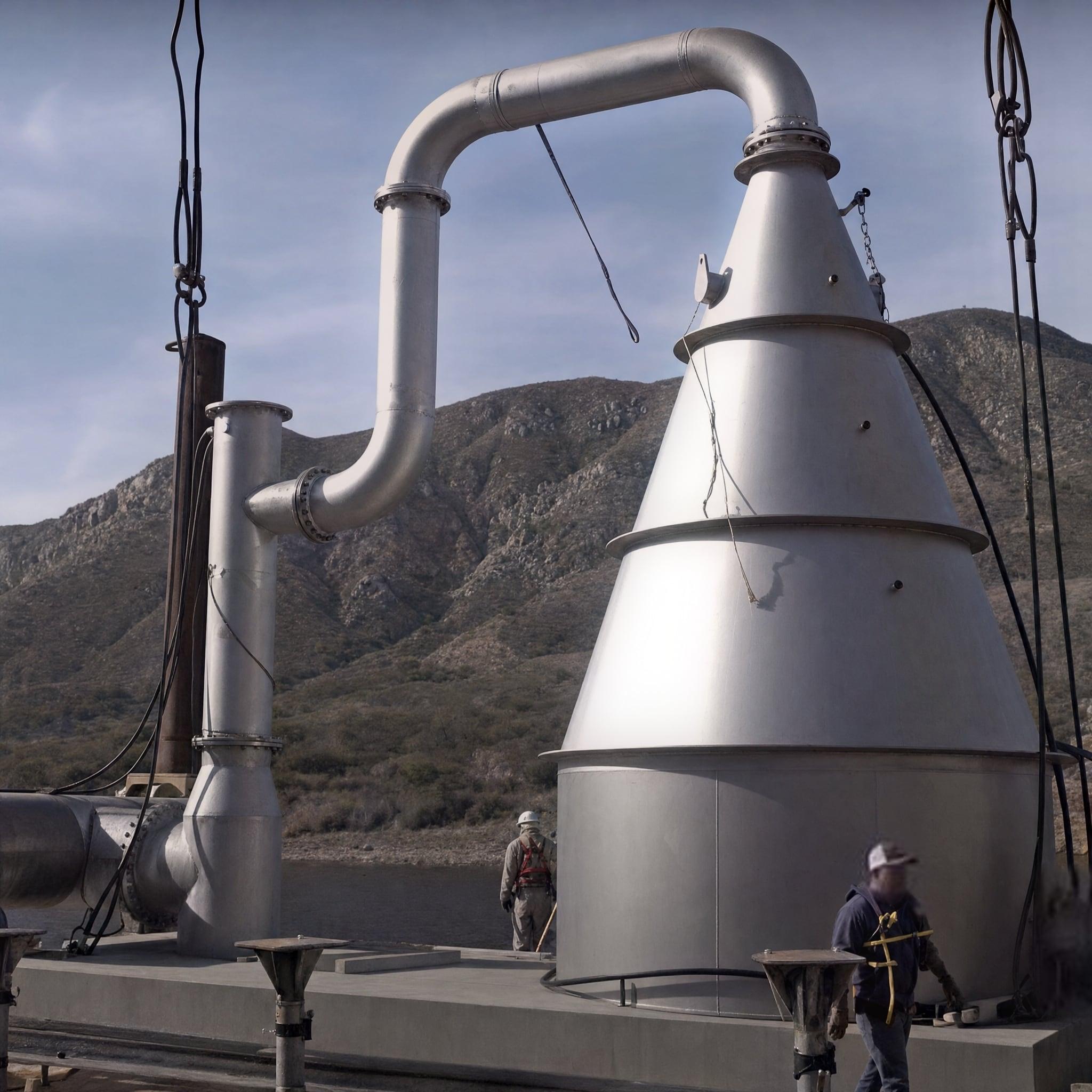
The ECO₂ SuperOxygenation System is sized for a maximum oxygen feed rate of 10,000 lbs / day. The System is installed on the lake bottom 55 feet below the surface. The side stream pump and intake screen are mounted with the Cone on a support skid. The discharge diffuser piping extends several hundred feet from the oxygenation skid and delivers oxygenated water to the reservoir hypolimnion.
The project sampling team and the Sediment Oxygen Demand (SOD) chamber: Peter Martin, Marc Beutel, Goldamer Herbon, and Jeffrey Pasek.
How to Cite
One line to paste into a report.
Lake Hodges Receives Supplemental Oxygen System to Reduce Nutrient Loading and Control Algae. ECO₂, 2017. Project engineer: Brown and Caldwell. Eco Oxygen Technologies Technical Library. https://eco2tech.com/technical-library/lake-hodges-receives-supplemental-oxygen-system-to-reduce-nutrient-loading-and-control-algae/
https://eco2tech.com/technical-library/lake-hodges-receives-supplemental-oxygen-system-to-reduce-nutrient-loading-and-control-algae/
The Next Step
Ask an ECO₂ Engineer
Questions about this case study, or about your own water? An application engineer answers, with the figures.