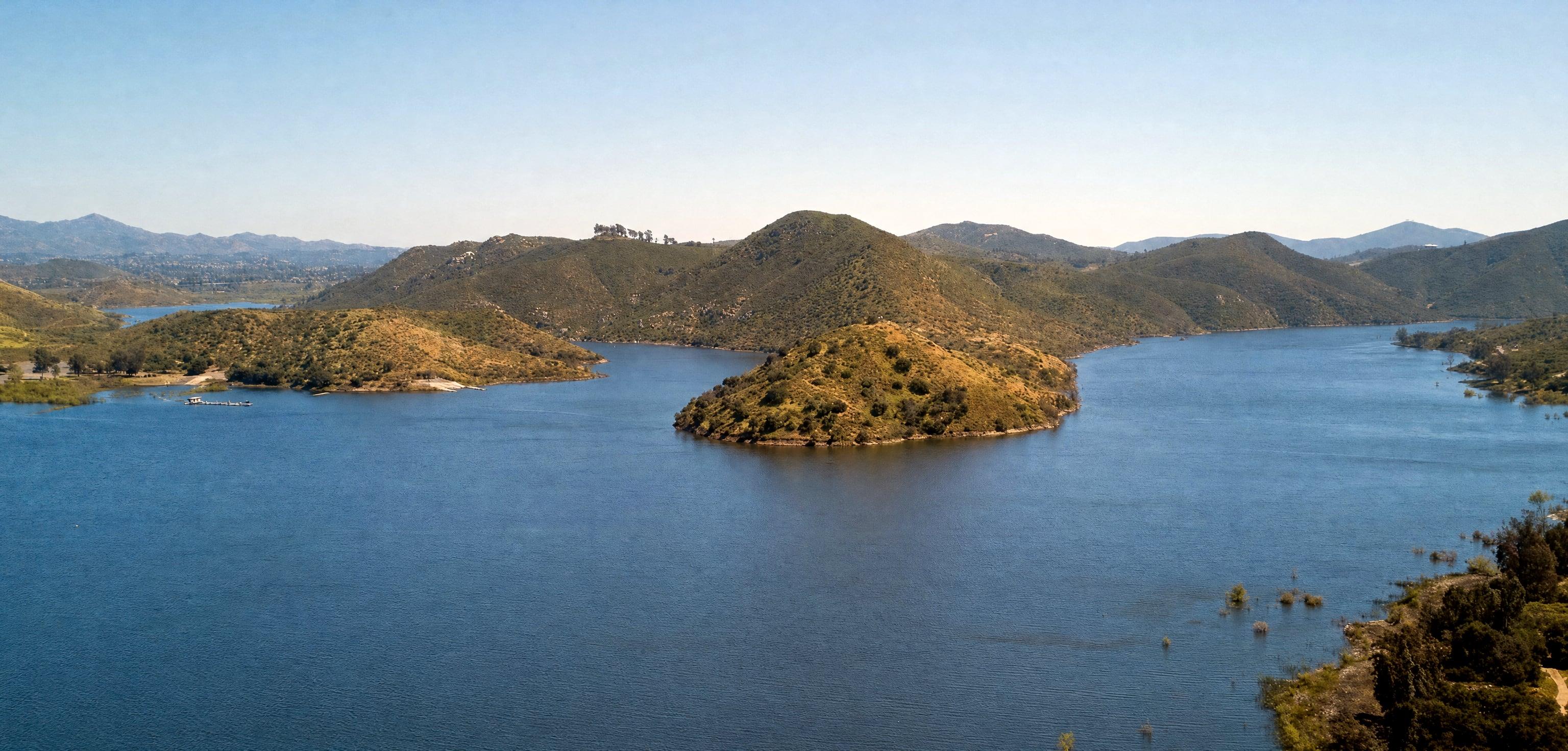
Logan Martin, AL Reservoir Oxygenation System Prevents Anoxia and Fish Kills
ECO₂'s case study of Logan Martin Dam in Alabama, where weekend leakage left the tailwater without oxygen and a Speece Cone® at the base of the dam was installed to add it.
Details
Summary
Logan Martin Dam on Alabama's Coosa River is a peaking hydropower dam built on karst rock, and on weekends the only water reaching the tail water is leakage under the dam with essentially no dissolved oxygen: fish gasp at the surface and a paper mill 35 miles downstream has to curtail operation. A Speece Cone at the base of the dam takes water from the pool above and uses the dam's head to dissolve oxygen under pressure, so its discharge carries about 50 mg/L. Tests found over 90% oxygen absorption efficiency at the design flow, and 94% of theoretical saturation with a retention time of only about 30 seconds.
Key Figures
900cfs
Water leaking through the karst foundation with essentially zero D.O. (approximately) Source: PDF page 1 (opens in a new tab)
50mg/L
Dissolved oxygen in the cone discharge (approximately) Source: PDF page 1 (opens in a new tab)
90%absorption efficiency
Oxygen absorption in the cone at the design flow (over) Source: PDF page 2 (opens in a new tab)
Questions
Why does Logan Martin Dam need oxygenation?
On weekends the hydropower turbines are shut down, and the only water reaching the tail water is about 900 cfs leaking through conduits in the dam's karst foundation. A biological slime in those conduits removes essentially all of the dissolved oxygen, stressing fish and forcing the paper mill downstream to curtail operation. (PDF page 1) (opens in a new tab)
How does the Speece Cone use the dam?
It sits at the base of the dam and takes 21 cubic feet per second of water from the pool above. A throttling valve at the discharge keeps the cone pressurized by the difference between the upstream pool and the tail water, so oxygen dissolves under about 50 feet of hydrostatic head and the discharge carries about 50 mg/L. (PDF page 1) (opens in a new tab)
How efficient is the cone?
Over 90% oxygen absorption at the design flow, and 95% at flows of 22 to 25 cubic feet per second. It reached 94% of theoretical saturation even though water stays in the cone for only about 30 seconds. (PDF page 2) (opens in a new tab)
The Project
Logan Martin Dam
In Full
More Key Figures
Two more, each with what it measures and its PDF page.
From the PDF
| Figure | What It Measures |
|---|---|
| 94% of theoretical saturation | Saturation reached with about 30 seconds of retention (PDF page 2 (opens in a new tab)) |
| 95% absorption efficiency | Efficiency at flows of 22 to 25 cubic feet per second (PDF page 2 (opens in a new tab)) |
Full Text as Published
The text as its authors wrote it.
Logan Martin Dam, Alabama, Speece Cone Oxygenation
Logan Martin Dam, owned and operated by Alabama Power Co., is located on the Coosa River and was constructed on a karst stone geological foundation, 60 feet deep near the dam. The river flows 35 miles downstream past a paper mill, with less than 4 mg/L of D.O. on the weekends due to hydropower turbine shut down. Since it is operated as a peaking power dam, water is only released through the turbines between 9 a.m. and 10 p.m. on weekdays, causing approximately 900 cfs of water to leak out through the conduits in the karst foundation, in spite of extensive grouting to prevent it.
These conduits in the rock below the dam are somewhat similar to biological trickling filters in that a biological slime develops on the surface of these conduits. Consequently, even though the water contains about 8 mg/L of D.O. in the reservoir behind the dam, by the time the water leaks through these conduits beneath the dam, essentially all of the D.O. is removed. Then on weekends when water is not released to the hydropower turbines, the only water passing into the tail water zone is comprised of this 900 ft.³ per second of leakage water, which contains essentially zero D.O.
The resident fishery in the tail water below the dam is noticeably stressed during these weekend periods of low D.O. Fish by the dozens can be seen standing on their tails gulping air in an attempt to compensate for the low D.O. in the tail water. By Monday when the water now containing less than 1 mg/L of D.O., slowly passes the paper mill discharge point, the mill must curtail operation until the D.O. level again reaches about 4 mg/L.
In 1990 a Speece Cone oxygenation system was installed to meet one third of the 18,000 pound per day of oxygen required to raise the D.O. in the leakage flow to the required level. The 21 ft.³ per second system also incorporated into the final design an additional system capable of handling another 42 ft.³ per second.
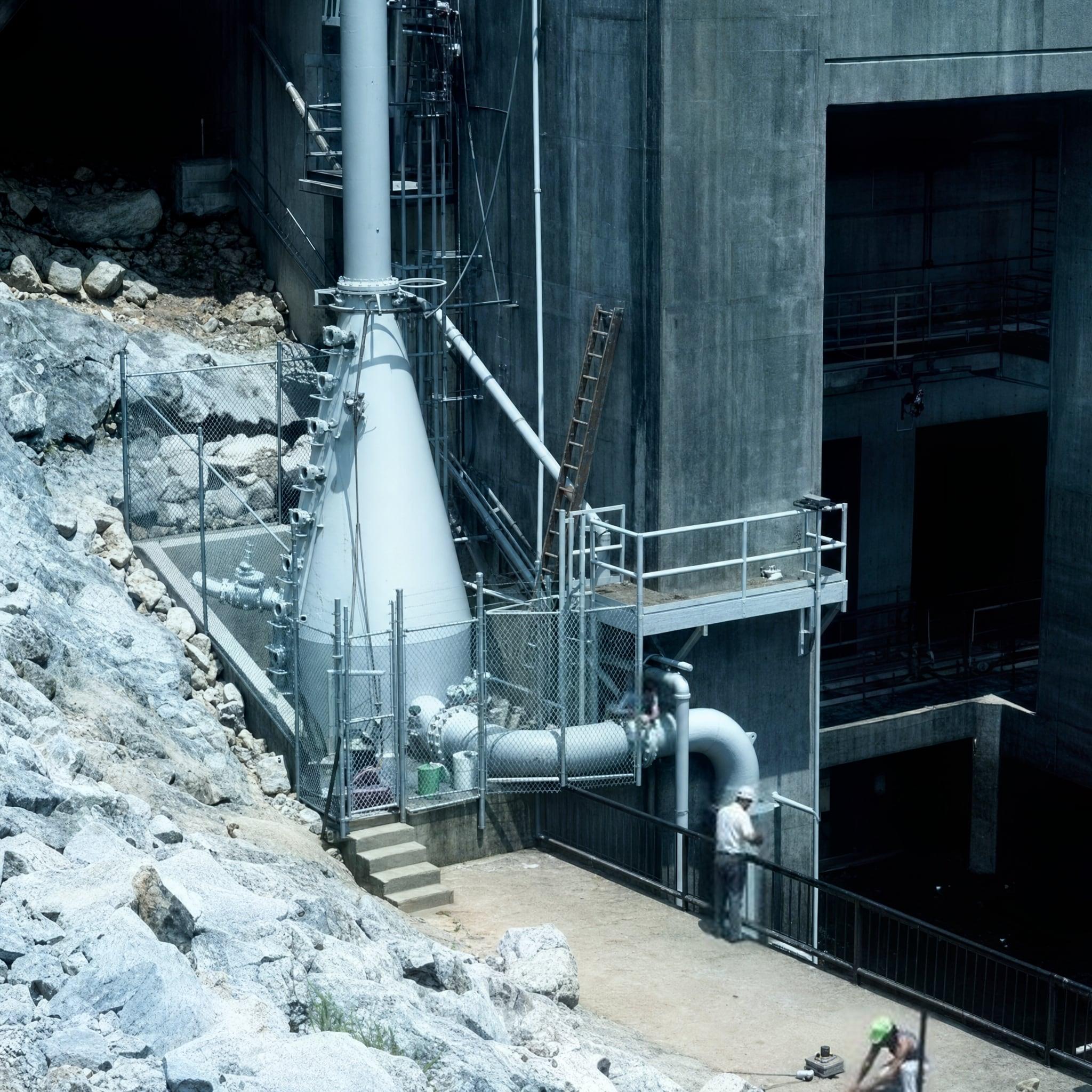
This oxygenation system receives 21 ft.³ per second of water from a pipe connected to the pool above the dam. The Speece Cone oxygenation system was installed at the base in the dam so that the water from above the dam passes through the Speece Cone oxygenator and discharges about 30 foot below the tail water surface. A throttling valve is located at the discharge in the tail water to allow pressurization of the oxygenation system. This pressure corresponds to the difference in water elevation between the upstream pool and the tail water.
Two photos in the PDF: the Speece Cone and its piping at the base of the dam, beside the tail water, and the face of the dam with an arrow marking where the cone stands.
The water pressure in the Speece Cone is advantageous because it allows oxygen transfer to take place at a pressure of 50 foot of hydrostatic head above ambient pressure. Consequently, the discharge D.O. has a concentration of approximately 50 mg/L. Approximately 5000 pounds of D.O. is added to the tail water each day by this supplemental oxygenation system. There is a D.O. rich zone in the vicinity of the Speece Cone discharge into the tail water of Logan Martin Dam which can provide a respite for fish when the bulk of the tail water is very low in D.O.
The performance characteristics of the Logan Martin Dam oxygenation system have been thoroughly evaluated. When the water throughput is at the design level, over 90% oxygen absorption efficiency is realized within the Speece Cone. Maximum oxygen absorption efficiency occurs at a water flow rate of 21 to 25 ft.³ per second through the system. A slight reduction of oxygen absorption efficiency occurs below this range and a more rapid decline at higher velocities.
The pressure at the oxygenation discharge with no flow through the system is 52 feet, reflecting the static head of water above the dam with respect to the location of the oxygenation cone. With no oxygen injection the discharge pressure registers 44 and 42 feet at water flows of 22 and 25 ft.³ per second, respectively and an oxygen to water injection rate of 4% results in discharge pressures of 38 and 37 feet. It is to be noted that the total head loss across the oxygenation cone is nearly constant at 6.2 feet regardless of water flow through the system when oxygen is subjected at 4% oxygen water ratio.
At the design flow of 21 ft.³ per second and 4% oxygen water ratio, the system added 48 mg/L of D.O. to a background influent D.O. of 3.6 mg/L for a total of 5600 pounds of D.O. per day or 9 pounds of D.O. per cubic feet of reactor per day, which is 100 mg/L per minute at 90% oxygen absorption efficiency. The average pressure in the Speece Cone is approximately 29 feet at the centerline of the cone and the water temperature is 86°F. At this pressure and temperature the saturation D.O. concentration would be 66 mg/L, if the gas phase is 100% oxygen. The discharge D.O. was 51 mg/L and the oxygen content of the bubbles within the oxygenation cone was approximately 83% as measured and with a 4% oxygen to water injection rate, indicating the oxygenation system is able to achieve 94% of theoretical saturation under these conditions. These results are indicative of an excellent oxygen transfer system since the hydraulic retention time is only about 30 seconds.
In the flow range of 22 to 25 ft.³ per second with an oxygen ejection ratio of 3%, the discharge D.O. was 42 mg/L for a net increase of 38 mg/L over the background level. Under these conditions, the absorption efficiency was 95%.
The Logan Martin Dam with its full-scale application of Speece Cone technology has been in operation for over 10 years.
How to Cite
One line to paste into a report.
Logan Martin, AL Reservoir Oxygenation System Prevents Anoxia and Fish Kills. ECO₂, 2006. Project engineer: Alabama Power Co. Eco Oxygen Technologies Technical Library. https://eco2tech.com/technical-library/logan-martin-al-reservoir-oxygenation-system-prevents-anoxia-and-fish-kills/
https://eco2tech.com/technical-library/logan-martin-al-reservoir-oxygenation-system-prevents-anoxia-and-fish-kills/
The Next Step
Ask an ECO₂ Engineer
Questions about this case study, or about your own water? An application engineer answers, with the figures.