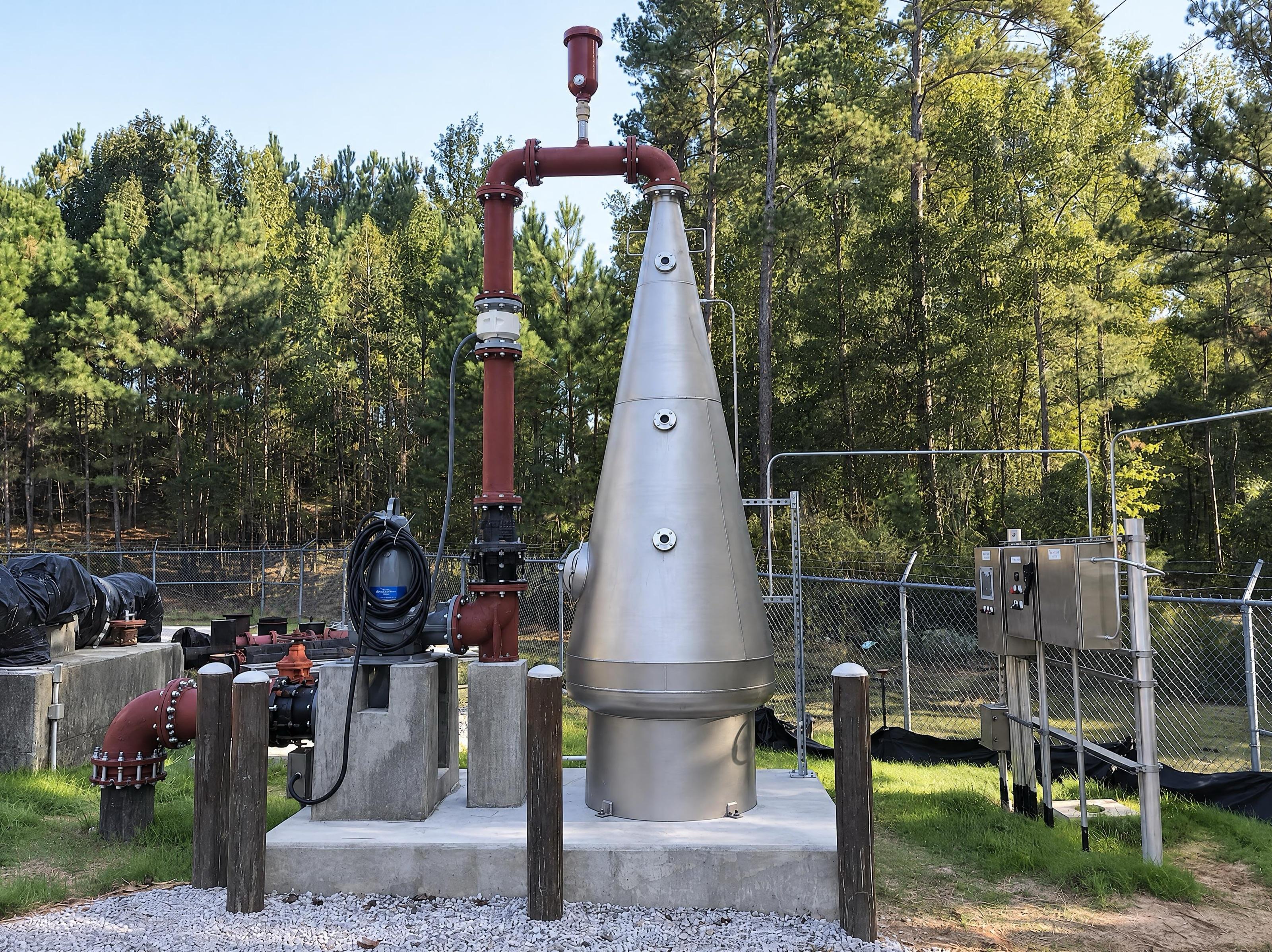
Port Wentworth, GA WWTP Effluent Dissolved Oxygen for Net-Zero UOD
ECO₂'s case study of Port Wentworth, Georgia, which adds dissolved oxygen to its plant effluent to offset BOD and meet a permit for net-zero ultimate oxygen demand.
Details
Summary
To build its own treatment plant, the city offset the 5 mg/L of BOD in its effluent with dissolved oxygen added by an ECO₂ Superoxygenation system and a PSA oxygen generator. The permit allowed 5 mg/L of BOD and 1 mg/L of ammonia if offset with 30 mg/L of dissolved oxygen per 1 MGD of flow, for a net zero ultimate oxygen demand on the river. The ECO₂ system cost less than 20% of the tertiary treatment it replaced.
Key Figures
5mg/L
BOD in the plant's discharge, offset with dissolved oxygen Source: PDF page 1 (opens in a new tab)
2million USD (approx.)
Extra cost of the tertiary treatment option the city avoided Source: PDF page 1 (opens in a new tab)
30mg/L D.O. per 1 MGD
Dissolved oxygen the permit requires per 1 MGD of effluent flow Source: PDF page 2 (opens in a new tab)
Questions
What options did the city have?
Keep paying a third party to treat its wastewater, spend about $2 million more on tertiary treatment to bring BOD below 5 mg/L, or offset the 5 mg/L of BOD with dissolved oxygen. (PDF page 2) (opens in a new tab)
What did the permit allow?
5 mg/L of BOD and 1 mg/L of ammonia in the discharge, as long as they are offset with 30 mg/L of dissolved oxygen per 1 MGD of effluent flow. (PDF page 2) (opens in a new tab)
How did the cost compare with tertiary treatment?
The ECO₂ system cost less than 20% of the tertiary treatment equipment that would otherwise have been required. (PDF page 2) (opens in a new tab)
Why did the city choose Superoxygenation?
For its low cost compared with tertiary treatment equipment and its high oxygen transfer efficiency. (PDF page 1) (opens in a new tab)
The Project
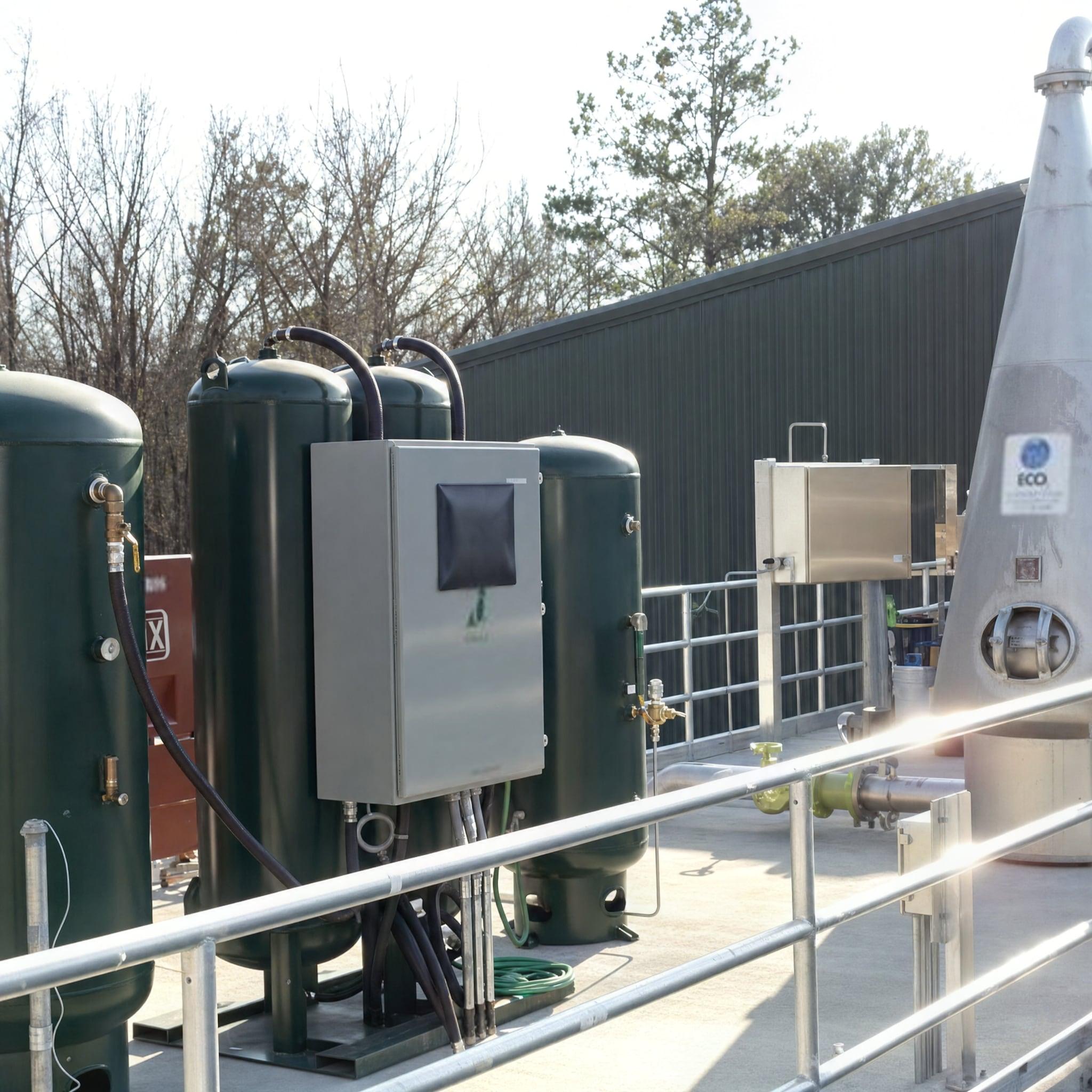
Port Wentworth Wastewater Plant
In Full
More Key Figures
Two more, each with what it measures and its PDF page.
From the PDF
| Figure | What It Measures |
|---|---|
| 1 mg/L | Ammonia allowed in the discharge when offset with dissolved oxygen (PDF page 2 (opens in a new tab)) |
| less than 20% | Cost of the ECO₂ system compared with the tertiary treatment it replaced (PDF page 2 (opens in a new tab)) |
Full Text as Published
The text as its authors wrote it.
Net-Zero Ultimate BOD Discharge
The City of Port Wentworth, GA is situated on the Savannah River just outside of Savannah, GA. Parts of the Savannah River are considered "D.O. impaired" and are subject to Total Maximum Daily Load (TMDL) and minimum D.O. requirements. No new discharges with a Biological Oxygen Demand (BOD) were permitted into that section of the river.
The City of Port Wentworth desired to build their own treatment plant rather than pay a nearby industry to treat their wastewater. The city proposed a 5 mg/L BOD limit discharge but could not obtain the necessary permits.
The City was faced with three options; 1) continue to pay a third party to treat their wastewater, 2) spend an additional ~$2 million on tertiary treatment systems or reverse osmosis equipment to reduce the BOD to below 5 mg/L, or 3) offset the 5 mg/L of BOD with dissolved oxygen (D.O.).
Ultimately, the City was granted a permit with a plant design for a net zero ultimate BOD discharge by offsetting the 5 mg/L of BOD with D.O. for a net zero impact on the Savannah River.
The City chose ECO₂'s SuperOxygenation Technology to add the required amount of D.O. because of the low cost compared to tertiary treatment equipment and the high oxygen transfer efficiency.
ECO₂ System and PSA Oxygen Generator
Project History
New TMDL Regulations
Under Section 303(d) of the Clean Water Act, every state sets its own water quality standards designed to protect, restore and preserve water quality. When a body of water fails to meet water quality standards after application of required technology-based controls, the Clean Water Act requires the state to place it on a list of "impaired" water bodies and to prepare a TMDL analysis. TMDL requirements should guarantee an optimal environment for the aquatic ecosystem.
The D.O. concentration in surface water has a direct and strong impact on the biological life resident therein, affecting the strength and stamina of fish and other aquatic species. The Savannah River has been an impaired waterway for a number of years, and as such no new discharge permits had been issued despite local growth.
The City of Port Wentworth was faced with three options:
- Continue to pay a third party to treat their wastewater
- Spend an additional ~$2 million on tertiary treatment systems to reduce the BOD to below 5 mg/L
- Offset the 5 mg/L of BOD with dissolved oxygen (D.O.)
Evaluation
The City evaluated all factors that would affect the D.O. level in the Savannah Harbor, including BOD, ammonia, nutrients, and even potential elevated D.O. toxicity to the local wildlife. The permit granted allowed for 5 mg/L of BOD and 1 mg/L of ammonia to be discharged if offset with 30 mg/L of D.O. per 1 MGD of discharge effluent flow.
Project Results
In order to achieve the required D.O. levels in their plant effluent, the City of Port Wentworth chose the ECO₂ SuperOxygenation Technology to efficiently meet their permit requirements.
Costs for the ECO₂ System were less than 20% that of otherwise required tertiary treatment equipment.
Using the Net-Zero Ultimate Oxygen Demand is an economically feasible, yet responsible approach to meeting TMDL guidelines and improving water quality.
The ECO₂ System adds enough D.O. to the plant's effluent to off-set any residual BOD—which enabled the City to receive their discharge permit and build a new WWTP.
How to Cite
One line to paste into a report.
Port Wentworth, GA WWTP Effluent Dissolved Oxygen for Net-Zero UOD. ECO₂. Project engineer: Port City Design Group. Eco Oxygen Technologies Technical Library. https://eco2tech.com/technical-library/port-wentworth-ga-wwtp-effluent-dissolved-oxygen-for-net-zero-uod/
https://eco2tech.com/technical-library/port-wentworth-ga-wwtp-effluent-dissolved-oxygen-for-net-zero-uod/
The Next Step
Ask an ECO₂ Engineer
Questions about this case study, or about your own water? An application engineer answers, with the figures.