Superoxygenation System Helps Solve Town's Odor Problems
The Town of Fishers, Indiana had odor complaints at its treatment plant's headworks and at a nearby lift station, and its sewer pipes were corroding fast.
Details
Summary
Fishers, Indiana Stops Force Main H₂S
Oxygen dissolved at its three lift stations raised dissolved oxygen to 65 mg/L, took average H₂S from 20 ppm to 0 ppm, and left 5 to 10 mg/L at the headworks (p. 1).
Key Figures
50 to 200mg/L
Dissolved oxygen concentrations the system reaches Source: PDF page 1 (opens in a new tab)
90 to 95%efficiency
Oxygen dissolution efficiency in the cone Source: PDF page 1 (opens in a new tab)
65mg/L
Dissolved oxygen the force mains were raised to Source: PDF page 1 (opens in a new tab)
Questions
How do you control odor at a sewage lift station near homes?
Fishers, Indiana dissolves pure oxygen into the wastewater at each of its three lift stations, so the force mains stay aerobic and H₂S does not form. Average H₂S fell from 20 ppm to 0 ppm (p. 1).
What causes the rotten egg smell from sewers?
Hydrogen sulfide (H₂S) gas. It forms when anaerobic conditions exist in the collection system, and it causes both odor and corrosion (p. 1).
How does a downflow cone dissolve oxygen into sewage?
Fast water at the cone's narrow top breaks up the oxygen gas and keeps the bubbles from rising out. The cone widens, so the water slows below the bubbles' rising speed and holds them until they dissolve completely (p. 2).
Does oxygen gas build up in a force main after Superoxygenation?
No, according to the article. The oxygen dissolves in the cone so efficiently that no gaseous oxygen enters the sewer lines to collect in high spots or escape at the discharge (p. 1).
How much dissolved oxygen reaches the treatment plant?
At Fishers, 5 to 10 mg/L of dissolved oxygen remained at the treatment plant's headworks after dissolved oxygen was raised to 65 mg/L (p. 1).
What problems did Fishers face?
Odor complaints from the plant headworks and the Allisonville Road Lift Station, and rapid corrosion of sewer pipes. (PDF page 1) (opens in a new tab)
What was installed?
Three custom ECO₂ Superoxygenation systems at three lift stations, supplied from bulk liquid oxygen, pretreating all flow to the Cheeney Creek plant. (PDF page 1) (opens in a new tab)
What results are reported?
Dissolved oxygen rose to 65 mg/L, average hydrogen sulfide fell from 20 ppm to 0 ppm, and 5 to 10 mg/L remained at the headworks. (PDF page 1) (opens in a new tab)
Why doesn't oxygen gas collect in the force main?
The cone dissolves the oxygen at 90 to 95% efficiency before the sidestream returns to the line, so no gaseous oxygen enters the sewer. (PDF page 1) (opens in a new tab)
In Full
More Key Figures
Eight more, each with what it measures and its PDF page.
From the PDF
| Figure | What It Measures |
|---|---|
| 20 ppm | Average hydrogen sulfide before, reduced to 0 ppm (PDF page 1 (opens in a new tab)) |
| 5 to 10 mg/L | Residual dissolved oxygen at the headworks (PDF page 1 (opens in a new tab)) |
| 6 years | Time the units had been in service when the article was written (PDF page 2 (opens in a new tab)) |
| 65 mg/L | Dissolved oxygen after Superoxygenation (PDF page 1 (opens in a new tab)) |
| 20 ppm H₂S | Average H₂S before oxygen (PDF page 1 (opens in a new tab)) |
| 0 ppm H₂S | Average H₂S with oxygen (PDF page 1 (opens in a new tab)) |
| 5 to 10 mg/L | Dissolved oxygen left at the treatment plant headworks (PDF page 1 (opens in a new tab)) |
| 6 years | Time in service when the article was written, every goal met (PDF page 2 (opens in a new tab)) |
The Full Write-Up
The problem, the work, the results and who did it.
Odor Complaints & Corroding Pipes in a Growing Suburb
Fishers is an upscale residential community in central Indiana, a suburb of Indianapolis. Its population skyrocketed over the 10 years before the article, making it one of the fastest growing cities in the country (p. 1).
Town officials had two worries. Residents complained often about unpleasant odors from the wastewater treatment plant's headworks and from the nearby Allisonville Road Lift Station. And the pipes in the sewer system were corroding quickly (p. 1).
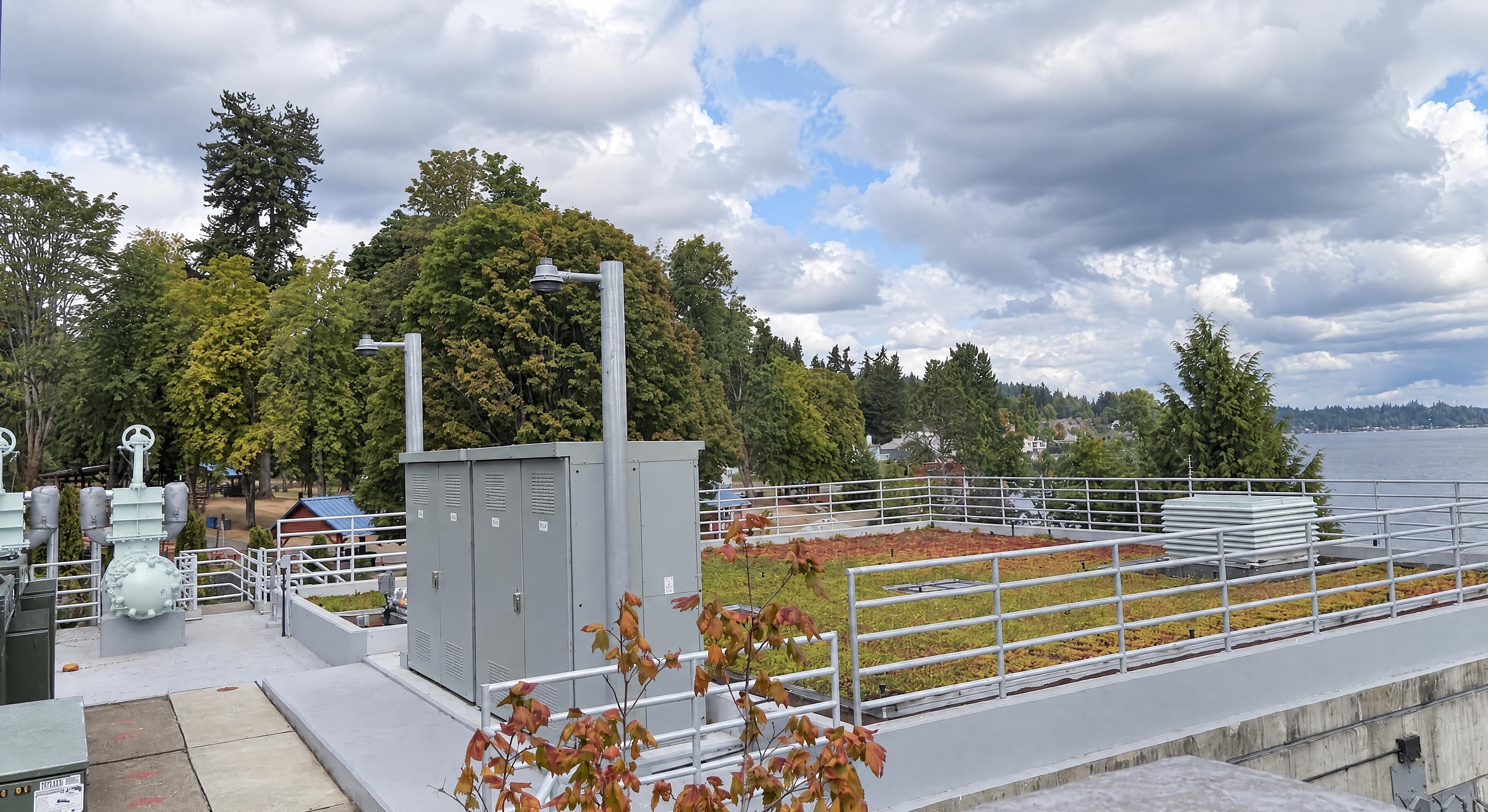
The town's three lift stations all sit very close to homes. Staff needed odor control that was cost effective and practical, that solved both odor and corrosion, and that looked acceptable in a neighborhood. Officials looked at several traditional solutions but were unhappy with their price and performance (p. 1).
The cause of both problems is hydrogen sulfide (H₂S) gas. It forms when anaerobic conditions exist in a collection system, and it gives the rotten egg odor people link with treatment plants (p. 1).
Pure Oxygen Dissolved in a Side Stream at Each Lift Station
Fishers chose an ECO₂ Superoxygenation system, which dissolves pure oxygen into wastewater so the pipeline stays aerobic. Three custom built systems went in at three separate lift stations, to pretreat all of the plant's influent and stop the odor at the headworks. Bulk liquid oxygen supplies the oxygen gas (p. 1).
The system dissolves pure oxygen at high concentrations, 50 to 200 mg/L, with no chemicals and no moving parts other than standard industrial water pumps. The oxygen is carried along the force main all the way to the Cheeney Creek Wastewater Treatment Plant (p. 1).
Each system pumps a side stream of raw, unscreened sewage from the force main through the cone, a conical downflow bubble contactor, and back into the main. Oxygen gas enters at the top. There the water moves fast enough to break up the oxygen and keep the bubbles from rising out. As the cone widens, the water slows below the speed at which the bubbles rise, so they stay trapped until they dissolve completely (p. 2). No oxygen gas enters the sewer to collect at high spots or escape at the discharge (p. 1).
H₂S from 20 ppm to 0 ppm, with Oxygen Still There at the Headworks
Dissolved oxygen was raised to 65 mg/L. Average H₂S fell from 20 ppm to 0 ppm, and 5 to 10 mg/L of dissolved oxygen was still left at the treatment plant's headworks (p. 1).
The project had three objectives: a positive dissolved oxygen level in the plant influent, less odor at the Allisonville Lift Station wet well, and less corrosion from hydrogen sulfide in the force mains. When the article was written, the units had been in place for 6 years and had met each goal (p. 2).
The article also lists what drew the town to the method: lower operation and maintenance costs, a rapid return on investment, maintenance small enough to absorb in the existing operations budget, an environmentally friendly process, BOD reduction, and protection of the sewer from corrosion (p. 1).
The Town of Fishers, with Systems Designed & Built by ECO₂
The article ran as an editorial feature in WaterWorld in June 2009, with no author named (pp. 1, 2). The owner is the Town of Fishers, whose officials and staff chose the method (p. 1). Eco Oxygen Technologies, LLC, of Indianapolis (ECO₂) designed and produced the systems (p. 2). The article names no consulting engineer.
What It Means for Lift Stations Next to Homes
A lift station next to homes needs odor control that works and that neighbors can live with. Fishers treated the cause in the water at each station, with no chemicals and no moving parts beyond standard pumps (p. 1).
Dissolving oxygen at the lift stations also protects the plant. The oxygen travels with the flow, so the wastewater reaches the headworks still carrying dissolved oxygen and no H₂S to release there (p. 1).
Fishers' three goals make a good test for any system like it: positive dissolved oxygen at the plant influent, a wet well without odor, and less corrosion in the force main (p. 2).
Written up from the published article. Every figure is as the published article prints it, with the PDF page it comes from; the authors' own words appear only in quotation marks.
How to Cite
One line to paste into a report.
David Clidence. Superoxygenation System Helps Solve Town's Odor Problems. WaterWorld, June 2009. Project engineer: Commonwealth Engineers. Eco Oxygen Technologies Technical Library. https://eco2tech.com/technical-library/super-oxygenation-system-helps-solve-towns-odor-problems/
https://eco2tech.com/technical-library/super-oxygenation-system-helps-solve-towns-odor-problems/
The Next Step
Ask an ECO₂ Engineer
Questions about this published article, or about your own water? An application engineer answers, with the figures.