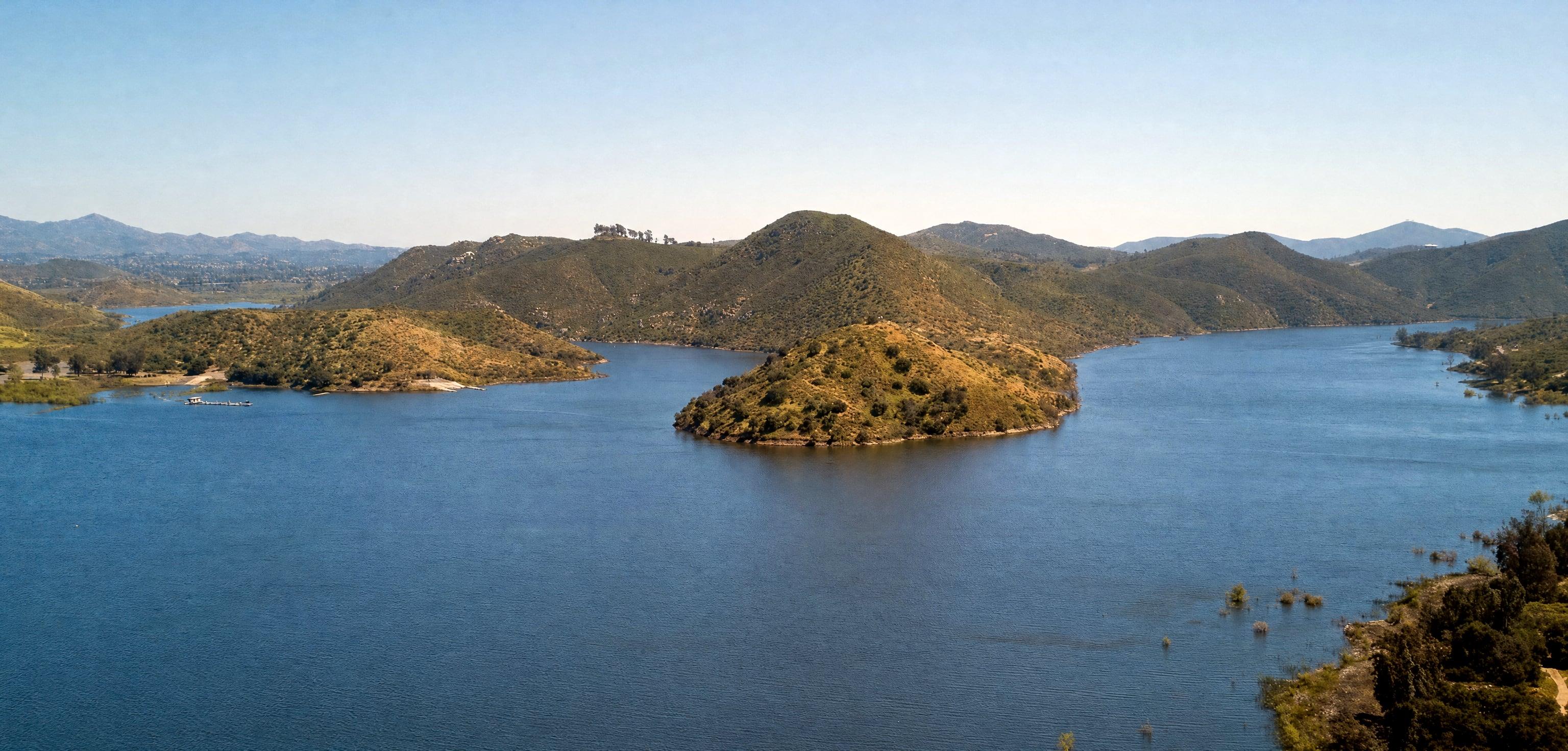
Flygt Propeller Pump Key to Lake Oxygenation System at Camanche Reservoir
To stop hydrogen sulfide reaching a hatchery below Camanche Reservoir, East Bay Municipal Utility District placed a 23-foot Speece Cone® on the reservoir bed near the dam.
Details
Summary
The Pump That Drives Camanche's Cone
A submersible propeller pump drives 14,500 gpm through it, and a 150-foot diffuser lays the oxygenated water into the cold bottom layer as a broad plume (p. 1).
Key Figures
1.2 millionpeople
Population EBMUD supplies with drinking water Source: PDF page 1 (opens in a new tab)
23feet
Height of the cone-shaped oxygenator Source: PDF page 1 (opens in a new tab)
135feet
Maximum depth where the oxygenator sits Source: PDF page 1 (opens in a new tab)
Questions
What kind of pump drives a Speece Cone in a deep reservoir?
At Camanche Reservoir, a Flygt PL-7061 submersible propeller pump with a 127 kW (170 hp) motor, able to produce 14,500 gpm at a head of 35 feet. EBMUD bought two, one running and one on standby (pp. 1, 2).
Why did Camanche Reservoir release hydrogen sulfide?
In the warm months the reservoir stratifies, and decaying plant material and sediments use up the limited oxygen in the bottom layer, so hydrogen sulfide builds up there and leaves with the releases (p. 1).
How big is the oxygen plume in Camanche Reservoir?
The article gives up to 30 feet high, 2,000 feet wide and over 10,000 feet (3 km) long (pp. 1, 2).
Why not release more water to fix the river below a reservoir?
At Camanche that was the state and federal plan, but the mandated bypass would have reduced the water EBMUD could draw on and created a shortage for its customers (p. 1).
Where does the Camanche Speece Cone sit?
On the reservoir bed about 600 feet from Camanche Dam, at a maximum depth of 135 feet, supplied with oxygen from a storage tank on shore (p. 1).
Why did EBMUD oxygenate Camanche Reservoir?
In the 1980s, hydrogen sulfide in water released from the reservoir's oxygen-depleted bottom layer contributed to significant fish losses at a downstream hatchery. The alternative plan, a large increase in bypass flow, would have threatened EBMUD's ability to meet customer demand. (PDF page 1) (opens in a new tab)
How does the Camanche oxygenation system work?
A Flygt propeller pump drives reservoir water into a 23-foot cone on the reservoir bed, where it combines with oxygen piped from an onshore tank. The oxygen-rich water is discharged through a 150-foot diffuser into the hypolimnion. (PDF page 1) (opens in a new tab)
What made the Camanche project unusual?
It was the first deep-lake application of a Speece Cone oxygenator, and by far the largest. (PDF page 2) (opens in a new tab)
In Full
More Key Figures
11 more, each with what it measures and its PDF page.
From the PDF
| Figure | What It Measures |
|---|---|
| 600 feet | Distance from the oxygenator to Camanche Dam (about) (PDF page 1 (opens in a new tab)) |
| 14,500 gpm | Flow of the Flygt PL-7061 propeller pump at 35 feet of head (PDF page 1 (opens in a new tab)) |
| 150 feet | Length of the linear diffuser (PDF page 1 (opens in a new tab)) |
| 2,000 feet | Width of the oxygenated plume (up to) (PDF page 1 (opens in a new tab)) |
| 14,500 gpm | Pump flow at a head of 35 feet (PDF page 1 (opens in a new tab)) |
| 127 kW | Motor of the submersible propeller pump (170 hp) (PDF page 1 (opens in a new tab)) |
| 23 ft | Height of the cone-shaped oxygenator (PDF page 1 (opens in a new tab)) |
| 135 ft | Maximum depth where the oxygenator stands (PDF page 1 (opens in a new tab)) |
| 150 ft | Length of the linear diffuser with horizontal ports (PDF page 1 (opens in a new tab)) |
| 2,000 ft | Width of the oxygenated plume (up to) (PDF page 1 (opens in a new tab)) |
| 1.2 million people | Supplied with drinking water by EBMUD (PDF page 1 (opens in a new tab)) |
The Full Write-Up
The problem, the work, the results and who did it.
Releasing More Water Would Have Helped the River & Emptied the Supply
East Bay Municipal Utility District (EBMUD) supplies 1.2 million people in the greater Oakland area with drinking water from the 577 square mile Mokelumne River watershed in the Sierra Nevada (p. 1).
In the 1980s, poor water quality caused significant fish losses at a hatchery downstream of Camanche Reservoir. A key cause was hydrogen sulfide in the reservoir's releases to the Mokelumne River (p. 1).
The sulfide came from a natural process. Warm climate reservoirs stratify in late spring and summer and mix again in late fall. Through the warm season, decaying plant material and sediments use up the limited oxygen in the hypolimnion, the coldest and deepest layer, and hydrogen sulfide builds up there.
State and federal agencies planned to improve the river by sending much more stored water past the dam. For EBMUD, that bypass would have cut the water it could draw on and created a shortage for its customers (p. 1).
A Cone on the Reservoir Bed, a Propeller Pump & a Long Diffuser
Scientists recommended a large hypolimnetic oxygenation system on the reservoir bottom, to inject oxygen into the cold, dense layer and hold an oxygenated plume near the outlet so that no hydrogen sulfide leaves in the discharges. Flygt, the pump maker, says it helped design the system (p. 1).
A 23-foot (7m) cone-shaped oxygenator stands on the reservoir bed about 600 feet from Camanche Dam, at a maximum depth of 135 feet. Oxygen comes to the cone from a storage tank on shore (p. 1).
A Flygt PL-7061 submersible propeller pump, driven by a 127 kW (170 hp) motor, introduces reservoir water into the cone, where it combines with the oxygen. The pump can produce 14,500 gpm at a head of 35 feet (pp. 1, 2). A propeller pump suits this duty because it moves a large flow against a low head; the depth of the cone, not the pump, provides the pressure that helps the oxygen dissolve.
The oxygen-rich water leaves through a 150-foot (46m) linear diffuser with horizontal ports. Its momentum, together with the reservoir's normal flow patterns, carries the oxygen through the hypolimnion (p. 1). EBMUD bought two of the pumps, one to run and one on standby (p. 2).
A Plume 2,000 Feet Wide, & Every Objective Met
The article describes the oxygenated plume as up to 30 feet high, 2,000 feet wide and over 10,000 feet (3 km) long (pp. 1, 2).
Quoting the final report to the district, it says the program "met or exceeded all of its objectives". The oxygenator and its pump consistently and effectively diffused oxygen into the reservoir, so that no hydrogen sulfide was present in the discharges in the years the report covered (p. 2).
Flygt calls Camanche the first deep-lake application of a Speece Cone oxygenator and, when it wrote, by far the largest. It also reports inquiries about similar systems for stagnant reservoirs across the southern and southwestern United States and around the world (p. 2).
EBMUD's System, Described by Its Pump Supplier
EBMUD runs Camanche Reservoir and the oxygenation system (p. 1). The article was published by ITT Flygt, which supplied the pumps, and it quotes Bob Domkowski, the company's municipal market manager and engineering consultant. In his words, the project's importance is in overcoming a problem that is inherent in nature and providing a better and purer water source to the water supply companies (p. 2). The article names no other engineer, supplier or installer.
Why It Matters If You Are Specifying the Pump & the Diffuser
The cone is only one part of a hypolimnetic oxygenation system. At Camanche the pump sets how much water carries oxygen to the bottom layer, and the diffuser and the reservoir's own currents spread it (p. 1). Specify all three together.
A standby pump earns its place on a system that protects a hatchery or a water supply, and EBMUD bought one with the first (p. 2). And where the alternative is releasing more stored water, as the agencies proposed here, oxygen in the reservoir can protect the river without giving up the supply (p. 1).
Written up from the published article. Every figure is as the published article prints it, with the PDF page it comes from; the authors' own words appear only in quotation marks.
How to Cite
One line to paste into a report.
Flygt. Flygt Propeller Pump Key to Lake Oxygenation System at Camanche Reservoir. Flygt, 2017. Project engineer: EBMUD. Eco Oxygen Technologies Technical Library. https://eco2tech.com/technical-library/flygt-propeller-pump-key-to-lake-oxygenation-system-at-camanche-reservoir/
https://eco2tech.com/technical-library/flygt-propeller-pump-key-to-lake-oxygenation-system-at-camanche-reservoir/
The Next Step
Ask an ECO₂ Engineer
Questions about this published article, or about your own water? An application engineer answers, with the figures.