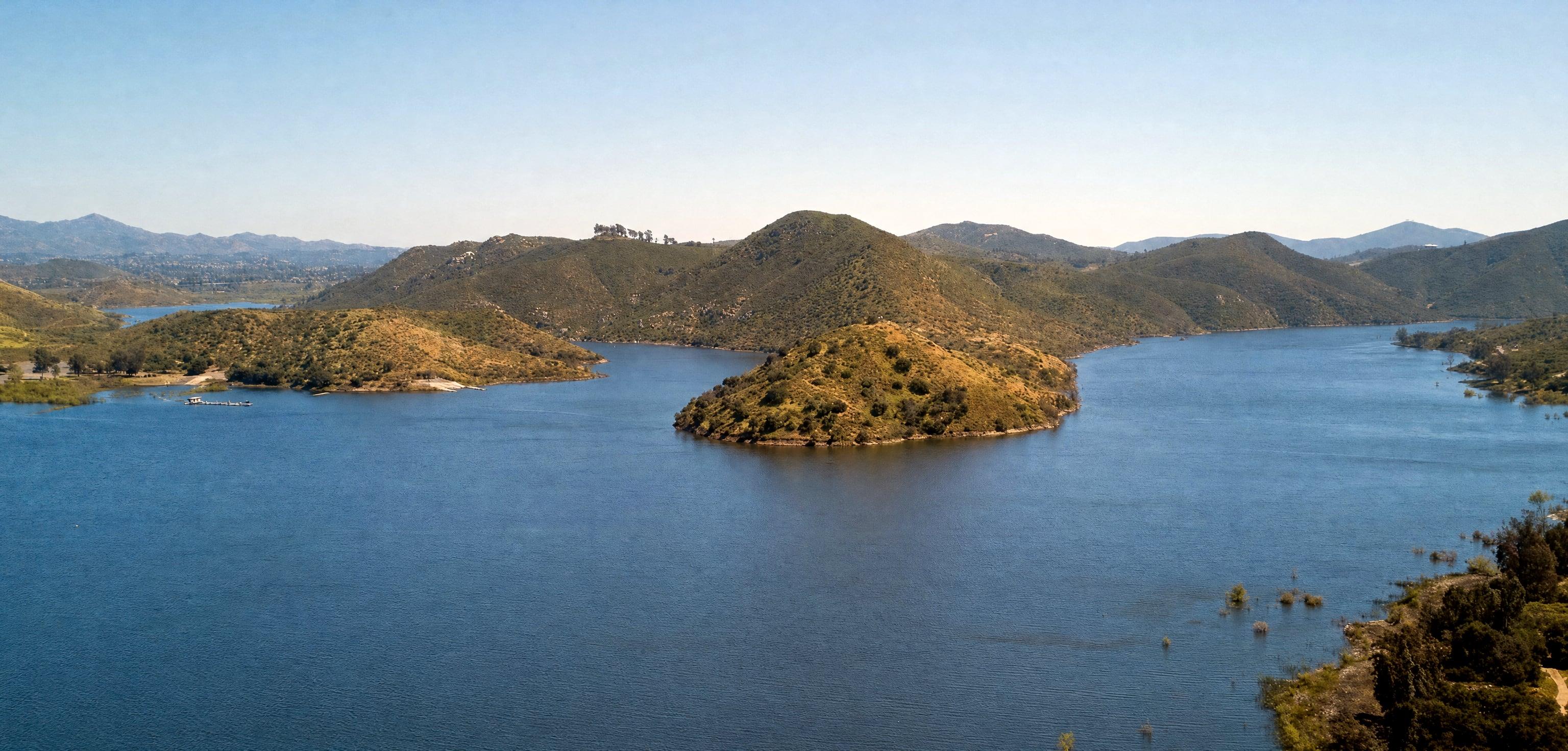
Improving Water Quality Through Lake Oxygenation at Camanche Reservoir
EBMUD's AWWA paper on the first years of oxygenating Camanche Reservoir, and why oxygen was chosen to remove the sulfide without disturbing the cold water layer.
Details
Summary
Presented by Rodney Jung, James O. Sanders, Jr. and H. Hubert Lai of the East Bay Municipal Utility District at the AWWA Water Quality Technology Conference in November 1998, this paper reports the first years of hypolimnetic oxygenation at Camanche Reservoir in California. Camanche releases supply a cold water hatchery for Chinook salmon and steelhead trout and the Lower Mokelumne River, and droughts from 1987 to 1990 caused fish losses. EBMUD studies in 1988 and 1989 traced them to seasonal anoxia in the bottom water, which produced toxic levels of hydrogen sulfide. Aeration, multi-level intakes, potassium permanganate and diversion from Pardee Reservoir were all ruled out, and hypolimnetic oxygenation was chosen as the most cost-effective way to remove the sulfide without disturbing the cold water layer. Professor Richard Speece designed a system in which a cone supersaturates a sidestream of cold bottom water with over 100 mg/L of oxygen and a manifold returns it to the deep reservoir. The paper reports an oxygen plume about 15 meters thick reaching about 3 kilometers upstream, lower ammonia and phosphate in the bottom water, clearer water and lower chlorophyll. About 270 metric tons of oxygen were added in one year. The authors caution that the years since installation were wet, so dry years could demand more oxygen than the demonstration unit, at half the design capacity, can supply.
Key Figures
100mg/L
Dissolved oxygen the Speece Cone® puts into the sidestream (over) Source: PDF page 2 (opens in a new tab)
35cfs
Discharge of the 127 kW (170 h.p.) submersible pump Source: PDF page 2 (opens in a new tab)
270metric tons
Oxygen added in one calendar year (approximately) Source: PDF page 3 (opens in a new tab)
Questions
Why did EBMUD oxygenate Camanche Reservoir?
Droughts from 1987 to 1990 caused fish losses downstream. EBMUD studies in 1988 and 1989 found that seasonal anoxia in the reservoir's bottom water produced toxic levels of hydrogen sulfide in the water released to the hatchery and river. (PDF page 1) (opens in a new tab)
Why was hypolimnetic oxygenation chosen over other options?
Hypolimnetic aeration, multi-level intakes, potassium permanganate with aeration, and diversion from Pardee Reservoir were ruled out for practical, reliability or feasibility reasons. Oxygenation removed the hydrogen sulfide without disturbing the cold water layer or EBMUD's water supply operations. (PDF page 2) (opens in a new tab)
What did oxygenation change in the reservoir?
Oxygen rose near the bottom in a plume about 15 meters thick reaching about 3 kilometers upstream. Ammonia fell by as much as two orders of magnitude, phosphate fell to about 0.02 mg/L in summer, water clarity improved and chlorophyll levels dropped. (PDF page 5) (opens in a new tab)
What limits do the authors note?
The years after installation were wet or normal, so the findings are preliminary. In a dry year, oxygen demand could exceed the capacity of the demonstration unit, which is half the design capacity. (PDF page 4) (opens in a new tab)
In Full
More Key Figures
Four more, each with what it measures and its PDF page.
From the PDF
| Figure | What It Measures |
|---|---|
| 10,000 feet | Distance at which the oxygen plume could be observed (over) (PDF page 3 (opens in a new tab)) |
| 24 hours | Time needed to oxidize hydrogen sulfide in the plume, from bench tests (at least) (PDF page 4 (opens in a new tab)) |
| 0.02 mg/L | Summer phosphate range in the hypolimnion after oxygenation (PDF page 4 (opens in a new tab)) |
| 15 meters | Thickness of the oxygen plume along the reservoir bottom (PDF page 5 (opens in a new tab)) |
How to Cite
One line to paste into a report.
Rodney Jung, James O. Sanders, Jr. and H. Hubert Lai. Improving Water Quality Through Lake Oxygenation at Camanche Reservoir. AWWA, November 1998. Project engineer: R.E. Speece. Eco Oxygen Technologies Technical Library. https://eco2tech.com/technical-library/improving-water-quality-through-lake-oxygenation-at-camanche-reservoir/
https://eco2tech.com/technical-library/improving-water-quality-through-lake-oxygenation-at-camanche-reservoir/
The Next Step
Ask an ECO₂ Engineer
Questions about this technical paper, or about your own water? An application engineer answers, with the figures.