Escondido Grapevine - Lake Hodges Gets Highly Oxygenated for 2020
Development and farming above Lake Hodges had raised its nutrients and algae. San Diego's new system sends highly oxygenated water to the reservoir's bottom to bring them down.
Details
Summary
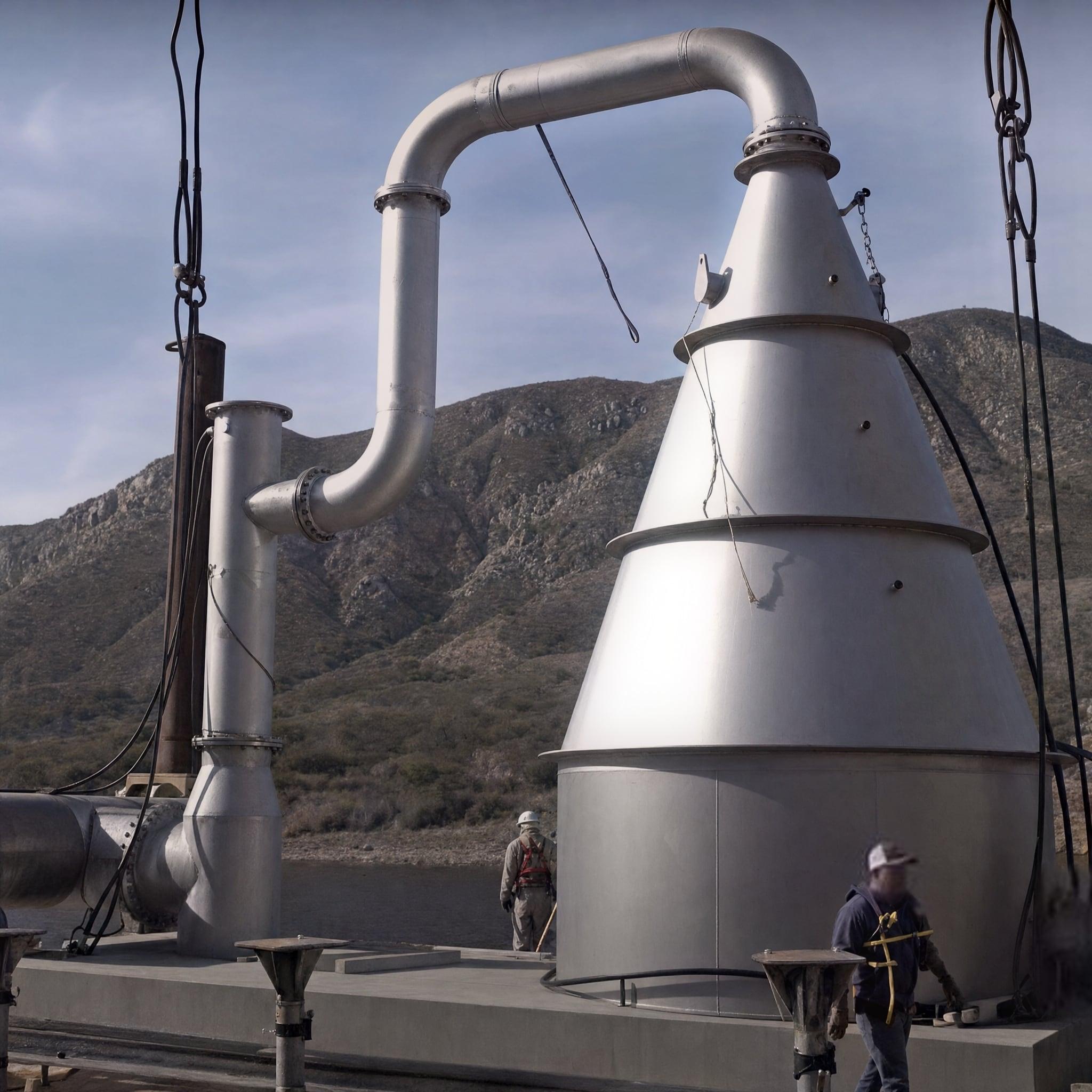
The Escondido Grapevine reported on December 31, 2019 that the City of San Diego's Public Utilities Department had taken a major step toward finishing an oxygenation project at Lake Hodges. Human activity in the watershed above the reservoir, including residential and commercial development, agriculture and land clearing, had raised nutrient and algae levels, and poor water quality can limit how water is moved in and out of the reservoir. The new system, designed by city engineers, sends highly oxygenated water to the bottom of the reservoir to reduce the buildup of excess nutrients and harmful algae. The city's project manager explains that a planning study done about five years earlier identified oxygenation with a Speece cone as the most cost-effective way to address the lake's water quality problems. Divers released the cone, checked its position, fastened it down and connected the large diffuser pipe that spreads the oxygen-rich water through the reservoir. The San Diego County Water Authority points to further benefits: more operational flexibility for regional supply, since Hodges is connected to the Olivenhain Reservoir through the Emergency & Carryover Storage Project, and preventing the buildup of mercury that can harm people and wildlife who eat fish from the reservoir. A $3.4 million grant from the California State Department of Water Resources, funded by the San Diego Integrated Regional Water Management program, paid for the project, which began in February 2019.
Key Figures
130,000pounds
Weight of the Speece cone lowered into Lake Hodges Source: PDF page 2 (opens in a new tab)
11feet
Silt excavated from the reservoir bottom for the cone's foundation (approximately) Source: PDF page 3 (opens in a new tab)
3.4million USD
State grant that funded the oxygenation project Source: PDF page 4 (opens in a new tab)
Questions
Why did Lake Hodges need an oxygenation system?
Human activities in the watershed upstream, including residential and commercial development, agriculture and land clearing, increased nutrients and algae in the reservoir. The oxygenated water sent to the bottom is meant to reduce the buildup of excess nutrients and harmful algae. (PDF page 2) (opens in a new tab)
Why did San Diego choose a Speece cone?
A planning study done about five years earlier identified oxygenation with a Speece cone as the most cost-effective way to address the water quality problems at Hodges, according to the city's project manager. (PDF page 2) (opens in a new tab)
What other benefits does the project bring?
The Water Authority cites operational flexibility for regional supply and preventing the buildup of mercury, which can harm people and wildlife that eat fish from the reservoir. (PDF page 4) (opens in a new tab)
How was the project funded?
The California State Department of Water Resources awarded the City of San Diego a $3.4 million grant funded by the San Diego Integrated Regional Water Management program. The project began in February 2019. (PDF page 4) (opens in a new tab)
The Project
Lake Hodges
In Full
How to Cite
One line to paste into a report.
City of San Diego. Escondido Grapevine - Lake Hodges Gets Highly Oxygenated for 2020. Escondido Grapevine, December 2019. Project engineer: Brown and Caldwell. Eco Oxygen Technologies Technical Library. https://eco2tech.com/technical-library/escondido-grapevine-lake-hodges-gets-highly-oxygenated-for-2020/
https://eco2tech.com/technical-library/escondido-grapevine-lake-hodges-gets-highly-oxygenated-for-2020/
The Next Step
Ask an ECO₂ Engineer
Questions about this published article, or about your own water? An application engineer answers, with the figures.