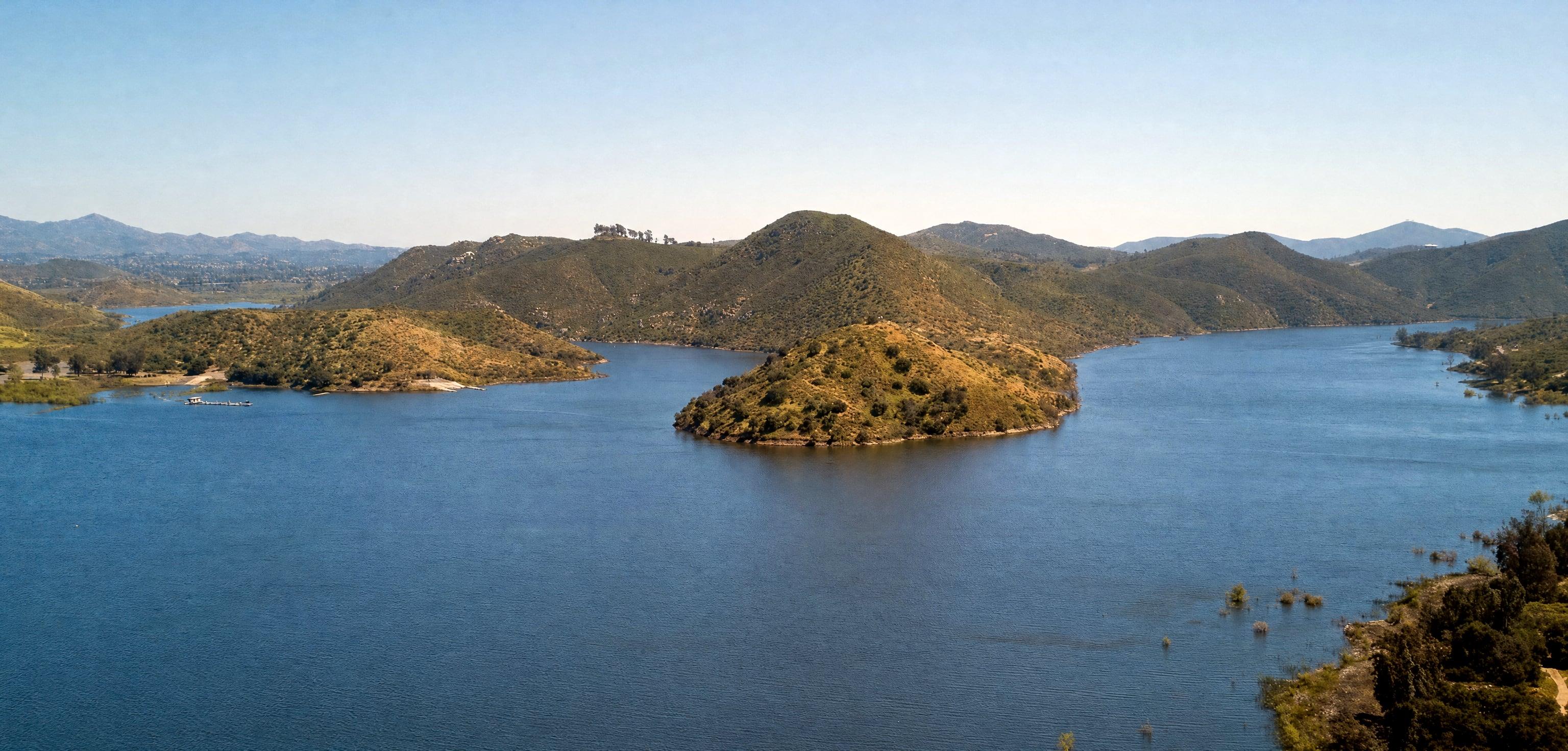
WaterWorld - New Oxygenation System to Improve Water Quality at San Diego Lake Hodges Reservoir
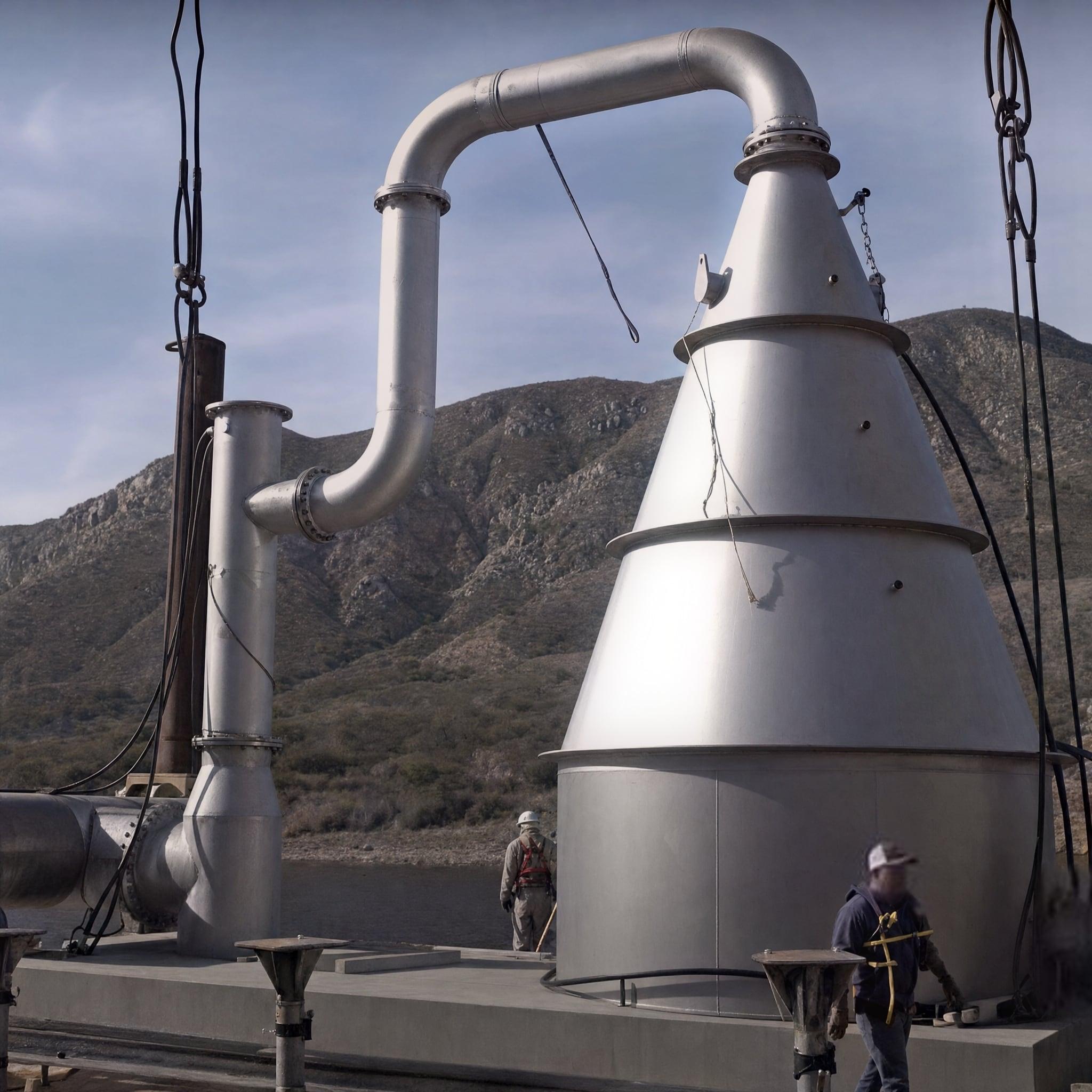
In December 2019 the City of San Diego lowered a Speece Cone® into Lake Hodges, a reservoir that serves two water districts and links to the region's emergency storage.
Details
Summary
Oxygen for the Bottom of Lake Hodges
The system sends oxygen-rich water to the bottom to reduce excess nutrients and harmful algae. A $3.4 million state grant paid for the project, which began in February 2019 (pp. 2, 4).
Key Figures
130,000pounds
Weight of the Speece Cone Source: PDF page 2 (opens in a new tab)
11feet
Silt excavated to build the underwater foundation (approx.) Source: PDF page 3 (opens in a new tab)
$3.4million USD
State grant for the oxygenation project Source: PDF page 4 (opens in a new tab)
Questions
Why does Lake Hodges need an oxygenation system?
Nutrients from development, agriculture and land clearing upstream have increased the algae in the reservoir, and degraded water quality can restrict the ability to move water in and out of it (p. 2).
What does the Lake Hodges oxygenation system consist of?
A stainless steel Speece Cone on the reservoir bottom that diffuses oxygen-rich water, underwater pipes with a large diffuser, and an onshore facility that stores the oxygen and the electrical power (pp. 1, 3).
Why did San Diego choose a Speece Cone for Lake Hodges?
The city's project manager said a planning study done about five years earlier identified oxygenation using the Speece Cone as the most cost-effective way of addressing the reservoir's water quality problems (p. 2).
Who paid for the Lake Hodges oxygenation project?
The California State Department of Water Resources awarded the City of San Diego a $3.4 million grant, funded by the San Diego Integrated Regional Water Management program (p. 4).
Can oxygenating a reservoir help with mercury in fish?
The San Diego County Water Authority lists preventing the accumulation of mercury, which can harm people and wildlife that eat fish from the reservoir, among the project's ancillary benefits (p. 4).
Why does Lake Hodges need oxygen?
Nutrients from development, agriculture and land clearing upstream feed algae and degrade water quality, which limits moving water in and out of the reservoir. (PDF page 2) (opens in a new tab)
Why the Speece Cone?
A planning study about five years earlier identified it as the most cost effective way to address the water quality problems at Hodges. (PDF page 2) (opens in a new tab)
Who paid for it?
The California Department of Water Resources awarded the City of San Diego a $3.4 million grant through the San Diego Integrated Regional Water Management program. (PDF page 4) (opens in a new tab)
The Project
Lake Hodges
In Full
More Key Figures
Three more, each with what it measures and its PDF page.
From the PDF
| Figure | What It Measures |
|---|---|
| 11 feet | Silt excavated to build the cone's concrete base (approximately) (PDF page 3 (opens in a new tab)) |
| $3.4 million | Grant from the California State Department of Water Resources (PDF page 4 (opens in a new tab)) |
| February 2019 | Project start (PDF page 4 (opens in a new tab)) |
The Full Write-Up
The problem, the work, the results and who did it.
Nutrients from the Watershed Feed Algae & Limit How the Reservoir Can Be Used
Lake Hodges is owned and operated by the City of San Diego. It serves the San Dieguito Water District and the Santa Fe Irrigation District, and it is connected to the San Diego County Water Authority's Olivenhain Reservoir as part of the Emergency & Carryover Storage Project, which is there to keep regional water reliable in an emergency or if imported supplies are cut off (pp. 3, 4).
Human activity in the watershed upstream has raised the nutrients and algae in the reservoir: residential and commercial development, agriculture and land clearing. Degraded water quality can restrict the ability to move water in and out of the reservoir (p. 2). For a lake tied into a regional storage system, that is a real constraint.
The mechanism is common to many reservoirs. Nutrients feed algae near the surface. When the algae die they sink, and their decay uses up the oxygen in the deep water. Without oxygen at the bottom, the sediment releases more nutrients, and the cycle feeds itself. Adding oxygen at the bottom is meant to break it.
A Cone on the Bottom, Pipes & a Diffuser, & a Facility on Shore
The system was designed by city engineers (p. 2). It has three parts: a stainless steel Speece Cone that diffuses oxygen-rich water into the bottom of the reservoir, underwater pipes, and an onshore facility that stores the oxygen and the electrical power (p. 1).
A pump moves reservoir water through the cone, and a large diffuser pipe connected to the cone spreads the oxygen-rich water through the reservoir (p. 3). The cone is named after the inventor of the technology, Richard Speece. It weighs 130,000 pounds and was lowered to the reservoir floor, onto a concrete base that crews built after excavating approximately 11 feet of silt (pp. 2, 3).
The choice of method came from planning. Jeff Pasek, project manager at the city's Public Utilities Department, said the project derived from a planning study done about five years earlier, which identified oxygenation using the Speece Cone as the most cost-effective way of addressing the water quality problems in Hodges (p. 2). That study is in this library.
In Place in December 2019, with Clear Goals & a State Grant
This is a news report of an installation, not of measured results. The city's Public Utilities Department called the cone's placement a major step toward completing the project (p. 2).
The San Diego County Water Authority, the source of the story, sets out what it expects. First and foremost are water quality improvements for Hodges Reservoir. The ancillary benefits are operational flexibility for regional supply, and preventing the accumulation of mercury, which can be harmful to people and wildlife that eat fish from the reservoir (p. 4).
The California State Department of Water Resources awarded the city a $3.4 million grant, funded by the San Diego Integrated Regional Water Management program, to complete the project, which began in February 2019 (p. 4).
The City Designed It, & the Water Authority Told the Story
The City of San Diego's Public Utilities Department owns the reservoir and the project, and city engineers designed the system. Jeff Pasek was the department's project manager (p. 2).
Goldamer Herbon, a senior water resources specialist at the San Diego County Water Authority, described the benefits. The Water Authority supplied the story, which WaterWorld ran under its Aeration section (pp. 1, 4). The article names no equipment supplier, contractor or consulting engineer.
Why It Matters for a Reservoir in a Regional System
If your reservoir is part of a larger supply network, poor water quality limits how you can use it, not only how you treat it. Lake Hodges shows a city treating the cause in the lake itself, with oxygen at the bottom to reduce the nutrients that feed algae, chosen through a planning study for cost-effectiveness (p. 2).
It also shows how such a project is paid for: a state grant through a regional water management program (p. 4). The benefits the Water Authority lists, from flexibility for the regional supply to less mercury building up in fish, reach well beyond one treatment plant.
Written up from the published article. Every figure is as the published article prints it, with the PDF page it comes from; the authors' own words appear only in quotation marks.
How to Cite
One line to paste into a report.
City of San Diego. WaterWorld - New Oxygenation System to Improve Water Quality at San Diego Lake Hodges Reservoir. WaterWorld, December 2019. Project engineer: Brown and Caldwell. Eco Oxygen Technologies Technical Library. https://eco2tech.com/technical-library/waterworld-new-oxygenation-system-to-improve-water-quality-at-san-diego-lake-hodges-reservoir/
https://eco2tech.com/technical-library/waterworld-new-oxygenation-system-to-improve-water-quality-at-san-diego-lake-hodges-reservoir/
The Next Step
Ask an ECO₂ Engineer
Questions about this published article, or about your own water? An application engineer answers, with the figures.