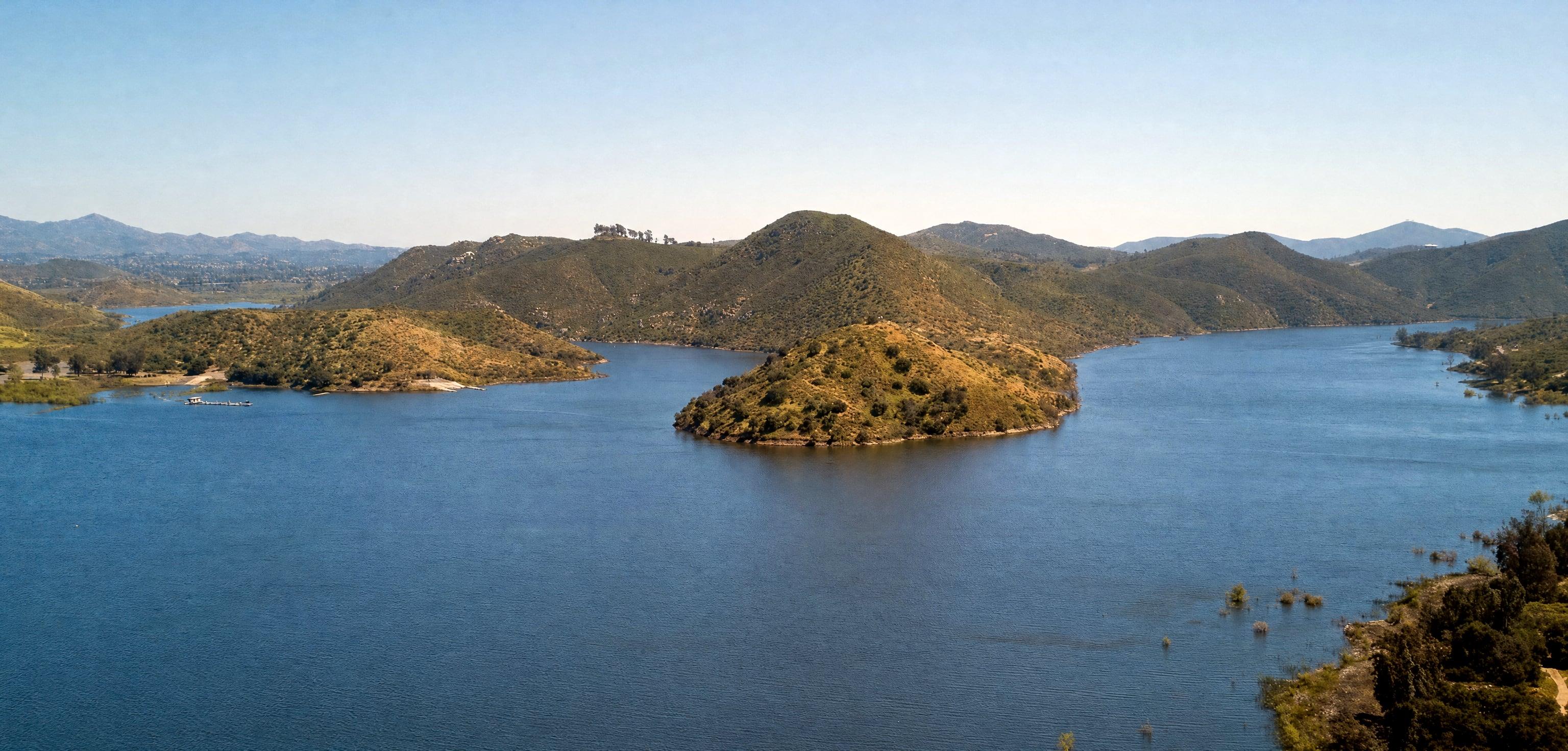
Reduction of Taste and Odor Compounds and Soluble Manganese in San Pablo Reservoir (Final Report - December 2017)
Why San Pablo Reservoir's water tasted earthy and carried manganese, and which of the fixes screened for East Bay Municipal Utility District came out first.
Details
Summary
San Pablo's Taste & Odor, Traced
This December 2017 report for East Bay Municipal Utility District (EBMUD) traces San Pablo Reservoir's earthy, musty water and soluble manganese to bottom water cut off from fresh oxygen for 6 to 8 months a year. Of 17 methods screened, a hypolimnetic oxygenation system built on a Speece Cone® ranked first (pp. 7, 8).
Key Figures
5tons of oxygen a day
Design capacity of the San Pablo HOS (Speece Cone with liquid oxygen supply) Source: PDF page 8 (opens in a new tab)
4.75tons a day
Estimated hypolimnion oxygen demand the system was sized to meet Source: PDF page 38 (opens in a new tab)
460ng/L
Peak reservoir geosmin in summer 2015, which overwhelmed Sobrante WTP treatment Source: PDF page 11 (opens in a new tab)
Questions
What causes geosmin and MIB in a drinking water reservoir?
Algae, most often cyanobacteria. At San Pablo, cyanobacteria counts did not track geosmin well, pointing to a low-abundance source or to algae on the bottom (pp. 7, 24).
How does oxygen at the bottom of a reservoir reduce manganese?
Oxygen at the sediment surface stops manganese and iron oxides from dissolving, so the metals stay in the sediment. In San Pablo's tests, manganese fell below 60 µg/L within 12 days with oxygen (pp. 117, 119).
Why not use aeration or destratification for taste and odor?
Both mix the water column, and San Pablo's stratification keeps cold water for fish in summer. Oxygenation adds oxygen to the bottom water without destratifying it (pp. 32, 33).
How is a hypolimnetic oxygenation system sized?
From the sediment's oxygen demand plus the water's own. At San Pablo, 1.0 g/m² a day of sediment demand gave about 4.75 tons/day in all, so a 5 tons/day Speece Cone was chosen (pp. 188, 189).
Can oxygenation stop algae blooms on its own?
Not always. It should greatly reduce internal nutrient cycling, but blooms may continue if nutrients from runoff and water transfers are not addressed (p. 10).
Why did EBMUD choose hypolimnetic oxygenation for San Pablo Reservoir?
Of 17 in-reservoir methods screened, four were rated against 15 weighted criteria, and the HOS ranked highest at 93 out of 100. It addresses the root causes of both problems, internal nutrient loading and anoxia at the sediment-water interface, and was expected to improve fish habitat too. (PDF page 163) (opens in a new tab)
How was the San Pablo oxygenation system sized?
An early estimate from dissolved oxygen profiles and literature values gave up to 6 tons a day. Sediment chamber tests then set a design sediment oxygen demand of 1.0 g/m2 per day, which put hypolimnion oxygen demand at about 4.75 tons a day, so the team chose a standard Speece Cone rated at 5 tons a day. (PDF page 37) (opens in a new tab)
What did the San Pablo sediment chamber experiments show about oxygen and manganese?
Under oxic conditions, manganese in the water over Sobrante Tower sediments dropped from around 1,000 µg/L to below 60 µg/L within 12 days. Under anoxic conditions manganese was released at once, with peak fluxes of 40 to 60 mg/m2 per day, so keeping the sediment surface oxygenated should cut manganese in the water column. (PDF page 119) (opens in a new tab)
How will EBMUD judge whether the oxygenation system works?
Effectiveness monitoring starts a year before installation to set a baseline, then tracks dissolved oxygen profiles, nutrients, manganese, geosmin, MIB and algae. Success means fewer and smaller taste and odor events, a Carlson trophic state index below 50, and soluble manganese at or below 0.01 mg/L. (PDF page 53) (opens in a new tab)
The Project
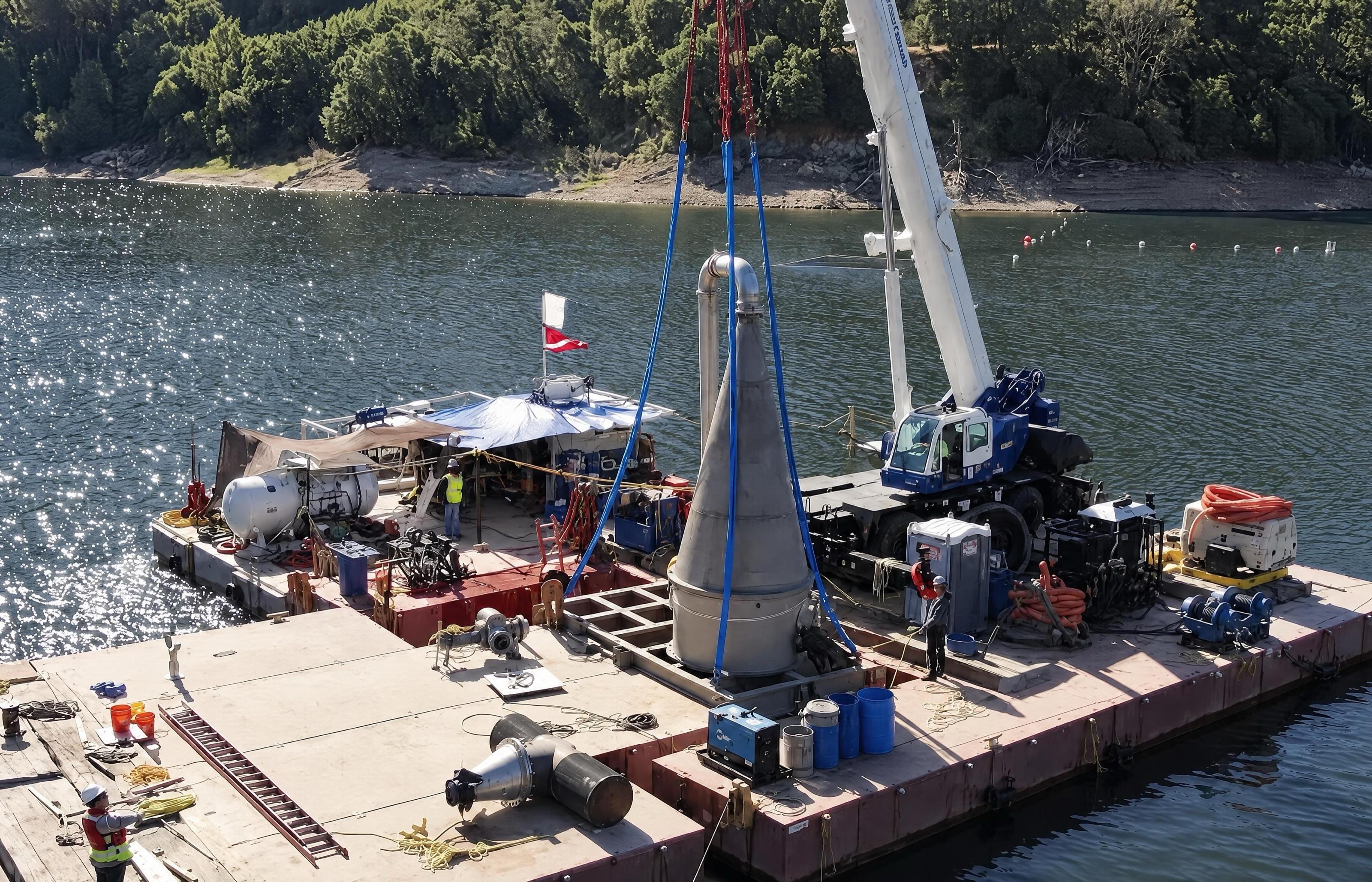
San Pablo Reservoir
In Full
More Key Figures
10 more, each with what it measures and its PDF page.
From the PDF
| Figure | What It Measures |
|---|---|
| 60 µg/L | Manganese in sediment chamber water after 12 days under oxic conditions (below this level at both sites; about 1,000 µg/L at the start in Sobrante Tower cores) (PDF page 119 (opens in a new tab)) |
| 0.01 mg/L | Effectiveness target for soluble manganese once the HOS operates (PDF page 53 (opens in a new tab)) |
| 460 ng/L | Peak geosmin in the reservoir, summer 2015 (PDF page 11 (opens in a new tab)) |
| 6 to 8 months a year | Time the bottom water and sediment are cut off from fresh oxygen (PDF page 15 (opens in a new tab)) |
| 17 methods | In-reservoir management methods screened (PDF page 30 (opens in a new tab)) |
| 93 out of 100 | Weighted rating of hypolimnetic oxygenation, the highest of the four rated (PDF page 163 (opens in a new tab)) |
| Below 60 µg/L | Manganese over the sediment cores after 12 days with oxygen, from around 1,000 over the Sobrante cores (PDF page 119 (opens in a new tab)) |
| 23 to 28 Fe:P | Iron to phosphorus ratio in the sediment, where above 10 binds phosphate well (PDF page 35 (opens in a new tab)) |
| 5 tons/day | Speece Cone design capacity, for an estimated demand of about 4.75 tons/day (PDF page 38 (opens in a new tab)) |
| 0.01 mg/L | Target for soluble manganese once the system runs, at or below (PDF page 53 (opens in a new tab)) |
The Full Write-Up
The problem, the work, the results and who did it.
Earthy, Musty Water & Manganese from the Reservoir's Own Sediment
San Pablo Reservoir in Contra Costa County, California, supplies the northern part of EBMUD's service area through the Sobrante and San Pablo water treatment plants. Geosmin in the reservoir spiked to 460 ng/L in the summer of 2015 and overwhelmed the 60 MGD Sobrante plant, bringing many customer complaints (p. 11).
Geosmin and MIB, made by algae, give water an earthy and a musty flavor. Soluble manganese gives it a metallic taste and stains laundry, and removing it at the plant uses up ozone needed for the taste and odor compounds (p. 11).
The cause is in the reservoir. Strong thermal stratification cuts the bottom water and sediment off from fresh oxygen for 6 to 8 months each year. Without oxygen, the sediment releases soluble manganese, ammonium, orthophosphate, iron and potentially methylmercury, and the nutrients feed more algae (p. 15).
Sediment Tests, 17 Options & a Design Sized from Measured Demand
The team tested that idea on intact sediment cores from the Sobrante and San Pablo intake towers, held with oxygen and then without. With oxygen, manganese over the Sobrante cores fell from around 1,000 µg/L to below 60 µg/L within 12 days. Without it, the sediment released manganese at once (p. 119). The sediment's iron to phosphorus ratio of 23 to 28 is above the 10 that means it binds phosphate well once its surface has oxygen (p. 35).
A workshop with the District in October 2016 cut 17 in-reservoir methods to four: algaecide, hypolimnetic oxygenation, oxygenation with selective withdrawal, and a wetland filter (pp. 30, 33). Destratification and aeration were rejected because they would mix away the cold water the reservoir keeps for fish (pp. 32, 33). The four were rated on 15 weighted criteria (p. 33).
The first sizing, from oxygen profiles and literature values, was up to 6 tons/day (p. 153). Chamber tests then gave a design sediment oxygen demand of 1.0 g/m² a day and a total demand of about 4.75 tons/day, so the team chose a standard Speece Cone rated at 5 tons/day (pp. 188, 189).
A liquid oxygen tank holding 10 days of supply and two vaporizers on or near the dam feed a cone assembly on the reservoir floor: intake screen, submersible pump, cone and diffuser (p. 8). The design places the cone beside the deep hole by the dam, not in it, so its water can reach far more of the bottom. The hole holds less than 0.1 percent of the volume (pp. 8, 40, 192).
Oxygenation Ranked First, with Clear Targets to Prove It Works
This is a planning report: its results are the ranking, the sediment tests and the targets. Hypolimnetic oxygenation scored 93 out of 100, oxygenation with selective withdrawal 91 and algaecide 58. The wetland filter was not rated for lack of data (p. 165).
Oxygenation treats the root cause of both problems, internal nutrient loading and anoxia at the sediment, should improve fish habitat and is likely to keep working. Its downsides are a high capital cost and intensive engineering. Selective withdrawal was kept in reserve, to add later if needed (pp. 7, 8).
Monitoring is to start a year before installation to set a baseline. Success means fewer, smaller and shorter taste and odor events, a Carlson trophic state index below 50 and soluble manganese at or below 0.01 mg/L (pp. 51, 53). The team expects manganese to respond in the first year and algae over several years (p. 155).
Written by Stillwater Sciences and Brown and Caldwell for EBMUD
Stillwater Sciences of Berkeley and Brown and Caldwell of Walnut Creek, California, wrote the report for East Bay Municipal Utility District, which operates the reservoir (pp. 1, 6). Dr. Marc Beutel of the University of California, Merced, ran the sediment flux study with EBMUD staff (pp. 66, 117). The design names ECO₂ as the proposed Speece Cone manufacturer (p. 38).
What It Means for a Reservoir with Taste, Odor or Manganese
If your raw water brings geosmin, MIB or manganese to the plant each summer, this report shows how to treat the cause in the reservoir, after a diagnosis from stratification, oxygen profiles and sediment tests (pp. 15, 22).
Two steps carry over. Size from sediment oxygen demand measured on your own sediment, which here brought the size from up to 6 tons/day to 5 (pp. 37, 153). Check the iron to phosphorus ratio: where it is high, oxygen should also hold back phosphate. And oxygen does not stop nutrients from the watershed, so measure that load too (pp. 10, 39).
Written up from the technical paper. Every figure is as the technical paper prints it, with the PDF page it comes from; the authors' own words appear only in quotation marks.
How to Cite
One line to paste into a report.
Stillwater Sciences and Brown and Caldwell. Reduction of Taste and Odor Compounds and Soluble Manganese in San Pablo Reservoir (Final Report - December 2017). Brown and Caldwell, December 2017. Project engineer: Brown and Caldwell, Stillwater Sciences. Eco Oxygen Technologies Technical Library. https://eco2tech.com/technical-library/reduction-of-taste-and-odor-compounds-and-soluble-manganese-in-san-pablo-reservoir-final-report-december-2017/
https://eco2tech.com/technical-library/reduction-of-taste-and-odor-compounds-and-soluble-manganese-in-san-pablo-reservoir-final-report-december-2017/
The Next Step
Ask an ECO₂ Engineer
Questions about this technical paper, or about your own water? An application engineer answers, with the figures.