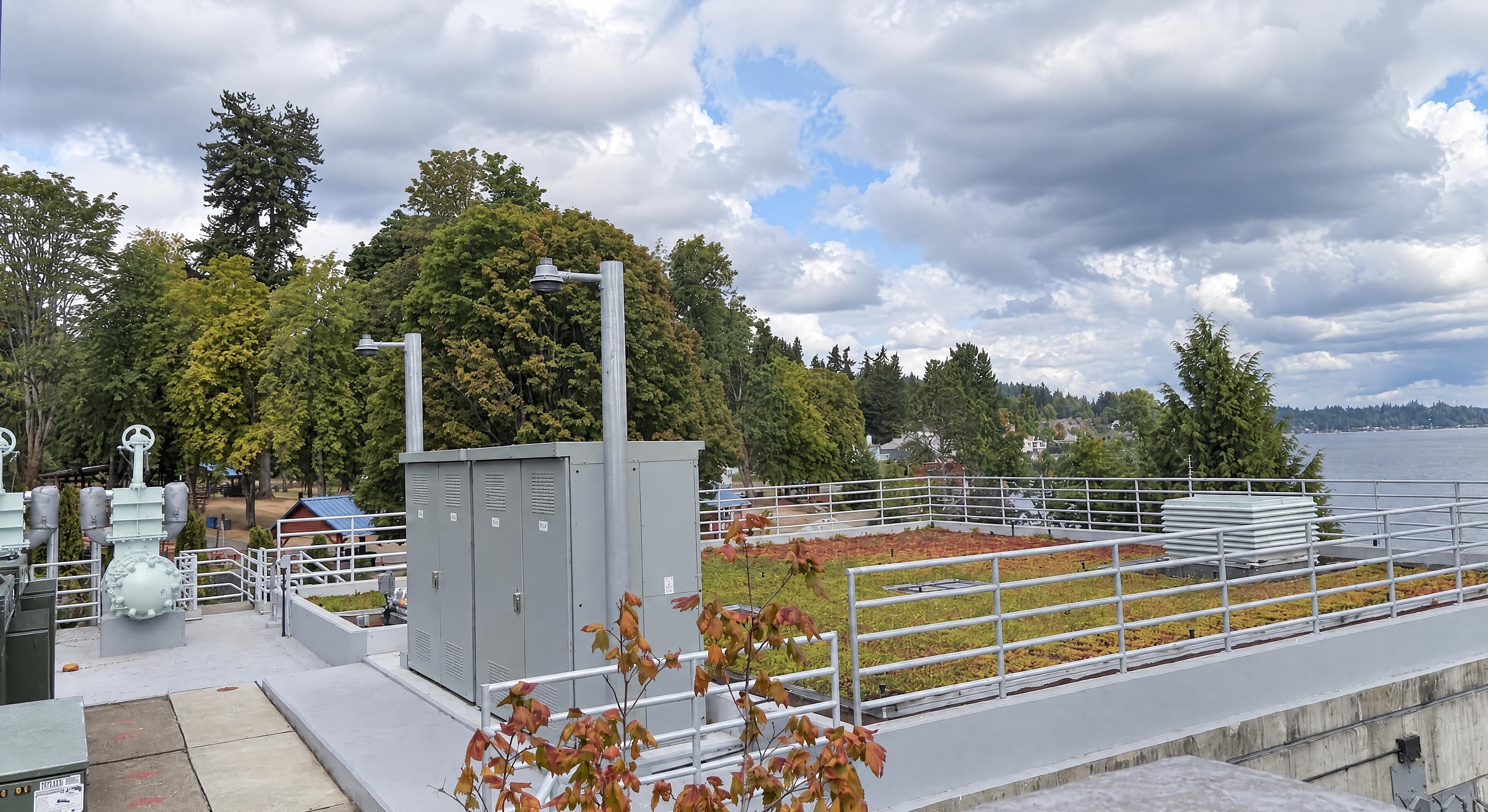
Use of Pure Oxygen to Control Odors and Corrosion and Improve Safety in the Milford, Connecticut Sewer System
Hydrogen sulfide from the two force mains of Milford's Gulf Pond Pump Station had corroded an interceptor and a pump station wet well, with peaks of 900 ppm.
Details
Summary
From 900 ppm H₂S Peaks to Zero
The city cut detention time with automatic valve control and added a pure oxygen side stream. In tests in June 2012, no sulfide was detected at the force main discharge (pp. 6, 18, 20).
Key Figures
900ppm
Peak H₂S in a manhole just below the Gulf Pond force main discharge before treatment (July 2004) Source: PDF page 6 (opens in a new tab)
2.5mi
Length of the dual 20 in and 24 in Gulf Pond force mains (4.0 km) Source: PDF page 1 (opens in a new tab)
3.0MGD
Average flow at the Gulf Pond Pump Station (11.4 ML/d) Source: PDF page 11 (opens in a new tab)
Questions
Why did H₂S peak in the early morning?
In every case it peaked when flows were lowest and the sewage spent longest in the force mains (p. 6).
When does the Gulf Pond oxygen system run?
Only at or below average flow, when detention in the main approaches two hours or more. The break point is 18.9 ML/d (5.0 MGD), and operators can adjust it (p. 16).
Does the oxygen needed change with flow?
No. The paper shows the daily oxygen depends on the size and length of the force main. Another way to get it is the main's volume times the uptake rate times 24 hours (p. 17).
What happens if the oxygen system stops?
On June 22, 2012 a communication failure stopped it briefly and a small H₂S peak followed. Oxygen flow was back within one hour and H₂S returned to zero (pp. 19, 20).
How much maintenance does the system need?
Very little. The cone has no moving parts. The oxygen supplier maintains the tank and vaporizer, and the city maintains the side stream pumps, drives and valves (p. 23).
What caused the odor and corrosion problems in Milford's sewer system?
The investigation traced most of the H₂S to the dual force mains from the Gulf Pond Pump Station. In July 2004, H₂S peaked at 900 ppm in a manhole just below their discharge and at 250 ppm, "a potentially lethal dose", in the West Avenue Pump Station wet well downstream. (PDF page 6) (opens in a new tab)
How was the oxygen system at Gulf Pond sized?
The required dissolved oxygen is the oxygen uptake rate times the travel time through the force main, with a design uptake rate of 15.0 mg/L/hr against a highest measured 13.0. The system was designed to deliver 1,000 lb/d (454 kg/d) to the 24 in force main and 650 lb/d (294 kg/d) to the 20 in main. (PDF page 17) (opens in a new tab)
How does controlling the two force mains reduce sulfide?
Motorized valves, flow meters and a PLC match the number of force mains in use to pump station flow, which shortens detention time and cuts the oxygen needed. Between 7.6 and 18.9 ML/d the two mains alternate on a 2-hour cycle so the idle one does not turn septic. (PDF page 12) (opens in a new tab)
What did performance testing show with the oxygen system on and off?
With oxygen on, no sulfide was detected at the force main discharge (0.7 mg/L average with it off), dissolved oxygen rose from 1.3 to 8.3 mg/L, and H₂S in the headspace of two downstream manholes fell to 0 ppm. Before oxygenation the discharge manhole averaged 3.8 ppm with peaks close to 90 ppm. (PDF page 20) (opens in a new tab)
What does the Milford oxygen system cost to run?
The city found it very economical, about $60 a day at maximum oxygen usage. The oxygen supplier maintains the liquid oxygen tank and vaporizer, and the cone has no moving parts. (PDF page 23) (opens in a new tab)
Why was pure oxygen chosen over chemicals?
A 1995 study for New Haven by Bowker and others found pure oxygen had the lowest cost per pound of H₂S removed, with sodium hypochlorite about ten times and potassium permanganate eighteen times more expensive; nitrate products cost seven to ten times more to operate. (PDF page 10) (opens in a new tab)
The Project
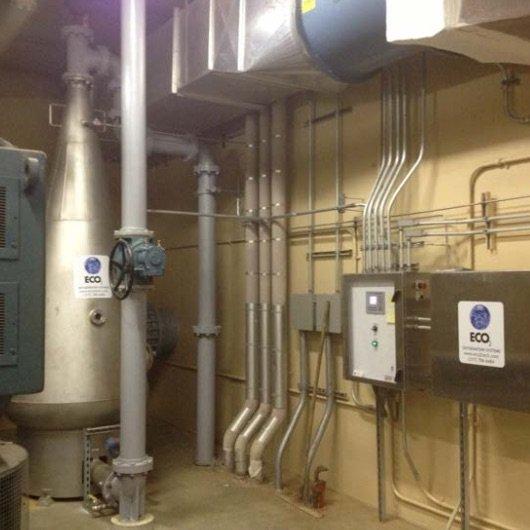
Gulf Pond Pump Station
In Full
More Key Figures
11 more, each with what it measures and its PDF page.
From the PDF
| Figure | What It Measures |
|---|---|
| 1,000 lbs/day | Design oxygen delivery to the 24 in force main (454 kg/d); 650 lb/d to the 20 in main (PDF page 17 (opens in a new tab)) |
| 95% to 98% | Oxygen transfer efficiency measured at startup (PDF page 15 (opens in a new tab)) |
| 0.7 mg/L | Average sulfide at the force main discharge with oxygen off; none detected with oxygen on (PDF page 20 (opens in a new tab)) |
| 8.3 mg/L | Average dissolved oxygen at the force main discharge with oxygen on (1.3 mg/L with it off) (PDF page 20 (opens in a new tab)) |
| 60 US$ a day | Operating cost at maximum oxygen usage (approximately) (PDF page 23 (opens in a new tab)) |
| 900 ppm H₂S | Peak in a manhole below the Gulf Pond discharge, July 2004 (PDF page 6 (opens in a new tab)) |
| 0.7 mg/L | Average sulfide at the force main discharge with oxygen off (none detected with it on) (PDF page 20 (opens in a new tab)) |
| 8.3 mg/L | Average dissolved oxygen at the discharge with oxygen on (1.3 with it off) (PDF page 20 (opens in a new tab)) |
| 0 ppm H₂S | Headspace H₂S in two downstream manholes with oxygen on (PDF page 20 (opens in a new tab)) |
| 95% to 98% | Oxygen transfer efficiency at startup (PDF page 15 (opens in a new tab)) |
| $60/d | Running cost at maximum oxygen use (approximately) (PDF page 23 (opens in a new tab)) |
The Full Write-Up
The problem, the work, the results and who did it.
Acid from Two Force Mains Was Eating the Sewer System
In Milford, Connecticut, the Gulf Pond Pump Station sends its flow through dual 20 in and 24 in force mains, 4.0 km (2.5 mi) long, into the East-West Interceptor and on to the West Avenue Pump Station, the city's largest (p. 2).
Every manhole on the interceptor was badly deteriorated, and its 36 in ductile iron pipe perforated after slightly more than 20 years, so the city replaced it. In the West Avenue wet well, concrete was crumbling, reinforcing steel showed, and the electrical and HVAC systems were ruined (p. 2).
Data loggers in July 2004 found the cause. H₂S peaked at 900 ppm in a manhole just below the Gulf Pond discharge and at 250 ppm in the West Avenue wet well, a potentially lethal level (p. 6). Drivers on the nearby interstate could smell it, and it kept residents of a senior condominium complex indoors (p. 22). Permanganate and hypochlorite had given limited results, and carbon canisters were used up fast (p. 10).
Shorter Detention First, Then Oxygen Sized to the Travel Time
The fix had two parts. Either force main can carry average flow, so the city added a magnetic flow meter and a motorized valve on each, run by a new PLC (pp. 2, 11). Below 26.5 ML/d only one main is in service, and in the normal range the two alternate on a 2 hour cycle so neither goes septic. Less time in the pipe means less sulfide and less oxygen needed (pp. 11, 12).
The second part was pure oxygen. A study for New Haven had found pure oxygen the cheapest per pound of H₂S removed, with sodium hypochlorite about ten times and potassium permanganate eighteen times the cost (p. 10).
A side stream from the pump discharge header goes through a Speece Cone®, furnished by Eco Oxygen Technologies, with oxygen from a liquid oxygen tank and evaporator. One of two pumps supplies 3,785 L/min (1,000 gpm) (pp. 12, 13, 15). The design used an uptake rate of 15.0 mg/L per hour against the 13.0 measured, times the travel time in the main. That gave 1,000 lb/d for the 24 in main and 650 lb/d for the 20 in main (p. 17). Oxygen runs only at flows up to 5.0 MGD, when detention nears two hours or more (p. 16). The system started in April 2012 (p. 22).
No Sulfide at the Discharge & 0 ppm H₂S Downstream
Startup tests showed 95% to 98% oxygen transfer efficiency (p. 15).
In June 2012 the team ran the system off and then on, at the design dose of 454 kg/d. Flows were 14.4 to 16.6 ML/d, higher than in a dry summer, so sulfide was lower than at its worst (pp. 18, 19). With oxygen on, sulfide at the force main discharge fell from an average of 0.7 mg/L to none detected. Dissolved oxygen rose from 1.3 to 8.3 mg/L, and ORP from 8 to 123 mV (pp. 19, 20).
In the air, H₂S at the discharge had peaked near 90 ppm and averaged 3.8 ppm, and at the West Avenue manhole it peaked over 40 ppm and averaged 7.3 ppm. With oxygen on, both manholes read 0 ppm. A one-hour outage on June 22 brought a small H₂S peak, which went back to zero once oxygen flowed again (p. 20).
The city puts the running cost at about $60 a day at maximum oxygen use (p. 23).
AECOM and Bowker and Associates Engineered It for the City of Milford
The authors are Kenneth A. Bradstreet of AECOM in Rocky Hill, Connecticut, Charles N. Smith of AECOM in Chelmsford, Massachusetts, and Robert P.G. Bowker of Bowker and Associates in Portland, Maine (p. 1). Eco Oxygen Technologies furnished the oxygen dissolving system (p. 13). The City of Milford owns and runs the station and maintains the side stream pumps, drives and valves (p. 23).
What It Means for a Utility with Twin or Oversized Force Mains
Milford's order of work is worth copying: first take away the extra detention time with valve control, then size oxygen for what is left. The oxygen dose is the uptake rate times the travel time, and the paper notes the daily oxygen depends on the size and length of the main, not the flow (p. 17).
The payoff went beyond odor. The paper expects the oxygen to protect the repaired West Avenue wet well, the new interceptor and the treatment plant downstream from the same damage (p. 23).
Written up from the technical paper. Every figure is as the technical paper prints it, with the PDF page it comes from; the authors' own words appear only in quotation marks.
How to Cite
One line to paste into a report.
Kenneth A. Bradstreet, Charles N. Smith and Robert P.G. Bowker. Use of Pure Oxygen to Control Odors and Corrosion and Improve Safety in the Milford, Connecticut Sewer System. WEF. Project engineer: AECOM, Bowker & Associates. Eco Oxygen Technologies Technical Library. https://eco2tech.com/technical-library/use-of-pure-oxygen-to-control-odors-and-corrosion-and-improve-safety-in-the-milford-connecticut-sewer-system/
https://eco2tech.com/technical-library/use-of-pure-oxygen-to-control-odors-and-corrosion-and-improve-safety-in-the-milford-connecticut-sewer-system/
The Next Step
Ask an ECO₂ Engineer
Questions about this technical paper, or about your own water? An application engineer answers, with the figures.