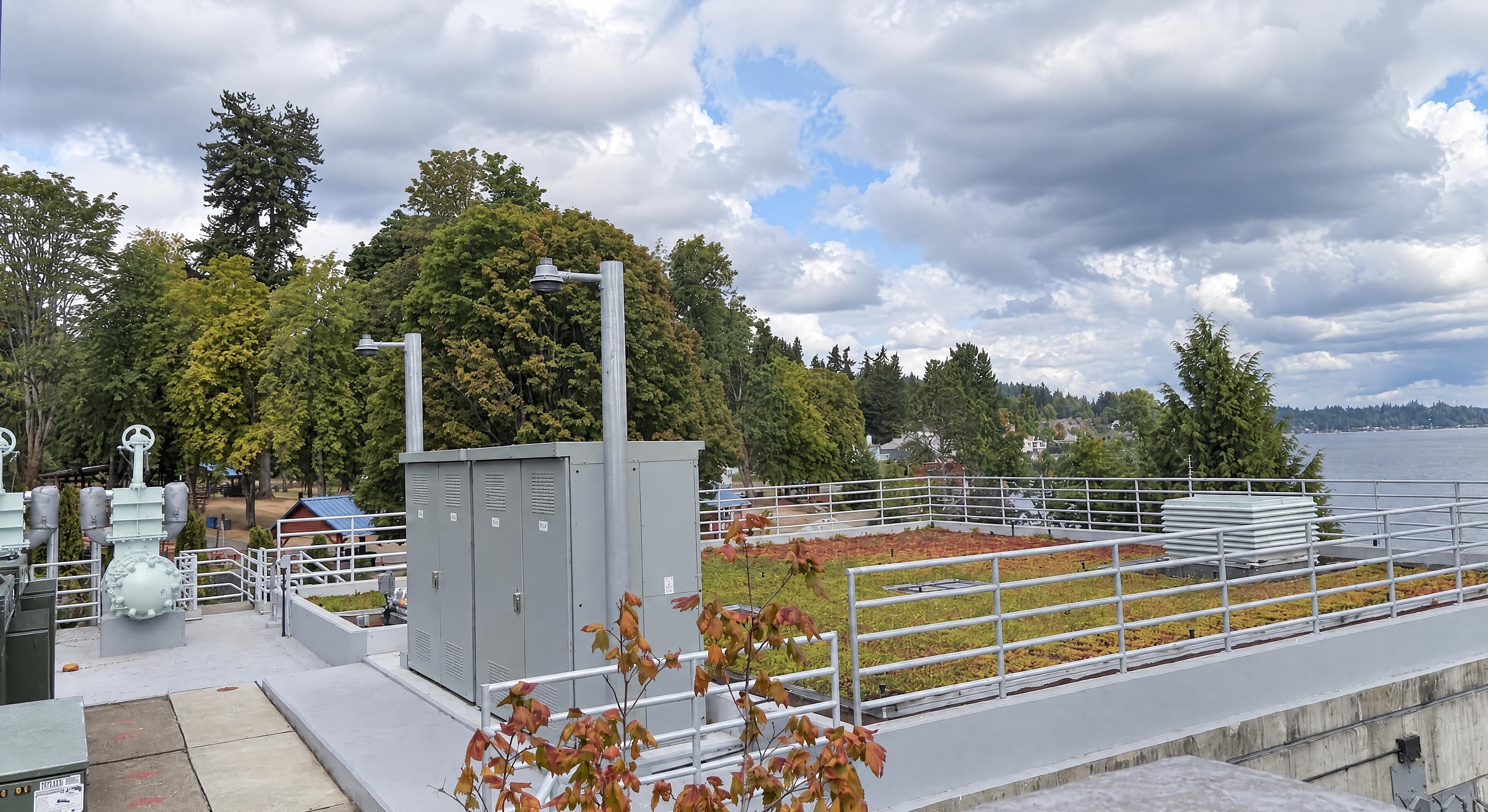
Milford Fights Odor and Corrosion
A published article on Milford, Connecticut's search for the source of its sewer corrosion, and the pure oxygen side stream that stopped the H₂S at its root.
Details
Summary
Milford Traces & Stops Its H₂S
Hydrogen sulfide had corroded Milford's East/West Interceptor and the West Avenue Pump Station wet well. The city traced it to the twin force mains from the Gulf Pond Pump Station, automated which main runs and added a pure oxygen side stream. In June 2012 tests, no sulfide was detected at the force main discharge (pp. 3, 5, 8).
Key Figures
900ppm
H₂S spikes at the Gulf Pond force main discharge before the upgrade (up to) Source: PDF page 5 (opens in a new tab)
3MGD
Average flow at the Gulf Pond Pump Station Source: PDF page 5 (opens in a new tab)
95%transfer efficiency
Average oxygen transfer efficiency of the Speece Cone® Source: PDF page 7 (opens in a new tab)
Questions
How does hydrogen sulfide form in a force main?
Bacteria in the slime layer on the pipe wall use up the dissolved oxygen, then any nitrate, then turn sulfate into sulfide. It forms dissolved H₂S gas, which escapes wherever the flow turns turbulent, such as a force main discharge (p. 8).
Why add oxygen in a side stream instead of straight into the force main?
The side stream is saturated with oxygen before it returns, so no oxygen bubbles enter the force main and pipes and pumps cannot airlock (p. 7).
What did Milford try before oxygen?
Potassium permanganate and sodium hypochlorite, with limited success, and activated carbon canisters, which the large amount of H₂S made useless within a relatively brief period (pp. 5, 6).
Can wastewater clog a Speece Cone?
The article says every opening is at least 4 in in diameter so wastewater passes and maintenance stays low, and the only moving part is the side stream pump (p. 7).
What damage did hydrogen sulfide do in Milford?
All of the manholes on the East/West Interceptor deteriorated badly, the 36 inch ductile iron sewer developed perforations, and in the West Avenue Pump Station wet well concrete crumbled and the electrical and ventilation equipment was damaged beyond repair. (PDF page 3) (opens in a new tab)
Where did the sulfide come from?
Mainly from the dual force mains carrying an average 3 mgd from the Gulf Pond Pump Station for 2.5 miles. Keeping both mains open in hot, dry months left wastewater in them for hours, and H₂S at the discharge spiked up to 900 ppm. (PDF page 5) (opens in a new tab)
Why did Milford choose pure oxygen?
Chemical addition and carbon canisters had limited success, and a 1995 study found pure oxygen had the lowest cost per pound of H₂S removed, with sodium hypochlorite about 10 times and potassium permanganate 18 times more expensive. Oxygen was chosen for its low operating cost, proven effectiveness and simplicity. (PDF page 6) (opens in a new tab)
How does the Milford system work?
Automated valves and flowmeters pick which force main to use based on flow to cut retention time. A sidestream from the pump discharge is saturated with pure oxygen in a Speece Cone and returned to the force main, and the oxygen system runs when flows are at or below average. (PDF page 7) (opens in a new tab)
What were the results?
With the oxygen system running, dissolved oxygen at the end of the force main rose by an average of 7 mg/L, no sulfide was detected at the discharge, and H₂S in two downstream manholes fell to zero. The system costs about $60 per day at maximum oxygen use. (PDF page 8) (opens in a new tab)
The Project
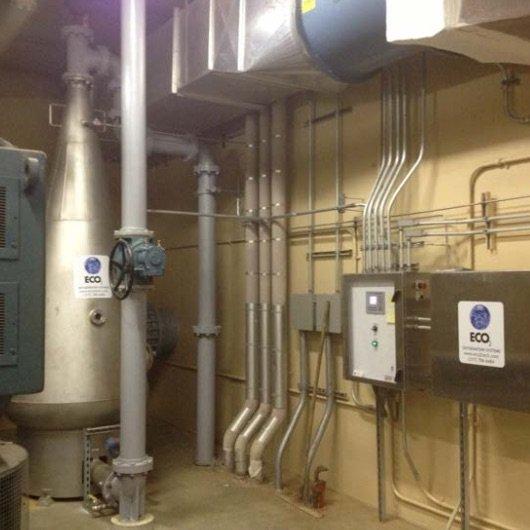
Gulf Pond Pump Station
In Full
More Key Figures
11 more, each with what it measures and its PDF page.
From the PDF
| Figure | What It Measures |
|---|---|
| 1,000 lbs/day | Design oxygen delivery to the 24 inch force main (PDF page 7 (opens in a new tab)) |
| 650 lbs/day | Design oxygen delivery to the 20 inch force main (PDF page 7 (opens in a new tab)) |
| 7 mg/L | Average rise in dissolved oxygen at the end of the force main (PDF page 8 (opens in a new tab)) |
| 60 USD/day | Operating cost at maximum oxygen use (about) (PDF page 8 (opens in a new tab)) |
| 18 times | Cost of potassium permanganate per pound of H₂S removed compared with pure oxygen, in a 1995 study (PDF page 6 (opens in a new tab)) |
| 900 ppm H₂S | Spikes at the Gulf Pond force main discharge before the upgrade (up to) (PDF page 5 (opens in a new tab)) |
| 2.9 mg/L | Average sulfide at the force main discharge, July 2004 (0.0 in the wet well) (PDF page 6 (opens in a new tab)) |
| 7 mg/L | Average rise in dissolved oxygen at the end of the force main, at the design dose (PDF page 8 (opens in a new tab)) |
| 7.3 ppm H₂S | Average at the West Avenue manhole before oxygen (zero with it on) (PDF page 8 (opens in a new tab)) |
| 95% to 98% | Oxygen transfer efficiency at startup (PDF page 7 (opens in a new tab)) |
| $60 per day | Running cost at maximum oxygen use (about) (PDF page 8 (opens in a new tab)) |
The Full Write-Up
The problem, the work, the results and who did it.
A City-Wide Search for the Source of the Hydrogen Sulfide
Milford, Connecticut had odor complaints and severe corrosion from hydrogen sulfide (H₂S). Every manhole on the East/West Interceptor had deteriorated badly, and its 36 in ductile iron sewer had perforated, so the city replaced it at slightly more than 20 years old. In the West Avenue Pump Station wet well, concrete crumbled and the electrical and HVAC equipment was damaged beyond repair (p. 3).
The investigation began in 1998, measuring H₂S below three suspect pump stations in August 1998 and 2001 (p. 3). The city moved the East Broadway station to cut its force main to about half its length, and readings below Rock Street were relatively low. The main cause was the dual force mains from the Gulf Pond Pump Station (p. 5).
Gulf Pond, Milford's second-largest station, averages 3 mgd and pumps through 2.5 mi of 20 in and 24 in force mains. Either main carries the average flow, but peaks need both. Left open through hot, dry summers, they held wastewater for several hours, and H₂S at the discharge spiked up to 900 ppm (p. 5). July 2004 samples showed sulfide rising from 0.0 mg/L in the wet well to 2.9 mg/L at the discharge, a sign of anaerobic wastewater (pp. 5, 6).
Valves That Match the Force Main to the Flow, & Oxygen in a Side Stream
Chemicals and carbon canisters had given limited success (pp. 5, 6). Milford chose to stop sulfide forming instead. Pure oxygen contains five times more oxygen than air, and a 1995 study for New Haven found it had the lowest cost per pound of H₂S removed (p. 6).
The first part of the fix is control. A programmable logic controller now picks the main by measured flow, with a magnetic flowmeter and motorized valve on each. Up to 2 mgd only the 20 in main runs. From 2 to 5 mgd the mains alternate every 2 hours so neither turns septic, from 5 to 7 mgd the 24 in main runs, and above that both open (p. 7).
The second part takes a side stream from the pump discharge header, saturates it with pure oxygen in a Speece Cone and returns it to the force main. Milford chose liquid oxygen. Oxygen runs only at or below average flow, when detention nears 2 hours or more, with the break point at 5 mgd. The supplier sized it to deliver 1000 lb/d to the 24 in main and 650 lb/d to the 20 in main (p. 7).
No Sulfide at the Discharge & Clean Air at the Wet Well
Startup tests showed 95% to 98% oxygen transfer efficiency (p. 7). Performance tests ran in June 2012 at flows of 3.8 and 4.4 mgd, higher than in a dry summer, so sulfide was lower than at its peak (p. 8).
Before oxygen, H₂S at the discharge peaked at about 90 ppm and averaged 3.8 ppm. At the West Avenue manhole, 1 mi downstream, it peaked above 40 ppm and averaged 7.3 ppm. At the design dose of 1000 lb/d, dissolved oxygen at the end of the force main averaged 7 mg/L above background, no sulfide was detected at the discharge, and H₂S in both manholes fell to zero (p. 8).
When the system first ran in April 2012, the change was immediate: the West Avenue wet well, once a dangerous place to work, read zero H₂S. The city puts the cost at about $60 per day at maximum oxygen use (p. 8).
Written by AECOM, Bowker and Associates and ECO₂ for WE&T
The authors are Kenneth A. Bradstreet and Charles N. Smith of AECOM, Robert P.G. Bowker of Bowker and Associates in Portland, Maine, and Inken N. Mello of Eco Oxygen Technologies in Indianapolis (p. 8). Water Environment & Technology published the article in October 2013 (p. 2). A longer technical paper by Bradstreet, Smith and Bowker covers the same project with its full test data, linked below.
What It Means for a City with Corrosion It Cannot yet Trace
Milford did not treat its whole system. It measured H₂S below each suspect station and matched the fix to the source: a new site and a shorter force main at one station, a later look at another, and valve control with oxygen at the worst (pp. 3, 5).
The gain went beyond odor. Oxygen at Gulf Pond now protects the repaired West Avenue wet well, the replaced interceptor and the treatment facilities downstream from new damage (p. 8).
Written up from the published article. Every figure is as the published article prints it, with the PDF page it comes from; the authors' own words appear only in quotation marks.
How to Cite
One line to paste into a report.
Kenneth A. Bradstreet, Charles N. Smith, Robert P.G. Bowker and Inken N. Mello. Milford Fights Odor and Corrosion. Water Environment & Technology, October 2013. Project engineer: AECOM. Eco Oxygen Technologies Technical Library. https://eco2tech.com/technical-library/milford-fights-odor-and-corrosion/
https://eco2tech.com/technical-library/milford-fights-odor-and-corrosion/
The Next Step
Ask an ECO₂ Engineer
Questions about this published article, or about your own water? An application engineer answers, with the figures.