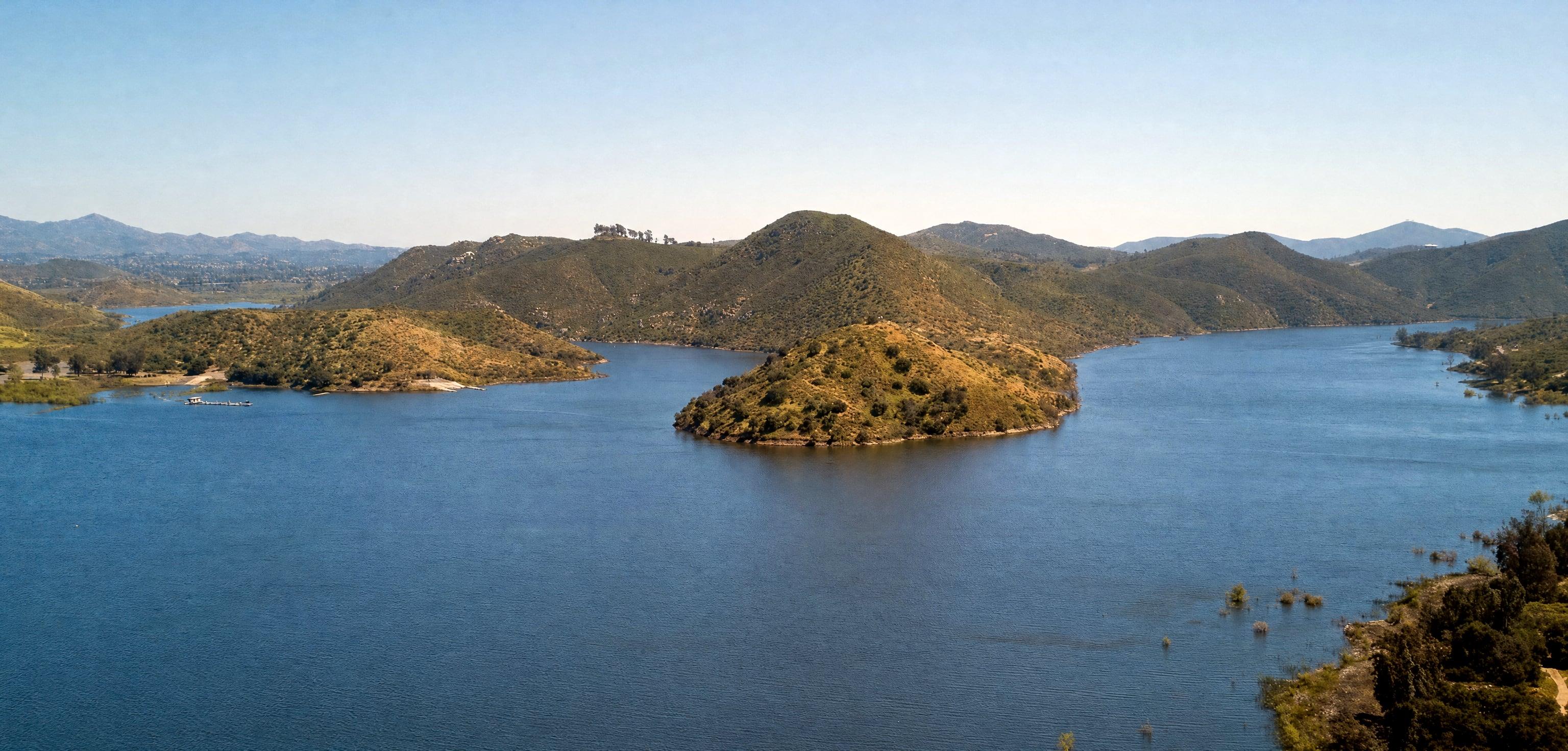
Lake Hodges Reservoir Water Quality Assessment Study
A planning study for the City of San Diego that weighs ways to control Lake Hodges' algae, taste and odor, manganese and methylmercury, and puts oxygenation first.
Details
Summary
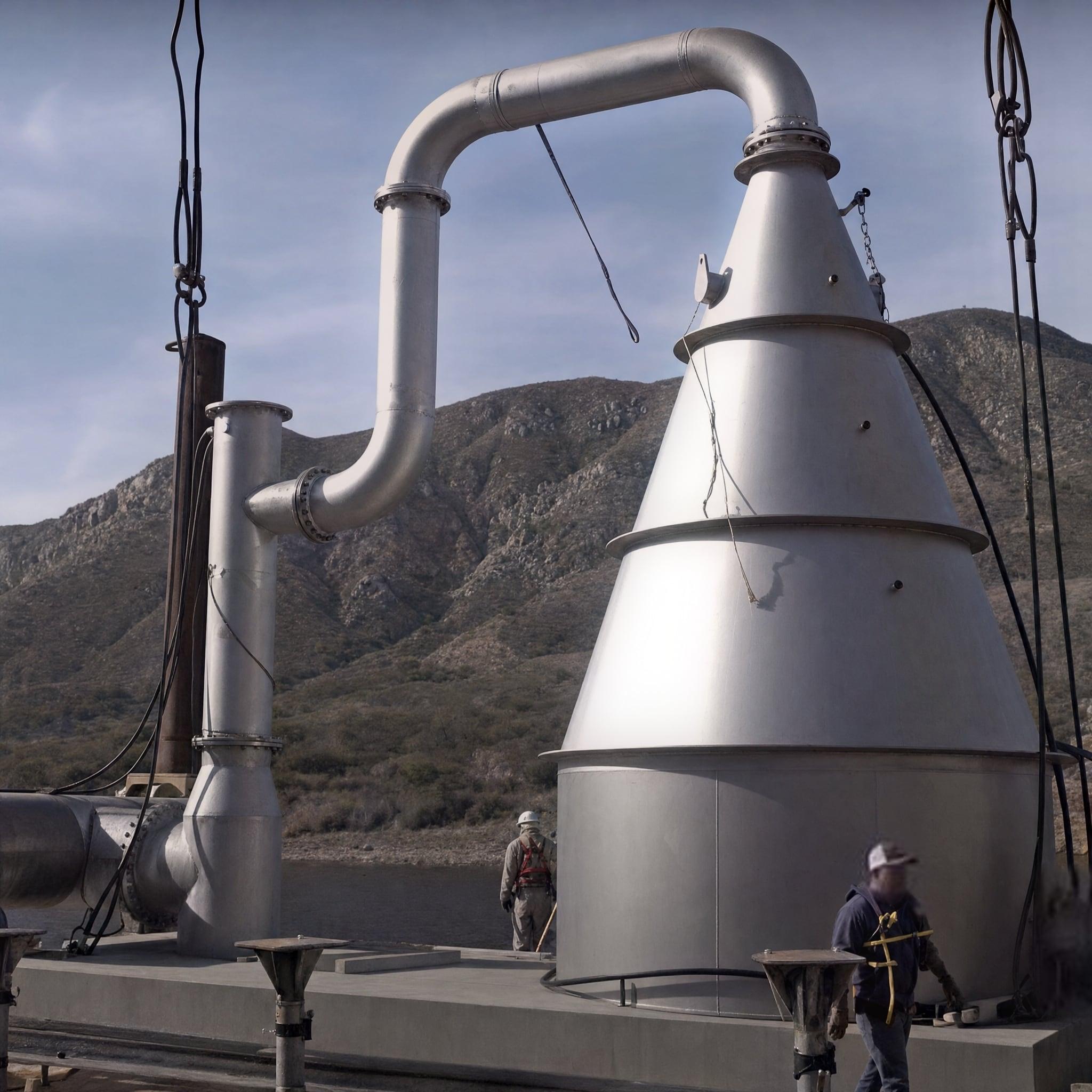
Brown and Caldwell's 2014 conceptual planning report for the City of San Diego sets out how to control excess algae, taste and odor, manganese and methylmercury in Lake Hodges Reservoir, a eutrophic drinking water reservoir near Escondido, California. Its first priority is a Speece Cone® hypolimnetic oxygenation system (HOS) in the deepest water near Hodges Dam, supplied by on-site oxygen generation.
Key Figures
9,800lbs/day
Modeled oxygen injection at full pool (315 ft) that kept the hypolimnion at or above saturation (Run 7) Source: PDF page 89 (opens in a new tab)
3 to 6g/m² per day
Sediment oxygen demand that best matched observed data in model calibration Source: PDF page 31 (opens in a new tab)
0.5mg/L
Dissolved oxygen level the report says is enough to prevent sulfate reduction to sulfide and methylmercury formation Source: PDF page 17 (opens in a new tab)
Questions
What did the Lake Hodges water quality study recommend first?
A Speece Cone hypolimnetic oxygenation system in the reservoir's deepest water near Hodges Dam, ahead of mid-lake VEM, an upper algae filtering wetland, biomanipulation and emergency algaecides. Ending anaerobic conditions at the bottom stops internal nutrient cycling and greatly decreases or ends methylmercury generation. (PDF page 10) (opens in a new tab)
Why would the Lake Hodges HOS generate oxygen on site instead of using liquid oxygen?
A review of the candidate sites, roads and neighborhoods found that truck delivery of liquid oxygen would be neither feasible nor acceptable to neighbors, so the team adopted on-site oxygen generation. The dam site was chosen for its three-phase power and closeness to the deepest water. (PDF page 36) (opens in a new tab)
What did water quality modeling predict for oxygenation at Lake Hodges?
With 9,800 lbs of oxygen a day at full pool and a sediment oxygen demand of 3 g/m2 per day, the hypolimnion stayed at or above saturation and chlorophyll a fell in summer and fall, but a band about 5 m thick in the metalimnion stayed near zero oxygen. At a sediment oxygen demand of 1.5, metalimnion oxygen rose substantially. (PDF page 89) (opens in a new tab)
How much dissolved oxygen does Lake Hodges need to stop methylmercury formation?
The report says even a low dissolved oxygen level on the order of 0.5 mg/L would prevent sulfate reduction to sulfide, the process that produces methylmercury. Methylation should stop quickly once oxygen is added, but methylmercury already in the food chain would decline over years. (PDF page 17) (opens in a new tab)
The Project
Lake Hodges
In Full
More of the Summary
Two more paragraphs of our summary.
The team screened 17 lake management methods in a June 2013 workshop and combined the best into a phased plan: the HOS, vigorous epilimnetic mixing (VEM) in the mid-lake shallows, a 25 acre algae filtering wetland, carp removal, and algaecides for emergencies only. Data from 2008 to 2013 showed near-zero dissolved oxygen in the hypolimnion while stratified, total oxygen loss across the water column after turnover, and chlorophyll a of 50 to 100 µg/L. Truck delivery of liquid oxygen was ruled out near the dam, so the design uses three oxygen generators of about 1 ton per day each feeding a skid-mounted Speece Cone with a 75 hp pump.
DYRESM-WQ modeling by Water Quality Solutions found that injecting 9,800 lbs of oxygen a day at full pool kept the hypolimnion at or above saturation and lowered summer and fall chlorophyll a, but a near-zero oxygen band stayed in the metalimnion at a sediment oxygen demand of 3 g/m2 per day. Calibrated sediment oxygen demand of 3 to 6 g/m2 per day was far above the 0.2 used for preliminary sizing, so the report's key recommendation is to measure it in sediment cores before final design. It also warns that better oxygen could open deep water to quagga mussels.
More Key Figures
Two more, each with what it measures and its PDF page.
From the PDF
| Figure | What It Measures |
|---|---|
| 50 to 100 µg/L | Observed chlorophyll a concentrations in Lake Hodges, 2008 to 2013 data (PDF page 30 (opens in a new tab)) |
| 232,000 US dollars a year | Estimated annual operation and maintenance cost of the HOS (PDF page 46 (opens in a new tab)) |
How to Cite
One line to paste into a report.
Brown and Caldwell. Lake Hodges Reservoir Water Quality Assessment Study. City of San Diego, 2014. Project engineer: Brown and Caldwell. Eco Oxygen Technologies Technical Library. https://eco2tech.com/technical-library/lake-hodges-reservoir-water-quality-assessment-study/
https://eco2tech.com/technical-library/lake-hodges-reservoir-water-quality-assessment-study/
The Next Step
Ask an ECO₂ Engineer
Questions about this technical paper, or about your own water? An application engineer answers, with the figures.