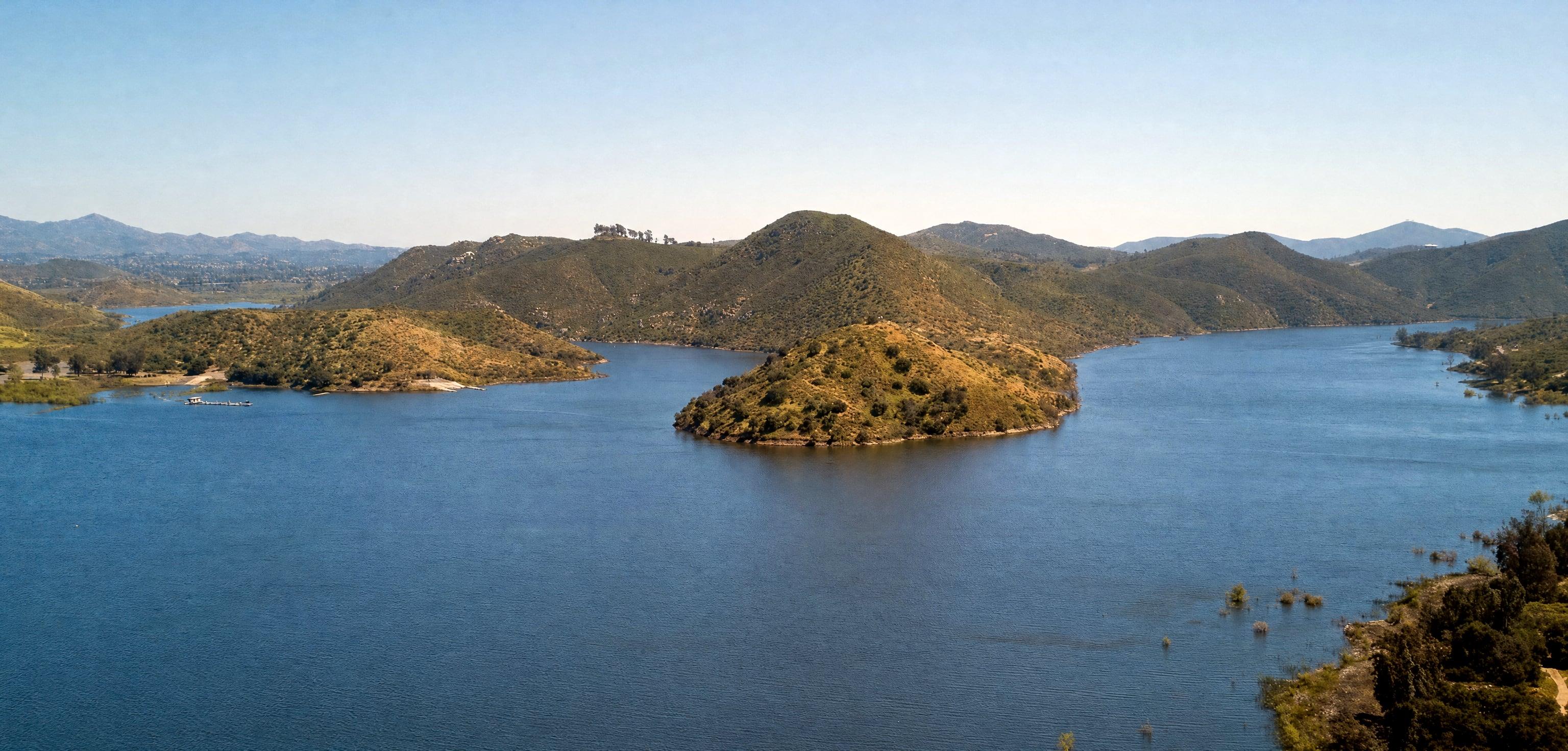
The Triple Threat to Algae - Oxygenation, Vigorous Epilimnion Mixing, and Algae-Filtering Wetlands
UC Berkeley limnologist Alex Horne's slides on fighting algae in lakes, with Camanche Reservoir as the main example of oxygen dissolved at the lake bed.
Details
Summary
Three Tools Against Algae
In these October 2014 slides, UC Berkeley limnologist Alex Horne sets out three in-lake tools against algae: pure oxygen dissolved at the lake bed, vigorous mixing of the surface layer, and algae-filtering wetlands on shore. His main example is Camanche Reservoir in Northern California, where oxygenation ended the fish kills at the hatchery below the dam (pp. 1, 6, 30).
Key Figures
100lakes, rivers and reservoirs
Water bodies using pure oxygen (over) Source: PDF page 9 (opens in a new tab)
80mg/L
Dissolved oxygen reachable in a Speece Cone® (up to) Source: PDF page 12 (opens in a new tab)
8tons/day
Oxygen supply to the Camanche Speece Cone Source: PDF page 13 (opens in a new tab)
Questions
What are the three best ways to control algae in a lake?
Alex Horne's three are pure oxygenation of the bottom water, vigorous mixing of the surface layer (the epilimnion), and algae-filtering wetlands on shore (p. 6).
How is a Speece Cone different from a bubble plume oxygenator?
A free bubble plume oxygenates the hypolimnion in general and needs more than 80 feet of water. A cone dissolves the oxygen first and keeps it concentrated over the bottom mud, which best suppresses nutrient release (p. 11).
Does mixing a lake get rid of blue-green algae?
Vigorous mixing of the surface layer targets large colonial blue-greens, which do badly in mixed water. At Cherry Creek Reservoir in Denver they dropped to zero, though total chlorophyll a stayed much the same (pp. 19, 21).
Do floating islands clean up algae?
Horne's answer is no. He recommends filtering wetlands on shore, which can remove up to 90% of particles and suit floating blue-green algae (p. 22).
Why did fish die below Camanche Dam?
Horne ascribed the deaths of over 300,000 salmonids at the hatchery to hydrogen sulfide, which forms in anoxic muds. Oxygenating the water above the muds stopped the fish kills (pp. 24, 30).
What are the three techniques?
Pure oxygenation of the bottom water, vigorous mixing of the surface layer (epilimnion), and algae-filtering wetlands on shore. (PDF page 6) (opens in a new tab)
How does a Speece Cone differ from a bubble plume?
A free bubble plume needs over 80 feet of water and oxygenates the hypolimnion in general; a cone dissolves the oxygen first and sends it along the bottom, which best suppresses nutrient release from the mud. (PDF page 11) (opens in a new tab)
Why mix the surface layer?
Large colonial blue-green algae do poorly in mixed water; at Cherry Creek Reservoir, Denver, vigorous mixing dropped blue-greens to zero. (PDF page 19) (opens in a new tab)
In Full
More Key Figures
10 more, each with what it measures and its PDF page.
From the PDF
| Figure | What It Measures |
|---|---|
| 92% of TSS | Suspended solids removed by the Lake Apopka wetland over 7 years (PDF page 23 (opens in a new tab)) |
| 300,000 fish | Hatchery salmon and steelhead killed below Camanche before oxygenation (over) (PDF page 24 (opens in a new tab)) |
| 8,000+ Chinook | Natural Chinook spawning after oxygenation, up from 3,000 (PDF page 30 (opens in a new tab)) |
| 1:30 cost to benefit | Cost benefit ratio of the Camanche oxygenation (approx.) (PDF page 30 (opens in a new tab)) |
| 80 mg/L | Dissolved oxygen leaving a Speece Cone (up to), diluted at once in the exit jet (PDF page 12 (opens in a new tab)) |
| 80 ft | Water depth a free bubble plume needs (more than) (PDF page 11 (opens in a new tab)) |
| 3,000 to 8,000+ Chinook | Natural Chinook spawning at Camanche Reservoir, before and after oxygenation (PDF page 30 (opens in a new tab)) |
| Zero | Blue-green algae at Cherry Creek Reservoir, Denver, after vigorous surface mixing (PDF page 21 (opens in a new tab)) |
| 92% | Suspended solids removed by the 760 acre Lake Apopka wetland over 7 years (PDF page 23 (opens in a new tab)) |
| 90% | Particles an algae-filtering wetland can remove (up to) (PDF page 22 (opens in a new tab)) |
The Full Write-Up
The problem, the work, the results and who did it.
Most Lake Problems Trace Back to Algae & Their Nutrients
Horne's list of typical lake problems is eutrophication, blue-green algae, high pH with low dissolved oxygen, taste and odor, particulates and scums. All of them, he says, come directly or indirectly from algae and the nutrients they use (p. 2).
The ideal fix is to cut the nutrients flowing in from the watershed. In-lake management fixes the problem directly (p. 3).
The deep water is where it starts. In a typical season the bottom of a stratified lake goes anoxic by late summer (p. 4). With plenty of oxygen, an oxidized microzone at the mud surface holds iron and phosphate in the sediment, and the lake has few phytoplankton. Without oxygen, the microzone turns anoxic, iron, phosphate and ammonium escape into the water, and algae flourish (p. 7).
Oxygen at the Bottom, Mixing at the Top, Filters on Shore
The first tool is pure oxygen: if the water is short of oxygen, add oxygen (p. 9). A free plume of oxygen bubbles gives general oxygenation and needs more than 80 feet of water. Dissolving the oxygen first and concentrating it over the bottom mud gives the best suppression of nutrient release, which is what a cone does (p. 11).
The Speece Cone was invented by Prof. Dick Speece of Vanderbilt University. It mixes bottom water with pure oxygen on the lake bed, where the depth adds solubility, and its discharge of up to 80 mg/L dilutes at once in the exit jet (p. 12). The cone in his diagram stands 23 ft tall, fed by a 175 hp water pump, with a 150 ft diffuser (p. 13). The oxygen is bought as liquid or made on site (p. 31). The deck also shows cones at Savannah Harbor, on a sewer line, at Marston Reservoir in Denver and at Indian Creek Reservoir near Tahoe (p. 15).
The second tool is vigorous mixing of the surface layer, the epilimnion. Large colonial blue-green algae do badly in mixed water, and wind mixes the surface often but not all the time (p. 19). A typical layout works in water 2 to 10 m deep (p. 20).
The third tool is the algae-filtering wetland. A wetland on shore can remove up to 90% of particles and suits floating blue-green algae. Horne's verdict on floating islands is no (p. 22).
Camanche's Fish Kills Stopped, & Chinook Spawning Rose
At Camanche Reservoir over 300,000 salmonids died in the fish hatchery below the dam, and Horne ascribed the deaths to hydrogen sulfide from the anoxic muds (p. 24). Before oxygenation the cold water the fish needed, below 16.4°C, carried less than 2 mg/L of oxygen (p. 32).
A few weeks after start-up, the water near the dam held more than 5 mg/L where there had been none (p. 34). Over the first decade, phosphate, ammonia and chlorophyll declined and Secchi depth rose. There have been no fish kills since, the dam's hydropower can now be used, and natural Chinook spawning rose from 3,000 to 8,000+ (pp. 29, 30).
The other tools have results too. At Cherry Creek Reservoir in Denver (850 acres), mixing dropped the blue-green algae to zero, though total chlorophyll a stayed much the same. The 760 acre wetland at Lake Apopka, Florida, removed 92% of suspended solids over 7 years (pp. 21, 23).
Presented by Alex Horne of UC Berkeley
Alex J. Horne, Ph.D., is Professor Emeritus in Ecological Engineering in the Department of Civil and Environmental Engineering at the University of California, Berkeley, and principal of Alex Horne Associates (p. 1). The three techniques, he says, served him well in 49 years of lake research and management (p. 6). He names Prof. Richard Speece and ECO₂ among the beginnings of pure oxygenation (p. 10).
Match the Tool to the Problem, & Combine Them
The deck is a menu, not a single answer. Oxygen at the lake bed treats what comes out of the sediment, including the hydrogen sulfide that killed fish at Camanche (pp. 7, 24). Surface mixing goes after scums of colonial blue-greens, and a wetland on shore filters algae and particles out of the water (pp. 21, 22).
Destratification, the older method, can increase algae by mixing nutrient-rich deep water into the sunny surface, and it takes a lot of energy (p. 18). The choice, Horne says, depends on the reservoir and the local people (p. 5).
Written up from the presentation. Every figure is as the presentation prints it, with the PDF page it comes from; the authors' own words appear only in quotation marks.
How to Cite
One line to paste into a report.
Alex J. Horne. The Triple Threat to Algae - Oxygenation, Vigorous Epilimnion Mixing, and Algae-Filtering Wetlands. UC Berkeley, October 2014. Project engineer: Alex Horne Associates. Eco Oxygen Technologies Technical Library. https://eco2tech.com/technical-library/the-triple-threat-to-algae-oxygenation-vigorous-epilimnion-mixing-and-algae-filtering-wetlands/
https://eco2tech.com/technical-library/the-triple-threat-to-algae-oxygenation-vigorous-epilimnion-mixing-and-algae-filtering-wetlands/
The Next Step
Ask an ECO₂ Engineer
Questions about this presentation, or about your own water? An application engineer answers, with the figures.