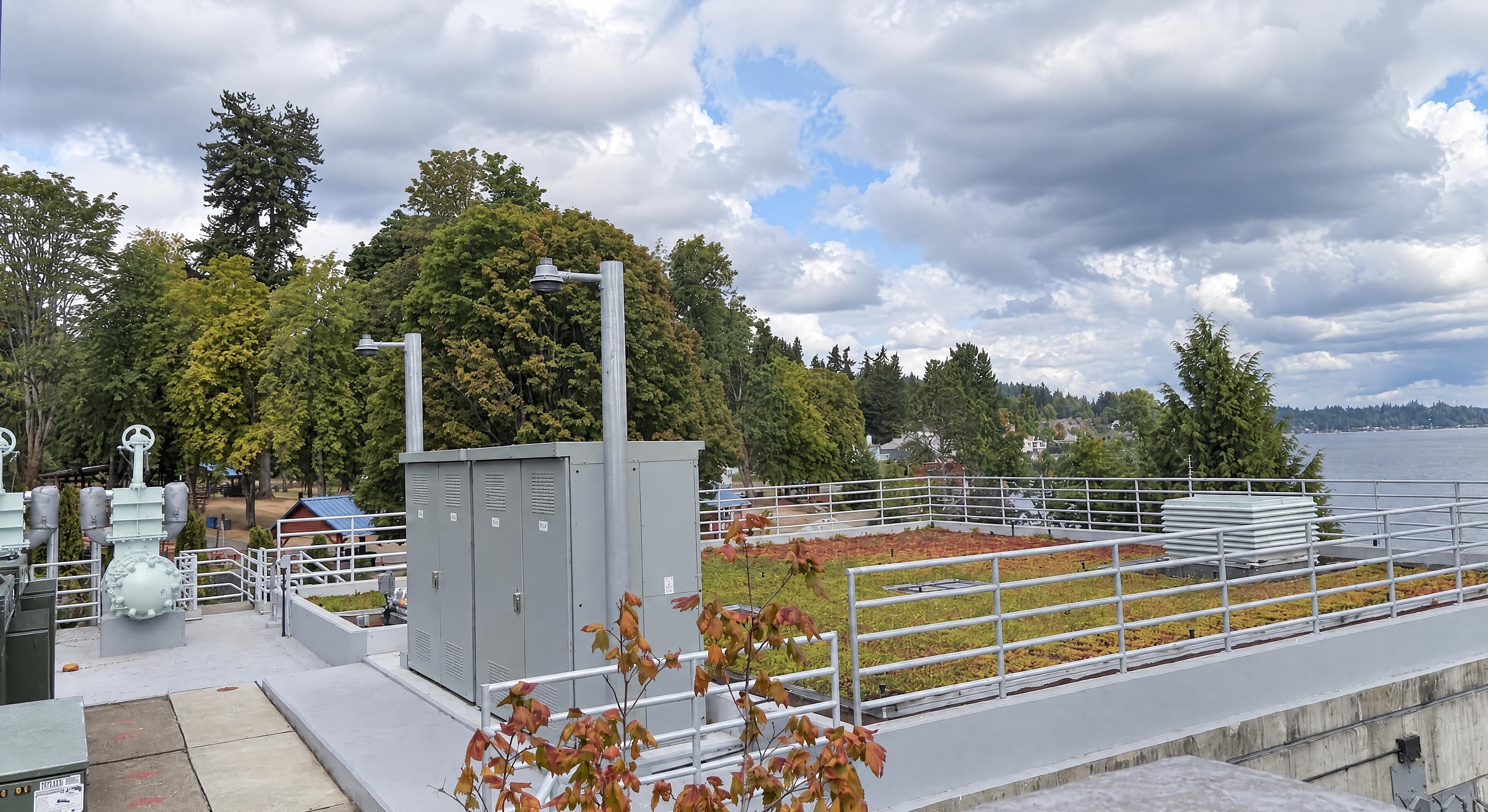
Raymore, MO Stops Extreme H2S Problems with Oxygen
ECO₂'s case study of Raymore, Missouri, whose pump station, sized for growth, left sewage sitting for hours in its force main, and how ECO₂'s system keeps that main aerobic.
Details
Summary
Raymore, Missouri, sized its Owen Good Pump Station for growth: it can pump over 7 MGD but pumps less than 1 MGD, so sewage sat in the 24 inch force main for up to 17 hours and H₂S at the discharge spiked to 600 to 900 ppm every day.
Key Figures
600 to 900ppm H₂S
Daily H₂S spikes at the force main discharge before oxygenation Source: PDF page 1 (opens in a new tab)
17hours
Hydraulic retention time in the force main, at most Source: PDF page 1 (opens in a new tab)
7MGD
Owen Good Pump Station capacity ("over 7 MGD"), against less than 1 MGD pumped Source: PDF page 1 (opens in a new tab)
Questions
Why did Raymore, MO have such high H₂S in its force main?
The force main was designed for future growth: the pump station can move over 7 MGD but pumps less than 1 MGD, so sewage stayed in the pipe for up to 17 hours and went septic. (PDF page 1) (opens in a new tab)
Why did Raymore choose ECO₂ Superoxygenation over chemicals?
HDR's odor evaluation compared five chemical feeds and 3 oxygen injection systems. Oxygen was less expensive than any of the chemicals, and the City chose ECO₂ for the lowest operating and capital cost, the most reliable system and the highest proven oxygen transfer efficiency. (PDF page 2) (opens in a new tab)
How long does sewage take to turn septic in a force main?
The case study says approximately 1 hour, after which sulfide formation begins. (PDF page 1) (opens in a new tab)
The Project
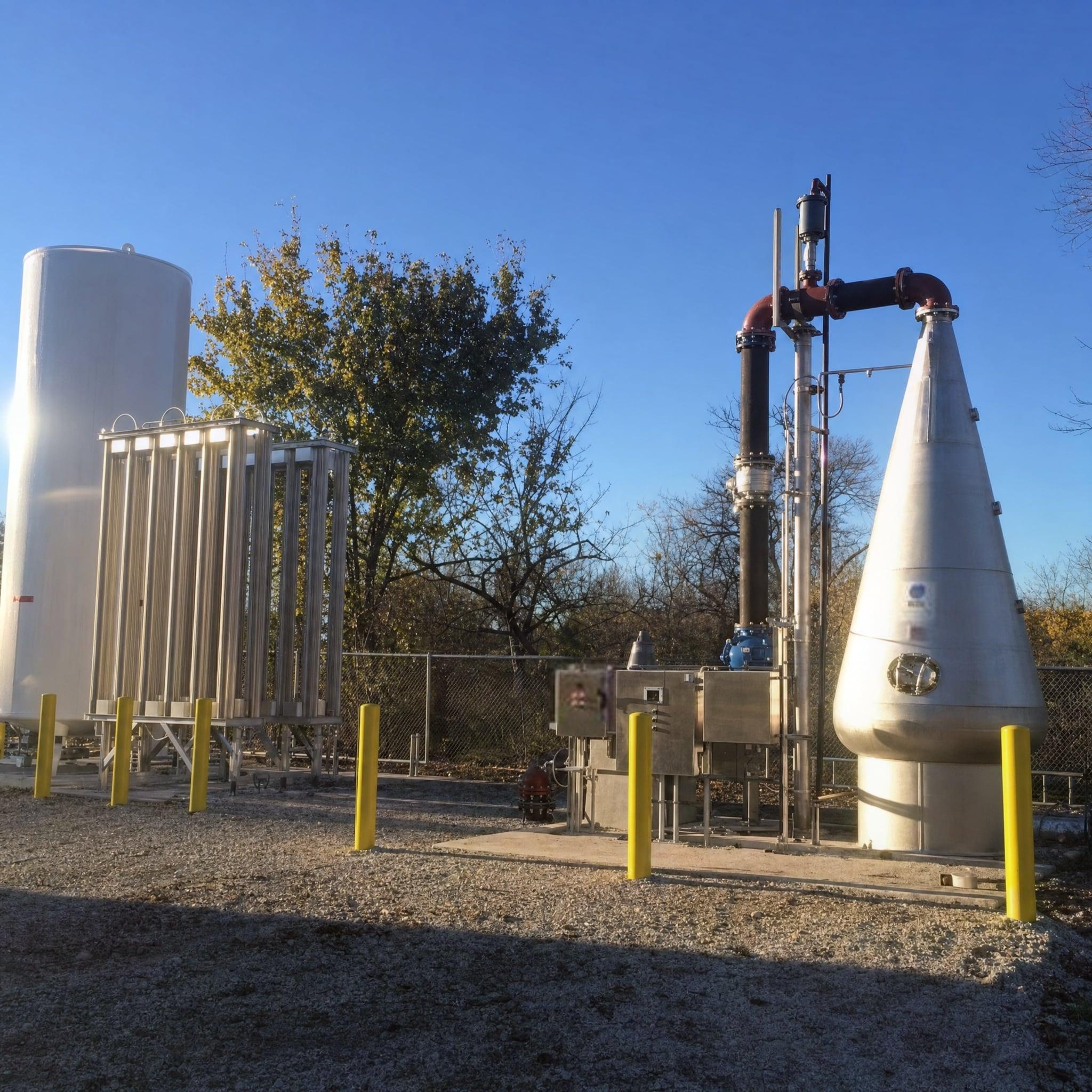
Owen Good Pump Station
In Full
Full Text as Published
The text as its authors wrote it.
Odor and corrosion control through SuperOxygenation
As with many other cities around the country, the City of Raymore designed their force mains for future growth. The Owen Good Pump Station has a capacity of over 7 MGD, but pumps less than 1 MGD, resulting in less than optimum velocity in the force main and hydraulic retention times of up to 17 hours. Sewage goes septic after approximately 1 hour in a force main, at which point the sulfide formation begins.
The graph below shows the hydrogen sulfide (H₂S) concentration measured continuously over 12 days, at the discharge of the 3-mile-long, 24" force main (daily spikes of 600-900 ppm). The City realized that these H₂S concentrations go beyond the odor complaints and the accelerated corrosion they have been experiencing. The data indicates that at times the City staff maybe exposed to a severe health risk when working on their gravity system.
OdaLog H₂S data trend: H₂S concentrations (ppm), shown in the PDF.
ECO₂ system selection
HDR was selected to prepare an odor evaluation for the City of Raymore. They compared multiple control methods, including traditional chemical feed alternatives (calcium nitrate, ferrous chloride, hydrogen peroxide, potassium permanganate and sodium hypochlorite) as well as 3 oxygen injection systems.
Oxygen addition is less expensive than any of the traditional chemicals. Operating the ECO₂ equipment is also less expensive than any other pressurized side stream oxygenation system, due to lower pump horsepower and lower maintenance requirements.
While direct oxygen addition with a sparger would be less capital intensive, the risk for rags and debris getting caught is significant. Furthermore, non-dissolved oxygen will build up to form a headspace in the pipe, which will affect the pump operation.
The City chose ECO₂ SuperOxygenation equipment not only for the lowest operating and capital cost, but also for the most reliable system with the highest proven oxygen transfer efficiency.
Results
Results from the system start-up can be seen on page 1 of this document. As soon as the ECO₂ system is turned on and maintaining aerobic conditions in the force main, H₂S concentrations at the discharge drop to near 0 ppm.
Installation of ECO₂ SuperOxygenation System at the Owen Good Pump Station, Raymore, MO (photo in the PDF).
How to Cite
One line to paste into a report.
Raymore, MO Stops Extreme H2S Problems with Oxygen. ECO₂. Project engineer: HDR. Eco Oxygen Technologies Technical Library. https://eco2tech.com/technical-library/raymore-mo-stops-extreme-h2s-problems-with-oxygen/
https://eco2tech.com/technical-library/raymore-mo-stops-extreme-h2s-problems-with-oxygen/
The Next Step
Ask an ECO₂ Engineer
Questions about this case study, or about your own water? An application engineer answers, with the figures.