Introducing Superoxygenation Technology to Hong Kong
Jardine Engineering's company magazine on bringing Superoxygenation to a Hong Kong sewage pumping station, as more cost effective and environmentally friendly than chemicals.
Details
Summary
Superoxygenation Comes to Hong Kong
Jardine Engineering Corporation (JEC) sourced Superoxygenation from the United States and introduced it to Hong Kong's Drainage Services Department, to stop foul odors forming at the Tung Chung Sewage Pumping Station. JEC's company magazine says the method, which raises dissolved oxygen in the wastewater, is more cost effective and environmentally friendly than chemical dosing (pp. 1, 2).
Questions
Where did Jardine Engineering introduce Superoxygenation in Hong Kong?
At the Drainage Services Department's Tung Chung Sewage Pumping Station, to prevent foul odors from forming there (p. 2).
How does Superoxygenation prevent sewage odors?
It increases the level of dissolved oxygen in the wastewater, so odors are prevented rather than treated after they form (p. 2).
Is oxygen better than chemical dosing for sewage odor?
The article calls it more cost effective and environmentally friendly than traditional chemical dosing systems, which only treat odors after they have formed (p. 2).
What are the parts of a lift station oxygenation system?
The article's drawing shows a system intake from the wet well, a booster pump, an oxygen supply and an ECO₂ oxygenation cone, with the oxygen-rich discharge returned to the force main (p. 2).
Who brought Superoxygenation technology to Hong Kong?
Jardine Engineering Corporation (JEC), which sourced it from the United States and introduced it to Hong Kong's Drainage Services Department (p. 2).
Where was Superoxygenation introduced in Hong Kong?
At the Drainage Services Department's Tung Chung Sewage Pumping Station, where Jardine Engineering Corporation introduced it to prevent foul odors from forming. (PDF page 2) (opens in a new tab)
Why choose oxygen over chemical dosing?
The article says it is more cost effective and environmentally friendly than chemical dosing, which only treats odors after they have formed. (PDF page 2) (opens in a new tab)
The Project
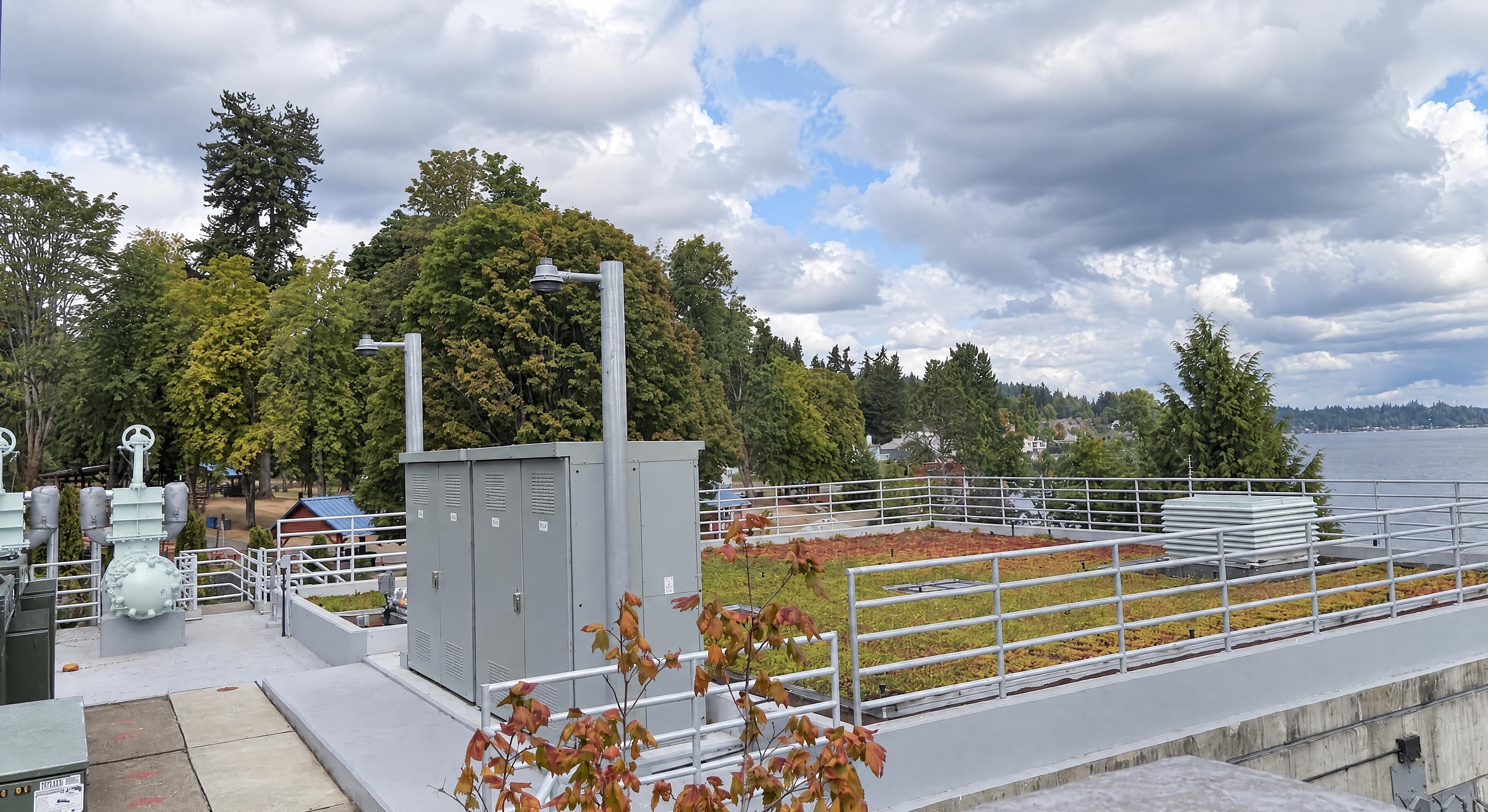
Tung Chung Lift Station
In Full
The Full Write-Up
The problem, the work, the results and who did it.
Foul Odors at a Sewage Pumping Station
The article is brief about the problem. JEC introduced the technology to Hong Kong's Drainage Services Department (DSD) to prevent the formation of foul odors at the Tung Chung Sewage Pumping Station (p. 2).
Odor at a pumping station usually starts in the sewage itself. Sewage that sits in a wet well, or travels a long way in the pressure main that carries it onward, uses up the dissolved oxygen it had. Bacteria then turn to sulfate and produce hydrogen sulfide, the gas behind the rotten-egg smell. It escapes wherever the sewage meets air, and in the air above the flow it turns into an acid that corrodes concrete and metal.
The usual answer, the article notes, is chemical dosing, which only treats odors after they have formed (p. 2).
Raise the Dissolved Oxygen so Odors Never Form
Superoxygenation works the other way round. It prevents odors in and around wastewater sources by increasing the level of dissolved oxygen in the wastewater, so the conditions that make hydrogen sulfide do not develop (p. 2).
The article's drawing shows how such a system sits at a lift station. Influent arrives in the wet well. A system intake draws wastewater to a booster pump, which feeds it into an ECO₂ oxygenation cone with its own oxygen supply. The oxygen-rich discharge is returned to the force main, so the dissolved oxygen travels with the flow (p. 2).
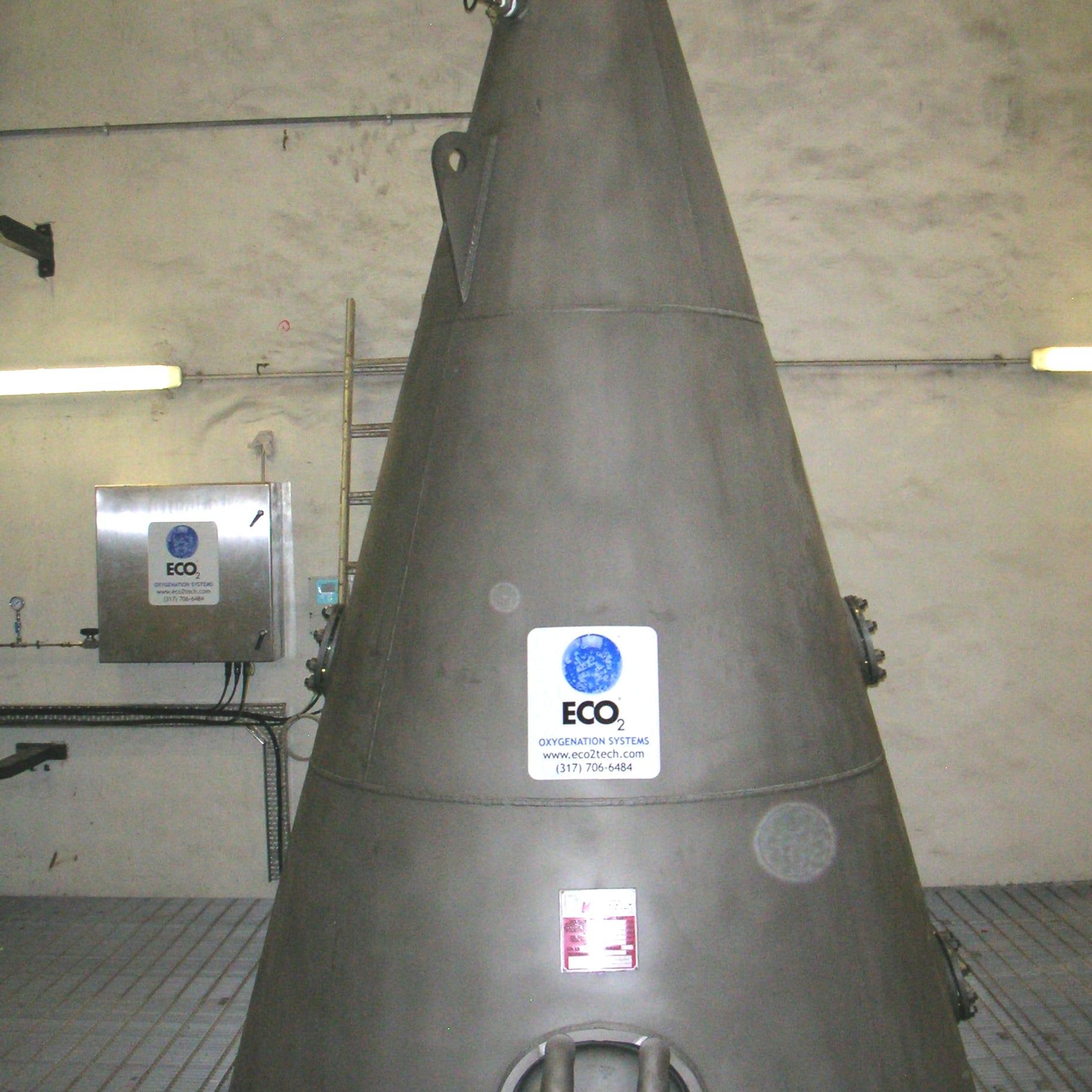
The cone is ECO₂'s Speece Cone®. Wastewater and oxygen gas enter at the top and flow down. The cone widens toward the bottom, so the downward flow slows until it matches the rising speed of the bubbles, and the bubbles stay in the cone until they dissolve. The oxygen leaves in solution, not as gas.
A Company Report of the Project, Without Measurements
This is a short item in a company magazine, and it reports no measured results or costs. Its claim is a comparison: the oxygen method is more cost effective and more environmentally friendly than traditional chemical dosing systems, because it prevents odors instead of treating them after they form (p. 2).
For engineers, the value of the item is the record it gives. It names the station, the public authority and the company that introduced the technology to Hong Kong, and it shows the system's layout (p. 2).
Jardine Engineering Corporation & the Drainage Services Department
The item appeared in JEC Magazine, the magazine of Jardine Engineering Corporation, under the cover theme of pioneering green building technologies in Asia (p. 1). It presents the project as an example of JEC's core value of being Globally Minded: keeping abreast of global best practices and leading in introducing them to the markets where it operates. JEC introduced the technology to the Drainage Services Department for its Tung Chung station (p. 2). The drawing carries the ECO₂ logo. No author or engineer is named.
Why It Matters for Utilities Choosing Between Dosing & Prevention
The item is short, but its argument is the one every odor program faces. Chemical dosing treats odor after it forms, and has to keep doing so for as long as the sewage goes septic. Raising dissolved oxygen stops the sewage going septic in the first place, which also spares the pipes the acid that hydrogen sulfide produces.
It also shows how the method reached a new market: a local engineering company sourced it from the United States and introduced it to the public drainage authority (p. 2). If you run pumping stations outside the United States, the same path is open to you.
Written up from the published article. Every figure is as the published article prints it, with the PDF page it comes from; the authors' own words appear only in quotation marks.
How to Cite
One line to paste into a report.
Jardine Engineering Corp. Introducing Superoxygenation Technology to Hong Kong. JEC Magazine - Hong Kong. Eco Oxygen Technologies Technical Library. https://eco2tech.com/technical-library/introducing-superoxygenation-technology-to-hong-kong/
https://eco2tech.com/technical-library/introducing-superoxygenation-technology-to-hong-kong/
The Next Step
Ask an ECO₂ Engineer
Questions about this published article, or about your own water? An application engineer answers, with the figures.