Dissolved Oxygen 'super-dye' Test
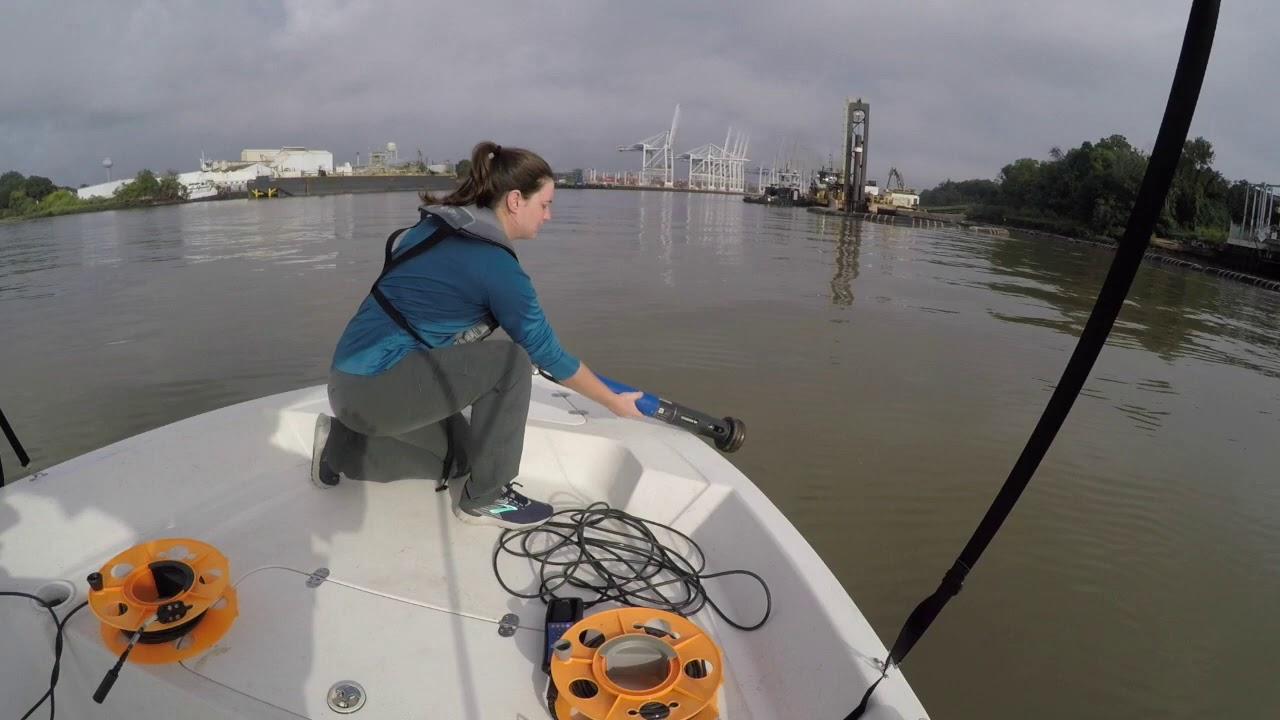
A video of the three-day dye test on the Savannah River that tracked how well the oxygen injected at the harbor's down-river site spreads through the water.
Details
Summary
A Dye Test Traces Savannah's Oxygen
Key Figures
60gallons
Rhodamine dye added at the down-river site Source: The video (opens in a new tab), 0:27
42ft
Harbor depth before the deepening 47ft
Harbor depth after the deepening
Questions
Why did the Corps put dye in the Savannah River?
To track where the injected oxygen goes and how fast it mixes: the rhodamine dye travels with the oxygen-rich water, and a boat with a sensor measured it (0:50).
How much dye was used in the Savannah River test?
60 gallons of rhodamine dye, added at the down-river site (0:27).
What did the Savannah dye test find?
The dye was well dispersed, which means the oxygen added at the site is well dispersed too (0:53).
Where are the Savannah River oxygen injection sites?
Up-river near Plant McIntosh in Rincon, Georgia, and down-river on Hutchinson Island (video description).
Why is oxygen added to the Savannah River in summer?
Dissolved oxygen is naturally lower in the summer months, and the extra oxygen helps fish such as the endangered shortnose sturgeon and the Atlantic sturgeon (video description).
The Project
Savannah Harbor Expansion
In Full
The Full Write-Up
The problem, the work, the results and who did it.
A Deeper Harbor Needs More Oxygen in the River
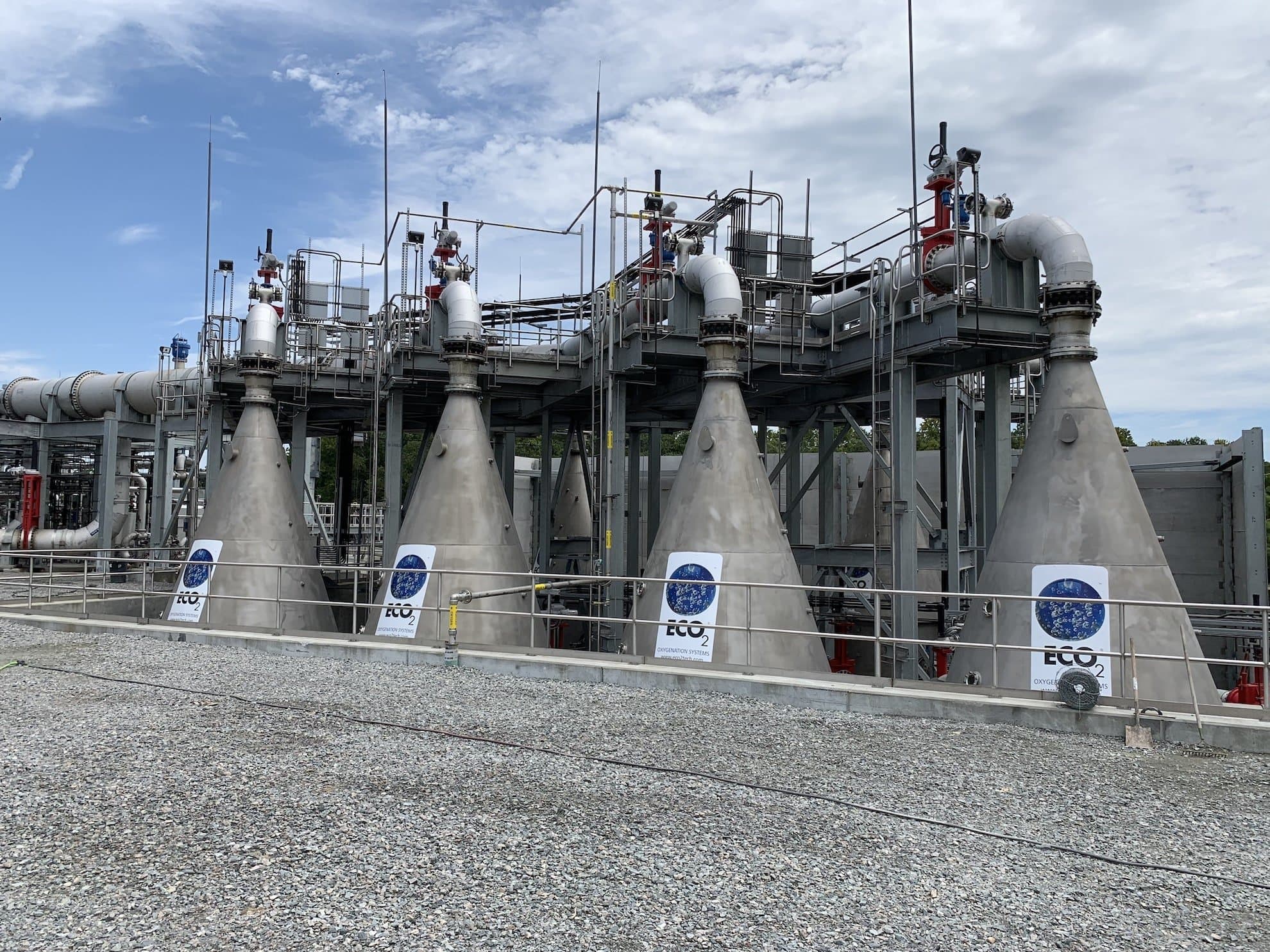
The Savannah Harbor is being deepened from 42 to 47 feet, and two dissolved oxygen injection sites are part of making up for the oxygen the river loses as a result (video description). One is up-river near Plant McIntosh in Rincon, Georgia; the other is down-river on Hutchinson Island.
The extra oxygen matters most in summer, when dissolved oxygen is naturally lower. It is meant to help fish such as the endangered shortnose sturgeon and the Atlantic sturgeon as they travel up the river and back down to the Atlantic Ocean (video description).
Adding oxygen is only half the job. The other half is knowing where it goes once it leaves the diffuser.
Dye in with the Oxygen, a Sensor on a Boat
At the down-river site the team put 60 gallons of rhodamine dye into the oxygen injection system. The dye went with the oxygen into the diffuser and mixed into the Savannah River (0:27).
A boat carrying a rhodamine sensor then measured where the dye went and how fast it mixed. Because the dye travels with the oxygen-rich water, it shows where the oxygen goes and how fast it mixes (0:50).
Well Dispersed, & Data for a Water Quality Model
The first finding is in the video: the dye was well dispersed, so the oxygen the Corps is putting in is well dispersed too (0:53).
The team then planned to put all the data together: using the dye to work out how fast the oxygen and the river move downstream and how fast the tides move, and feeding it into a water quality model to evaluate the effect of the oxygen injection (1:19).
LG2 Environmental Solutions and Tetra Tech, for the Corps
Biologists and environmental engineers from LG2 Environmental Solutions, Inc. and Tetra Tech, Inc. ran the test for the U.S. Army Corps of Engineers. Jeremy Buddemeier of the Corps' Savannah District made the video (video description). The person speaking in it is not named.
Why Tracing the Oxygen Matters
For any river or reservoir oxygen system, the question after "how much?" is "how far?". A dye released with the oxygen answers it in the field, and the same data calibrate the model that predicts the system's effect. It is a method worth copying for any large oxygen injection.
Written up from the video. Every figure is as the video's speakers give it or its YouTube description prints it, with the moment it comes from; the speakers' own words appear only in quotation marks.
How to Cite
One line to paste into a report.
U.S. Army Corps of Engineers. Dissolved Oxygen 'super-dye' Test. U.S. Army Corps of Engineers, August 2020. Project engineer: Amec Foster Wheeler, CDM Smith, U.S. Army Corps of Engineers. Eco Oxygen Technologies Technical Library. https://eco2tech.com/technical-library/dissolved-oxygen-super-dye-test/
https://eco2tech.com/technical-library/dissolved-oxygen-super-dye-test/
The Next Step
Ask an ECO₂ Engineer
Questions about this video, or about your own water? An application engineer answers, with the figures.