Popular Mechanics Oct 2011, American Infrastructure - Prepping for Bigger Boats
In October 2011, Popular Mechanics looked at how U.S. ports were getting ready for the bigger ships a widened Panama Canal would bring from 2014.
Details
Summary
Bigger Ships Were Coming to Savannah
Its Savannah entry names the problem this library's later Savannah papers set out to solve: deepening the river could lower its already depleted dissolved oxygen (p. 1).
Key Figures
$310 millionUSD
Possible cost of dredging Charleston's channel Source: PDF page 1 (opens in a new tab)
50ft
Draft of New Panamax ships Source: PDF page 1 (opens in a new tab)
39.5ft
Draft of a Panamax ship Source: PDF page 1 (opens in a new tab)
Questions
Why did East Coast ports need to deepen their harbors?
The Panama Canal was being widened and deepened to take larger ships from 2014. A New Panamax ship draws 50 ft, against 39.5 ft for a Panamax ship (p. 1).
What was the environmental concern about deepening the Savannah harbor?
Local environmentalists feared that deepening the channel could lower the river's already depleted dissolved oxygen and bring salt into freshwater wetlands (p. 1).
How did big ships reach Savannah before the harbor was deepened?
In 2011 they were filled to only half capacity and entered the port at high tide, to avoid scraping the river bottom (p. 1).
Were U.S. roads and railroads ready for the larger Panama Canal ships?
Not according to the experts the article quotes. Paul Bingham said road and rail networks were unprepared, worst in dense areas near the ports, and Johanna Mendelson Forman said railroads were at capacity (p. 1).
Does the Popular Mechanics article mention oxygenation?
No. It reports the dissolved oxygen concern at Savannah but not a remedy. The design and testing of Savannah's oxygen system are in the library's later Savannah entries.
Why were East Coast ports preparing for bigger ships?
The Panama Canal was being widened and deepened to take larger ships from 2014. (PDF page 1) (opens in a new tab)
What did the article say about Savannah?
Big ships were loaded to half capacity and entered at high tide, the state had partly funded an impending dredging project, and environmentalists worried deepening would lower dissolved oxygen and push salt into freshwater wetlands. (PDF page 1) (opens in a new tab)
The Project
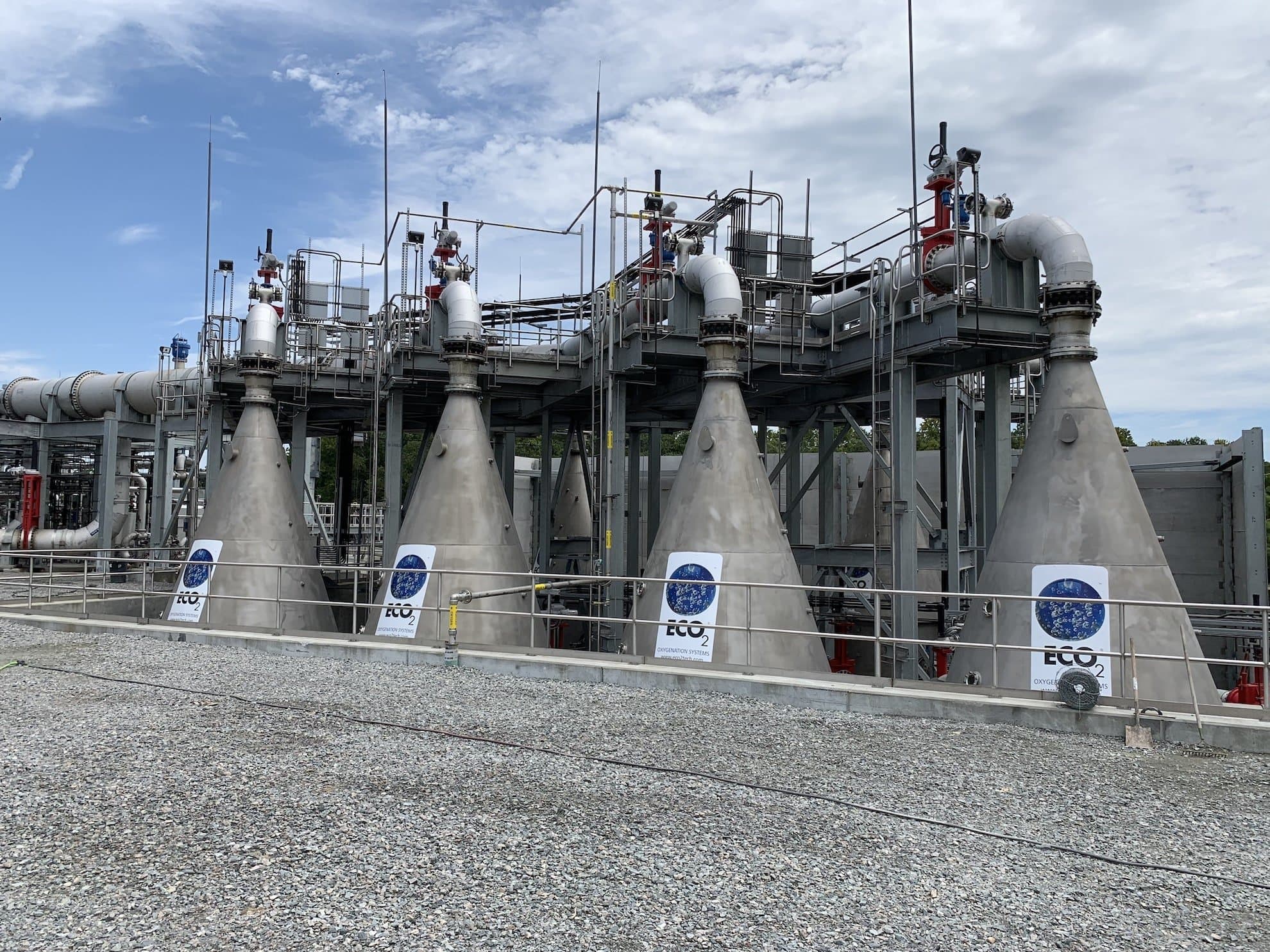
Savannah Harbor Expansion
In Full
More Key Figures
Four more, each with what it measures and its PDF page.
From the PDF
| Figure | What It Measures |
|---|---|
| 50 ft | Draft of a New Panamax ship (PDF page 1 (opens in a new tab)) |
| 1,200 ft | Length of a New Panamax ship (PDF page 1 (opens in a new tab)) |
| 2014 | Year the widened Panama Canal was to open to larger ships (PDF page 1 (opens in a new tab)) |
| 45 to 50 feet | Baltimore's channel deepening for New Panamax ships (PDF page 1 (opens in a new tab)) |
The Full Write-Up
The problem, the work, the results and who did it.
Bigger Ships Need Deeper Water than Savannah Had
The operators of the Panama Canal were widening and deepening it so larger ships could pass between the Atlantic and Pacific oceans, starting in 2014 (p. 1). The article's graphic shows the jump in size. A Panamax ship draws 39.5 ft. A New Panamax ship is 1,200 ft long and draws 50 ft (p. 1).
Savannah could not take the big ships fully loaded. Ships bound for Savannah were filled to only half capacity and came into port at high tide to avoid scraping the river bottom. A deeper channel was the answer, and the state had already funded part of a dredging project (p. 1).
That is where dissolved oxygen comes in. Local environmentalists warned that deepening the channel could lower the river's dissolved oxygen, which the article calls already depleted, and push salt into freshwater wetlands (p. 1).
A Survey of Four East Coast Ports
The item looks at four ports and what each was doing about the new ships (p. 1).
In Bayonne, New Jersey, the Bayonne Bridge at the mouth of Newark Bay gave a clearance of just 151 feet, and the Port Authority of New York and New Jersey had approved a $1 billion plan to raise it to 215 feet. Baltimore was deepening a shipping channel from 45 feet to 50 feet in a $105 million project due to finish in 2012 (p. 1). In Charleston, which could take larger Panamax ships only at high tide, local officials and the U.S. Army Corps of Engineers had approved a study of the environmental and economic impact of dredging, though a lack of funding could delay it for eight years (p. 1).
Savannah came last, with its half-loaded ships, its partly funded dredging project and its oxygen question. It is the only one of the four where the article raises a water quality concern.
Roads, Rails & the River's Oxygen Were the Weak Points
The article's main warning is about land, not water. Paul Bingham, an economist with Wilbur Smith Associates, said U.S. road and rail networks were not ready for the extra commerce, with the worst problems in dense urban areas near the ports that have little room to grow. Johanna Mendelson Forman of the Center for Strategic and International Studies said ships would unload twice as much cargo, causing gridlock, and that the country's railroads were at capacity (p. 1). Bingham put the timeline plainly: "Three years is a blink of an eye." (p. 1)
For Savannah, the article records the dissolved oxygen concern but gives no measurements and proposes no remedy. It does not mention oxygenation, the Speece Cone® or ECO₂ (p. 1). Its value is as a record of the question, set out in a national magazine while the dredging was still ahead.
Written by Amir Khan, with the Experts He Quoted
Amir Khan wrote the item for the American Infrastructure column of Popular Mechanics. It ran on page 12 of the October 2011 issue (p. 1).
He quotes Paul Bingham, an economist with the transportation consulting firm Wilbur Smith Associates, and Johanna Mendelson Forman, senior associate with the Americas Program at the Center for Strategic and International Studies (p. 1).
The Savannah entry names no engineer, utility or agency. The dissolved oxygen concern it reports belongs to local environmentalists (p. 1).
Why a Magazine Item Belongs in a Technical Library
Most of this library is engineering papers. This page is here because it shows the problem as the public first met it: a port that needed a deeper channel, on a river already short of oxygen (p. 1).
The concern is a sound one. Oxygen enters a river mainly through its surface. Deepening a channel adds water below the same surface, and the ASCE Civil Engineering article in this library explains how a deeper, slower harbor also lets seawater reach farther upstream, and salty water holds less oxygen. Warm summer water holds less again, just when river flows are low.
If you own a harbor, port or river project where dredging is planned, read this item with the Savannah entries that follow it: the demonstration on a barge, the design of the full-scale system, its construction and the Corps of Engineers test. Together they show a dissolved oxygen objection turned into an engineered, measured answer.
Written up from the published article. Every figure is as the published article prints it, with the PDF page it comes from; the authors' own words appear only in quotation marks.
How to Cite
One line to paste into a report.
Amir Khan. Popular Mechanics Oct 2011, American Infrastructure - Prepping for Bigger Boats. Popular Mechanics, October 2011. Project engineer: U.S. Army Corps of Engineers. Eco Oxygen Technologies Technical Library. https://eco2tech.com/technical-library/popular-mechanics-oct-2011-american-infrastructure-prepping-for-bigger-boats/
https://eco2tech.com/technical-library/popular-mechanics-oct-2011-american-infrastructure-prepping-for-bigger-boats/
The Next Step
Ask an ECO₂ Engineer
Questions about this published article, or about your own water? An application engineer answers, with the figures.