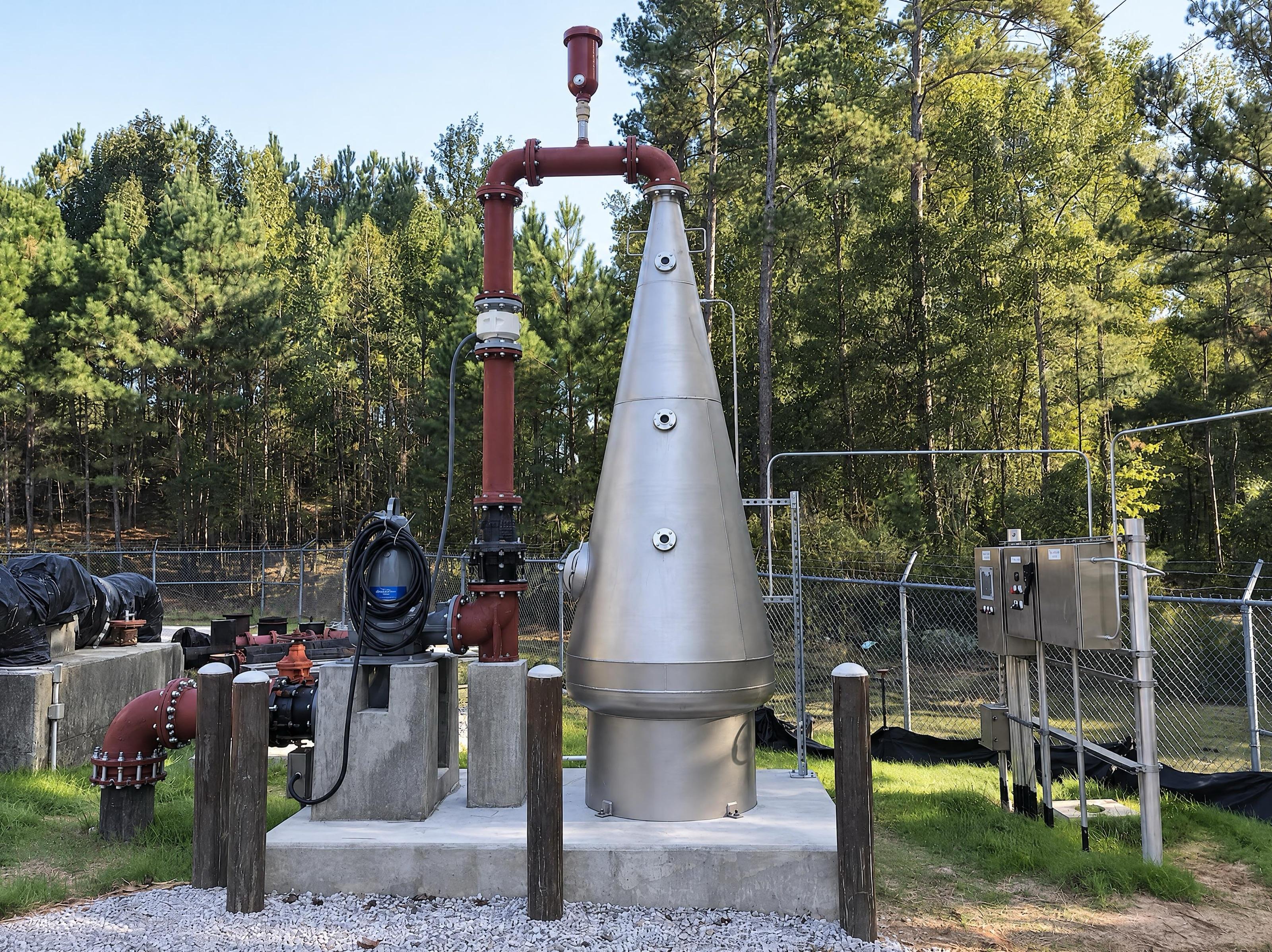
Fort Valley, GA Post-Treatment Oxygenation For Net-Zero Ultimate BOD Discharge
Estudo de caso da ECO₂ sobre Fort Valley, Geórgia, que eleva o oxigênio dissolvido do efluente da ETE para compensar a DBO que lança, em uma licença de DBO última líquida zero.
Detalhes
Resumo
Uma nova licença da Geórgia exigiu que a ETE de Fort Valley adicionasse até 316 libras de oxigênio por dia ao efluente antes do lançamento no Bay Creek. Em vez de gastar cerca de US$ 2 milhões em tratamento terciário ou osmose reversa, a cidade compensa 10 mg/L de DBO e amônia com oxigênio dissolvido de um sistema ECO₂ de Superoxigenação que custou menos de 20% da opção terciária e só funciona quando a vazão do efluente passa de cerca de 1,3 MGD.
Números-chave
316lb/dia
Oxigênio que a nova licença exige adicionar ao efluente da ETE (até) 2 milhõesUSD
Custo adicional da alternativa de tratamento terciário ou osmose reversa (cerca de) 10mg/L
DBO e amônia compensadas com oxigênio dissolvido
Perguntas
O que a nova licença de Fort Valley exigia?
O estado da Geórgia exigiu que a ETE adicionasse até 316 libras de oxigênio por dia ao seu efluente, lançado no Bay Creek, um pequeno riacho receptor. (PDF, página 1) (abre em nova aba)
Que opções a cidade tinha?
Gastar cerca de US$ 2 milhões a mais em tratamento terciário ou osmose reversa para levar a DBO abaixo de 10 mg/L, ou compensar os 10 mg/L de DBO e amônia com oxigênio dissolvido. A cidade escolheu o caminho do oxigênio, com a tecnologia de Superoxigenação da ECO₂. (PDF, página 1) (abre em nova aba)
Como o sistema está disposto na ETE?
O espaço era limitado, por isso o sistema capta de um novo poço de sucção de extravasamento. Quando a vazão do efluente passa de cerca de 1,3 MGD, a vazão excedente se acumula no poço de sucção, o sistema a oxigena e ela se junta de novo ao efluente principal no ponto de lançamento. (PDF, página 2) (abre em nova aba)
Como o custo se comparou ao do tratamento terciário?
O sistema da ECO₂ custou menos de 20% dos equipamentos de tratamento terciário que, de outra forma, teriam sido necessários. (PDF, página 2) (abre em nova aba)
O que significa aqui lançamento com DBO última líquida zero?
O sistema adiciona ao efluente oxigênio dissolvido suficiente para compensar qualquer DBO e amônia residuais, de modo que o lançamento tem impacto líquido zero sobre o Bay Creek e a cidade cumpre sua licença. (PDF, página 2) (abre em nova aba)
O projeto
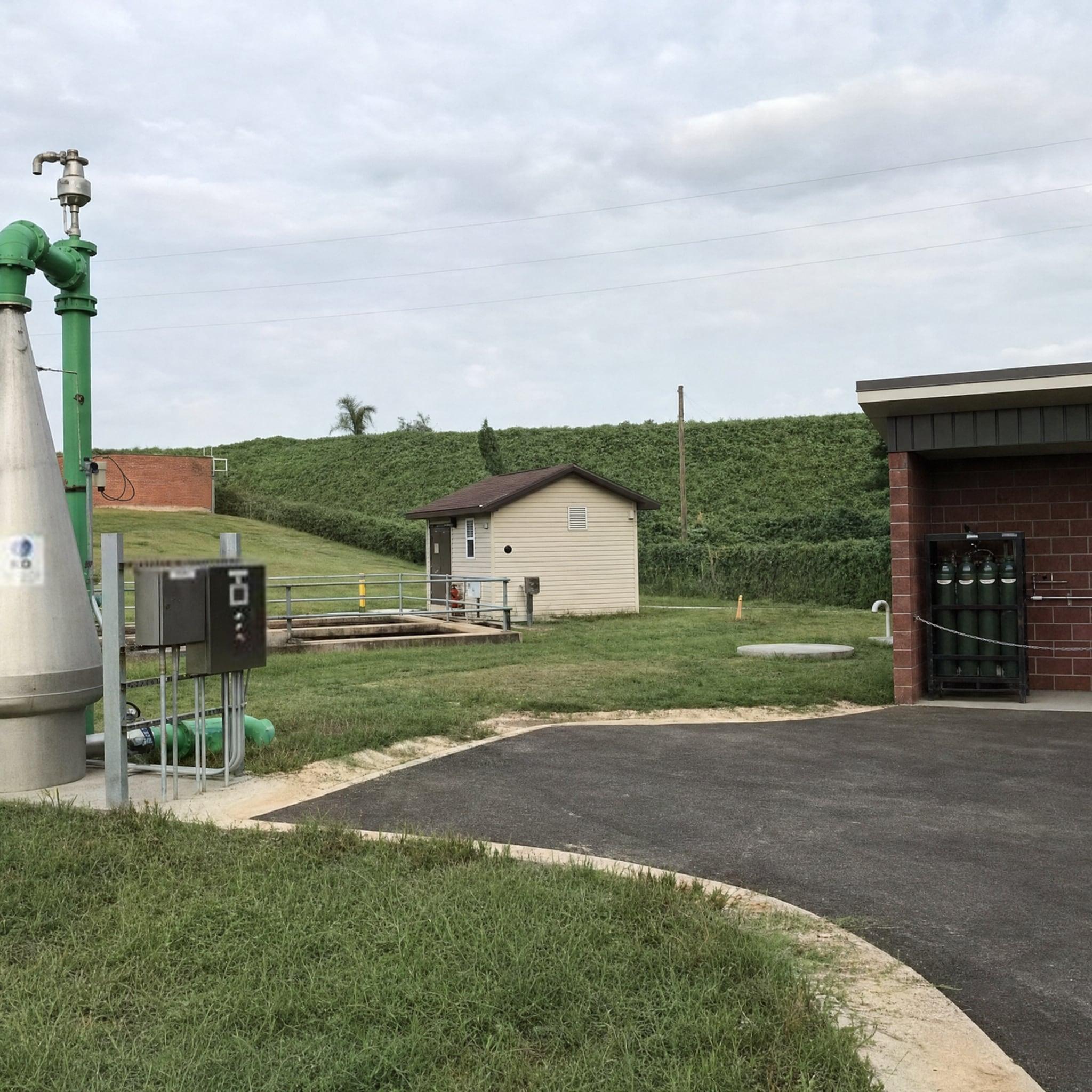
Fort Valley Wastewater Treatment Plant
Na íntegra
Mais números-chave
Mais dois, cada um com o que mede e sua página no PDF.
Do PDF
| Número | O que mede |
|---|---|
| 1,3 MGD | Vazão de efluente acima da qual o sistema da ECO₂ funciona (cerca de) (Página 2 do PDF (abre em nova aba)) |
| 20% | Custo do sistema da ECO₂ em relação ao equipamento de tratamento terciário (menos de) (Página 2 do PDF (abre em nova aba)) |
Texto completo como publicado (em inglês)
O texto como seus autores o escreveram.
Net-Zero Ultimate BOD Discharge
The City of Fort Valley, GA is located near Macon, GA. The City operates a return-activated sludge, extended aeration wastewater treatment plant and discharges into Bay Creek, a small receiving creek. At lower flows, the plant operators are able to meet their stringent permit requirements but due to the arrangement of the plant, have trouble adding the required oxygen above 1.3 MGD of effluent flow.
The State of Georgia issued a new permit requiring the wastewater treatment plant to add up to 316 lbs of oxygen per day to the plant effluent. The City was faced with two options; 1) spend an additional ~$2 million on tertiary treatment systems or reverse osmosis equipment to reduce the BOD to below 10 mg/L; or 2) offset the 10 mg/L of BOD and ammonia with dissolved oxygen (D.O.).
The City chose ECO₂'s SuperOxygenation technology to add the required amount of D.O. because of the low cost compared to tertiary treatment equipment and the high oxygen transfer efficiency. With the addition of the ECO₂ system, the plant could operate reliably, and with little operator intervention, to meet the net zero ultimate BOD discharge permit by offsetting the 10 mg/L of BOD and ammonia with D.O. for a net zero impact on Bay Creek.
ECO₂ System and 12 Pack of Oxygen Cylinders.
Project History
New TMDL Regulations
Under Section 303(d) of the Clean Water Act, every state sets its own water quality standards designed to protect, restore and preserve water quality. When a body of water fails to meet water quality standards after application of required technology-based controls, the Clean Water Act requires the state to place it on a list of "impaired" water bodies and to prepare a TMDL analysis. TMDL requirements should guarantee an optimal environment for the aquatic ecosystem. The D.O. concentration in surface water has a direct and strong impact on the biological life resident therein, affecting the strength and stamina of fish and other aquatic species.
Design
The existing layout of the Fort Valley WWTP had limited space available to install a system to add additional oxygen. The final process before effluent discharge is chlorination/dechlorination. The consulting engineer considered placing the system upstream, midstream, and downstream of the contact chamber, any of which arrangements would have been suitable. In the end, an overflow arrangement was chosen to allow the ECO₂ system to operate on an as needed basis during periods of high flow which required additional oxygen to be added.
The ECO₂ system receives flow from a newly constructed over flow wet well. When plant effluent flow rises above ~1.3 MGD, the additional portion is collected in the wet well. When the level in the wet well is sufficient for pump operation, the system activates and adds oxygen to the effluent, which is then combined with the original effluent flow at the plant outfall.
Project Results
In order to achieve the required D.O. levels in their plant effluent, the City of Fort Valley chose the ECO₂ SuperOxygenation Technology to efficiently and affordably meet their permit requirements.
Costs for the ECO₂ System were less than 20% that of otherwise required tertiary treatment equipment.
Using the Net-Zero Ultimate Oxygen Demand is an economically feasible, yet responsible approach to meeting TMDL guidelines and improving water quality.
The ECO₂ System adds enough D.O. to the plant's effluent to off-set any residual BOD—which enabled the City to meet their discharge permit.
Como citar
Uma linha para colar em um relatório.
Fort Valley, GA Post-Treatment Oxygenation For Net-Zero Ultimate BOD Discharge. ECO₂. Project engineer: Carter & Sloope. Eco Oxygen Technologies Technical Library. https://eco2tech.com/technical-library/fort-valley-ga-post-treatment-oxygenation-for-net-zero-ultimate-bod-discharge/
https://eco2tech.com/technical-library/fort-valley-ga-post-treatment-oxygenation-for-net-zero-ultimate-bod-discharge/
O próximo passo
Pergunte a um engenheiro da ECO₂
Dúvidas sobre este estudo de caso ou sobre a sua água? Um engenheiro de aplicações responde, com os números.