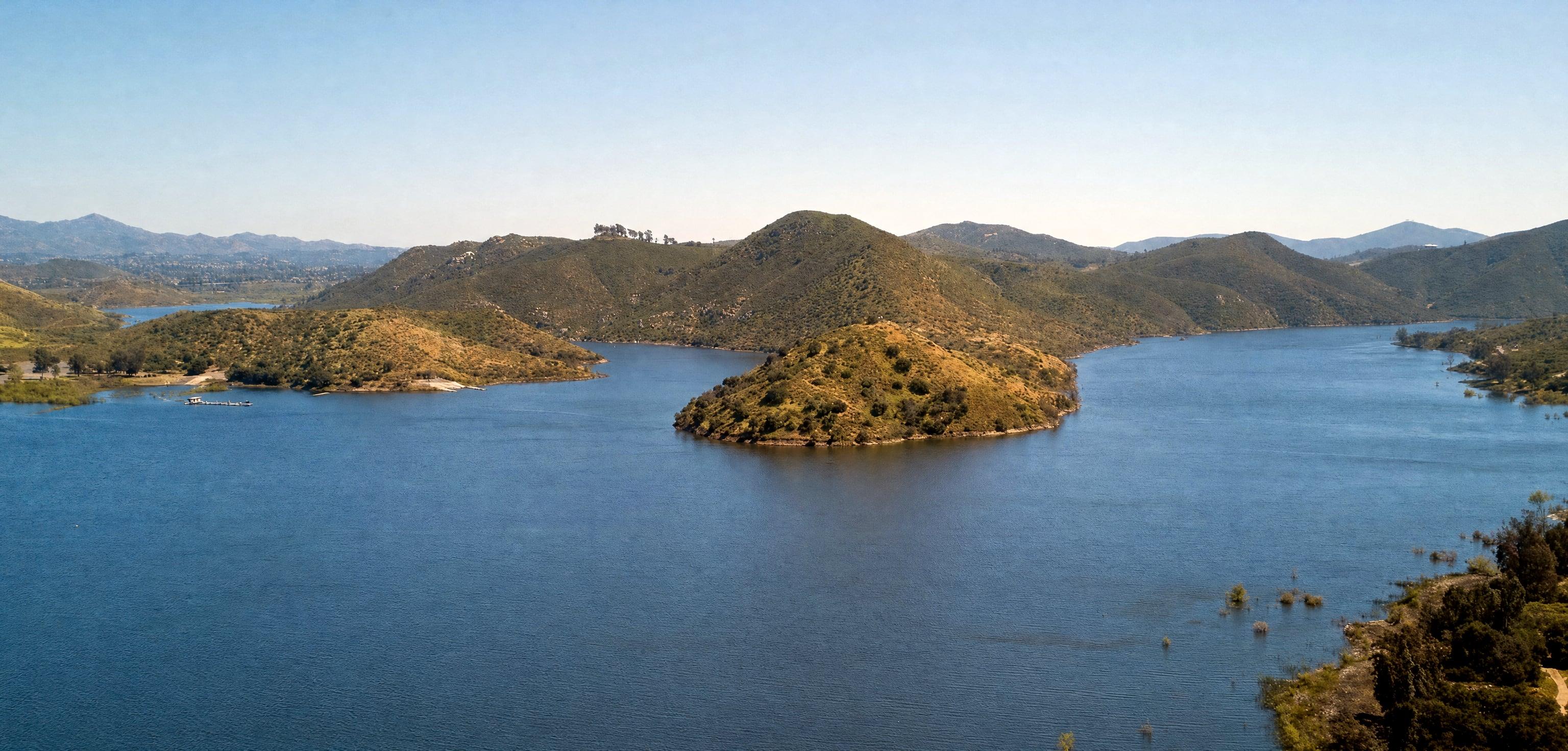
Logan Martin, AL Reservoir Oxygenation System Prevents Anoxia and Fish Kills
Estudo de caso da ECO₂ sobre a Logan Martin Dam (Alabama): o vazamento de fim de semana deixava a água a jusante sem oxigênio, e um Speece Cone® foi instalado na base para repô-lo.
Detalhes
Resumo
A Logan Martin Dam, no rio Coosa, no Alabama, é uma barragem hidrelétrica de geração de ponta construída sobre rocha cárstica, e nos fins de semana a única água que chega ao trecho a jusante da barragem é a que vaza por baixo dela, praticamente sem oxigênio dissolvido: os peixes vêm à superfície em busca de ar e uma fábrica de papel 35 milhas a jusante precisa reduzir a operação. Um Speece Cone na base da barragem capta água do reservatório acima e usa a queda da barragem para dissolver oxigênio sob pressão, de modo que sua descarga leva cerca de 50 mg/L. Os testes constataram mais de 90% de eficiência de absorção de oxigênio na vazão de projeto e 94% da saturação teórica com um tempo de retenção de apenas cerca de 30 segundos.
Números-chave
900cfs
Água que vaza pela fundação cárstica com OD praticamente zero (aproximadamente) 50mg/L
Oxigênio dissolvido na descarga do cone (aproximadamente) 90%de eficiência de absorção
Absorção de oxigênio no cone na vazão de projeto (mais de)
Perguntas
Por que a Logan Martin Dam precisa de oxigenação?
Nos fins de semana, as turbinas da hidrelétrica são desligadas, e a única água que chega ao trecho a jusante da barragem são cerca de 900 cfs que vazam por condutos na fundação cárstica da barragem. Um limo biológico nesses condutos remove praticamente todo o oxigênio dissolvido, o que estressa os peixes e obriga a fábrica de papel a jusante a reduzir a operação. (PDF, página 1) (abre em nova aba)
Como o Speece Cone aproveita a barragem?
Ele fica na base da barragem e retira 21 pés cúbicos por segundo de água do reservatório acima. Uma válvula de estrangulamento na descarga mantém o cone pressurizado pela diferença entre o reservatório a montante e o trecho a jusante da barragem, de modo que o oxigênio se dissolve sob cerca de 50 pés de carga hidrostática e a descarga leva cerca de 50 mg/L. (PDF, página 1) (abre em nova aba)
Qual é a eficiência do cone?
Mais de 90% de absorção de oxigênio na vazão de projeto e 95% com vazões de 22 a 25 pés cúbicos por segundo. Ele atingiu 94% da saturação teórica, embora a água fique no cone por apenas cerca de 30 segundos. (PDF, página 2) (abre em nova aba)
O projeto
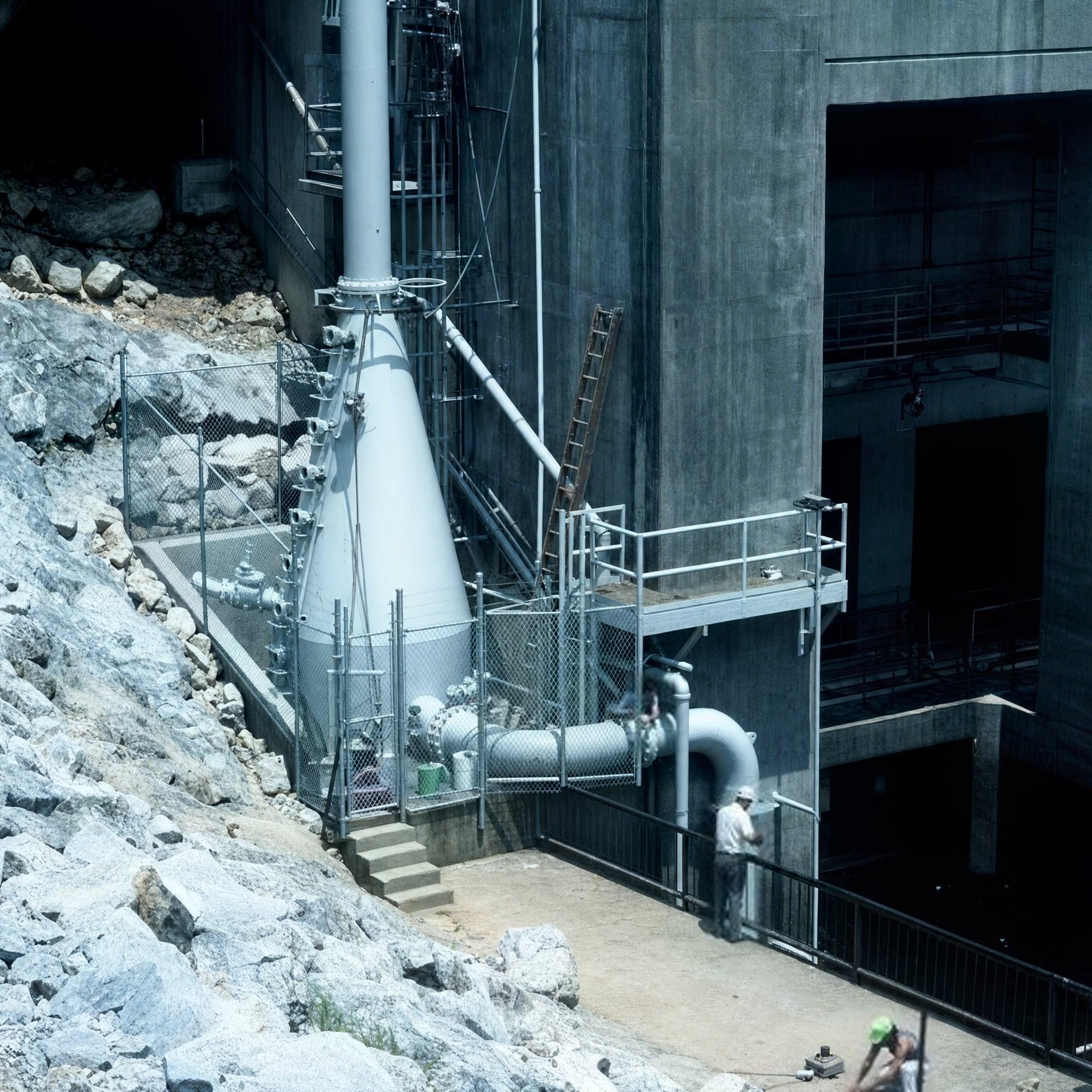
Logan Martin Dam
Na íntegra
Mais números-chave
Mais dois, cada um com o que mede e sua página no PDF.
Do PDF
| Número | O que mede |
|---|---|
| 94% da saturação teórica | Saturação alcançada com cerca de 30 segundos de retenção (Página 2 do PDF (abre em nova aba)) |
| 95% de eficiência de absorção | Eficiência com vazões de 22 a 25 pés cúbicos por segundo (Página 2 do PDF (abre em nova aba)) |
Texto completo como publicado (em inglês)
O texto como seus autores o escreveram.
Logan Martin Dam, Alabama, Speece Cone Oxygenation
Logan Martin Dam, owned and operated by Alabama Power Co., is located on the Coosa River and was constructed on a karst stone geological foundation, 60 feet deep near the dam. The river flows 35 miles downstream past a paper mill, with less than 4 mg/L of D.O. on the weekends due to hydropower turbine shut down. Since it is operated as a peaking power dam, water is only released through the turbines between 9 a.m. and 10 p.m. on weekdays, causing approximately 900 cfs of water to leak out through the conduits in the karst foundation, in spite of extensive grouting to prevent it.
These conduits in the rock below the dam are somewhat similar to biological trickling filters in that a biological slime develops on the surface of these conduits. Consequently, even though the water contains about 8 mg/L of D.O. in the reservoir behind the dam, by the time the water leaks through these conduits beneath the dam, essentially all of the D.O. is removed. Then on weekends when water is not released to the hydropower turbines, the only water passing into the tail water zone is comprised of this 900 ft.³ per second of leakage water, which contains essentially zero D.O.
The resident fishery in the tail water below the dam is noticeably stressed during these weekend periods of low D.O. Fish by the dozens can be seen standing on their tails gulping air in an attempt to compensate for the low D.O. in the tail water. By Monday when the water now containing less than 1 mg/L of D.O., slowly passes the paper mill discharge point, the mill must curtail operation until the D.O. level again reaches about 4 mg/L.
In 1990 a Speece Cone oxygenation system was installed to meet one third of the 18,000 pound per day of oxygen required to raise the D.O. in the leakage flow to the required level. The 21 ft.³ per second system also incorporated into the final design an additional system capable of handling another 42 ft.³ per second.
This oxygenation system receives 21 ft.³ per second of water from a pipe connected to the pool above the dam. The Speece Cone oxygenation system was installed at the base in the dam so that the water from above the dam passes through the Speece Cone oxygenator and discharges about 30 foot below the tail water surface. A throttling valve is located at the discharge in the tail water to allow pressurization of the oxygenation system. This pressure corresponds to the difference in water elevation between the upstream pool and the tail water.
Two photos in the PDF: the Speece Cone and its piping at the base of the dam, beside the tail water, and the face of the dam with an arrow marking where the cone stands.
The water pressure in the Speece Cone is advantageous because it allows oxygen transfer to take place at a pressure of 50 foot of hydrostatic head above ambient pressure. Consequently, the discharge D.O. has a concentration of approximately 50 mg/L. Approximately 5000 pounds of D.O. is added to the tail water each day by this supplemental oxygenation system. There is a D.O. rich zone in the vicinity of the Speece Cone discharge into the tail water of Logan Martin Dam which can provide a respite for fish when the bulk of the tail water is very low in D.O.
The performance characteristics of the Logan Martin Dam oxygenation system have been thoroughly evaluated. When the water throughput is at the design level, over 90% oxygen absorption efficiency is realized within the Speece Cone. Maximum oxygen absorption efficiency occurs at a water flow rate of 21 to 25 ft.³ per second through the system. A slight reduction of oxygen absorption efficiency occurs below this range and a more rapid decline at higher velocities.
The pressure at the oxygenation discharge with no flow through the system is 52 feet, reflecting the static head of water above the dam with respect to the location of the oxygenation cone. With no oxygen injection the discharge pressure registers 44 and 42 feet at water flows of 22 and 25 ft.³ per second, respectively and an oxygen to water injection rate of 4% results in discharge pressures of 38 and 37 feet. It is to be noted that the total head loss across the oxygenation cone is nearly constant at 6.2 feet regardless of water flow through the system when oxygen is subjected at 4% oxygen water ratio.
At the design flow of 21 ft.³ per second and 4% oxygen water ratio, the system added 48 mg/L of D.O. to a background influent D.O. of 3.6 mg/L for a total of 5600 pounds of D.O. per day or 9 pounds of D.O. per cubic feet of reactor per day, which is 100 mg/L per minute at 90% oxygen absorption efficiency. The average pressure in the Speece Cone is approximately 29 feet at the centerline of the cone and the water temperature is 86°F. At this pressure and temperature the saturation D.O. concentration would be 66 mg/L, if the gas phase is 100% oxygen. The discharge D.O. was 51 mg/L and the oxygen content of the bubbles within the oxygenation cone was approximately 83% as measured and with a 4% oxygen to water injection rate, indicating the oxygenation system is able to achieve 94% of theoretical saturation under these conditions. These results are indicative of an excellent oxygen transfer system since the hydraulic retention time is only about 30 seconds.
In the flow range of 22 to 25 ft.³ per second with an oxygen ejection ratio of 3%, the discharge D.O. was 42 mg/L for a net increase of 38 mg/L over the background level. Under these conditions, the absorption efficiency was 95%.
The Logan Martin Dam with its full-scale application of Speece Cone technology has been in operation for over 10 years.
Como citar
Uma linha para colar em um relatório.
Logan Martin, AL Reservoir Oxygenation System Prevents Anoxia and Fish Kills. ECO₂, 2006. Project engineer: Alabama Power Co. Eco Oxygen Technologies Technical Library. https://eco2tech.com/technical-library/logan-martin-al-reservoir-oxygenation-system-prevents-anoxia-and-fish-kills/
https://eco2tech.com/technical-library/logan-martin-al-reservoir-oxygenation-system-prevents-anoxia-and-fish-kills/
O próximo passo
Pergunte a um engenheiro da ECO₂
Dúvidas sobre este estudo de caso ou sobre a sua água? Um engenheiro de aplicações responde, com os números.