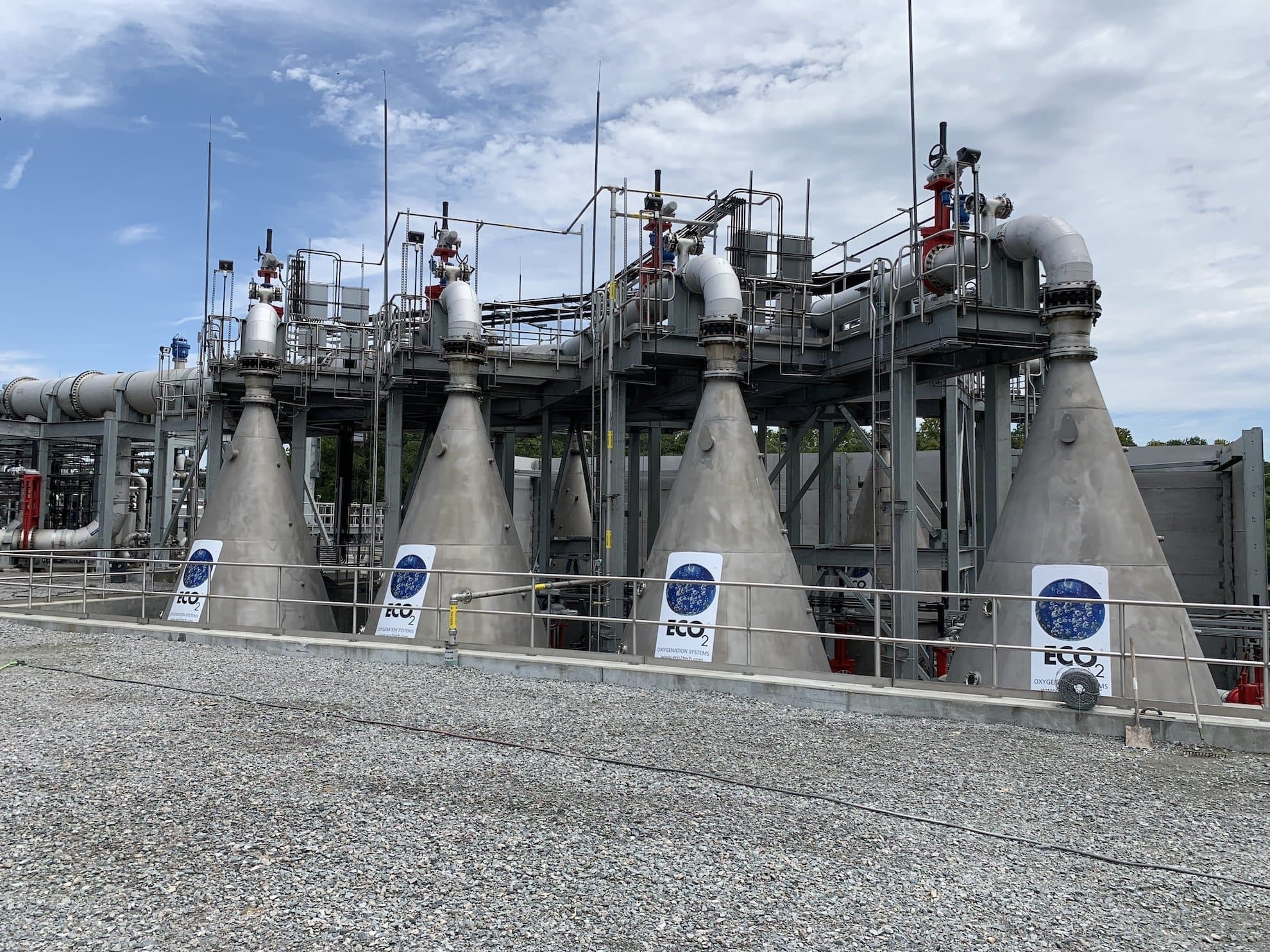
Gowanus Canal in Brooklyn, NY Receives Superoxygenation System for Water Quality Remediation Project
Estudo de caso da ECO₂ sobre o Gowanus Canal, no Brooklyn, onde um sistema de Superoxigenação elevou o oxigênio dissolvido na água do canal durante a sua remediação.
Detalhes
Resumo
Ao desativar o túnel de renovação de água do Gowanus Canal por 26 meses para obras ligadas ao extravasamento de esgoto, a cidade de Nova York precisava manter oxigênio dissolvido suficiente no canal para sustentar a vida aquática. Colocado em operação em meados de julho de 2010, o sistema elevou rapidamente o OD a 12 mg/L e manteve 8 mg/L com facilidade, de modo que as obras seguiram no prazo.
Números-chave
4mg/L
Oxigênio dissolvido mínimo que o projeto mantém ao longo do canal 7.500ft
Extensão do canal coberta pelo projeto 26meses
Período de obras com o túnel de renovação de água desativado
Perguntas
Por que o Gowanus Canal precisava de oxigênio suplementar?
O NYC DEP precisou desativar o túnel de renovação de água do canal por 26 meses para construir uma nova estação elevatória que controla os extravasamentos de esgoto combinado. Sem a renovação com água da Upper New York Bay, o oxigênio dissolvido se esgotaria rapidamente, e o canal ainda precisava sustentar a vida aquática existente. (PDF, página 1) (abre em nova aba)
Por que o Speece Cone® foi escolhido em vez de outros métodos de aeração?
A Dvirka & Bartilucci avaliou a renovação provisória da água, a aeração superficial, a aspiração superficial, a aspiração por venturi, a aeração por ar difuso e a oxigenação em corrente lateral. A oxigenação em corrente lateral com o Speece Cone foi escolhida pela transferência de oxigênio de 90 a 95% independentemente do nível da água, por não entupir nem incrustar, pelos baixos custos de operação e manutenção (O&M), por não desprender odores, pelo controle flexível do OD e por não interferir no uso do canal. (PDF, página 2) (abre em nova aba)
O que aconteceu depois da partida?
O sistema entrou em operação em meados de julho de 2010 e elevou rapidamente o OD a 12 mg/L. Como conseguia manter 8 mg/L com facilidade, o túnel de renovação de água foi desativado e as obras seguiram no prazo. (PDF, página 2) (abre em nova aba)
O projeto
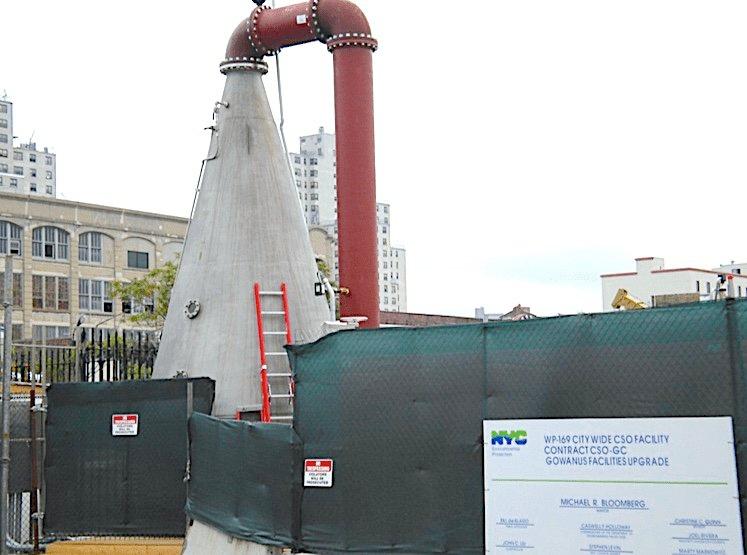
Gowanus Canal Remediation
Na íntegra
Mais números-chave
Mais quatro, cada um com o que mede e sua página no PDF.
Do PDF
| Número | O que mede |
|---|---|
| 2.500 pés | Comprimento da tubulação do difusor (Página 2 do PDF (abre em nova aba)) |
| 90 a 95% | Taxa de transferência de oxigênio, qualquer que seja o nível da água no canal (Página 2 do PDF (abre em nova aba)) |
| 12 mg/L | Oxigênio dissolvido atingido logo após a entrada em operação (Página 2 do PDF (abre em nova aba)) |
| 8 mg/L | Oxigênio dissolvido que o sistema manteve com facilidade no canal (Página 2 do PDF (abre em nova aba)) |
Texto completo como publicado (em inglês)
O texto como seus autores o escreveram.
Gowanus Canal, Brooklyn, New York: D.O. Supplementation of Canal
Design Performance: Maintain 4 mg/l minimum D.O. throughout 7500 ft canal length.
Reference: Roger Owens, Dvirka & Bartilucci Consulting Engineers, Woodbury, NY.
Project Background
The Gowanus Canal originally served as a navigable waterway prior to the development of efficient railroads and truck routes. Built in the 1860s, the canal served industries such as tanneries, cement works, paint, ink and soap facilities. As a result of years of discharges, storm water runoff, sewer outflows and industrial pollutants, the Gowanus Canal has become one of the nation's most extensively contaminated bodies of water. Contaminants include PCBs, coal tar wastes, heavy metals and volatile organics. In 2010, the Gowanus Canal was added to the EPA's Superfund National Priorities list for further investigation.
In 1911, a flushing tunnel was built to allow for artificial circulation of the water in the canal. This flushing tunnel had to be updated and a new pump station was needed to control Combined Sewer Overflows (CSOs) at the head end of the canal. During the 26 months construction period, the Gowanus Canal had to be able to support existing aquatic life. Without the flushing action from the Upper New York Bay, dissolved oxygen (D.O.) levels would quickly deplete. The New York City Department of Environmental Protection (NYC DEP) chose the ECO₂ SuperOxygenation technology out of 5 investigated aeration technologies to maintain D.O. levels in Gowanus Canal.
Design Considerations and Selection of ECO₂ SuperOxygenation
The Gowanus Canal is 7,500 feet in length and 100 feet in width with a depth ranging from 4 to 16 feet at mean low water. The Gowanus Canal is an estuarine waterbody with a semi-diurnal tidal cycle varying between 5 and 7 feet. During a period between the mid-1960s and 1999 when the flushing tunnel was inoperable the median D.O. level was 2 mg/L resulting in discoloration, odors, and adverse impacts to aquatic life. After the tunnel returned to operation in 1999, the median D.O. level was 8 mg/L, considerably improving water quality.
The NYC DEP developed a facility plan to reduce the level of CSO occurring into the Gowanus Canal requiring the shut down of the flushing tunnel for a period of 26 months while construction occurred. Dvirka & Bartilucci Consulting Engineers reviewed a number of alternatives to maintain D.O. levels, including an interim flushing system, surface aeration, surface aspiration, venturi aspiration, diffused aeration, and side stream oxygenation. Side stream oxygenation, using the Speece Cone developed by ECO₂, was selected based upon several important considerations:
- Efficient oxygen transfer rates (90-95%), regardless of canal water level
- Non-clogging / Non-fouling
- Low operations & maintenance costs
- No stripping of odors due to gas bubble action
- Versatile control of D.O. levels
- No interference with canal use
- Oxygen transfer performed in a centralized, controlled unit
The ECO₂ SuperOxygenation System is sized for a maximum oxygen feed rate of 3,250 lb/day and is designed to run continuously during the 26 month construction period. The oxygenated water is distributed along a 2,500 ft diffuser pipeline to ensure adequate lateral mixing of the water without undue disturbance of bottom sediments.
Installation of ECO₂'s Speece Cone at Gowanus Canal.
Results
The system was commissioned in mid-July 2010 and quickly elevated D.O. levels to 12 mg/L. As the system could easily maintain 8 mg/L in the canal, the project team and contractor were able to shut down the flushing tunnel and move forward with the construction project according to schedule.
Exposed Diffuser Pipe at Low Tide.
Dissolved Oxygen Supplementation of Lakes, Rivers, Reservoirs
The ECO₂ SuperOxygenation technology is an innovative, economical and environmentally friendly solution for Dissolved Oxygen (D.O.) Supplementation in lakes, rivers and reservoirs. Applications include D.O. discharge compliance, supplemental oxygenation below powerhouse dams, and injection into the hypolimnion of reservoirs to improve fish habitats and reduce algae blooms. The proprietary ECO₂ technology has been proven at locations including the Marston Reservoir in Colorado, the Upper Oso Reservoir in California, and the Savannah Harbor ReOx Demonstration Project.
Como citar
Uma linha para colar em um relatório.
Gowanus Canal in Brooklyn, NY Receives Superoxygenation System for Water Quality Remediation Project. ECO₂. Project engineer: Dvirka & Bartilucci Consulting Engineers. Eco Oxygen Technologies Technical Library. https://eco2tech.com/technical-library/gowanus-canal-in-brooklyn-ny-recieves-superoxygenation-system-for-water-quality-remediation-project/
https://eco2tech.com/technical-library/gowanus-canal-in-brooklyn-ny-recieves-superoxygenation-system-for-water-quality-remediation-project/
O próximo passo
Pergunte a um engenheiro da ECO₂
Dúvidas sobre este estudo de caso ou sobre a sua água? Um engenheiro de aplicações responde, com os números.