Wastewater treatment improvements made in Grand Rapids - Herald Review

Grand Rapids Public Utilities' Superoxygenation system cuts the odors from the city's treatment plant and keeps residual chemicals out of the Mississippi River.

Details

Shared
October 18, 2023
Category
In the Press
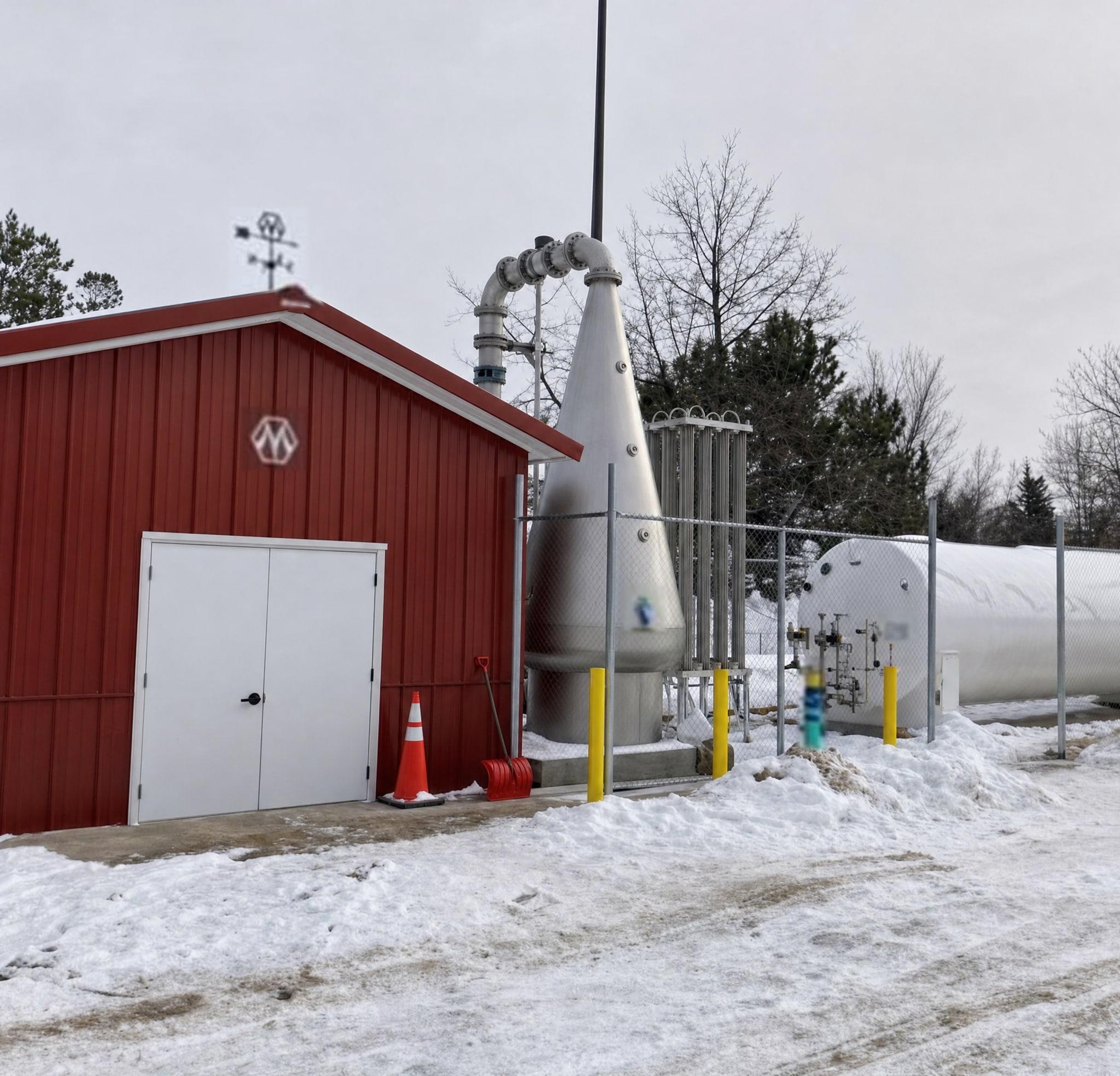
A stainless steel Speece Cone with its side-stream piping, vaporizers and a liquid oxygen tank beside a red equipment building, in snow

New wastewater treatment infrastructure was installed in 2021 by Grand Rapids Public Utilities (GRPU) that oxygenates the industrial effluent to help mitigate the odors generated from the wastewater treatment plant (WWTP).

The Superoxygenation system significantly reduces odor issues and improves water quality by eliminating discharge of residual chemicals into the Mississippi River. The project improves the quality of life in GRPU’s service area which includes the cities and outlying areas of Grand Rapids, LaPrairie and Cohasset and a total of around 12,000 people. Iron Range Resources & Rehabilitation supported the project with a $300,000 Development Infrastructure grant to the city of Grand Rapids. Total project investment was $810,000.

GRPU’s largest industrial wastewater customer is UPM Blandin Paper Company, which employs about 230 people. The volume of effluent from Blandin’s manufacturing process has decreased in recent years due to both continuous technological developments and through the elimination of their less efficient paper machines. The effluent reduction caused the travel time in the pipe system leading to the WWTP to be more than two hours, which allowed bacteria to break down and cause foul gases.

Prior to the new infrastructure, GRPU used costly chemical additives of calcium nitrate, hydrogen peroxide and zinc to combat the foul gases. These chemicals were costly, dangerous to employees and only partially effective at keeping odors low. The new Superoxygenation system eliminates most of the need to use chemicals to treat odors by introducing dissolved oxygen into the waste stream which prevents the formation of odor-causing hydrogen sulfide.
The new infrastructure will significantly reduce GRPU’s industrial WWTP operations and maintenance costs, which are passed on to Blandin through wastewater treatment rates.

Blandin was established in 1901 in Grand Rapids and has been a principal contributor to the economy of northeastern Minnesota. In addition to its 230 employees, Blandin indirectly supports another 250 jobs in Itasca County and generated over $1.7 million in local property taxes in 2019. In 2018 and 2019 UPM invested millions of dollars into mill upgrades and hired over 25 new workers. Source: UMD Bureau of Business and Economic Research, Economic Impact of UPM Blandin on Itasca County.

“The project has both environmental and economic impacts,” said Steve Mattson, GRPU water/wastewater manager. “It improves the air and water quality for our residents. It also reduces Blandin’s operational costs and helps UPM remain viable and competitive. For over 100 years Blandin has been an enduring business partner that is critical to Itasca County, and we want to keep that relationship strong.”

Other infrastructure funding partners included the city of Grand Rapids, GRPUC, UPM Blandin, Blandin Foundation and Itasca Economic Development Corporation. For Development Infrastructure grant information email Chris Ismil or call him at 218-735-3010.

Projects in This Article

Grand Rapids Paper Mill Force Main and Primary Clarifiers

Location
Grand Rapids, Minnesota
Application
H₂S Prevention, Primary Clarifier Sulfide Removal
Capacity
1,950 lbs/day
See the Project

The Next Step

Talk to an ECO₂ Engineer

Send your flow, pipe or reservoir data and get a budgetary price for your system. ECO₂'s engineers check the data for a technical fit, then send a system design with its estimated capital and annual operating costs, and can visit your site to confirm the data.

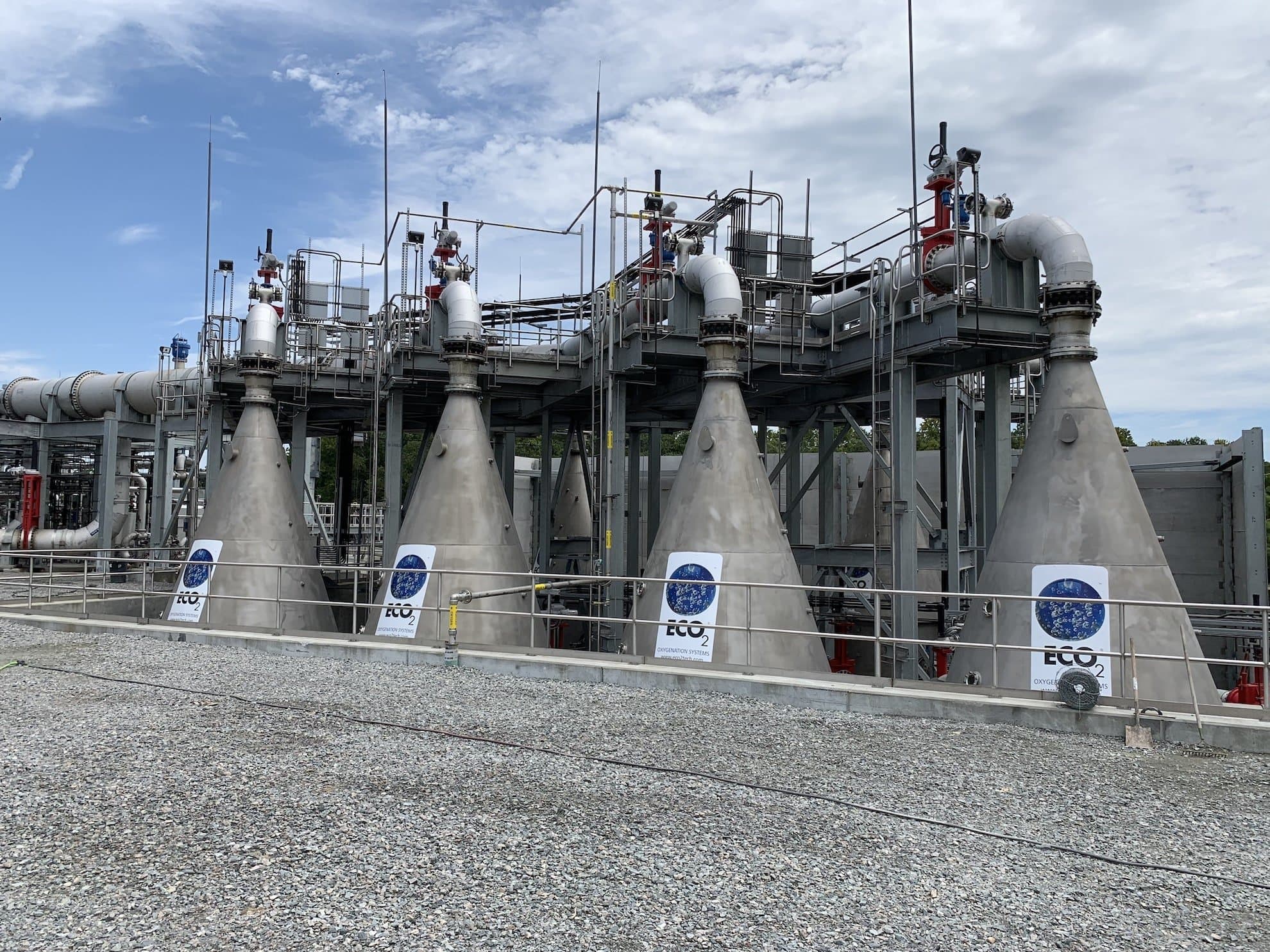
A row of stainless steel Speece Cones with ECO₂ signs on the Savannah River, Georgia

Savannah River, Georgia. Part of a 40,000 lbs/day system.